The Affair of the Diamond Necklace: History & Style Guide
Discover the scandalous history of the Affair of the Diamond Necklace and learn how to style modern festoon and bib diamond necklaces today.

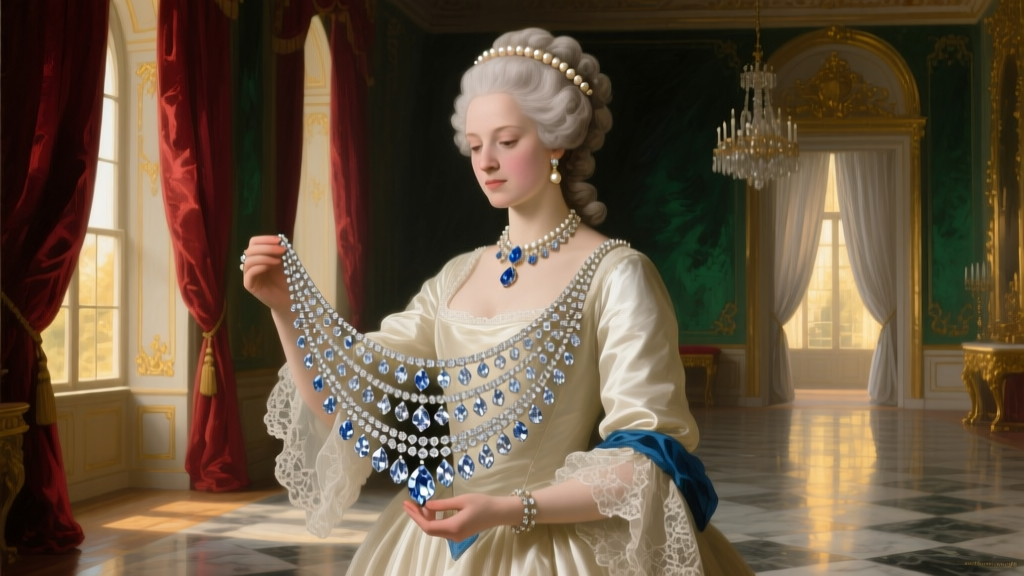
The Scandal That Shook France: A Beginner’s Breakdown
When jewelry historians discuss pieces that altered the course of history, the Affair of the Diamond Necklace sits at the very top of the list. This wasn't just a story about a beautiful accessory; it was a catalyst that helped spark the French Revolution. For beginners stepping into the world of high jewelry and historical gems, understanding this scandal provides incredible context for why massive diamond bib and festoon necklaces carry such an aura of mystery and prestige today.
In the 1770s, King Louis XV commissioned Parisian jewelers Boehmer and Bassange to create a breathtaking diamond necklace for his mistress, Madame du Barry. However, the King died before the piece was completed or paid for. The jewelers were left holding a masterpiece valued at 1.6 million livres—a sum that would bankrupt most European estates. Desperate to recoup their losses, they attempted to sell it to the new queen, Marie Antoinette, who famously despised Madame du Barry and initially refused the gaudy piece. According to Britannica, a con artist named Jeanne de Valois-Saint-Rémy intercepted the jewelers, forged documents, and convinced the gullible Cardinal de Rohan that the Queen secretly desired the necklace. The Cardinal purchased it on credit, Jeanne's husband dismantled it and sold the diamonds across Europe, and the Queen was publicly dragged through the mud when the scheme unraveled. Though Marie Antoinette was entirely innocent, the public relations disaster permanently tarnished her reputation.
Anatomy of the Infamous Jewel: Specs & Design
To truly appreciate the Affair of the Diamond Necklace, we must look at the physical specifications of the jewel itself. It was designed as a "festoon" style—a complex arrangement of diamond swags, tassels, and cascading drops that draped heavily over the décolletage. The original piece was an absolute behemoth of 18th-century lapidary work.
According to historical records highlighted by the Smithsonian Magazine, the necklace contained 647 individual diamonds. The cut styles of the era were primarily Old Mine cuts (the precursor to the modern cushion cut) and flat-backed rose cuts, which were designed to sparkle brilliantly in candlelight rather than direct sunlight. The sheer weight of the silver and gold alloy setting, combined with nearly 2,800 carats of diamonds, made it incredibly heavy, requiring reinforced silk ribbons to support it on the wearer's neck.
| Feature | 1785 Original Piece | 2026 Modern Equivalent |
|---|---|---|
| Total Carat Weight | ~2,800 Carats | 15 - 60 Carats (CTW) |
| Diamond Count | 647 Individual Stones | 80 - 250 Stones |
| Cut Style | Old Mine & Rose Cuts | Brilliant, Pear, & Marquise |
| Metal Base | Silver & Gold Alloy | 18k White Gold or Platinum |
| Estimated Value | 1.6 Million Livres | $12,000 - $250,000+ |
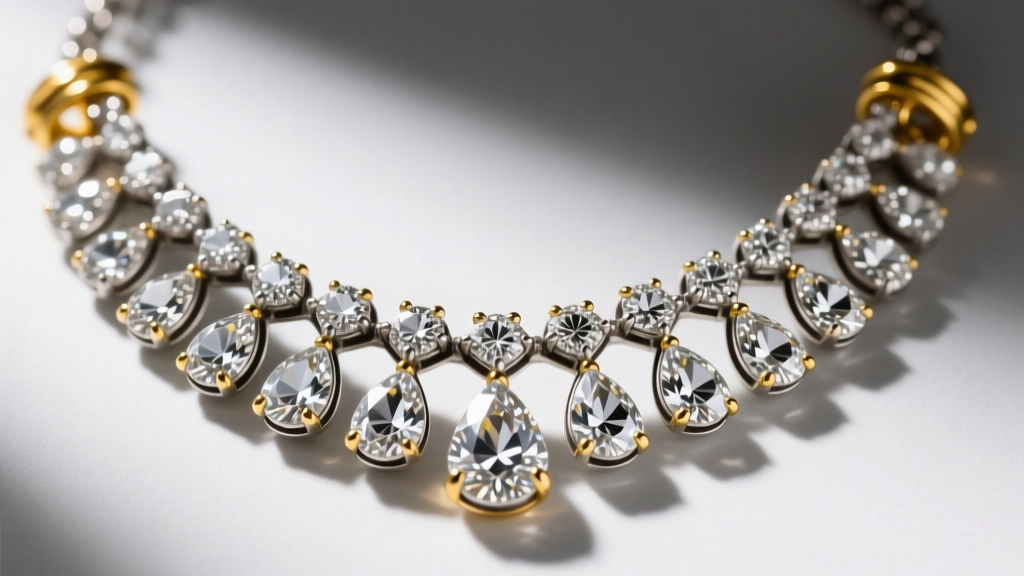
Modern Translation: The Festoon & Bib Necklace
Today, you don't need royal credentials or a secret cardinal to acquire a necklace inspired by this historical masterpiece. The modern descendants of this design are known as bib necklaces and festoon necklaces. A bib necklace typically covers the upper chest like a garment, while a festoon specifically features draped, swagged chains or gemstone strands that hang in elegant arcs.
When shopping for a modern diamond festoon, the most critical factor to evaluate is articulation. High-end jewelers engineer these necklaces with micro-hinges and flexible jump rings at every intersection where a diamond swag meets the main collar. If a jeweler uses rigid soldering instead of articulation, the necklace will sit stiffly on the collarbone, kink when stored, and eventually suffer from metal fatigue and broken prongs. Always inspect the reverse side of the piece; you should see a honeycomb or gallery-wire backing that allows the metal to move fluidly with your body.
Hardware and Clasp Mechanics
A heavy diamond bib necklace requires serious hardware. Never purchase a multi-carat festoon necklace secured only by a standard lobster clasp. The industry standard for pieces exceeding 30 Carats Total Weight (CTW) is a tongue-and-groove box clasp equipped with double figure-eight safety catches. The box clasp bears the structural tension, while the figure-eight wires act as a fail-safe if the primary latch is bumped. Furthermore, the Gemological Institute of America (GIA) recommends ensuring that all primary diamonds in a high-value bib necklace are laser-inscribed and mapped to a grading dossier, protecting your investment against stone swapping during repairs.
Buying Guide: Lab-Grown vs. Natural Diamonds
As we navigate the jewelry market in 2026, the rise of premium lab-grown diamonds has completely democratized the "royal" look. Recreating a 40-carat natural diamond festoon necklace could easily cost upwards of $250,000, placing it strictly in the realm of museum archives and ultra-high-net-worth collectors. However, advancements in Chemical Vapor Deposition (CVD) technology now allow jewelers to produce large-format pear and marquise diamonds with exceptional F-G color and VS1 clarity at a fraction of the cost.
2026 Pricing Tiers for Diamond Festoons
- Entry-Level (Lab-Grown, 10-15 CTW): $3,500 – $6,000. Features smaller melee diamonds and lab-grown center drops set in 14k white gold. Perfect for occasional gala wear.
- Mid-Tier (Lab-Grown, 25-40 CTW): $8,000 – $18,000. Fully articulated platinum or 18k white gold settings with certified CVD diamonds. Offers the true "bib" coverage without the natural diamond premium.
- High-End (Natural, 15-25 CTW): $45,000 – $120,000. Features natural, earth-mined diamonds with excellent cut grades. These pieces hold intrinsic resale value and are often sourced from estate sales or specialized high jewelers.
- Haute Joaillerie (Natural, 50+ CTW): $200,000+. Bespoke, one-of-a-kind masterpieces featuring rare D-flawless natural diamonds, often incorporating historical cuts like the Old European cut for vintage authenticity.
How to Style the Royal Silhouette
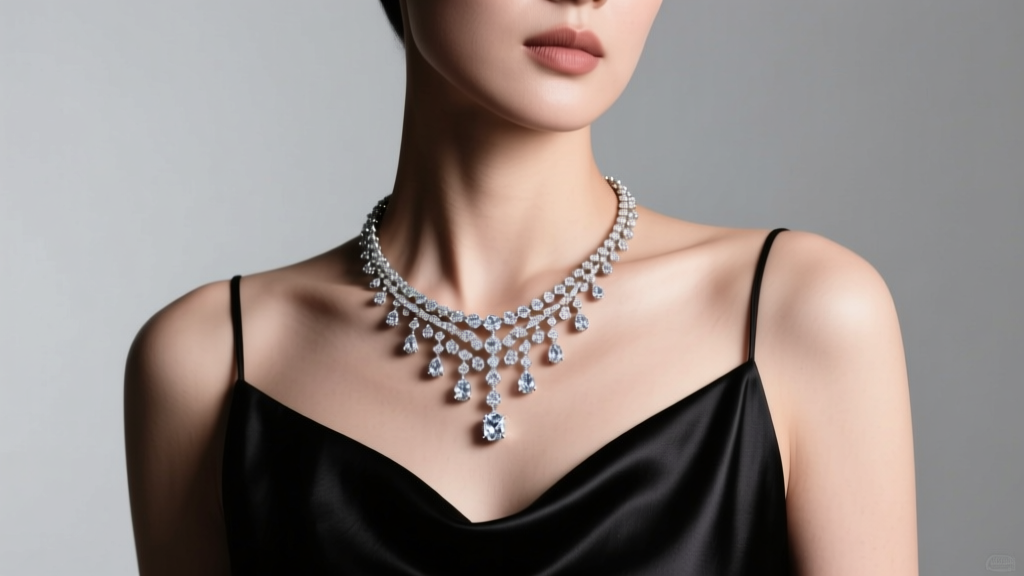
The sheer volume of a festoon or bib necklace dictates strict styling rules. Because the jewelry acts as a standalone collar, it requires a minimalist canvas. The most flattering neckline for a diamond cascade is a deep V-neck, a sweetheart cut, or a backless silk slip dress. Avoid high collars, ruffled blouses, or busy patterns, as they will visually compete with the intricate diamond swags and cause the metalwork to snag on delicate fabrics.
"The secret to wearing a heavy historical-style necklace is balance. Let the diamonds graze the skin directly, and keep earrings entirely out of the equation. A pair of simple diamond studs is the maximum you should wear to avoid looking overly costumed."
Ultimately, the legacy of the Affair of the Diamond Necklace lives on every time a modern jeweler sets a cascading diamond swag. While the original piece was lost to history, dismantled by thieves and scattered across the globe, its design DNA remains the pinnacle of statement jewelry. Whether you opt for a historically accurate Old Mine cut replica or a sleek, modern lab-grown cascade, understanding the engineering, the hardware, and the history behind the bib necklace ensures you wear it with the confidence of a queen—without the political scandal.


