The Ultimate Air Force Necklace Care & Cleaning Guide
Learn expert cleaning and maintenance tips for your air force necklace. Discover how to polish stainless steel, silver, and titanium military jewelry.

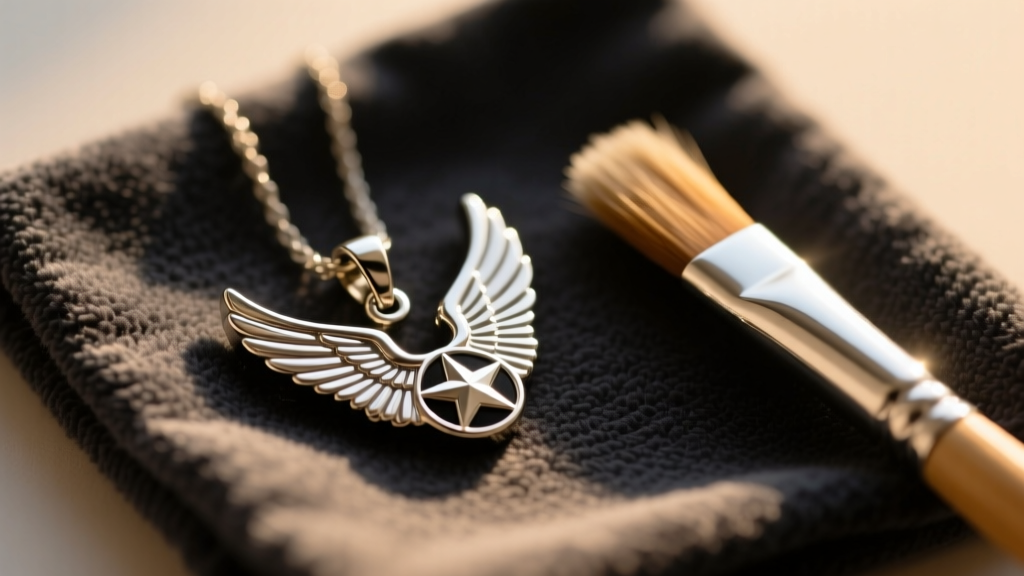
An air force necklace is more than just an accessory; it is a profound symbol of service, heritage, and personal achievement. Whether it features classic military dog tags, intricate pilot wings, or a squadron-specific propeller pendant, aviation and military jewelry is frequently exposed to harsh environments. From the acidic pH of daily sweat and the high humidity of deployment zones to the constant friction against flight suits and uniforms, these pieces endure significant wear and tear. Proper care and maintenance are essential to preserve both the structural integrity and the sentimental brilliance of your military jewelry.
In this comprehensive guide, we break down the metallurgical realities of aviation jewelry and provide actionable, expert-level cleaning protocols to keep your air force necklace in pristine condition for decades.
Understanding Your Air Force Necklace Materials
Before applying any cleaning solution, you must identify the exact metal grade of your pendant and chain. Military jewelry is typically forged from one of three primary materials, each with distinct chemical properties and failure modes.
316L Surgical Stainless Steel vs. 304 Grade
Most high-quality military dog tags and aviation pendants are crafted from 316L surgical stainless steel. The addition of molybdenum (2-3%) in 316L drastically increases its resistance to pitting and crevice corrosion caused by chlorides, making it highly resilient against sweat and saltwater. Conversely, cheaper souvenir necklaces may use 304-grade stainless steel, which lacks molybdenum and is prone to surface rust when exposed to high humidity. If your necklace exhibits minor surface oxidation, it is likely 304-grade or a lower-tier alloy.
Sterling Silver and Rhodium Plating
Formal presentation pieces and officer-class air force necklaces are often cast in 925 sterling silver. Because pure silver is too soft for daily wear, it is alloyed with 7.5% copper. This copper content is the culprit behind silver sulfide tarnish—the blackish film that forms when the metal reacts with sulfur compounds in the air and skin oils. Many modern silver aviation pendants are electroplated with a micro-layer of rhodium to delay this process, but aggressive polishing will strip this protective layer.
Aerospace-Grade Titanium
For active-duty personnel requiring hypoallergenic, ultra-lightweight options, Grade 5 Titanium (Ti-6Al-4V) is the standard. Titanium is virtually impervious to tarnish and corrosion, but it can accumulate a dull film of dead skin cells and environmental grime in its crevices, requiring specific mechanical cleaning rather than chemical treatments.
Step-by-Step Cleaning Protocols
According to the Jewelers of America, the safest and most effective baseline cleaning method for durable metals involves a mild surfactant and distilled water. Avoid tap water, as dissolved minerals and chlorine can leave micro-deposits on polished surfaces.
The Mild Soap Soak (For Dog Tags & Wing Pendants)
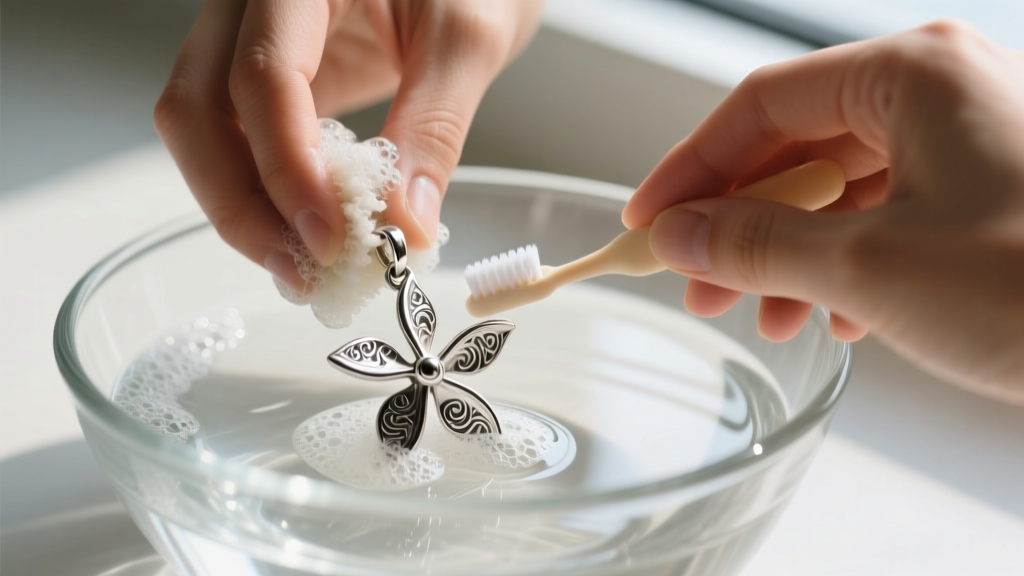
- Prepare the Solution: Mix three drops of phosphate-free dish soap (like Dawn) into one cup of warm distilled water.
- Soak: Submerge your air force necklace for 10 to 15 minutes. This loosens sebum and environmental grit trapped in the engraved lettering of dog tags or the feather details of pilot wings.
- Agitate: Use a baby toothbrush (which features ultra-soft bristles that will not scratch steel or silver) to gently sweep the crevices. Always brush in the direction of the metal's grain if a brushed finish is present.
- Rinse and Dry: Rinse thoroughly with fresh distilled water. Immediately dry with a lint-free microfiber cloth to prevent water spots.
Ultrasonic Cleaning: When to Use and Avoid
Ultrasonic cleaners use high-frequency sound waves (typically 40 kHz) to create cavitation bubbles that blast dirt from microscopic crevices. While excellent for solid 316L stainless steel and titanium dog tags, you must never use ultrasonic cleaners on rhodium-plated sterling silver, gold-filled components, or necklaces with epoxy-set enamel insignias, as the vibrations will shatter the enamel or strip the plating.
Material vs. Cleaning Method Matrix
| Material Grade | Tarnish Risk | Recommended Cleaner | Ultrasonic Safe? |
|---|---|---|---|
| 316L Stainless Steel | Very Low | Mild Soap / Distilled Water | Yes |
| 304 Stainless Steel | Moderate | Baking Soda Paste (Mild) | Yes |
| 925 Sterling Silver | High | Silver Dip / Polishing Cloth | No (Strips Rhodium) |
| Grade 5 Titanium | None | Isopropyl Alcohol (70%) | Yes |
| Brass / Bronze Alloys | Very High | Lemon Juice & Salt Bath | No |
Chain Maintenance: Ball Chains vs. Cable Links
The chain is often the first point of failure on any air force necklace. The classic military ball chain (bead chain) presents unique maintenance challenges compared to standard cable or curb links.
The Ball Chain Coupling Problem
Ball chains are constructed by trapping small metal spheres inside hollow, cylindrical coupling beads. These couplings are notorious for trapping dead skin, lint, and sweat. Over time, this buildup creates an acidic micro-environment that corrodes the coupling from the inside out, leading to sudden chain snaps. To clean a ball chain, drape it over a bowl and use a cotton swab dipped in isopropyl alcohol to run along the couplings. Never pull a tangled ball chain forcefully; instead, lay it flat on a glass surface, apply a drop of mineral oil, and use two sewing needles to gently work the knot apart.
Cable and Curb Chain Friction
If your aviation pendant hangs on a sterling silver or steel cable chain, pay attention to link abrasion. Constant friction against body armor or flight suits wears down the contact points between links. The Gemological Institute of America (GIA) recommends periodically inspecting chain links under a jeweler's loupe. If the links have thinned by more than 20%, the chain requires professional soldering or replacement before the pendant is lost.
Deployment & Active Duty Wear: Preventative Care
For active-duty personnel, an air force necklace is subjected to extreme conditions, including high-altitude pressure changes, desert dust, and maritime salt spray. Preventative care is vastly superior to reactive cleaning.
- The Flight Suit Rule: Always tuck your necklace beneath your undershirt when wearing Nomex flight suits or tactical gear. Nomex and Cordura fabrics are highly abrasive and will act like fine sandpaper against polished metal surfaces over a 12-hour sortie.
- Sweat Neutralization: After intense physical training or deployment operations, rinse your necklace with fresh water immediately. The urea and lactic acid in human sweat will rapidly degrade lower-grade alloys and accelerate silver tarnish.
- Chemical Exposure: Remove your necklace before applying DEET-based insect repellents, camouflage face paint, or CLP (Cleaner, Lubricant, Preservative) to firearms. The solvents in these military-issue chemicals will permanently cloud polished metals and degrade protective clear-coats.
Polishing and Storing Aviation Jewelry
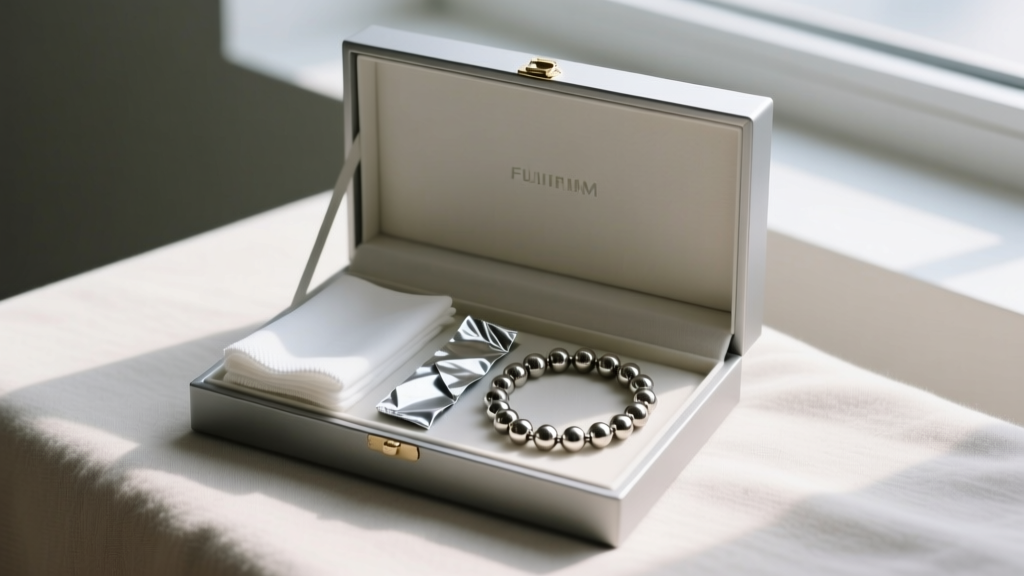
When your air force necklace is not being worn, proper storage is critical to preventing environmental damage. Never store sterling silver or copper-alloy military jewelry in PVC plastic bags or standard cardboard boxes; the off-gassing of sulfur and acidic compounds from these materials will cause rapid, severe tarnishing.
Instead, invest in a treated flannel storage pouch, such as a Pacific Silvercloth, which embeds fine silver particles into the fabric to intercept and absorb sulfur compounds before they reach your jewelry. For long-term storage of heirloom squadron pendants, place the necklace in an airtight polyethylene ziplock bag alongside a 3M anti-tarnish strip and a small silica gel desiccant packet to control ambient humidity.
By understanding the specific metallurgy of your jewelry and adhering to these targeted cleaning protocols, you ensure that your air force necklace remains a flawless, shining testament to your service and aviation heritage for generations to come.