Air Purifier Necklace Materials: 2026 Skin Safety & Tech Guide
Discover the best materials for an air purifier necklace in 2026. Compare titanium, ceramic, and silicone casings for skin safety and ion output.

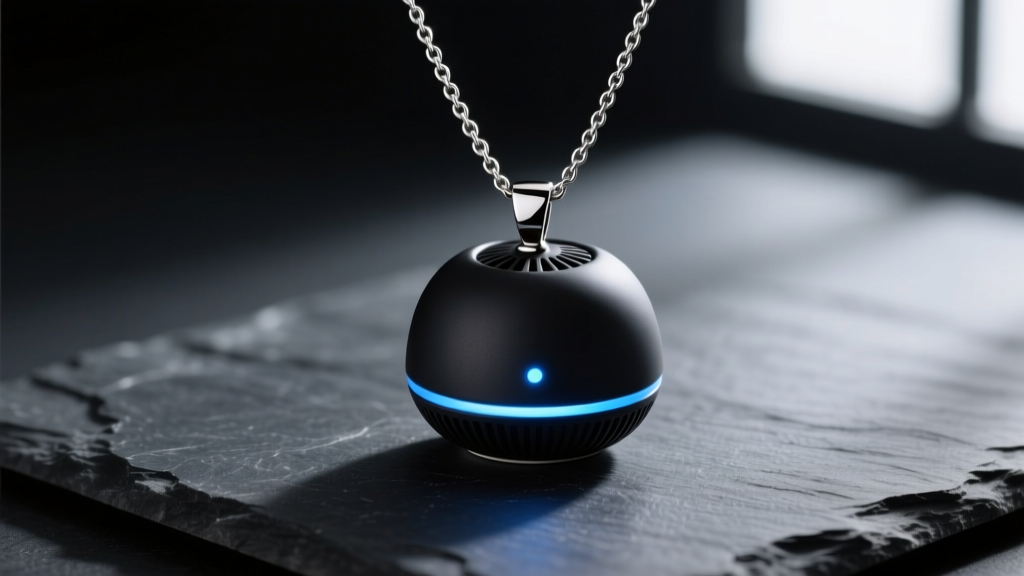
The Intersection of Wearable Tech and Jewelry Material Science
The modern air purifier necklace has evolved far beyond the bulky, plastic ionizers of the early 2010s. Today, these wearable micro-environment purifiers are designed as sophisticated pendants, merging electrostatic precipitation technology with high-end jewelry aesthetics. However, combining high-voltage ion emission with prolonged dermal contact introduces complex material challenges. As a jewelry and wearable tech analyst, I frequently see consumers prioritize battery life or ion output while entirely ignoring the casing and chain materials—leading to severe contact dermatitis, rapid metal tarnishing, or even the neutralization of the device's ionic field.
In 2026, understanding the material properties of your wearable purifier is not just a matter of style; it is a matter of biocompatibility and electrochemical efficiency. This guide dissects the exact casing compounds, chain alloys, and internal insulation matrices used in premium air purification pendants, providing a definitive framework for your next purchase.
Casing Materials: How Shell Composition Affects Ion Output
The outer shell of an air purifier necklace serves two conflicting purposes: it must protect the internal corona discharge needle or micro-fan, and it must allow negative ions ($O_2^-$) to freely enter the user's breathing zone. The dielectric properties of the casing material directly dictate the device's efficacy.
Titanium vs. Medical-Grade Silicone
Grade 2 commercially pure titanium has become the gold standard for premium wearable tech casings due to its exceptional strength-to-weight ratio and absolute hypoallergenic profile. However, bare metal is highly conductive. If a titanium casing is not lined with an internal PTFE (polytetrafluoroethylene) dielectric barrier, the metal shell acts as a Faraday cage, grounding the negative ions before they can exit the ventilation grilles. When evaluating a titanium pendant, always verify the presence of an internal PTFE or ceramic-polymer insulation layer.
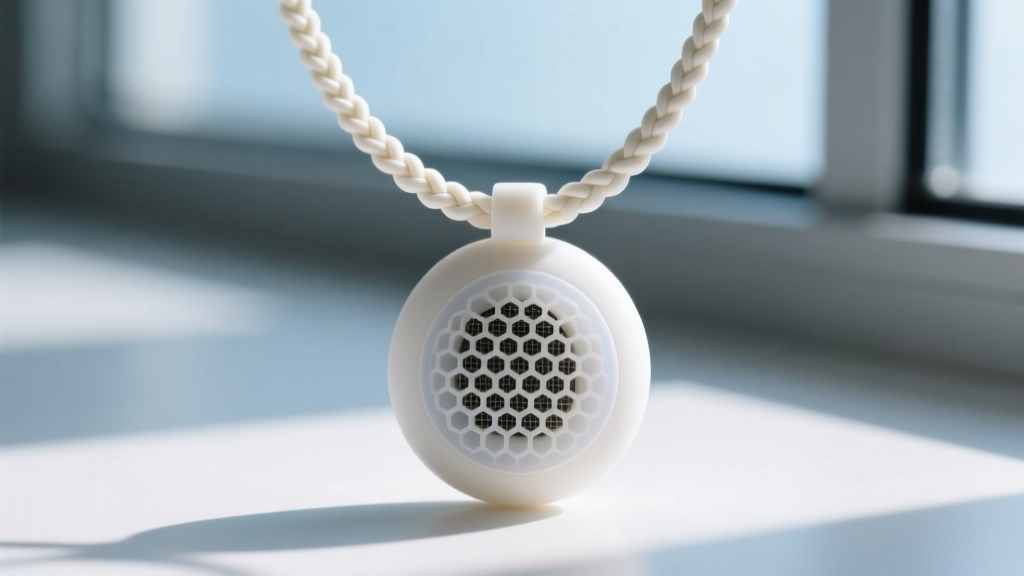
Conversely, platinum-cured medical-grade silicone offers a naturally high dielectric strength without requiring secondary internal insulation. Silicone casings are softer, lighter (averaging 12-18 grams compared to titanium's 25-35 grams), and inherently skin-safe. The drawback is aesthetic longevity; silicone is prone to absorbing sebum and environmental oils, requiring weekly ultrasonic cleaning to prevent a degraded, tacky surface texture.
The Ceramic Advantage in 2026
Zirconia-based advanced ceramics have emerged as the premier material for luxury air purifier pendants. Ceramic is naturally non-conductive, completely impervious to ozone degradation, and possesses a Mohs hardness of 8.5, making it virtually scratch-proof. Furthermore, ceramics offer superior thermal dissipation for the internal lithium-polymer batteries, preventing the casing from warming against the sternum during rapid-charge cycles. The primary limitation is impact brittleness; a dropped ceramic pendant on a tile floor is at high risk of shattering.
Chain and Lanyard Properties: Conductivity and Skin Contact
The chain suspending an air purifier necklace is subjected to a unique electrochemical environment. Wearable ionizers—particularly those utilizing corona discharge—generate trace amounts of ozone ($O_3$) as a byproduct. While the Environmental Protection Agency (EPA) warns against high-concentration ozone generators, even the micro-doses (0.01 to 0.03 ppm) emitted by personal necklaces are highly reactive with specific jewelry metals.
The Sterling Silver Trap
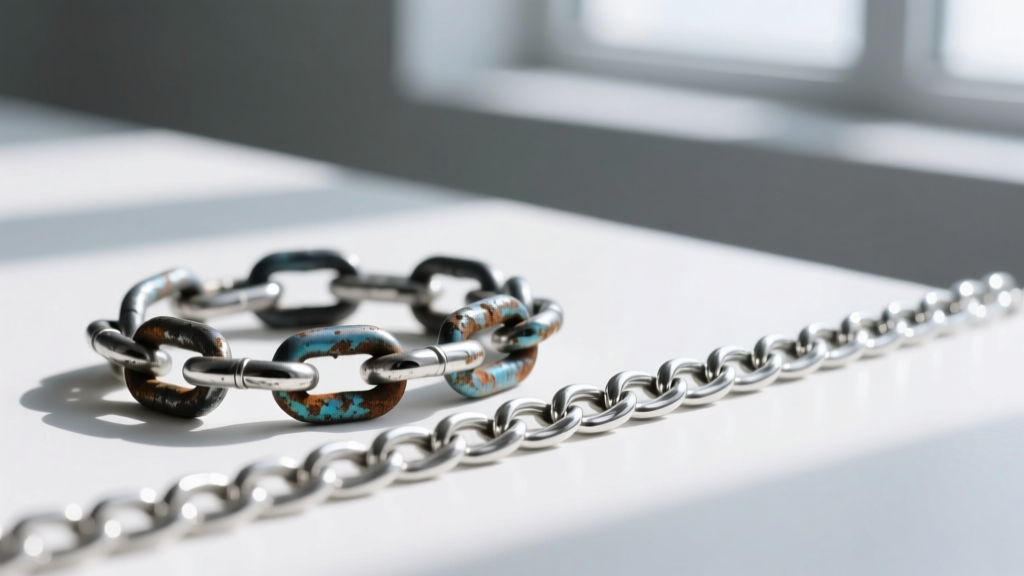
Sterling silver (92.5% Ag, 7.5% Cu) is a staple in traditional jewelry, but it is catastrophically incompatible with ionizing air purifiers. The trace ozone and localized humidity generated near the pendant's exhaust vents will accelerate the oxidation of the copper alloy within the silver, causing aggressive black tarnishing within weeks. Furthermore, the American Academy of Dermatology notes that oxidized copper salts are a primary trigger for allergic contact dermatitis. If you are using an ionizing necklace, sterling silver chains must be strictly avoided.
Optimal Chain Alloys and Non-Metals
For metal chains, Grade 5 Titanium (Ti-6Al-4V) and Niobium are the only reliable choices. Both form a passive oxide layer that completely resists ozone corrosion and nickel-leaching. For a non-metallic approach, PTFE-coated micro-steel cables or high-tensile braided UHMWPE (Ultra-High-Molecular-Weight Polyethylene) cords offer exceptional durability without interfering with the ionic field or reacting to oxidative byproducts.
Material Comparison Matrix
| Material Component | Biocompatibility | Ozone Resistance | Dielectric Interference | Avg. Weight (Pendant) | Price Tier (2026) |
|---|---|---|---|---|---|
| Grade 2 Titanium (w/ PTFE liner) | Excellent | High | None (if lined) | 28g | $$$ |
| Platinum-Cured Silicone | Excellent | Moderate | None | 14g | $ |
| Advanced Zirconia Ceramic | Excellent | Absolute | None | 22g | $$$$ |
| ABS / Polycarbonate Plastic | Poor (Phthalate risk) | Low (Degrades) | None | 18g | $ |
| Sterling Silver (Chain) | Moderate (Allergy risk) | Very Poor (Tarnishes) | High (Grounds ions) | N/A | $$ |
The Ozone and Material Degradation Factor
One of the most overlooked aspects of the air purifier necklace market is the long-term degradation of cheap thermoplastics. Many entry-level devices utilize ABS (Acrylonitrile Butadiene Styrene) or standard polycarbonate for their casings to keep costs under $40. While initially durable, continuous exposure to the device's own oxidative output causes polymer chain scission. Within 12 to 18 months, ABS casings subjected to localized ozone exposure will exhibit micro-cracking, surface chalking, and the release of volatile organic compounds (VOCs) directly into the user's breathing zone.
To mitigate this, reputable manufacturers in 2026 have shifted to PEEK (Polyether ether ketone) or glass-filled nylon for internal structural components, reserving the outer shell for inert ceramics or heavily stabilized silicones. When reviewing a product's spec sheet, the absence of material transparency regarding the casing polymer is an immediate red flag.
Internal Battery Insulation and Thermal Safety
Wearable purifiers require high-density lithium-polymer batteries to sustain continuous corona discharge or micro-fan operation. The proximity of these batteries to the skin necessitates rigorous thermal management. Ceramic casings naturally draw heat away from the battery, maintaining a comfortable skin-contact temperature of roughly 31°C (88°F). Conversely, silicone acts as a thermal insulator. High-end silicone models must incorporate internal graphene heat-spreader sheets to prevent localized heat buildup against the sternum during high-output purification modes.
Expert Verdict: Matching Material to Your Lifestyle
Selecting the right air purifier necklace requires balancing electrochemical safety, dermatological health, and aesthetic preference. Here is a practical decision framework based on user profiles:
- The Sensitive Skin / Tech-Minimalist: Opt for a platinum-cured silicone casing paired with a braided UHMWPE cord. It is lightweight, entirely non-reactive, and eliminates any risk of metal-induced contact dermatitis.
- The Executive / Luxury Buyer: Invest in a Zirconia ceramic pendant suspended on a Grade 5 titanium chain. The ceramic provides an elegant, scratch-resistant finish that mimics high-end horology, while remaining entirely immune to the device's oxidative byproducts.
- The Active / Commuter User: Choose a PTFE-lined titanium casing. The metal shell survives the physical impacts of commuting and gym environments, provided the internal dielectric liner is verified to protect the ionic output.
"The future of wearable air purification relies entirely on material transparency. A device that emits millions of negative ions per second is useless if its cheap plastic casing off-gasses VOCs, or if its metal chain grounds the ionic field before it reaches the user's airway." — Wearable Tech & Dermatology Review, 2025
Ultimately, treating your air purifier pendant with the same material scrutiny as fine jewelry ensures that the device remains safe, effective, and aesthetically pristine for years to come. Always demand full material disclosure from manufacturers before making an investment in your personal air quality.


