Best Aloha Necklace Metals: Gold, Silver & Enamel Durability
Compare gold, silver, and alternative metals for your Aloha necklace. Learn how material choices affect black enamel durability, pricing, and daily wear.

The Heritage and Metallurgy of the Aloha Necklace
The Hawaiian heirloom jewelry tradition, famously sparked in the late 19th century when Queen Liliʻuokalani commissioned mourning bracelets and pendants following the overthrow of the Hawaiian Kingdom, remains one of the most culturally significant jewelry styles in the Pacific. Today, the classic "Aloha" necklace—featuring the iconic word cut out or engraved and filled with stark black enamel—is a staple of both local Hawaiian wardrobes and global resort wear. However, as a domain expert in jewelry metallurgy, I often see buyers focus entirely on the aesthetic of the script font while ignoring the fundamental material properties that dictate the pendant's lifespan.
Choosing the right metal for an Aloha necklace is not merely a matter of budget or color preference. The base metal directly influences the adhesion of the signature black enamel, the structural integrity of the delicate script cut-outs, and the chain gauge required to support the piece safely. In this comprehensive material comparison, we break down the exact properties of gold, silver, and modern alternatives to help you make an informed, lifelong purchase.
The Traditional Standard: Yellow Gold Karats Explained
Yellow gold is the undisputed traditional choice for Hawaiian heirloom jewelry. Its warm luster provides the highest contrast against the jet-black enamel inlay. However, pure 24k gold is far too soft for daily wear; a snag on a sweater could easily warp the delicate loops of the cursive "Aloha" script. Therefore, jewelers rely on specific gold alloys. According to the Gemological Institute of America (GIA), the karat weight determines both the color depth and the Mohs hardness of the metal.
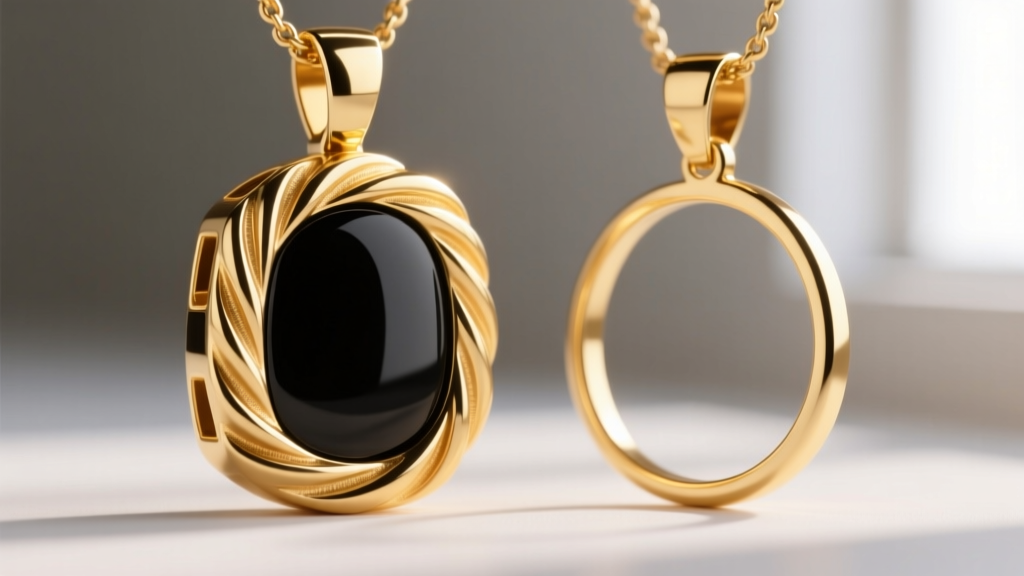
10k Gold (41.7% Pure Gold)
10k gold is the most durable and affordable option, heavily alloyed with copper, silver, and zinc. While it boasts excellent scratch resistance, its paler yellow hue can sometimes make the black enamel appear slightly less striking. Furthermore, the higher copper content means 10k gold is more prone to surface oxidation when exposed to chlorine or salt water, which can slowly degrade the boundary line where the metal meets the enamel.
14k Gold (58.3% Pure Gold)
This is the sweet spot for heirloom Aloha necklaces. 14k gold offers a rich, warm yellow color while retaining enough alloyed hardness to protect the intricate cut-out edges. Crucially, 14k gold's thermal expansion coefficient aligns exceptionally well with vitreous (fired) enamel, reducing the risk of the black inlay cracking during temperature fluctuations. A standard 14k gold Aloha pendant (approx. 4 grams) typically ranges from $280 to $450, making it a premium but accessible investment.
18k Gold (75% Pure Gold)
While 18k gold offers a luxurious, deep yellow saturation, it is noticeably softer. If you opt for an 18k Aloha pendant, avoid ultra-thin script fonts, as the delicate loops of the letters 'l' and 'h' are prone to bending under stress.
Sterling Silver Aloha Necklaces: Tarnish and Enamel Risks
For those seeking a more budget-friendly or contemporary white-metal aesthetic, 925 Sterling Silver is the most common alternative. Comprising 92.5% pure silver and 7.5% copper, sterling silver provides a brilliant, highly reflective backdrop that makes the black enamel pop. However, silver presents unique metallurgical challenges.
The primary enemy of silver is sulfur, which causes silver sulfide tarnish. As noted by The Silver Institute, silver reacts readily with sulfur compounds in the air, cosmetics, and human sweat. When a silver Aloha necklace tarnishes, the dark oxidation often creeps into the microscopic porous boundary between the metal and the enamel. Over years of wear and aggressive polishing, this can cause the sharp, clean line of the enamel inlay to blur or chip. To combat this, many modern jewelers apply a micro-thin layer of rhodium plating over the silver. While rhodium prevents tarnish, it will eventually wear away on high-friction areas, requiring re-plating every few years to maintain the pristine metal-to-enamel contrast.
The Science of the Black Inlay: Vitreous vs. Cold Enamel
The longevity of your Aloha necklace depends just as much on the black filling as the metal surrounding it. There are two distinct types of enamel used in modern jewelry manufacturing, and understanding the difference is critical for long-term care.
- Vitreous (Fired) Enamel: This is essentially finely ground glass (silica and metal oxides) that is packed into the engraved metal channels and fired in a kiln at approximately 1400°F. It fuses chemically with gold and silver, creating a permanent, UV-resistant, and waterproof bond. Vitreous enamel will not fade, but it can shatter if the pendant is dropped on a hard tile floor.
- Epoxy (Cold) Enamel: Often used in mass-produced or lower-cost silver and alternative metal necklaces, cold enamel is a two-part resin. It is cured at room temperature. While it is more impact-resistant than glass, epoxy enamel is highly susceptible to UV degradation (turning slightly brown or cloudy over years of sun exposure) and will melt or warp if exposed to high heat, such as being left on a car dashboard.
Material Properties & Enamel Adhesion Comparison
| Metal Base | Mohs Hardness | Ideal Enamel Type | Tarnish Resistance | Avg. Price Range (Pendant Only) |
|---|---|---|---|---|
| 14k Yellow Gold | 3.5 - 4.0 | Vitreous (Fired) | Excellent | $280 - $450 |
| 10k Yellow Gold | 4.0 - 4.5 | Vitreous (Fired) | Good (Prone to copper oxidation) | $150 - $250 |
| 925 Sterling Silver | 2.5 - 3.0 | Vitreous or Epoxy | Poor (Requires Rhodium) | $45 - $120 |
| Grade 5 Titanium | 6.0 | PVD Coating / Epoxy | Exceptional | $60 - $150 |
Modern Alternatives: Titanium and PVD Coatings
In recent years, Grade 5 Titanium (Ti-6Al-4V) has entered the Hawaiian jewelry market. Titanium is incredibly lightweight, hypoallergenic, and virtually impervious to saltwater corrosion, making it an exceptional choice for surfers and ocean lovers. Because titanium cannot withstand the thermal shock of traditional vitreous enamel firing, jewelers use alternative methods for the black inlay. The most premium method is PVD (Physical Vapor Deposition) coating, where a microscopic layer of black titanium nitride is vaporized into the engraved channels. PVD is vastly superior to epoxy resin, offering scratch resistance and zero UV fading, ensuring the "Aloha" lettering remains pitch-black for decades.
Sizing, Chain Pairings, and Gauge Specifications
A common failure point in Aloha necklaces is not the pendant itself, but the chain snapping under its weight. A solid 14k gold Aloha cut-out pendant typically weighs between 3.5 and 6.5 grams, depending on the height of the script and the thickness of the metal.
Never pair a solid gold pendant with a hollow, lightweight chain. For pendants weighing up to 5 grams, a 1.5mm solid wheat chain or a 1.8mm solid box chain is the minimum safe gauge. For heavier, oversized "Aloha" pendants (7+ grams), upgrade to a 2.2mm to 2.5mm solid rope chain. Always ensure the clasp is a reinforced lobster claw rather than a spring ring, which can easily deform and open under the pendulum motion of a heavy pendant.
Caring for the Enamel Inlay Across Different Metals
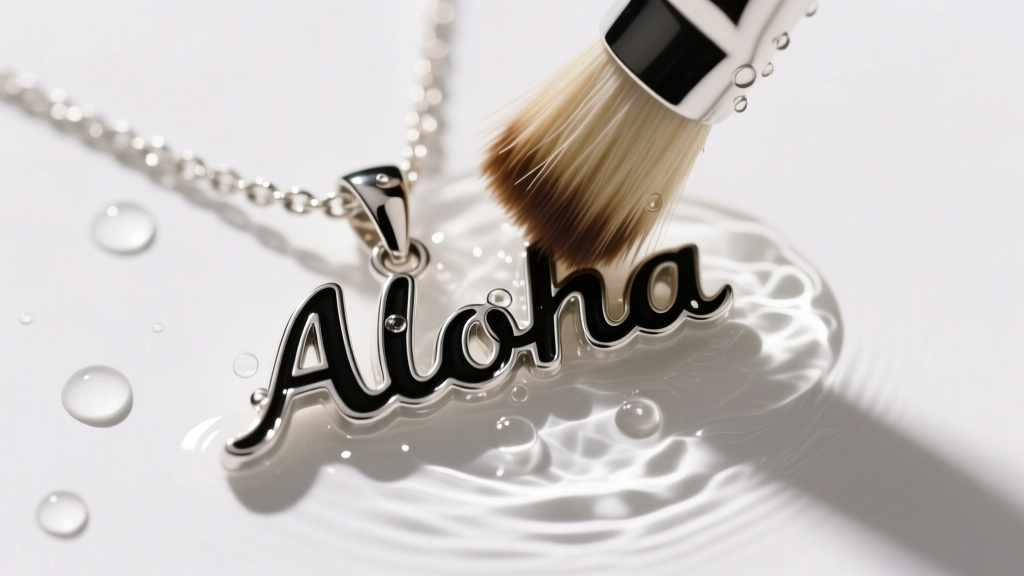
Proper maintenance varies strictly by your chosen material. If your gold or silver Aloha necklace features vitreous (fired) enamel, it is generally safe to use a mild ultrasonic cleaner for 30 seconds to remove skin oils from the metal. However, if your piece uses cold epoxy enamel (common in silver and fashion jewelry), ultrasonic vibrations and heat will cause the resin to cloud and detach from the metal walls. For all Aloha necklaces, the safest and most effective cleaning method is using a soft-bristled baby toothbrush with a drop of mild dish soap and lukewarm water, gently brushing the metal while avoiding aggressive scrubbing directly on the enamel boundary line. Store the necklace flat in a soft pouch to prevent the chain from scratching the high-polish gold or silver surrounding the black lettering.


