Authenticating an Amber Bakelite Necklace: An Expert Guide
Learn how to authenticate an amber Bakelite necklace using expert chemical tests, UV light analysis, and vintage hardware dating techniques.

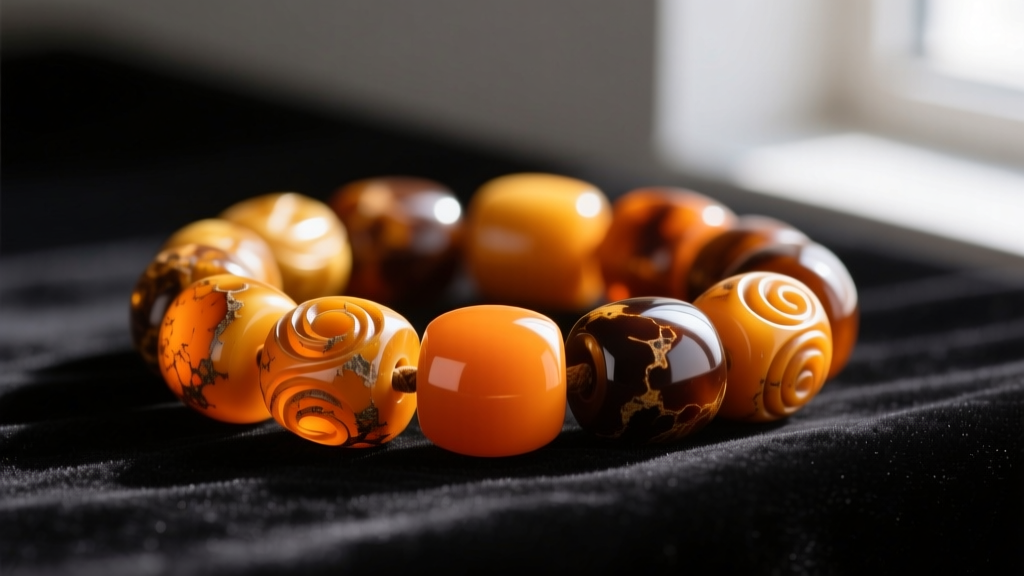
For vintage jewelry collectors and gemologists, the intersection of early synthetic plastics and natural resins presents a fascinating authentication challenge. An amber Bakelite necklace—typically referring to Bakelite beads crafted in translucent yellow, orange, and deep brown hues to mimic fossilized tree resin—remains one of the most highly sought-after categories in Art Deco and Mid-Century costume jewelry. However, as market values for pristine 1920s to 1940s pieces continue to climb in 2026, the market has seen an influx of modern phenolic resin reproductions and misidentified natural amber.
To accurately identify, date, and value an amber Bakelite necklace, one must move beyond superficial visual inspections and apply a rigorous, multi-tiered testing protocol. This guide provides a deep technical dive into the material science, non-destructive testing methodologies, and hardware forensics required to authenticate these iconic pieces.
The Chemistry: Polyoxybenzylmethylenglycolanhydride vs. Polymerized Isoprene
Before testing, it is crucial to understand the fundamental chemical differences between the two materials. Natural amber is an organic polymer primarily composed of polymerized isoprene (C5H8)n, formed over millions of years from the resin of extinct coniferous trees. Bakelite, patented by Leo Baekeland in 1907, is a synthetic phenol formaldehyde resin. When collectors refer to an 'amber Bakelite necklace,' they are usually describing Bakelite (or its castable cousin, Catalin) that was dyed with aniline pigments to achieve 'apple juice,' 'butterscotch,' or 'egg yolk' colorways.
According to the Science History Institute, Bakelite was revolutionary because it was a thermosetting plastic; once cured under heat and pressure, it could not be remelted. This fundamental thermal property is the first major divergence from natural amber, which softens at approximately 200°C to 300°C.
Comparative Gemological Data Table
| Property | Natural Amber (Baltic/Dominican) | Vintage Bakelite / Catalin | Modern Phenolic Reproduction |
|---|---|---|---|
| Specific Gravity (SG) | 1.05 – 1.10 | 1.25 – 1.32 | 1.28 – 1.35 |
| Refractive Index (RI) | 1.54 | 1.63 – 1.66 | 1.64 – 1.68 |
| Mohs Hardness | 2.0 – 2.5 | 3.5 – 4.5 | 4.0 – 5.0 |
| UV Fluorescence (365nm) | Pale blue, green, or milky white | Inert, dull mustard, or muddy brown | Inert or bright synthetic white |
Non-Destructive Authentication Protocols
Preserving the patina and structural integrity of a vintage necklace is paramount. Professional appraisers rely on a sequence of non-destructive tests to separate true amber from amber-colored Bakelite.
1. The Saturated Saltwater Float Test
This test leverages the Specific Gravity (SG) differences outlined above. By creating a saturated saline solution (mixing roughly 1 part table salt to 2.5 parts warm water until no more salt dissolves), the liquid's SG reaches approximately 1.20.
- Natural Amber: Will float or remain suspended in the solution.
- Bakelite: Will immediately sink to the bottom due to its higher density (SG > 1.25).
2. UV Fluorescence Analysis
Using a 365nm ultraviolet flashlight in a darkened room provides immediate visual clues. The Gemological Institute of America (GIA) notes that natural amber exhibits distinct fluorescence, typically glowing a pale blue, green, or soft milky white due to the presence of aromatic hydrocarbons. Conversely, vintage amber-hued Bakelite will appear largely inert, or it may emit a dull, muddy mustard or brownish-yellow glow. Modern epoxy or polyester resin fakes often fluoresce with an unnatural, chalky bright white.
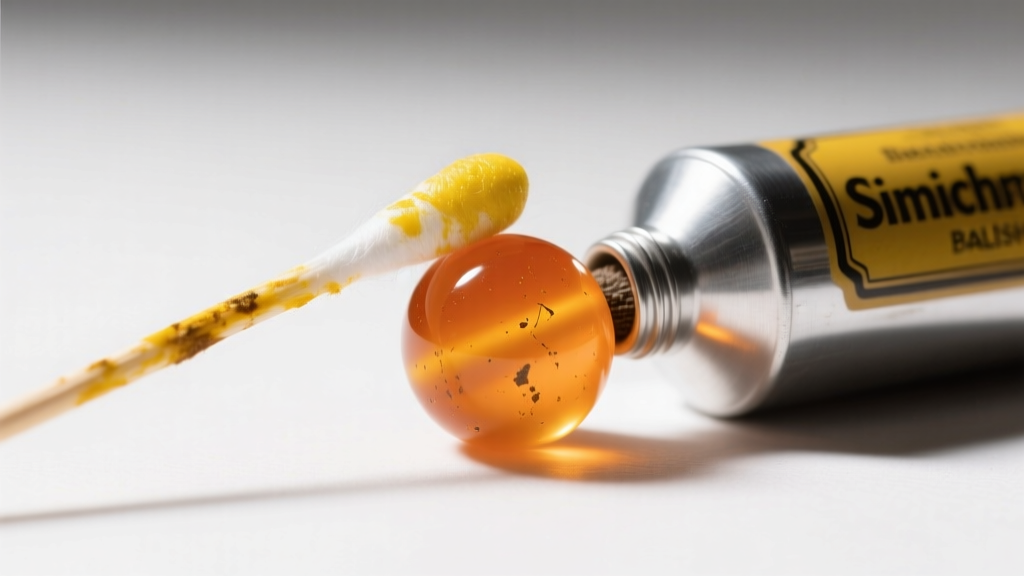
3. The Simichrome Polish Test
Widely considered the gold standard for identifying vintage Bakelite, the Simichrome test relies on a chemical reaction with the oxidized surface layer of the phenolic resin.
- Apply a small dab of Simichrome metal polish to a cotton swab or soft white cloth.
- Gently rub the swab against an inconspicuous area of the bead (such as the hole rim or the back of a carved element).
- The Reaction: If the piece is vintage Bakelite, the swab will turn a distinct yellow, mustard, or rusty brown color. This is caused by the polish reacting with the decades-old oxidation layer.
- Amber Result: Natural amber will not react; the swab will remain pinkish-white (the base color of the polish).
Critical Caveat: If a Bakelite piece has been recently machine-polished or aggressively cleaned, the oxidation layer may be stripped, resulting in a false negative. Always test multiple beads on the strand.
4. The Friction and Thermal Odor Test
Vigorously rubbing a bead against a piece of denim or wool generates enough friction to heat the surface slightly. Alternatively, dipping the bead in hot (not boiling) tap water for 30 seconds achieves the same effect without risking thermal shock.
- Amber: Emits a distinct, pleasant piney, resinous, or slightly sweet scent.
- Bakelite: Emits a harsh, chemical odor reminiscent of formaldehyde, camphor, or burnt hair.
The Danger of Destructive Testing: The Hot Pin Method
Historically, collectors used a red-hot needle to test plastics. When touched to the surface, amber melts slightly and smells of pine, while Bakelite resists melting and smells of formaldehyde. This method is universally condemned by modern appraisers. A hot pin will permanently scar the bead, leaving a blackened burn mark that destroys the piece's collectible value and interrupts the continuous patina. Furthermore, if the piece is actually celluloid (an early plastic highly prone to combustion), a hot pin can ignite the material. Never use destructive testing on an intact amber Bakelite necklace.
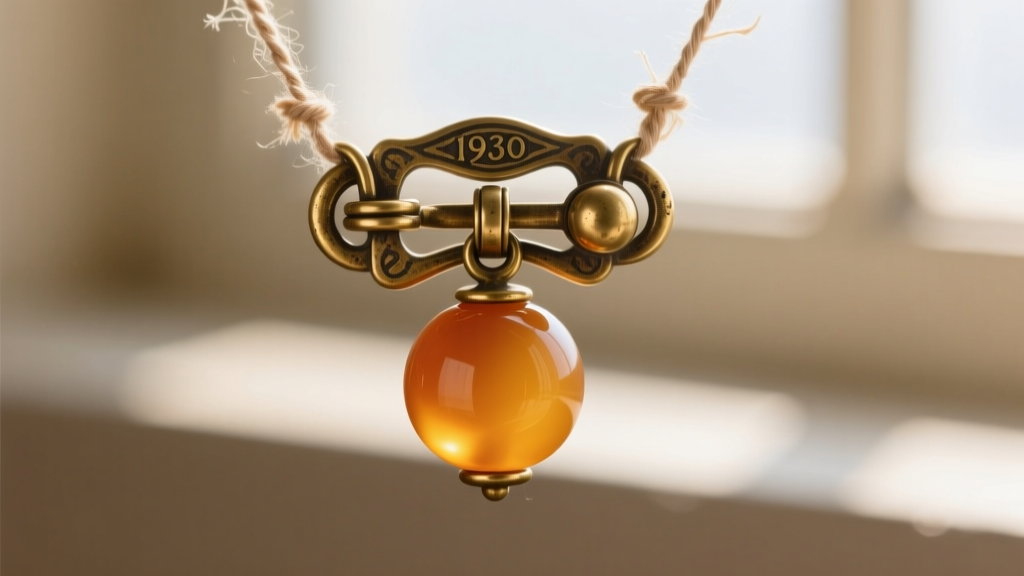
Dating the Hardware: Clasps and Stringing Forensics
Authenticating the beads is only half the battle; verifying the age of the hardware is essential to confirm the necklace is a genuine period piece rather than a modern restrung assemblage of vintage beads.
Clasp Typologies (1920s–1950s)
- Push-Pull (Push-in) Clasps: Common in the 1920s and 1930s Art Deco era. These feature a brass or base-metal cylinder with a spring-loaded hook. Look for a dark, undisturbed patina inside the mechanism.
- Barrel Clasps (Screw or Hook):strong> Highly prevalent in the 1930s and 40s. The two halves screw together or hook into a barrel-shaped housing. Original barrel clasps often show microscopic wear on the threading that modern reproductions lack.
- Magnetic and Lobster Clasps: If an 'antique' amber Bakelite necklace features a modern neodymium magnetic clasp or a stamped '925' lobster claw, it has either been retrofitted for modern wear or is an outright reproduction.
Stringing Materials
Examine the thread visible through the bead holes or near the clasp. Original 1920s-1930s pieces were typically strung on heavy cotton thread or early silk. By the late 1940s and 1950s, early extruded nylon or elastic cords became common. If the beads are strung on modern monofilament fishing line, flexible beading wire (like Soft Flex), or brightly colored synthetic paracord, the necklace has been restrung, which reduces its premium collector value by 15% to 30%.
2026 Market Valuation and Pricing Tiers
The market for amber-hued Bakelite remains robust, driven by collectors of Art Deco and Mid-Century Modern fashion. Pricing is heavily dictated by bead shape, carving complexity, and color rarity.
| Bead Style / Cut | Color Designation | Estimated 2026 Retail Value (16-18 inch strand) |
|---|---|---|
| Smooth Round / Oval | Apple Juice (Translucent Yellow) | $350 – $650 |
| Smooth Round / Oval | Butterscotch (Opaque Yellow/Orange) | $250 – $450 |
| Hand-Carved Floral / Geometric | Egg Yolk / Deep Amber | $800 – $1,800+ |
| Faceted / Chunky Geometric | Root Beer / Dark Brown | $600 – $1,200 |
Provenance, original hardware, and the absence of 'flea bites' (tiny surface chips around the drill holes) will push valuations to the higher end of these spectrums.
Preservation and Storage Protocols
Bakelite is highly durable, but it is not impervious to environmental degradation. Prolonged exposure to direct UV sunlight will cause the aniline dyes to fade and the surface to micro-craze. Furthermore, store your amber Bakelite necklace in a breathable cotton pouch or an acid-free archival box. Avoid sealing early plastics in airtight polyethylene bags; trapped moisture and off-gassed chemicals can accelerate surface deterioration, leading to a sticky, degraded surface layer often confused with 'vinegar syndrome' (though true vinegar syndrome is more specific to cellulose acetate and celluloid). Clean the beads only with a damp microfiber cloth and mild dish soap, never with alcohol, acetone, or commercial jewelry dips, which will strip the 80-year-old patina instantly.


