How to Clean a Vintage Silver Cross Necklace Without Damage
Learn expert techniques to clean, polish, and preserve your vintage silver cross necklace without damaging its antique patina or delicate engravings.


Owning a vintage silver cross necklace is akin to holding a piece of wearable history. Whether it is a heavy Gothic revival piece from the late 19th century, a delicate Edwardian pendant with intricate milgrain detailing, or a mid-century modernist design, antique silver requires a vastly different approach to care than contemporary mass-produced jewelry. The internet is saturated with aggressive DIY cleaning hacks that can permanently destroy the historical integrity and monetary value of antique silver. In this comprehensive guide, we will explore the metallurgy of vintage silver, the chemistry of tarnish, and the exact protocols used by conservators to safely clean and preserve your vintage silver cross necklace.
Decoding the Metallurgy: What Kind of Silver Do You Have?
Before applying any cleaning agent, you must identify the specific silver alloy. Vintage jewelry is rarely pure silver (which is too soft for daily wear). Instead, it is alloyed with copper for structural integrity. According to The London Assay Office, understanding hallmarks is the first step in proper conservation.
- Sterling Silver (.925): Contains 92.5% silver and 7.5% copper. This is the most common standard for vintage crosses from the US and UK. Look for the '925' stamp or the British lion passant hallmark.
- Coin Silver (.900 or .800): Common in early American and European antique pieces. It has a higher copper content, meaning it tarnishes faster and requires gentler polishing to avoid removing the softer surface layer.
- Scandinavian Silver (.830): Frequently found in mid-century Nordic vintage crosses. It has a distinct, slightly warmer hue due to the 17% copper content.
- Silverplate: A base metal (often brass or copper) coated with a microscopic layer of silver. Aggressive polishing will strip this layer entirely, exposing the base metal and ruining the piece.
The Patina Dilemma: Silver Sulfide vs. Dirt
A common mistake among novice collectors is confusing dirt with patina. Tarnish on silver is not merely grime; it is a chemical reaction. When the copper in the silver alloy reacts with sulfur compounds in the air, it forms silver sulfide (Ag2S). Over decades, this oxidation builds up into a dark, complex layer known as patina.
Why You Should Preserve the Patina in Crevices
For a vintage silver cross necklace, the dark oxidation trapped inside engraved floral motifs, Celtic knotwork, or Gothic tracery is highly desirable. It provides visual contrast, highlighting the artisan's original hand-engraving. Stripping a vintage piece to a blinding, mirror-like white shine is a hallmark of amateur restoration and can decrease an antique piece's auction value by up to 30%. The goal of cleaning is to remove surface sulfide and environmental grime while leaving the recessed patina intact.
Step-by-Step Safe Cleaning Protocol
To clean your vintage silver cross necklace safely, you need a method that relies on mild surfactants and gentle mechanical action rather than harsh chemical stripping. The Gemological Institute of America (GIA) recommends mild, non-detergent soaps for antique jewelry care.
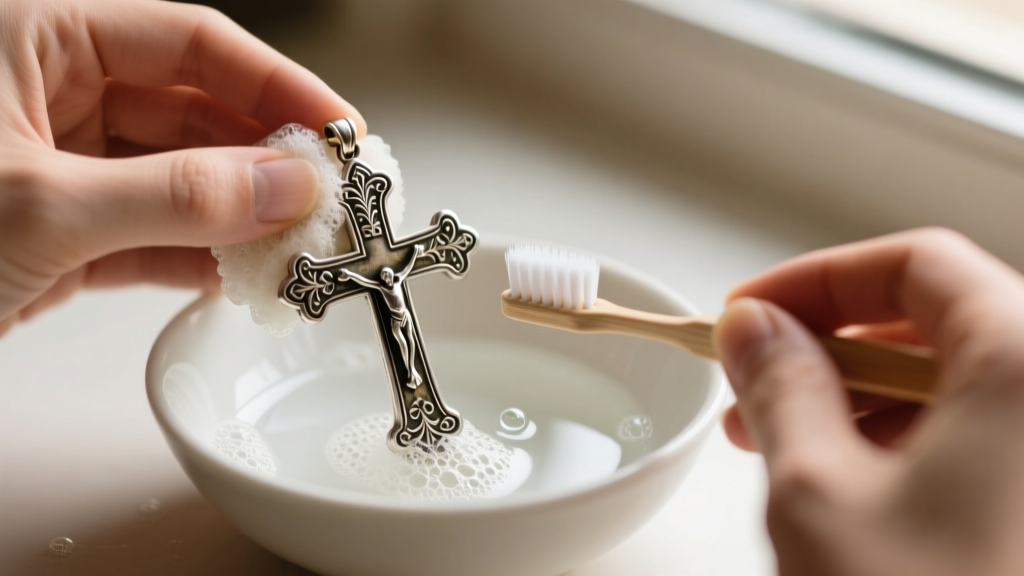
- Prepare the Bath: Fill a glass or ceramic bowl with lukewarm distilled water. Never use tap water, as the chlorine and dissolved minerals can cause micro-pitting and water spots on antique silver.
- Add a Surfactant: Add three drops of a pH-neutral, phosphate-free dish soap (such as original blue Dawn). Avoid soaps with added lotions, citrus extracts, or heavy fragrances.
- Soak Briefly: Submerge the cross pendant and chain for no more than 3 to 5 minutes. This loosens skin oils, cosmetics, and atmospheric dust.
- Gentle Agitation: Using an ultra-soft baby toothbrush, gently brush the surface of the cross. Brush in the direction of the metal's grain or engraving lines. Do not scrub the recessed areas; let the soapy water lift the dirt out naturally.
- Rinse and Dry: Rinse under a gentle stream of distilled water. Immediately pat dry with a lint-free microfiber cloth. Air-drying will leave irreversible water spots.
- Selective Polishing: Use an impregnated micro-abrasive jeweler's cloth (such as a Sunshine Polishing Cloth) to gently buff only the high, raised surfaces of the cross. Avoid pressing the cloth into the engraved grooves to preserve the dark antique contrast.
Hazardous Cleaning Methods to Avoid
Many popular internet hacks are actively destructive to vintage jewelry. Below is a comparison of common cleaning methods and their viability for antique silver crosses.
| Cleaning Method | Mechanism | Safe for Vintage Silver? | Risk Factors |
|---|---|---|---|
| Baking Soda & Aluminum Foil Bath | Electrochemical reduction | No | Strips all patina, leaves surface spongy and pitted, destroys porous stones (turquoise, opal) and melts antique shellac stone settings. |
| Commercial Liquid Dips (e.g., Tarn-X) | Chemical stripping (Thiourea) | No | Highly corrosive, toxic, causes rapid re-tarnishing, and permanently alters the surface crystalline structure of the silver. |
| Ultrasonic Cleaners | High-frequency cavitation | Rarely | Vibrations can shatter fragile guilloché enamel, crack old glass intaglios, and loosen friction-set stones common in Victorian crosses. |
| Toothpaste | Abrasive mechanical scrubbing | No | Contains silica and calcium carbonate abrasives that are harder than silver, leaving deep, permanent micro-scratches. |
| Mild Soap & Micro-Abrasive Cloth | Surfactant & gentle polishing | Yes | Safest method. Preserves structural integrity and allows for selective patina retention. |
Chain and Clasp Maintenance
The chain on a vintage silver cross necklace is often just as old and fragile as the pendant itself. Antique chains, such as belcher, cable, or fancy link chains, suffer from metal fatigue at the jump rings. When cleaning, inspect every single link under a jeweler's loupe. Look for thinning metal or slightly oval-shaped jump rings, which indicate stress and impending failure. Furthermore, many vintage crosses feature antique spring-ring clasps or early dog-clip fasteners. Never use liquid cleaners near the internal steel springs of these clasps, as the steel will rust and seize the mechanism. Apply a microscopic drop of synthetic watch oil to the clasp hinge if it becomes stiff, but wipe away any excess immediately to prevent attracting dust.
Long-Term Storage and Tarnish Prevention
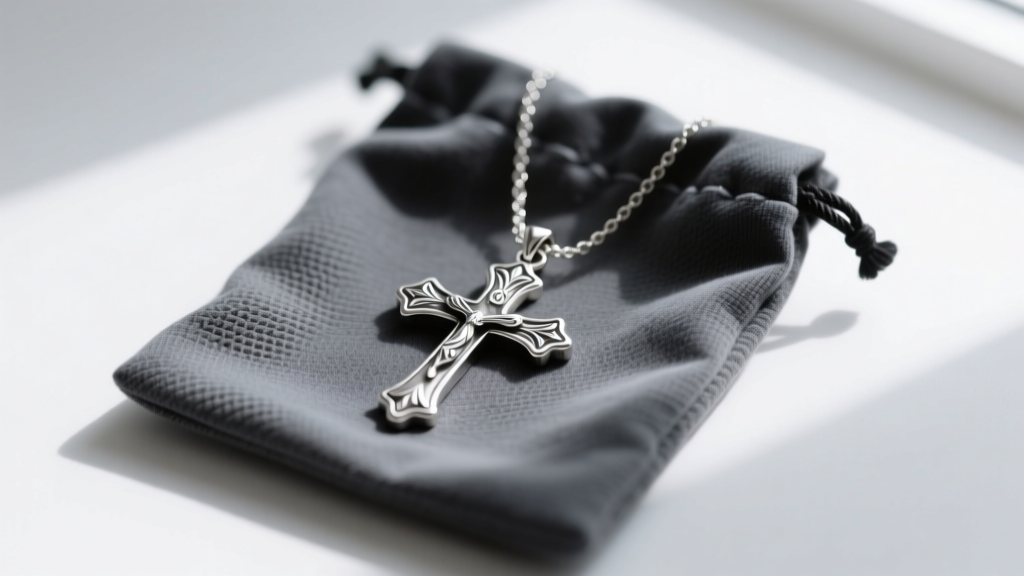
Proper storage is the ultimate defense against silver sulfide formation. The environment in which you store your vintage silver cross necklace dictates how often it will need cleaning. Sulfur is ubiquitous in modern environments—it is present in wool, felt, rubber bands, certain paints, and even drywall. Never store your antique silver in a standard cardboard box or wrap it in rubber bands, which will cause severe, localized black corrosion that is nearly impossible to remove without heavy polishing.
Instead, store the necklace in a specialized anti-tarnish pouch made of Pacific Silvercloth, which is embedded with microscopic silver particles that intercept and neutralize sulfur gases before they reach your jewelry. Alternatively, place the necklace in an airtight polyethylene ziplock bag alongside a 3M anti-tarnish strip and a small silica gel desiccant packet to control humidity. By controlling the micro-climate around your vintage silver cross necklace, you can halt the oxidation process entirely, ensuring that the piece remains pristine and historically intact for the next generation of collectors.


