Cross Knife Necklace Metals: Silver, Steel & Titanium Compared
Discover the best metals for a cross knife necklace. We compare 925 silver, 316L steel, and titanium grades for durability, weight, and skin safety.

The Anatomy of a Cross Knife Pendant
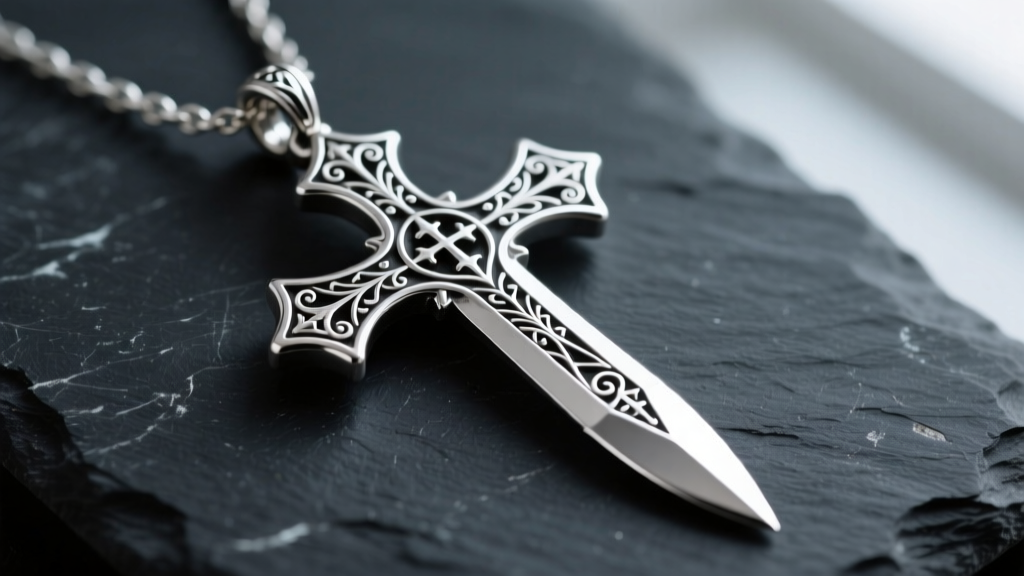
The cross knife necklace is a striking juxtaposition of sacred geometry and tactical aggression. Combining the traditional religious or gothic cross with the sharp, directional motif of a dagger or tactical blade, this pendant style has become a staple in alternative, streetwear, and high-end gothic jewelry. However, the intricate detailing and sharp edges of a cross knife design demand specific metallurgical properties. A metal that is too soft will lose its blade-like points, while a metal that is too brittle may snap at the narrow intersections of the crossguard.
As we navigate the jewelry landscape in 2026, consumers are moving beyond simple aesthetics to scrutinize material longevity, hypoallergenic properties, and weight-to-strength ratios. Whether you are investing in a heritage piece or a daily-wear streetwear accessory, understanding the metallurgy behind your cross knife necklace is critical. Below, we break down the three dominant metals used in this niche: 925 Sterling Silver, 316L Surgical Stainless Steel, and Grade 5 Titanium.
Material Breakdown: The Big Three
925 Sterling Silver: The Heritage Choice
Sterling silver has been the foundational metal for gothic and artisan jewelry for decades. By definition, 925 silver consists of 92.5% pure silver and 7.5% alloy metals, usually copper. The copper is essential; pure silver (999) is far too soft to hold the sharp, knife-like edges of a cross pendant. According to The Silver Institute, the addition of copper increases the Mohs hardness from 2.5 to roughly 3.0, allowing for deep, oxidized engravings that make the cross and blade motifs pop.
However, sterling silver is prone to tarnishing. The copper in the alloy reacts with hydrogen sulfide in the air and the natural acids in your sweat, forming silver sulfide—a dark, dull layer on the surface. For a cross knife necklace, which often features deep crevices and intentional oxidation (blackening) to highlight the blade's edge, aggressive polishing can ruin the designer's intended contrast. Furthermore, silver is relatively heavy and soft. If you wear a silver pendant on a steel chain, the harder steel will slowly act like a saw, wearing through the silver bail (the loop connecting the pendant to the chain) over a few years.
316L Surgical Stainless Steel: The Tactical Workhorse
For those who want a maintenance-free, highly durable cross knife necklace, 316L stainless steel is the undisputed workhorse. The "L" stands for low carbon, which prevents carbide precipitation during the casting and welding processes. More importantly, 316L contains 16-18% chromium, 10-14% nickel, and 2-3% molybdenum. The British Stainless Steel Association notes that the addition of molybdenum is what gives 316L its superior resistance to pitting corrosion, making it impervious to the salty, acidic environment of human sweat.
With a Mohs hardness of around 5.5, 316L steel will not scratch easily, and the sharp points of the knife motif will remain crisp for decades. It is also significantly more affordable than silver or titanium, typically ranging from $25 to $80 for high-quality CNC-machined or cast pendants. The primary drawback is weight; steel is dense, and a large 2.5-inch cross knife pendant can feel cumbersome on the neck. Additionally, while it is marketed as "hypoallergenic," the 10-14% nickel content means individuals with severe nickel contact dermatitis may still experience skin irritation.
Grade 5 Titanium: The Ultralight Premium
In 2026, Grade 5 Titanium (Ti-6Al-4V) has emerged as the ultimate premium material for tactical and alternative jewelry. Unlike Grade 2 (pure) titanium, which is relatively soft, Grade 5 is an aerospace-grade alloy containing 6% aluminum and 4% vanadium. This composition yields a tensile strength comparable to many steels but at 45% less weight. For a large, statement-making cross knife necklace, this weight reduction is a game-changer, eliminating neck strain during all-day wear.
Titanium is entirely biocompatible and 100% hypoallergenic, making it the only safe choice for wearers with severe metal allergies. It also develops a passive oxide layer that makes it completely immune to tarnish and corrosion. The challenge with Grade 5 titanium is manufacturing. It is incredibly difficult to cast using traditional jewelry lost-wax methods due to its high melting point and reactivity with oxygen. Therefore, premium titanium cross knife pendants are usually 5-axis CNC machined from solid billets, resulting in razor-sharp, flawless blade edges and a premium price tag ($120 to $400+).
Head-to-Head Material Comparison Chart
| Property | 925 Sterling Silver | 316L Stainless Steel | Grade 5 Titanium |
|---|---|---|---|
| Mohs Hardness | ~3.0 | ~5.5 | ~6.0 |
| Weight (Relative) | Heavy | Heaviest | Ultralight |
| Tarnish Resistance | Low (Requires polishing) | High | Absolute |
| Hypoallergenic | Mostly (Copper/Nickel traces) | Mostly (Contains Nickel) | 100% Biocompatible |
| Avg. Price Range | $80 - $300+ | $25 - $80 | $120 - $400+ |
| Best For | Heritage, oxidized details | Daily beaters, budget | Allergies, premium EDC |
Chain Pairing and Galvanic Corrosion
A common mistake when styling a cross knife necklace is ignoring the metallurgical interaction between the pendant and the chain. When two dissimilar metals rest against each other in the presence of an electrolyte (like sweat), galvanic corrosion occurs. The more anodic (less noble) metal will corrode rapidly to protect the cathodic metal.
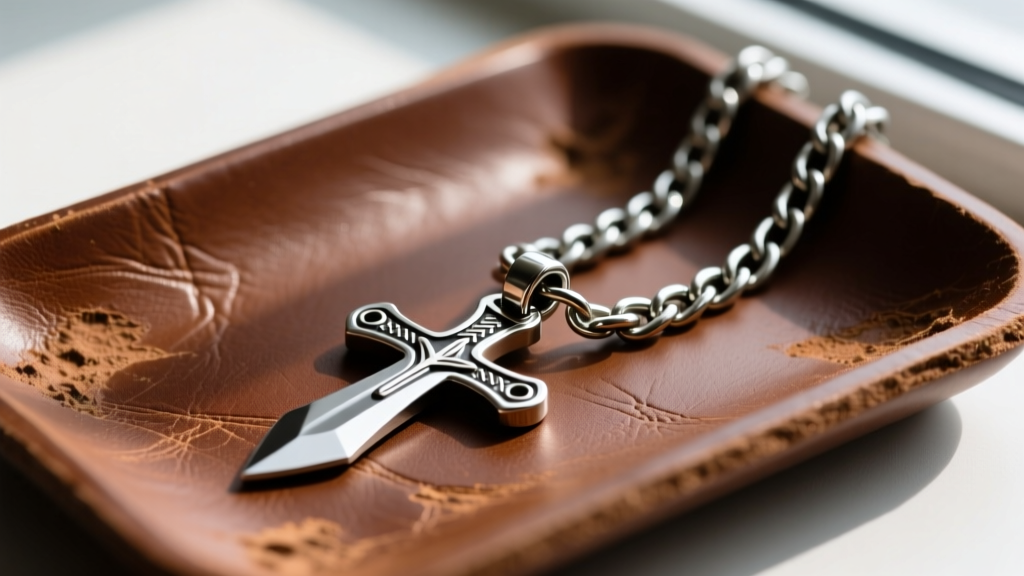
Expert Warning: Never pair a 925 sterling silver cross knife pendant with a stainless steel or titanium chain. The silver will act as the anode and degrade at the bail connection point. Always match your chain metal to your pendant metal, or use a neutral barrier like a leather cord or a PVD-coated chain.
Furthermore, consider the physical gauge of the chain. A cross knife pendant is visually heavy and often physically dense. A delicate 1.5mm cable chain will snap under the pendulum effect of a swinging steel dagger. For pendants weighing over 15 grams, opt for a 3mm to 5mm Cuban curb, Figaro, or rope chain. These weaves distribute the kinetic stress across multiple interlocking links, preventing micro-fractures at the clasp.
Maintenance and Patina Management
Maintaining the aggressive aesthetic of a cross knife necklace requires specific care protocols depending on your chosen metal. The Jewelers of America recommends avoiding ultrasonic cleaners for jewelry with intentional oxidation. Ultrasonic waves and harsh chemical baths will strip the black antiquing from the deep grooves of a silver cross, leaving it looking flat and lifeless.
- For Sterling Silver: Use a treated jeweler's cloth (like a Sunshine cloth) to gently buff only the raised, high-polish areas of the blade and cross edges. Leave the dark oxidation in the recessed crevices to maintain the 3D depth of the design.
- For 316L Steel: Wash with warm water and a mild dish soap. Steel can handle ultrasonic cleaners, which are excellent for removing dead skin cells and sebum trapped in the sharp angles of the crossguard.
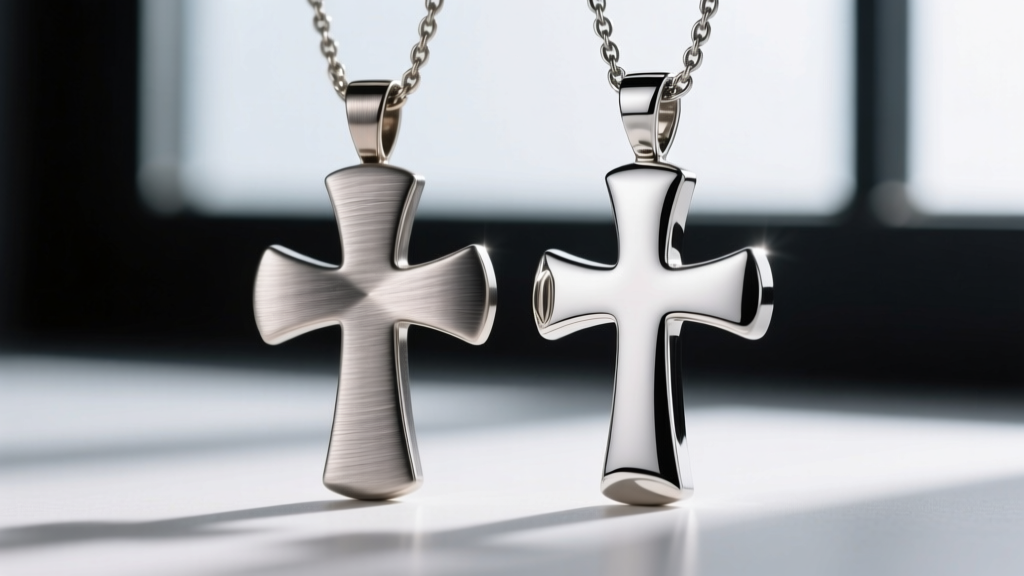
- For Titanium: Titanium requires virtually zero maintenance. A simple wipe with a microfiber cloth is enough to remove fingerprints from brushed or bead-blasted finishes.
Final Verdict: Which Metal Should You Choose?
The ideal metal for your cross knife necklace depends entirely on your lifestyle and skin chemistry. If you value artisanal craftsmanship, deep gothic engravings, and the traditional weight of fine jewelry, 925 Sterling Silver remains the gold standard—provided you are willing to perform light, targeted maintenance. If you need a rugged, sweat-proof piece for daily wear, gym sessions, and outdoor environments without breaking the bank, 316L Stainless Steel is your tactical workhorse. However, if you suffer from metal allergies, demand aerospace-grade durability, and prefer a large pendant that won't cause neck fatigue, investing in a CNC-machined Grade 5 Titanium piece is the ultimate 2026 upgrade.


