How to Clean and Care for Your Plunder Olivia Necklace
Learn expert cleaning and maintenance tips for your Plunder Olivia necklace. Preserve its vintage patina and mixed metals with our detailed care guide.

Understanding the Materials in the Plunder Olivia Necklace
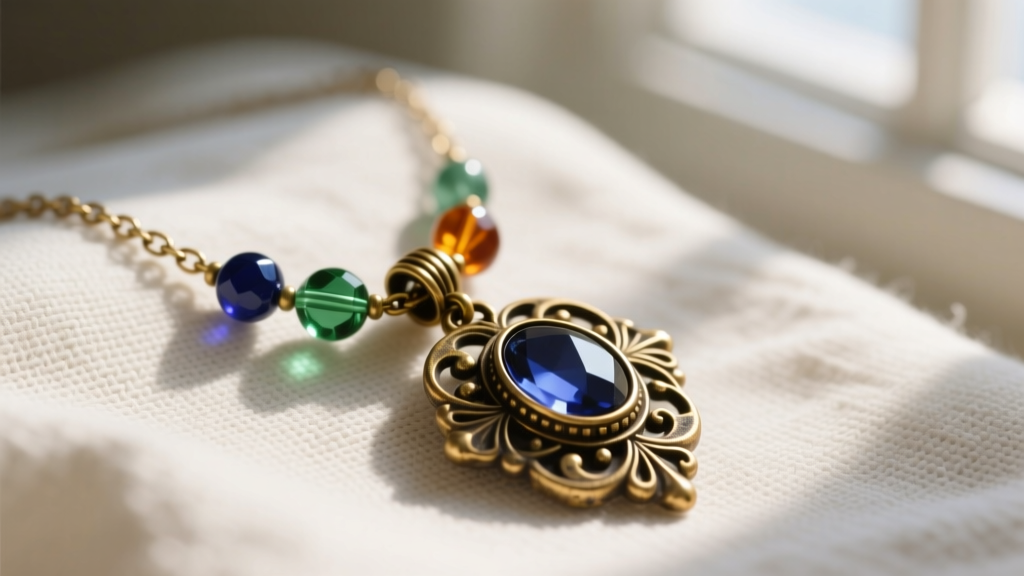
The Plunder Olivia necklace is a beloved staple for enthusiasts of bohemian, vintage-inspired jewelry. Known for its eclectic mix of textures, layered chains, and intricate pendant work, this piece requires a highly specific approach to maintenance. To properly care for it, you must first understand the metallurgy and material science behind its construction. Plunder Design frequently utilizes high-quality base metals, such as zinc alloys or brass, which are then plated and treated to achieve an 'antiqued' or oxidized finish.
This antiqued patina is not dirt or tarnish; it is a deliberate chemical treatment—often achieved using liver of sulfur or selenium dioxide—applied to darken the crevices of the metalwork, providing depth and a vintage aesthetic. Furthermore, the Olivia necklace often incorporates mixed media, including glass beads, resin elements, and cotton or leather cording. Because of this complex material matrix, standard jewelry cleaning methods that work for solid sterling silver or 14k gold can be actively destructive to your Plunder Olivia necklace. According to the Gemological Institute of America (GIA), mixed-media jewelry requires specialized, non-abrasive care to prevent irreversible damage to both the structural adhesives and the decorative finishes.
The Golden Rules of Daily Maintenance
Preventative care is always superior to reactive cleaning. By adopting a few specific daily habits, you can extend the time between deep cleanings and preserve the delicate clear-coat or oxidized layers of your necklace.
- The 'Last On, First Off' Rule: Always put your Olivia necklace on after applying perfumes, hairsprays, and lotions. The ethanol and aerosolized chemicals in cosmetics can degrade the protective top-coat on plated alloys, leading to rapid, uneven tarnishing.
- Avoid Sulfur Exposure: Sulfur is the primary catalyst for metal oxidation. Remove your necklace before visiting hot springs, handling rubber bands, or using sulfur-based skincare products (like acne treatments), as these will aggressively darken the bright metal accents.
- The Post-Wear Wipe Down: Human sebum (skin oils) is mildly acidic. After wearing the necklace, gently wipe the pendant and the lower chain links with a dry, lint-free microfiber cloth to remove oils and environmental dust before storing it.
Step-by-Step Deep Cleaning Guide
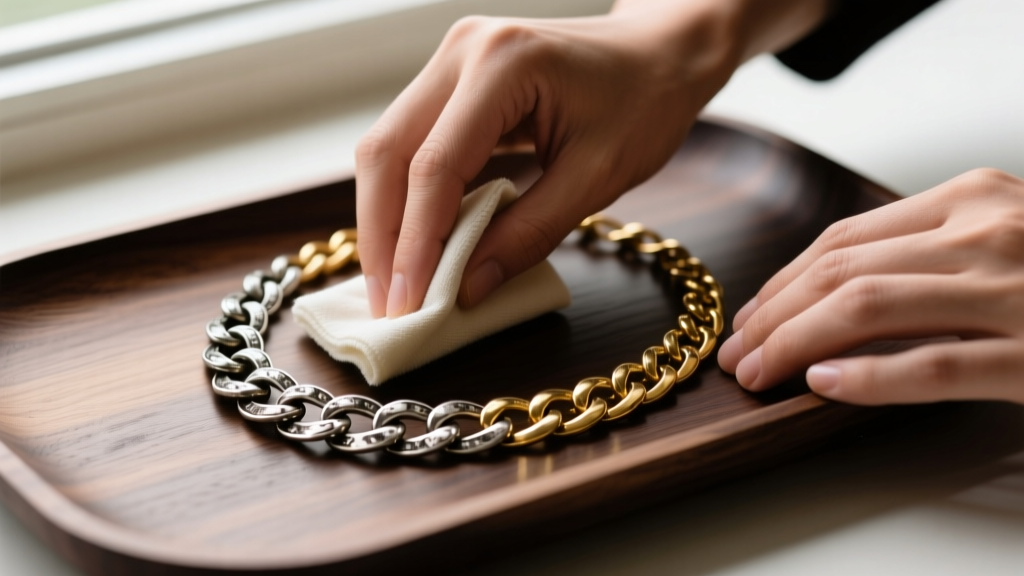
When your Plunder Olivia necklace accumulates stubborn grime or loses its luster, it is time for a deep clean. Never submerge this piece in water, as moisture can become trapped in the crevices of the pendant or degrade the adhesives holding glass and resin accents in place.
What You Will Need
- Distilled water (never use tap water, as chlorine and dissolved minerals will cause micro-spotting on base metals)
- pH-neutral liquid dish soap (such as original blue Dawn)
- An extra-soft baby toothbrush or a dedicated, clean makeup blending brush
- Two lint-free microfiber cloths
- Cotton swabs
The Cleaning Process
- Prepare the Solution: Mix three drops of pH-neutral dish soap into a small bowl of lukewarm distilled water. Avoid hot water, which can expand metal settings and loosen glue-set stones.
- Targeted Agitation: Dip the extra-soft toothbrush into the solution and gently tap it against a towel to remove excess moisture. You want the brush to be damp, not dripping.
- Clean the Metalwork: Gently brush the metal chains and the raised surfaces of the pendant. Do not scrub aggressively into the dark crevices, as this will strip the intentional antiquing.
- Detailing with Swabs: For tight spaces around glass beads or resin inlays, use a cotton swab lightly dampened with the soapy solution to lift away trapped skin cells and dust.
- Rinse and Dry: Dampen a clean microfiber cloth with pure distilled water and wipe down the necklace to remove any soapy residue. Immediately follow up with a dry microfiber cloth, buffing gently until completely moisture-free.
Cleaning Agents to Avoid at All Costs
The internet is full of DIY jewelry cleaning hacks that will permanently ruin the finish of boutique mixed-media pieces. The Conservation-Wiki's guidelines on brass and bronze emphasize that chemical strippers and abrasive pastes destroy historical and intentional patinas. Below is a breakdown of common household cleaners and their destructive effects on your Plunder Olivia necklace.
| Cleaning Agent | Chemical Composition | Destructive Effect on Plunder Jewelry |
|---|---|---|
| Silver Dip / Tarnish Removers | Thiourea, Hydrochloric Acid | Instantly strips the dark antiqued patina, leaving the piece looking flat, overly bright, and artificially new. |
| Baking Soda & Aluminum Foil | Sodium Bicarbonate, Galvanic Reaction | The alkaline nature of baking soda can cloud glass beads and degrade the protective clear-coat over brass alloys. |
| Ultrasonic Cleaners | High-Frequency Sound Waves | Micro-vibrations will shatter glass accents, fracture resin, and shake loose the adhesives securing pendant elements. |
| Toothpaste | Hydrated Silica (Abrasive) | Acts like liquid sandpaper, leaving permanent micro-scratches on plated surfaces and dulling the finish of glass beads. |
Proper Storage to Prevent Oxidation
How you store your Olivia necklace is just as critical as how you clean it. Base metals and plated alloys are highly susceptible to environmental humidity. When the relative humidity in your storage area exceeds 60%, the moisture in the air accelerates the oxidation process, leading to a dull, chalky film on the metal.
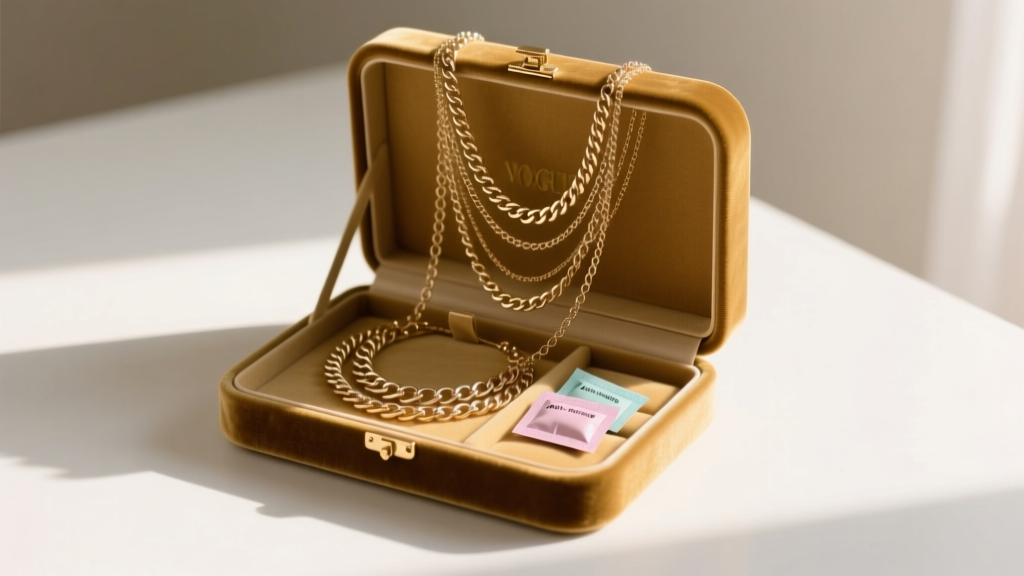
Store your necklace in a cool, dry environment, ideally maintaining a room humidity level between 40% and 50%. Place the necklace in a soft flannel pouch or a dedicated compartment in a velvet-lined jewelry box to prevent the chains from tangling and scratching the pendant. To actively combat tarnish, invest in 3M Anti-Tarnish strips. These strips contain copper-based polymers that absorb airborne sulfur and hydrogen sulfide gases before they can react with your jewelry. Replace these strips every six months for optimal protection. Never store your Plunder jewelry in the bathroom, as the fluctuating steam and humidity from showers will rapidly degrade the metal finishes.
Troubleshooting Common Issues
Fixing a Sticky Lobster Clasp
The layered chains on the Olivia necklace can sometimes put uneven tension on the clasp, or skin oils can cause the internal spring mechanism to become sticky. If your lobster clasp refuses to snap shut or feels sluggish, do not use WD-40 or household oils, which will attract dust and gum up the mechanism permanently. Instead, take a standard sewing needle and gently work the tip into the crevice of the clasp lever to dislodge any microscopic debris. Follow this by dipping a cotton swab in 99% isopropyl alcohol and running it over the clasp mechanism. The alcohol will dissolve the oils and evaporate instantly, leaving the spring mechanism clean and responsive.
Restoring Lost Luster Without Stripping Patina
If the raised, high-polish areas of your necklace have become dull, but you want to preserve the dark, oxidized crevices, avoid liquid polishes entirely. Instead, use a treated polishing cloth specifically designed for mixed metals, such as a Sunshine Cloth. These cloths are embedded with microscopic jeweler's rouge. By gently folding the cloth and rubbing only the raised, flat surfaces of the pendant and chain links, you can restore a brilliant shine to the high points without pulling the dark antiquing out of the recessed details. This technique maintains the three-dimensional contrast that gives the Plunder Olivia necklace its signature vintage charm.
Conclusion
Caring for the Plunder Olivia necklace requires a departure from traditional jewelry cleaning habits. By respecting the intentional antiqued finishes, avoiding harsh chemical baths, and utilizing targeted, low-moisture cleaning techniques, you can ensure that this beautiful mixed-media piece retains its bohemian elegance for years to come. Treat the patina as a feature, not a flaw, and your Olivia necklace will continue to be a standout element in your layered jewelry wardrobe.


