Baddie Necklace Styling: A Beginner's Layering Guide
Master the baddie necklace aesthetic with our beginner's guide. Learn exact layering lengths, chain widths, and tarnish-free metals for 2026.


The "baddie" aesthetic has fundamentally shifted since its early 2020s origins. What started as a trend defined by fast-fashion, easily tangled, and quickly tarnishing novelty chains has evolved into a highly curated streetwear-luxe movement. In 2026, the quintessential baddie necklace stack is less about wearing every piece of jewelry you own and more about intentional layering, mixed textures, and high-quality metallurgy that survives daily wear. If you are stepping into this aesthetic for the first time, navigating chain widths, metal grades, and layering mathematics can feel overwhelming. This beginner-friendly explainer breaks down the exact formulas, material grades, and hardware specifications you need to build a flawless, tarnish-free baddie necklace stack.
What Exactly Defines the Modern Baddie Aesthetic?
At its core, the baddie jewelry aesthetic bridges the gap between high-end hip-hop ice and delicate, edgy Y2K revivalism. It relies heavily on contrast: pairing a heavy, masculine-leaning chain with a hyper-delicate, motif-driven pendant. The modern iteration rejects the "green neck" effect of cheap brass alloys, favoring pieces that look expensive, feel substantial, and carry a hint of rebellion. Think mixed metals, asymmetrical pendant drops, and hardware-inspired motifs like safety pins, barbed wire, and celestial bodies.
The Core Stack: Chain Profiles and Gauge Sizes
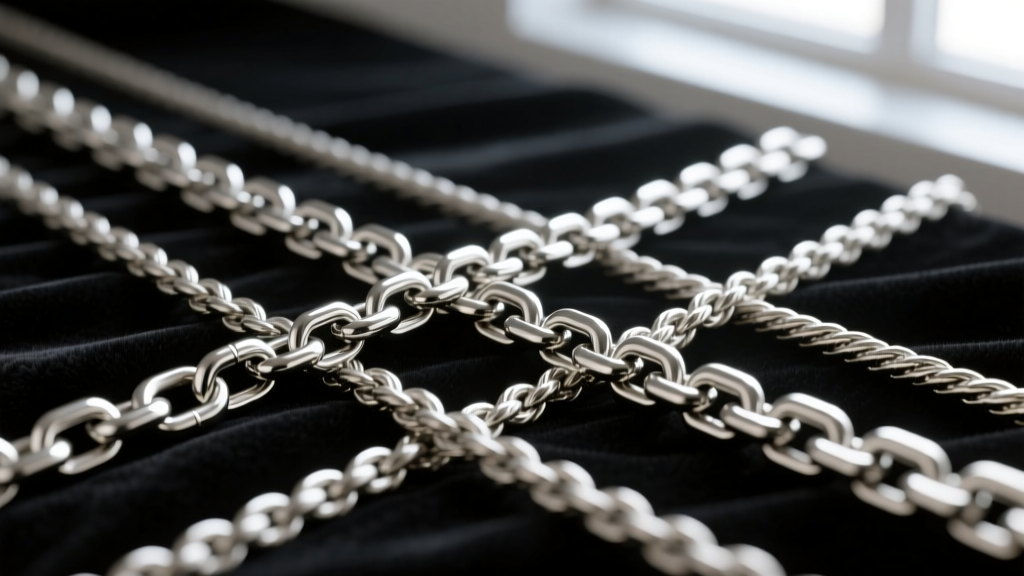
A successful stack requires a foundation of three distinct chain profiles. Buying three identical chains will result in a tangled, visually flat mess. Here are the three essential profiles and their exact dimensions for a balanced look.
1. The Anchor: Cuban Link (5mm - 8mm)
The Cuban link serves as the visual anchor of your stack. For a baddie aesthetic, you want a width between 5mm and 8mm. Anything over 10mm crosses into heavy statement territory and will overpower your pendants. Look for a flat-filed Cuban that catches the light, typically crafted in 12-gauge or 14-gauge wire for a substantial weight without choking the wearer.
2. The Light Catcher: Paperclip Chain (3mm - 5mm)
Paperclip chains feature elongated, rectangular links that offer a modern, industrial edge. A 3mm to 5mm paperclip chain provides excellent visual separation between your heavy Cuban and your delicate base layer. The open links also allow light to pass through, creating a shimmering effect that contrasts beautifully with solid metal links.
3. The Texture Layer: Rope Chain (2mm - 3mm)
Rope chains are twisted to mimic the look of a woven rope, offering maximum surface area for light reflection. A delicate 2mm or 3mm rope chain is the perfect bed for a lightweight pendant. Because of their twisted structure, rope chains are incredibly strong for their thickness, making them ideal for holding heavier charms without snapping.
Material Breakdown: Avoiding the Green Neck
The fastest way to ruin a curated aesthetic is a necklace that turns your skin green or rusts after a week. This happens when jewelry is made from brass or copper alloys plated with a microscopic flash of gold or silver. To build a lasting collection, you must understand metal grades. According to the The Silver Institute, pure silver is naturally hypoallergenic, but it must be alloyed for strength, which introduces tarnish risks if not properly maintained.
| Material | Grade / Specification | Price Range | Tarnish Risk | Best Use Case |
|---|---|---|---|---|
| 316L Stainless Steel | Marine / Surgical Grade | $25 - $70 | Zero | Daily wear, gym, high sweat environments |
| Argentium Silver | .935 Silver + Germanium | $80 - $200 | Very Low | Low-maintenance luxury, bright white finish |
| Sterling Silver | .925 Silver + Copper | $50 - $150 | High | Polished looks, requires regular wiping |
| Gold Vermeil | Min. 2.5µm Gold over .925 | $70 - $180 | Medium | Warm tones, occasional wear (avoid water) |
Expert Warning: Avoid "gold-plated brass" at all costs. The Federal Trade Commission guidelines dictate strict rules for jewelry labeling, but fast-fashion brands often use misleading terms. If the base metal is brass and the plating is less than 1.0 microns, the copper in the brass will react with your skin's acidity, resulting in the dreaded green stain within 48 hours.
The Mathematics of Layering: Exact Length Formulas
Layering is not random; it is a mathematical gradient. If your chains are too close in length, they will tangle constantly and rub against each other, causing premature wear and micro-scratches on the metal.
The 2-Inch Gradient Rule
To achieve the perfect cascading effect, maintain a strict 2-inch difference between each layer in your stack. The ultimate beginner baddie stack follows this exact formula:
- Layer 1 (The Choker): 14 inches. Sits snugly at the base of the neck. Best for a 3mm rope chain or a simple velvet ribbon with a silver clasp.
- Layer 2 (The Collar): 16 inches. Rests on the collarbone. This is where your 4mm paperclip chain lives.
- Layer 3 (The Princess): 18 inches. Falls just below the collarbone. The ideal home for your 5mm Cuban link anchor.
- Layer 4 (The Drop): 22 to 24 inches. A long, solitary rope chain featuring a heavy, oversized pendant that draws the eye downward.
Bail Sizing and Clasp Hardware
A common beginner mistake is buying a pendant with a bail (the loop that attaches the charm to the chain) that is too small for the chain. A standard 5mm Cuban link requires a pendant bail with an inner diameter of at least 6mm to 7mm to slide on smoothly and lay flat. Furthermore, inspect the clasps. Heavy chains require a lobster clasp or a box clasp with a safety latch. Never trust a tiny spring-ring clasp on a chain wider than 3mm; the internal spring will fail, and you will lose your jewelry.
Motif Pairings: Edgy Elements That Work
The baddie aesthetic thrives on subversive, slightly aggressive, or nostalgic motifs. When selecting pendants for your 16-inch and 18-inch layers, look for these specific design elements:
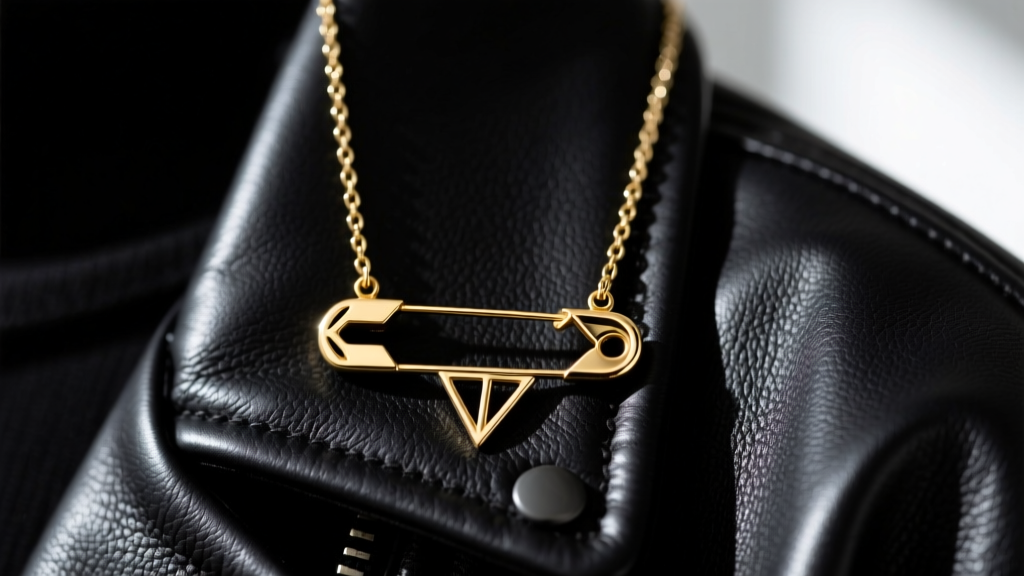
- The Safety Pin: A nod to 70s punk and 90s grunge, a diamond-encrusted or polished silver safety pin adds immediate edge to a delicate chain.
- The Dagger or Sword: Represents protection and sharpness. A 1.5-inch dagger pendant in oxidized silver provides a striking contrast against bright, polished chains.
- Barbed Wire Hearts: Juxtaposes romance with danger. Look for pieces where the barbs are smoothly filed down so they don't snag on your clothing or hair.
- Oversized Initials: Block-letter nameplates or initial pendants in a bubbly Y2K font, heavily polished to reflect light.
"The secret to a flawless stack isn't just about what you wear; it's about the negative space between the chains. Let the skin breathe between the metals."
Maintenance: Keeping the Stack Pristine
Even high-grade metals like 316L stainless steel and Argentium silver require basic maintenance to maintain their high-shine finish. Avoid wearing your stack in chlorinated pools, as chlorine can permanently pit and dull stainless steel and degrade the copper alloys in sterling silver. Once a week, use a dedicated jewelry polishing cloth infused with micro-abrasives to wipe down your Cuban and paperclip links. For intricate rope chains that trap skin oils and lotion, a quick soak in warm water with a drop of mild dish soap, followed by a gentle scrub with a soft-bristled baby toothbrush, will restore the factory-level shine in under three minutes. By respecting the metallurgy and the mathematics of layering, your baddie necklace stack will remain a staple of your wardrobe for years to come.


