Mastering the Collar Shirt With Necklace: A Technical Styling Guide
Expert guide on pairing a collar shirt with necklace styles. Learn exact chain lengths, metal grades, and clasp types for flawless button-down styling.

The Geometry of the Collar: Matching Chain Lengths to Spread Angles
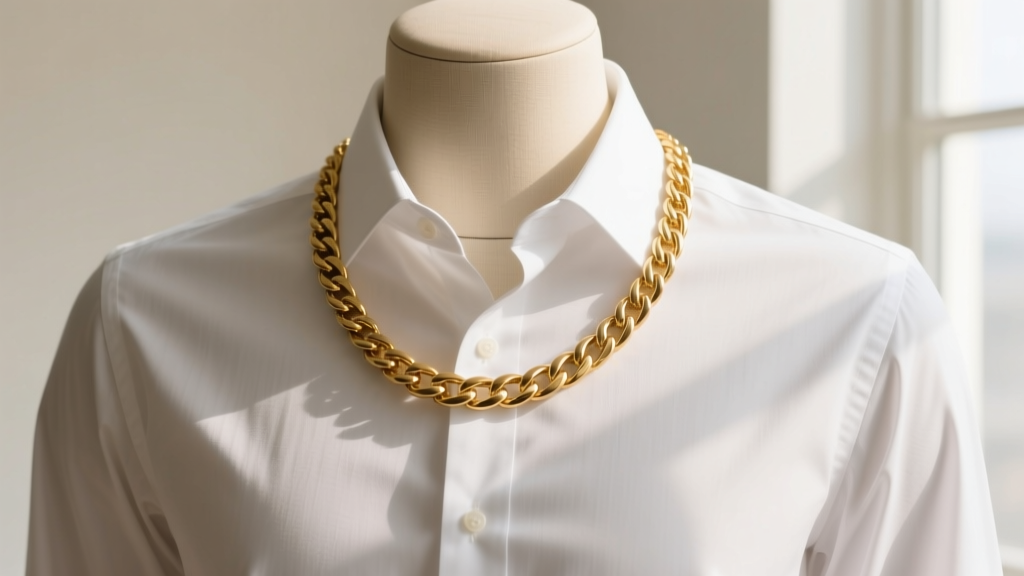
Pairing a collar shirt with necklace combinations is fundamentally an exercise in spatial geometry. The architecture of your shirt’s collar dictates the exact millimeter specifications of the chain and pendant you should wear. Most styling guides offer vague advice like 'match the vibe,' but true sartorial precision requires analyzing the collar's spread angle, the placket width, and the button stance.
A standard point collar features a narrow spread angle (typically 45 to 60 degrees). This creates a tight, vertical visual channel. If you wear a chain longer than 18 inches here, it will disappear beneath the fabric or awkwardly bisect the collar points. Conversely, a wide spread collar (75 to 90 degrees) opens up the chest cavity, demanding a longer chain (18 to 20 inches) and a wider pendant to anchor the negative space. Button-down collars, which are physically pinned to the shirt body, restrict movement; the necklace must either sit tightly above the collarbone (14-15 inches) or drop entirely below the second button.
| Collar Style | Spread Angle | Ideal Chain Length | Max Pendant Width | Optimal Chain Gauge |
|---|---|---|---|---|
| Point Collar | 45° - 60° | 16" - 18" | 10mm | 1.2mm - 1.5mm |
| Spread Collar | 75° - 90° | 18" - 20" | 15mm - 20mm | 1.5mm - 2.0mm |
| Button-Down | N/A (Fixed) | 14" or 20"+ | 8mm (if layered) | 1.0mm - 1.2mm |
| Mandarin/Band | 0° (No fold) | 18" - 22" | 12mm - 25mm | 2.0mm+ |
Material Science: Metals That Survive Fabric Friction
When you wear a collar shirt with necklace setups, the metal is subjected to constant micro-abrasion from cotton, linen, or silk fibers, combined with the corrosive effects of sweat and laundry starches. Not all precious metals survive this environment. According to metallurgical data from the Silver Institute, 925 sterling silver contains 7.5% copper. When trapped against the skin beneath a heavy Oxford cloth shirt, the copper reacts with sulfur in human sweat and the chemical residues in commercial laundry detergents, leading to rapid, uneven oxidation (tarnish) that can stain your shirt collar.
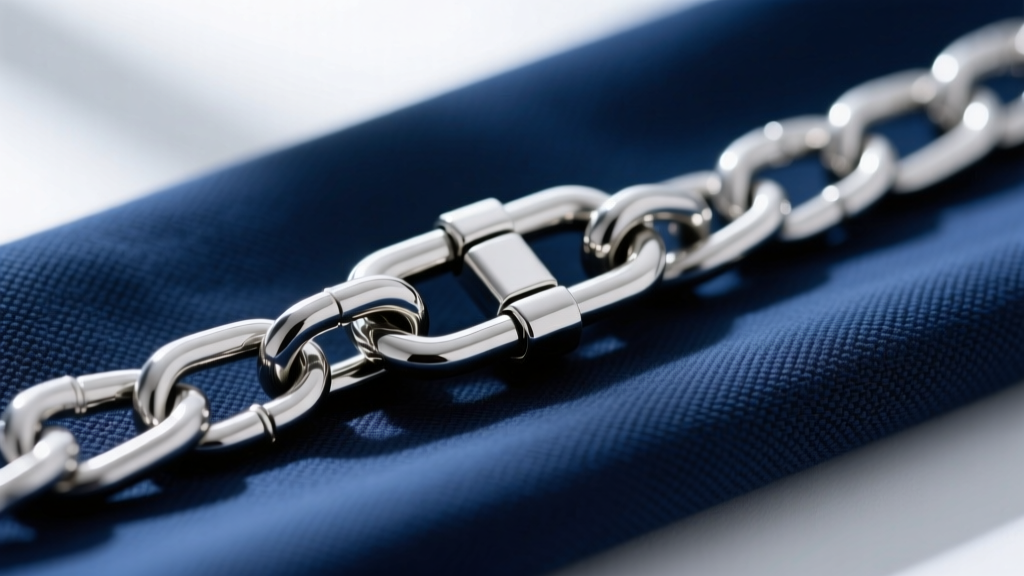
For daily collar-shirt wear, 316L surgical stainless steel is the superior utilitarian choice. Its high chromium and molybdenum content makes it virtually impervious to chloride-induced pitting from sweat. If you prefer precious metals, solid 14k or 18k gold is mandatory. Avoid gold vermeil (which typically features only 2.5 microns of gold over a silver base); the friction from a stiff collar band will wear through the plating in less than six months. Instead, opt for gold-filled chains, which contain a minimum of 5% gold by weight mechanically bonded to a brass core, offering 20 times the abrasion resistance of standard electroplating.
The Problem with Soft Alloys
High-karat gold (22k or 24k) is far too soft for collar friction. The Rockwell hardness of pure gold is exceptionally low, meaning the constant rubbing against a starched cotton collar will physically deform the links over time, leading to micro-fractures and eventual chain failure. Stick to 14k gold, which is alloyed with copper and silver to increase its structural integrity and scratch resistance, as detailed in the Gemological Institute of America's metallurgical guidelines.
Hardware Engineering: Clasps and Chain Weaves
The physical weave of your chain and the engineering of its clasp are critical failure points when interacting with woven fabrics. A rope chain, while visually striking, is a nightmare for broadcloth and poplin shirts. The twisted, spiraled links create thousands of microscopic hooks that will catch on individual cotton threads, causing pulls and pilling on your expensive dress shirts.
- Box Chains: The optimal choice for collar shirts. The flat, geometric links lay flush against the skin and offer zero snag points.
- Curb and Figaro Chains: Excellent secondary options. Their flattened profiles glide smoothly over silk and fine cotton without catching.
- Cable and Rope Chains: Avoid wearing these with delicate fabrics. Reserve them for heavy denim or casual flannel shirts where fabric pulls are less noticeable.
Regarding clasps, the standard spring-ring clasp is a structural liability. The tiny, spring-loaded lever frequently catches on collar threads and is difficult to operate blindly. A heavy-duty lobster claw is better, but the ultimate technical solution for a collar shirt with necklace pairing is a seamless magnetic barrel clasp encased in polished 316L steel, or a hidden box clasp with a flush safety latch. These eliminate all external levers and springs, ensuring a completely smooth exterior profile.
The Undershirt Variable and Layering Protocols
The introduction of an undershirt complicates the layering geometry. If you are wearing a dress shirt unbuttoned at the collar, the placement of your necklace relative to the undershirt is paramount. Never trap a chain between a crew-neck undershirt and an open dress shirt; this creates a cluttered, accidental aesthetic and causes the chain to bunch unnaturally at the collarbone.
If your undershirt is a crew neck, the necklace must be worn under the undershirt, resting directly against the skin, allowing the dress shirt to frame it. If you are wearing a deep V-neck undershirt, the chain can be layered between the skin and the dress shirt, provided the pendant drop does not extend past the V-neck's lowest point. For a deliberate, high-contrast layered look, the chain must be worn entirely over the unbuttoned dress shirt, requiring a heavier gauge (minimum 3.0mm) to visually separate the metal from the fabric patterns.
Troubleshooting Common Collar and Chain Failures
Even with perfect measurements, mechanical failures occur. The most common issue is the 'pendant flip,' where a lightweight pendant rests against the stiff placket of a button-down shirt and flips backward, hiding the design and tangling the bail. This happens because standard loop bails allow too much rotational freedom on thicker chains.
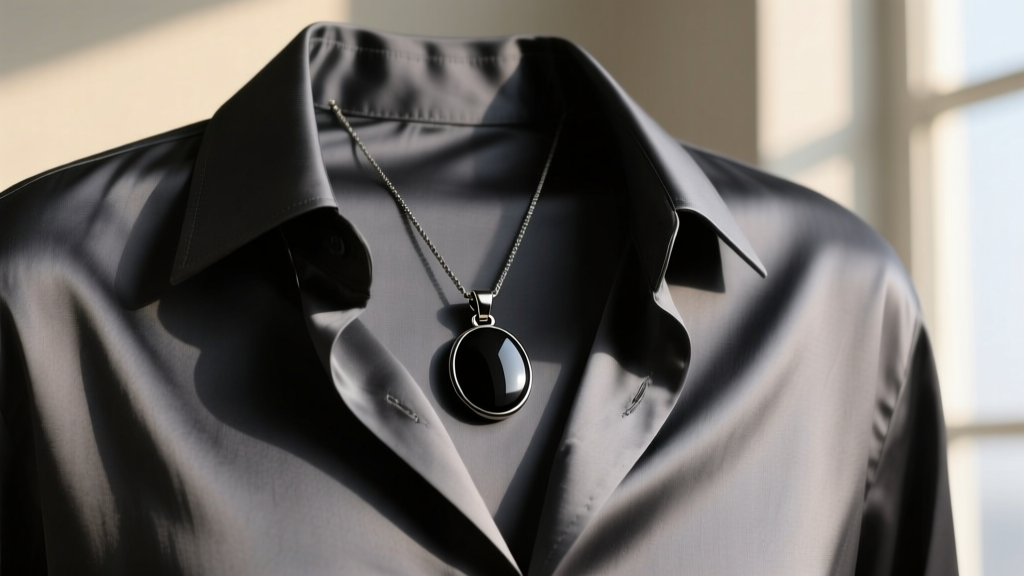
To solve the pendant flip, you must alter the physics of the bail. Switch to a pendant with a 'fixed bail' or a 'hidden bail' that locks the piece perpendicular to the chest. If you cannot replace the pendant, a jeweler can solder a tiny 1.5mm inner-diameter silicone O-ring inside the bail to increase friction against the chain, forcing the pendant to remain weighted forward.
Expert Troubleshooting Tip: If your chain constantly slides off-center, gathering at the side of your neck beneath the collar, your chain is too light for your pendant. The general rule of horology and jewelry engineering dictates that the chain's tensile weight must be at least 30% greater than the pendant's weight to maintain perfect center gravity against the slope of the clavicle.
Final Specifications for the Perfect Pairing
Mastering the collar shirt with necklace aesthetic requires abandoning guesswork in favor of precise specifications. Measure your collar's spread angle, select a chain weave with a low-friction profile like a box or curb, and ensure your metal alloy is hardened enough to withstand daily cotton abrasion. By treating your jewelry as an engineered component of your wardrobe rather than a mere afterthought, you achieve a level of sartorial refinement that is both technically flawless and visually striking.


