Expert Care and Cleaning Guide for Your Rose's Necklace
Learn how to safely clean, store, and maintain your rose's necklace. Expert tips for 14k/18k rose gold, copper oxidation, and gemstone care.

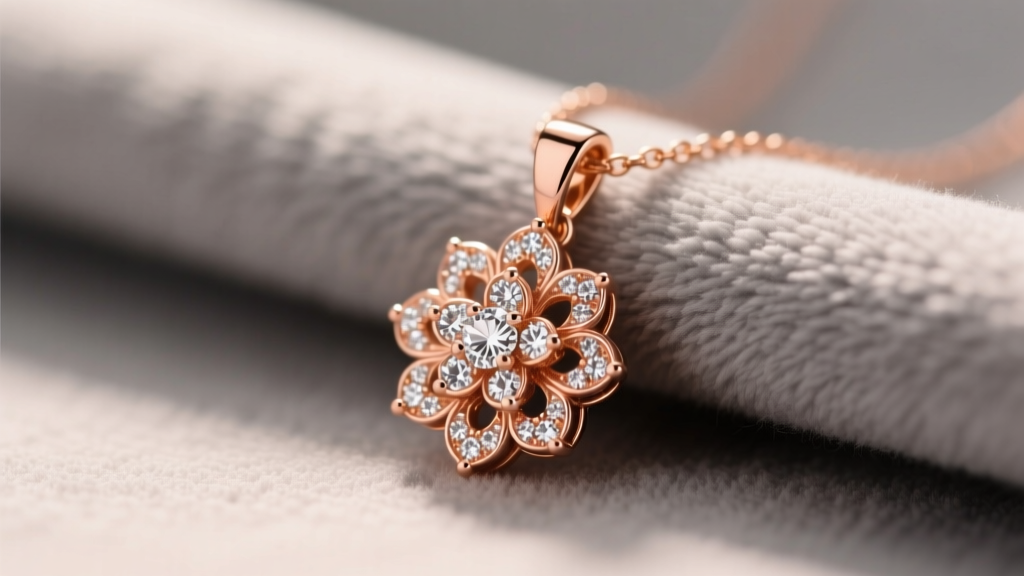
Understanding the Metallurgy of Your Rose's Necklace
When you invest in a signature piece like a rose's necklace—often characterized by its romantic rose gold alloy and intricate floral or gemstone pendant—you are acquiring a piece of metallurgical art that requires specific maintenance. Unlike yellow or white gold, rose gold owes its signature blush hue to a high copper content. A standard 14k rose gold alloy consists of 58.5% pure gold, approximately 36% copper, and 5.5% silver. An 18k variant contains 75% gold and roughly 22.25% copper. While pure gold is highly inert and resistant to tarnish, the copper introduced to create the rose color is highly reactive to environmental factors such as sulfur, chlorine, and even the natural pH of your skin.
This copper reactivity means that your necklace is susceptible to oxidation. Over time, exposure to airborne pollutants and cosmetics can cause the copper atoms on the surface to form copper oxide or copper sulfate, leading to a darkened, dull, or slightly brownish patina. Fortunately, this oxidation is strictly a surface-level reaction and does not compromise the structural integrity of the chain or pendant. However, restoring the original luster requires a precise, non-abrasive cleaning protocol to avoid micro-scratching the softer copper alloy.
The Step-by-Step Cleaning Protocol
Many consumers mistakenly reach for commercial silver dips or abrasive toothpaste to clean their jewelry. These are catastrophic for rose gold. Silver dips contain harsh thiourea compounds that can strip the copper from the alloy's surface, leaving it porous and brittle. Toothpaste contains silica abrasives that will permanently scratch the polished finish. Instead, follow this professional-grade cleaning method endorsed by gemological institutions.
Tools Required
- Phosphate-free, mild dish soap (e.g., original blue Dawn)
- Distilled or filtered lukewarm water (approx. 90°F / 32°C)
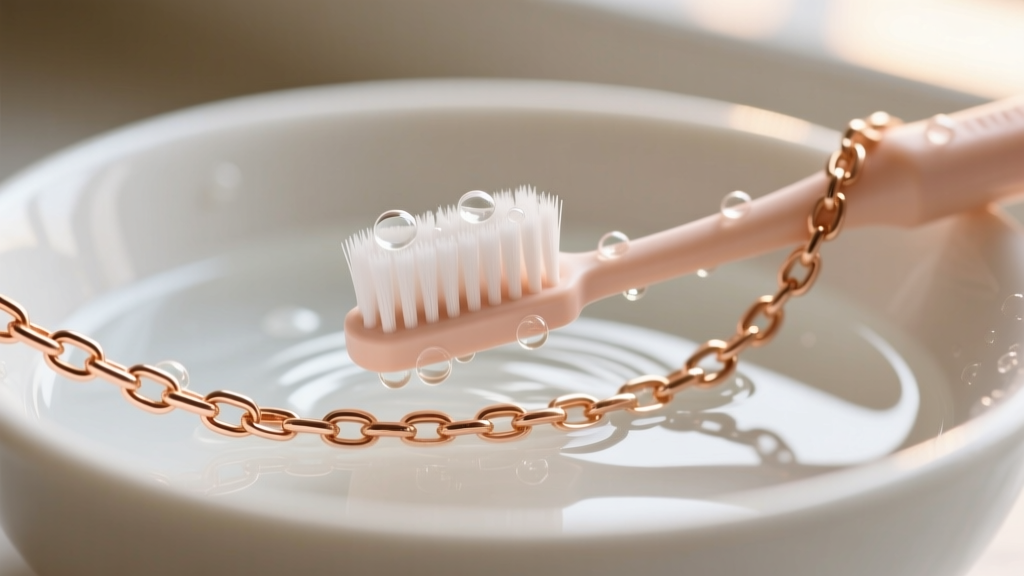
- Extra-soft baby toothbrush (bristle diameter < 0.1mm)
- Lint-free microfiber cloth or 100% cotton cosmetic pads
- Untreated jewelry polishing cloth (e.g., Sunshine Cloth)
The Cleaning Process
- Prep the Solution: Fill a small glass bowl with one cup of lukewarm distilled water and add exactly three drops of mild dish soap. Swirl gently to create a low-suds solution.
- Soak: Submerge your rose's necklace in the solution for 10 to 15 minutes. This allows the surfactants in the soap to break down sebum, dead skin cells, and cosmetic residue trapped within the chain links and pendant setting.
- Agitate: Using the extra-soft baby toothbrush, gently brush the necklace. Pay special attention to the back of the pendant and the clasp mechanism, where debris accumulates most heavily. Always brush in the direction of the metal's grain or chain links to prevent snagging.
- Rinse: Rinse the piece thoroughly under a gentle stream of lukewarm distilled water. Avoid tap water, as the chlorine and fluoride can leave mineral deposits on the gold.
- Dry and Polish: Pat the necklace dry with a lint-free cotton pad. Once completely dry, gently buff the rose gold components with an untreated polishing cloth to restore the high-polish finish.
Gemstone Considerations and Safe Cleaning Matrix
A rose's necklace frequently features center stones that complement the warm pinkish hue of the metal, such as morganite, pink sapphire, or champagne diamonds. The cleaning protocol must be adapted based on the Mohs hardness and structural integrity of the specific gemstone.
| Gemstone | Mohs Hardness | Porosity / Fracture Risk | Safe Cleaning Method | Methods to Avoid |
|---|---|---|---|---|
| Morganite | 7.5 - 8 | Low porosity, but can have liquid inclusions | Mild soap, lukewarm water, soft brush | Ultrasonic cleaners, steam, thermal shock |
| Pink Sapphire | 9 | Very durable, but heat-treated stones may have fractures | Mild soap, ultrasonic (if untreated) | Harsh chemicals, steam (if fracture-filled) |
| Champagne Diamond | 10 | Extremely durable, but can chip on girdle | Mild soap, ultrasonic, steam | Chlorine bleach (can damage setting) |
| Pearl (Accent) | 2.5 - 4.5 | Highly porous, organic material | Damp microfiber cloth only | ALL liquids, soaps, ultrasonics, brushes |
According to the Gemological Institute of America (GIA), ultrasonic cleaners should never be used on gems that have been fracture-filled or coated, as the high-frequency vibrations can shatter the stone or strip its treatment. If your pendant features a delicate pearl accent, avoid submerging the entire necklace; instead, clean the gold chain with a damp cloth while carefully avoiding the pearl.
Environmental Hazards and Stress Corrosion Cracking
One of the most critical threats to your rose's necklace is exposure to chlorine. Whether from a swimming pool, a hot tub, or household cleaning products, chlorine reacts aggressively with the copper and silver alloys in rose gold. This reaction can lead to a phenomenon known as stress corrosion cracking. The chlorine attacks the alloy's grain boundaries, particularly in areas of high mechanical stress, such as the solder joints on the chain links or the prongs holding the gemstone. Over time, this causes the metal to become brittle and snap without warning.
Similarly, sulfur compounds found in hot springs, rubber bands, and even certain types of cardboard packaging can cause rapid tarnishing. Always remove your necklace before swimming, bathing, or engaging in household cleaning. The Jewelers of America strongly advises applying all cosmetics, perfumes, and hairsprays before putting on your jewelry, as the alcohols and aerosols can degrade the polish and build up behind the gemstone setting, dulling its sparkle.
Proper Storage and Long-Term Maintenance
How you store your necklace when it is not being worn is just as important as how you clean it. Leaving a rose gold necklace exposed to the ambient air on a bathroom counter accelerates copper oxidation due to the high humidity. Furthermore, storing it loosely in a drawer where it can rub against harder metals or diamonds will result in surface abrasion.
Best Practices for Storage
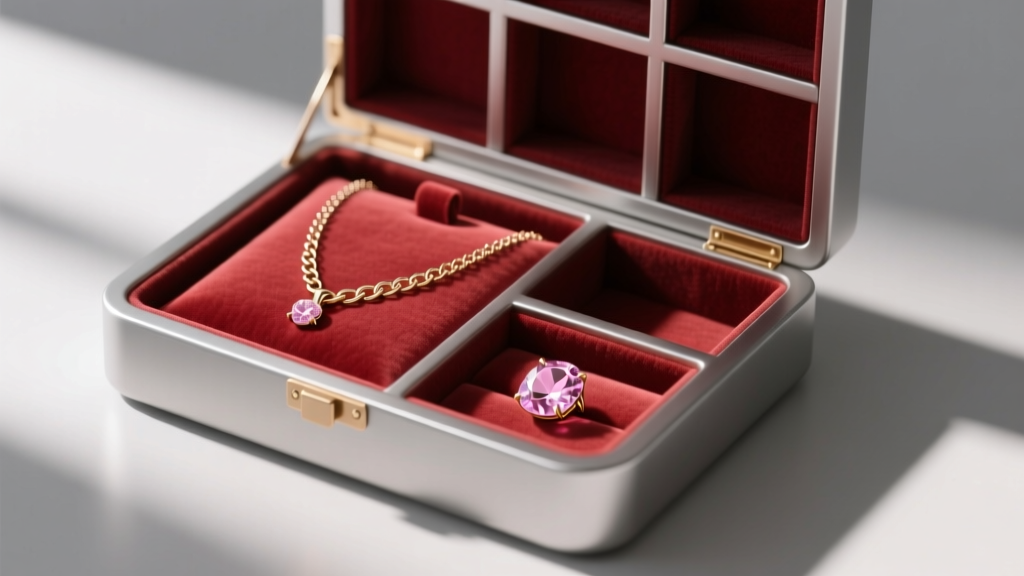
- Use Anti-Tarnish Strips: Place 3M anti-tarnish strips inside your jewelry box. These strips absorb airborne sulfur and moisture, significantly slowing the oxidation process.
- Individual Pouches: Store your necklace in a soft, flannel-lined pouch or a zip-lock bag with the air pressed out. This limits oxygen exposure and prevents the chain from tangling.
- Hang or Lay Flat: To prevent the delicate links from kinking, either hang the necklace on a velvet-lined jewelry stand or lay it completely flat in a compartmentalized box.
Professional Maintenance Schedule
Even with meticulous at-home care, mechanical wear and tear is inevitable. The prongs securing the center stone of your rose's necklace will slowly wear down from friction against clothing. You should take your piece to a certified bench jeweler every 12 to 18 months for a professional inspection. The jeweler will use a microscope to check for prong degradation, test the structural integrity of the clasp spring, and perform a professional steam clean and high-speed polish to remove any micro-scratches that have accumulated on the rose gold surface. Unlike white gold, rose gold does not require rhodium plating, meaning its color is permanent and will not fade or require re-dipping over time, making it a highly durable choice for long-term wear.


