Vintage Perfume Bottle Necklace: The Expert Buying Guide
Discover how to authenticate, price, and style a vintage perfume bottle necklace with our expert guide on glass types, eras, and stopper mechanisms.

The Allure of Wearable Fragrance History
A vintage perfume bottle necklace is more than a decorative accessory; it is a tactile piece of social history. From the mourning vinaigrettes of the Victorian era to the geometric crystal flacons of the Art Deco period, scent jewelry has long served as a personal, olfactory sanctuary. Today, collectors and style enthusiasts seek out these pendants not just for their aesthetic charm, but for their intricate craftsmanship and the unique stories they hold. However, buying antique and vintage glass jewelry requires a discerning eye. Glass is fragile, seals degrade, and hardware wears down over decades of use. This comprehensive buying guide will equip you with the specialized knowledge needed to evaluate, authenticate, and wear a vintage perfume bottle necklace with confidence.
Identifying Key Eras of Perfume Pendants
Understanding the historical context of your pendant is the first step in authentication and valuation. The design, materials, and hallmarks will typically point to one of three major eras of scent jewelry.
Victorian and Edwardian Scent Bottles (1837–1910)
During the 19th century, personal hygiene was masked by strong fragrances, leading to the popularity of the vinaigrette and the double-ended scent bottle. Pendants from this era often feature cut glass overlaid with intricate sterling silver or gold-filled filigree. Look for British hallmarks such as the lion passant (indicating 925 sterling silver) or anchor marks denoting the Birmingham assay office. Many Victorian pieces were originally chatelaine attachments that were later converted into necklaces. According to the Antique Jewelry University, converted chatelaine pieces often show slight soldering scars near the bail where the original hook was removed.
Art Deco Flacons (1920–1935)
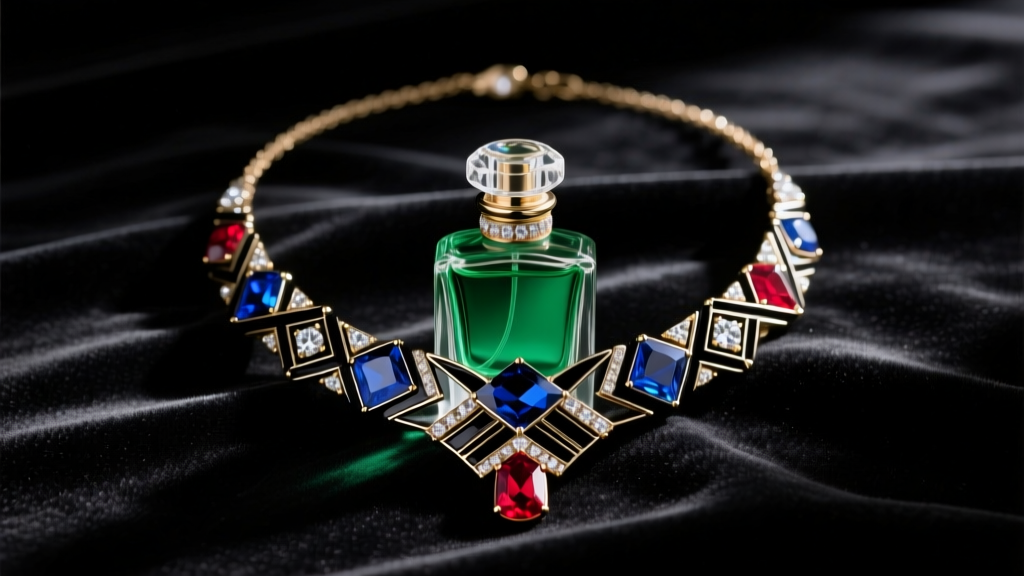
The roaring twenties brought a radical shift in perfume bottle design, heavily influenced by the glassmaking masters like René Lalique and Baccarat. An Art Deco vintage perfume bottle necklace will typically feature rock crystal, black onyx, or molded glass with sharp, geometric lines. Hardware from this period is often platinum, white gold, or rhodium-plated silver. Authentic French pieces may bear the eagle’s head hallmark (indicating 18k gold) or the boar’s head (for silver). Mold marks and acid-etched signatures on the base or side of the glass are critical indicators of authenticity.
Mid-Century Novelty and Designer Miniatures (1950s–1970s)
Post-war manufacturing introduced mass-produced novelty jewelry. Brands like Avon and Dior released miniature perfume bottles meant to be worn as pendants. These pieces often incorporate rhinestones, Bakelite, or brightly colored enameled metals. While less valuable than their Art Deco predecessors, pristine mid-century miniatures with their original presentation boxes and intact stoppers are highly collectible among vintage costume jewelry enthusiasts.
The Expert Inspection Checklist
When evaluating a vintage perfume bottle necklace, you must look beyond the surface beauty. Use a 10x jeweler’s triplet loupe to inspect the following critical areas:
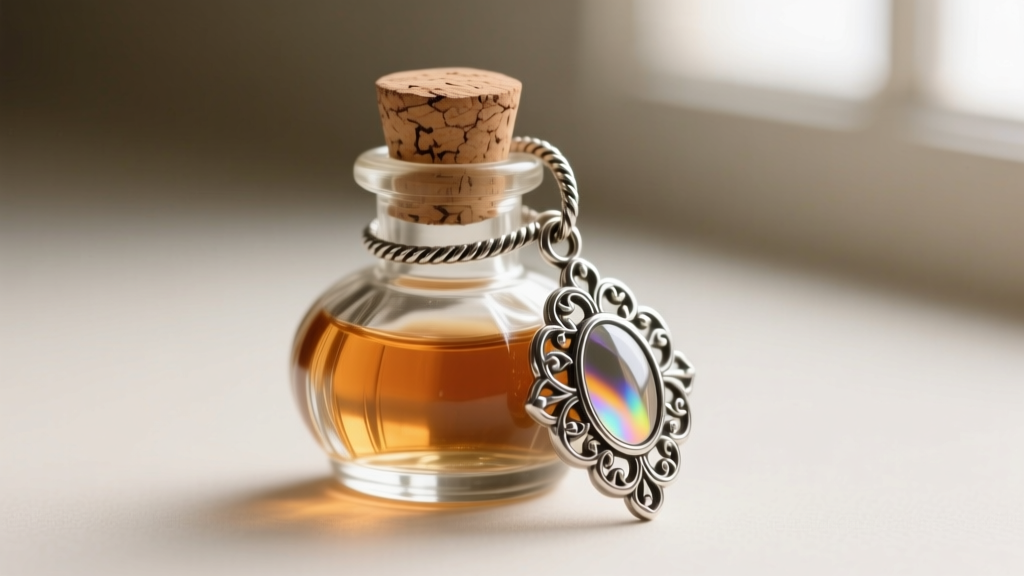
- The Stopper and Seal: Antique bottles use either a glass dauber (wand) or a cork stopper. Cork degrades over time, crumbling into the bottle and leaving dark tannin stains on the glass neck. If the cork is intact, it is likely a modern replacement. Glass daubers should fit snugly; excessive rattling indicates a worn neck ring.
- Fleabites and Hairline Cracks: Inspect the rim of the bottle neck and the base for 'fleabites'—microscopic chips that catch the light. Run a gloved fingernail gently over the glass edges. Any snagging indicates structural damage that severely diminishes the piece's value.
- Bail and Solder Joints: The bail (the loop connecting the bottle to the chain) bears the entire weight of the glass. Examine the solder joints where the bail meets the metal cap. Vintage solder can become brittle; look for dark oxidation lines or slight shifting, which indicate impending failure.
- Metal Cap Tarnish and Wear: Gold-filled caps from the Victorian era often wear down to the base brass on the high points. While patina on silver is desirable, deep pitting or green verdigris on the metal cap suggests prolonged exposure to corrosive liquids or poor storage.
Pricing and Valuation Matrix
The market for a vintage perfume bottle necklace varies wildly based on provenance, material, and condition. Below is a general pricing framework for the current collector's market.
| Era / Style | Primary Materials | Condition Requirement | Estimated Price Range |
|---|---|---|---|
| Victorian Silver Overlay | Cut glass, Sterling Silver | Intact filigree, no glass chips | $150 – $450 |
| Art Deco Crystal Flacon | Rock crystal, Platinum/White Gold | Original glass dauber, signed | $600 – $2,500+ |
| Mid-Century Novelty | Enameled brass, Rhinestones | Minimal stone loss, working clasp | $35 – $120 |
| French Lalique / Baccarat | Molded art glass, Silver | Acid-etched signature, pristine | $800 – $4,000+ |
Functional Wear: Preserving the Antique Seal
Many buyers intend to use their vintage perfume bottle necklace functionally, filling it with their signature scent. However, modern fragrances are highly concentrated alcohol solutions. Filling an antique silver-capped bottle with modern eau de parfum will cause alcohol vapor to degrade the cork from the inside out and aggressively tarnish the interior metal cap, leading to irreversible structural damage. For functional wear, experts at the Corning Museum of Glass recommend using jojoba oil-based essential oil blends or solid perfume waxes. These alcohol-free alternatives will not compromise the antique seal or cloud the historic glass.
Chain Pairing and Tensile Strength
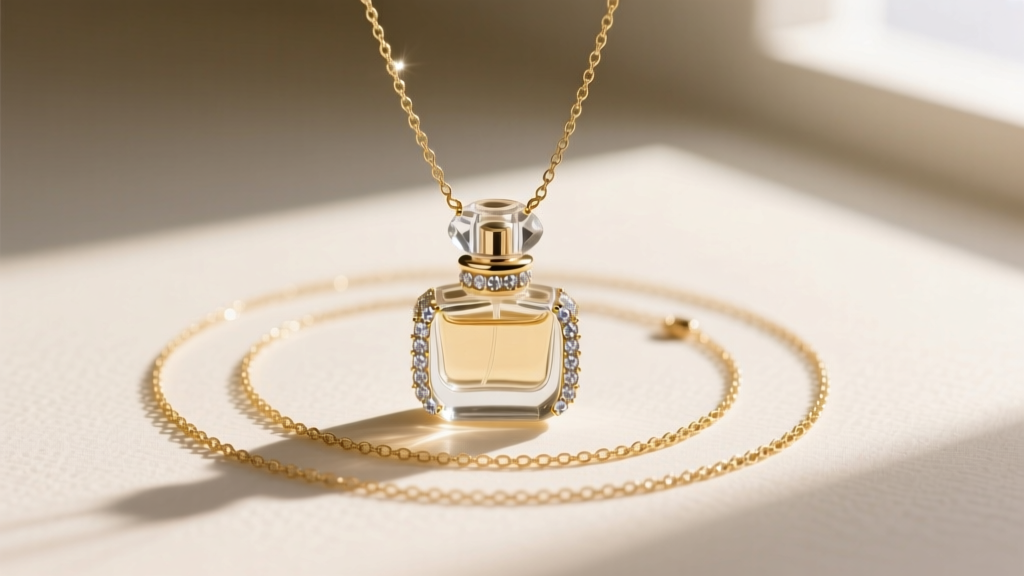
A common mistake when styling a vintage perfume bottle necklace is pairing a heavy glass flacon with an inadequate chain. A solid crystal Art Deco pendant can easily weigh between 25 and 45 grams. A standard 1.5mm box chain or delicate thread chain will eventually snap under the pendulum swing of this weight. For pendants exceeding 20 grams, opt for a 2.5mm to 4mm sterling silver rope, curb, or Figaro chain. Ensure the jump ring connecting the chain to the bail is soldered closed; open jump rings will inevitably pull apart under the dynamic stress of daily movement. By matching the tensile strength of your chain to the weight of your antique glass, you ensure your wearable history remains secure for generations to come.


