The Ultimate Necklace Rack Guide: Stop Tangling and Tarnishing
Stop jewelry tangling and tarnishing. Our expert guide troubleshoots common necklace rack issues, from weight limits to anti-tarnish materials.

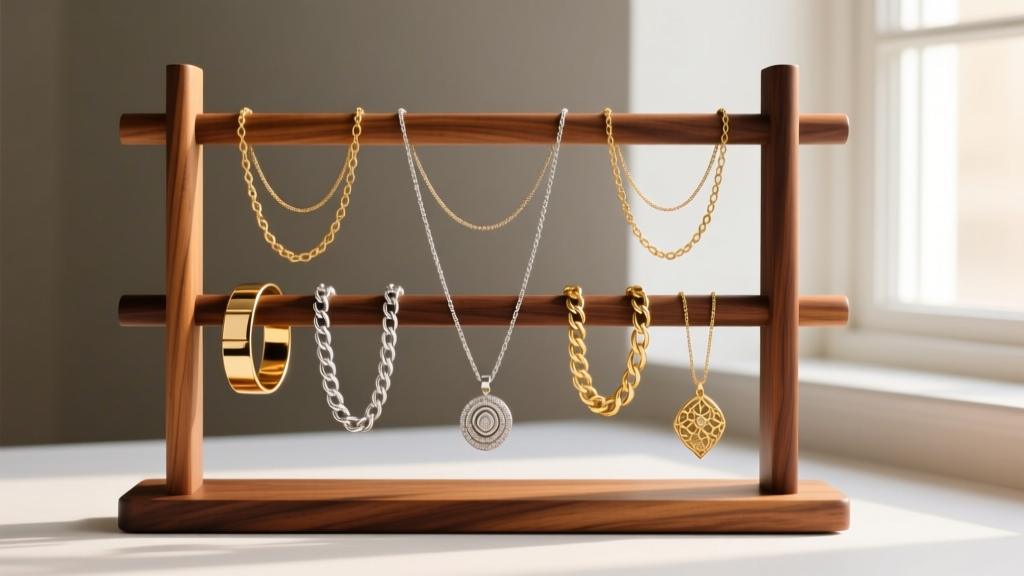
When you invest in fine jewelry, the storage mechanism is just as critical as the pieces themselves. A poorly designed necklace rack doesn't just create a frustrating morning routine of untangling knots; it actively degrades your metals and gemstones. In 2026, jewelry storage has evolved far beyond the basic velvet-lined box or the flimsy wire tree. Today, we are troubleshooting the most common failures in necklace organization, examining the physics of chain tangling, the chemistry of material off-gassing, and the structural engineering required to support heavy pendants.
The Physics of the Tangle: Why Your Current Setup Fails
Chain tangling is not random; it is a predictable outcome of mechanical interlocking and electrostatic attraction. When chains are hung too closely together on a standard necklace rack, ambient humidity and static electricity cause the links to attract. If the hook spacing is less than the maximum swing radius of your longest chain, micro-movements in the room (from walking past or HVAC drafts) will cause the links to weave together.
Furthermore, the geometry of the hook itself plays a massive role. Hooks with a narrow 'throat' (the opening gap) force you to pinch the clasp to remove the chain, often bending delicate spring rings or lobster clasps over time. Expert troubleshooting dictates using hooks with a minimum 15mm throat opening and a smooth, polished finish to prevent micro-scratches on 18k gold plating.
Material Chemistry: Is Your Rack Tarnishing Your Silver?
One of the most insidious problems with wooden and fabric-lined jewelry displays is chemical off-gassing. Sterling silver (Ag925) is highly reactive to sulfur and acidic compounds. Many mass-produced wooden racks are constructed from MDF (medium-density fiberboard) or unfinished oak, which naturally emit acetic acid and formaldehyde. When trapped in a small space or placed in a humid bathroom, these gases rapidly accelerate silver sulfide formation—the black tarnish layer that ruins your jewelry's luster.
The Off-Gassing Threat and Flocking Failures
Velvet 'flocking' is another major culprit. The adhesives used to bind synthetic velvet fibers to wooden or plastic racks frequently contain sulfur-based vulcanizing agents. According to the Gemological Institute of America (GIA), keeping silver away from sulfur-emitting materials is paramount for long-term preservation. If your necklace rack feels slightly tacky or emits a faint chemical odor when new, it is actively tarnishing your collection.
2026 Nano-Coating Innovations
The best modern racks now utilize powder-coated aerospace-grade aluminum or stainless steel cores wrapped in Pacific Silvercloth. These specialized fabrics contain microscopic silver particles that intercept and absorb hydrogen sulfide gas before it reaches your jewelry. When shopping for a premium rack, look for explicit mentions of 'anti-tarnish nano-lining' or 'sulfur-free adhesives'.
Chain Geometry and Hook Spacing Matrix
Not all chains behave the same way under gravity. Troubleshooting a tangled necklace rack requires matching the hook spacing to the specific link geometry of your chains. Below is a structural matrix to help you configure or purchase the right rack dimensions.
| Chain Type | Link Geometry | Min. Hook Spacing | Vulnerability & Troubleshooting |
|---|---|---|---|
| Cable / Link | Uniform oval/round links | 2.5 inches | Low tangle risk. Prone to stretching if hung with heavy pendants on thin wire hooks. |
| Box | Square, hollow links | 3.5 inches | High tangle risk. Square edges catch on adjacent chains easily. Requires wide spacing. |
| Snake | Tightly joined metal bands | 2.0 inches | Kink risk. Must hang perfectly straight (90°). Angled hooks will cause permanent plastic deformation. |
| Figaro | Alternating long/short links | 3.0 inches | Moderate tangle risk. The elongated links can easily hook onto the clasp of a neighboring chain. |
| Rope | Twisted, spiral links | 2.5 inches | High snag risk. The textured surface acts like velcro against delicate gemstone settings. |
For a mixed collection, the Jewelers of America recommends tiered or staggered hook configurations, ensuring that the longest, most complex chains (like box and rope) are placed on the outermost edges of the rack where they have zero lateral interference.
Load-Bearing Limits and Structural Failure Points
A common failure mode in freestanding necklace racks is toppling. When you load a lightweight wooden or acrylic tree with heavy gemstone pendants, the center of gravity shifts dangerously high and forward. A standard 24-inch 14k gold rope chain weighs approximately 25 grams. Add a 40-gram raw quartz or amber pendant, and you are applying 65 grams of lateral pull to a single hook.
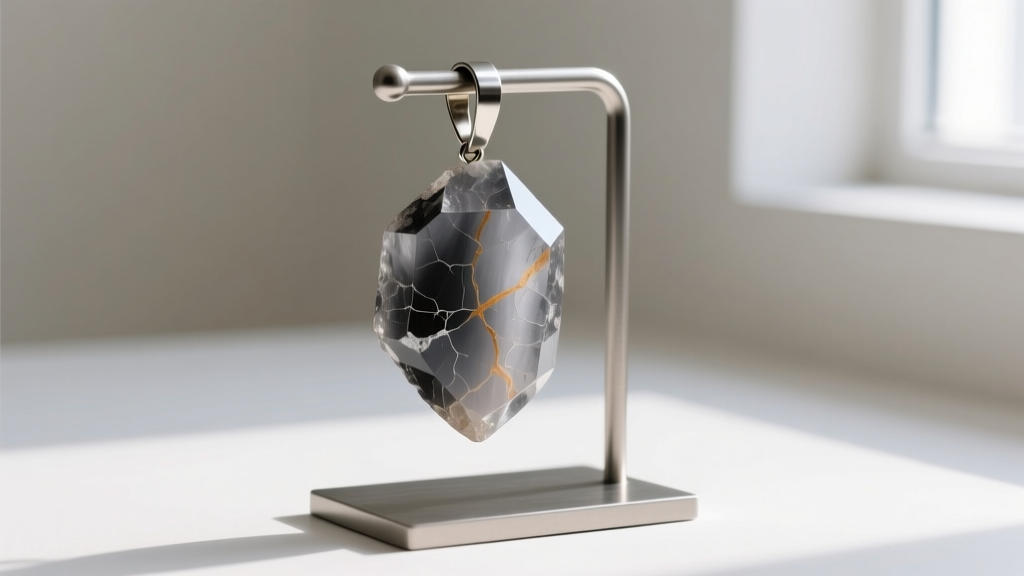
Calculating Hook Yield Strength
Most decorative wire hooks are made from 1.2mm brass or aluminum. These metals have a low yield strength and will permanently bend when subjected to loads exceeding 35 grams. To troubleshoot this, upgrade your hooks or select a rack featuring 2.5mm to 3mm stainless steel or forged iron hooks. If you are building a custom wall-mounted necklace rack, ensure the baseplate is anchored directly into drywall studs or uses heavy-duty toggle bolts rated for at least 50 lbs of shear force to prevent the entire unit from ripping out of the wall.
Environmental Controls and Placement Strategy
Where you place your necklace rack dictates its maintenance cycle. Bathrooms are the enemy of fine jewelry storage. The rapid fluctuations in temperature and high humidity levels (often exceeding 70% during showers) create a microclimate that accelerates oxidation and weakens the silk threads used in pearl necklaces.
- Optimal Humidity: Keep the room between 40% and 50% relative humidity. Use silica gel desiccant packets hidden in the base of freestanding racks if you live in a humid climate.
- UV Exposure: Direct sunlight will fade porous gemstones like amethyst, kunzite, and turquoise. Position your rack in a shaded alcove or use UV-filtering window films.
- Dust Mitigation: Open-air racks accumulate silica dust, which acts as a microscopic abrasive against high-polish metals. If you must use an open rack, commit to a bi-weekly dusting routine using a microfiber cloth, never a feather duster which can snag on prongs.
Final Troubleshooting Checklist
Before purchasing or reorganizing your necklace rack, run through this expert checklist to ensure your storage solution is actively protecting your investment:
- Verify the hook material is non-reactive (stainless steel, powder-coated metal, or lined with sulfur-free fabric).
- Measure the throat of the hooks to ensure they accommodate your largest lobster clasps without pinching.
- Calculate the total weight of your heaviest pendant-and-chain combinations and verify the rack's base footprint is wide enough to prevent tipping (the base diameter should be at least 60% of the total height).
- Ensure the spacing between hooks accommodates the widest swing radius of your box and figaro chains.
By treating your jewelry storage as an engineered environment rather than an afterthought, you eliminate the daily friction of tangled chains and protect the metallurgical integrity of your collection for decades to come.


