Amber Necklace Benefits: Baltic vs Copal Properties
Discover real amber necklace benefits by comparing Baltic amber, copal, and synthetics. Learn succinic acid facts, identification tests, and safety.

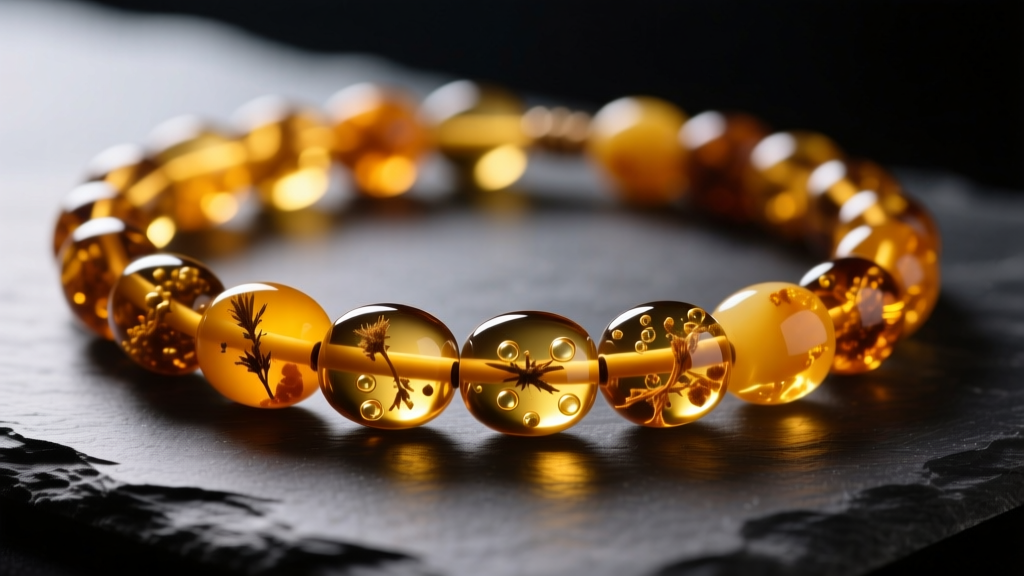
When exploring the wellness and aesthetic markets, the search for authentic amber necklace benefits often leads to a confusing landscape of fossilized resins, young copals, and outright synthetic imitations. Unlike crystalline gemstones, amber is an organic biopolymer—a fossilized tree resin that has undergone millions of years of polymerization and oxidation. To truly understand the material properties that drive the purported benefits of amber jewelry, we must look past marketing claims and examine the geochemical realities of succinic acid, specific gravity, and structural integrity.
The Science of Succinic Acid: Separating Fact from Fiction
The primary driver behind the historical and modern interest in amber necklace benefits is succinic acid (C4H6O4). Genuine Baltic amber, scientifically classified as succinite, contains between 3% and 8% succinic acid by weight. This compound was first isolated from amber in the 15th century and has been utilized in traditional European folk medicine for centuries. Succinic acid is a naturally occurring dicarboxylic acid that plays a crucial role in the Krebs cycle within human cellular metabolism, which is why it is often linked to anti-inflammatory and analgesic properties.
However, a rigorous material science perspective requires us to address the transdermal absorption debate. While succinic acid possesses documented anti-inflammatory properties in in vitro studies, the human skin barrier (stratum corneum) is highly effective at preventing the systemic absorption of large or highly polar molecules. The friction and body heat generated by wearing an amber necklace are insufficient to melt the resin matrix (which softens only around 150°C to 200°C) or release therapeutic doses of succinic acid directly into the bloodstream. Therefore, the true benefits of wearing amber are better attributed to its unique electrostatic properties—amber easily gains a negative static charge when rubbed, which some holistic practitioners believe helps neutralize ambient static electricity—as well as its lightweight, hypoallergenic, and thermally insulating physical traits.
Material Comparison: Baltic Amber vs. Copal vs. Synthetics
Not all "amber" on the market is created equal. The geological age and polymerization level of the resin drastically alter its durability, chemical composition, and value. Below is a comparative breakdown of the most common materials sold as amber jewelry.
| Property | Baltic Amber (Succinite) | Dominican Amber | Copal (Young Resin) | Synthetic Resin (Plastic) |
|---|---|---|---|---|
| Geological Age | 35 - 50 Million Years | 15 - 20 Million Years | 100 - 10,000 Years | N/A (Modern) |
| Succinic Acid % | 3.0% - 8.0% | Trace / < 1% | Trace / < 1% | 0% |
| Specific Gravity (SG) | 1.05 - 1.10 | 1.05 - 1.08 | 1.03 - 1.06 | 1.15 - 1.30+ |
| UV Fluorescence (365nm) | Pale Blue / Green / White | Strong Blue / Violet | Dull White / Chalky | None / Artificial Glow |
| Acetone Reaction | Inert (No reaction) | Inert (No reaction) | Tacky / Dissolves | Varies (Often melts) |
| Avg. Price (per gram) | $2.00 - $15.00+ | $5.00 - $30.00+ | $0.20 - $1.00 | $0.01 - $0.10 |
For consumers seeking the specific geochemical profile associated with traditional amber benefits, Baltic succinite remains the gold standard. Copal, while visually similar and often containing spectacular insect inclusions, is an immature resin. Its incomplete polymerization makes it highly susceptible to environmental degradation, cracking, and chemical melting, rendering it unsuitable for long-term daily wear.
Identifying Genuine Baltic Amber: 4 Foolproof Tests
Because the financial incentives for passing off copal or plastic as Baltic amber are high, relying on visual inspection is insufficient. As detailed by the Gemological Institute of America (GIA), gemologists rely on specific physical properties to authenticate succinite. Here are four actionable tests you can perform to verify your jewelry:
1. The Saturated Saltwater Float Test
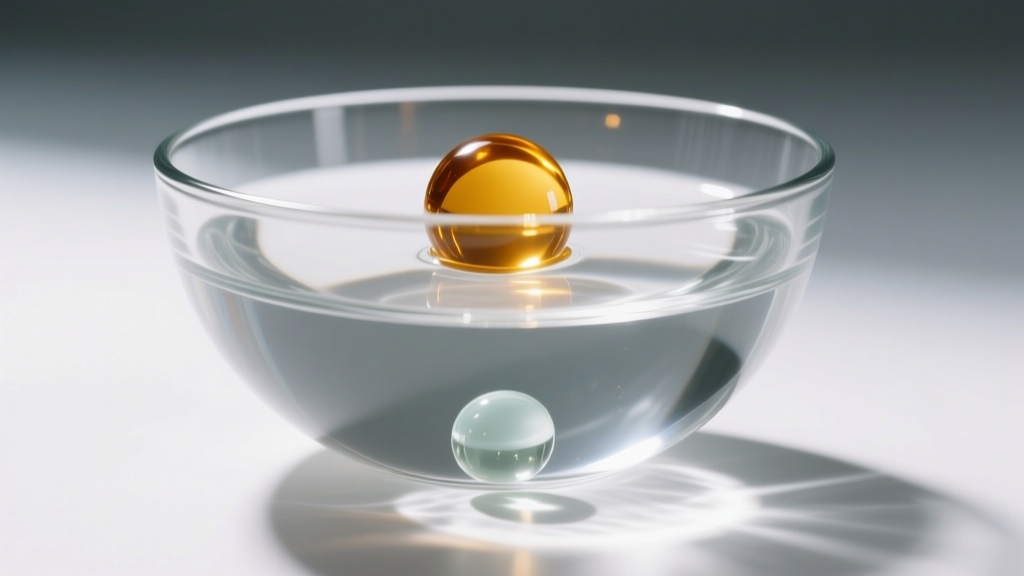
Baltic amber has a specific gravity of roughly 1.08, making it one of the lightest gemstones in existence. In fresh water, amber will sink. However, if you create a saturated saltwater solution (mixing roughly 1 part table salt to 2 parts warm water until no more salt dissolves), the density of the liquid increases to approximately 1.12. Genuine amber and copal will float to the surface, while glass, heavy plastics, and bakelite will sink immediately. Note: Remove all metal clasps and findings before testing, as the metal will cause the necklace to sink.
2. The UV Fluorescence Test
Using a standard 365nm ultraviolet flashlight, genuine Baltic amber will exhibit a distinct pale blue, greenish, or milky white fluorescence. Copal tends to show a much duller, chalky white glow, while synthetic plastics generally absorb the UV light and remain dark, unless optical brighteners have been artificially added to the mold.
3. The Acetone Solubility Test
Place a single drop of pure acetone (nail polish remover) on an inconspicuous area of a bead and let it evaporate. Because Baltic amber is fully polymerized and fossilized, it is chemically inert to acetone. Copal, however, is not fully cross-linked; the acetone will break down the surface polymers, leaving a permanently tacky or cloudy spot.
4. The Electrostatic Friction Test
Vigorously rub a bead against a soft wool or cotton cloth for 30 seconds. Genuine amber will develop a strong negative static charge, allowing it to easily pick up small pieces of torn tissue paper or dust. While some plastics can also hold a charge, amber's electrostatic properties (the very origin of the word "electricity," derived from the Greek elektron for amber) are exceptionally pronounced.
Construction, Safety, and Breakaway Mechanics
When discussing amber necklace benefits, it is an absolute ethical and professional imperative to address the safety profile of these garments, particularly regarding infant teething necklaces. The U.S. Food and Drug Administration (FDA) has issued strict warnings against the use of teething necklaces due to severe risks of strangulation and choking. The material benefits of amber do not outweigh the physical hazards of a beaded strand around an infant's neck. For adult wellness jewelry, however, structural integrity and safety mechanics remain vital for preventing loss and injury.
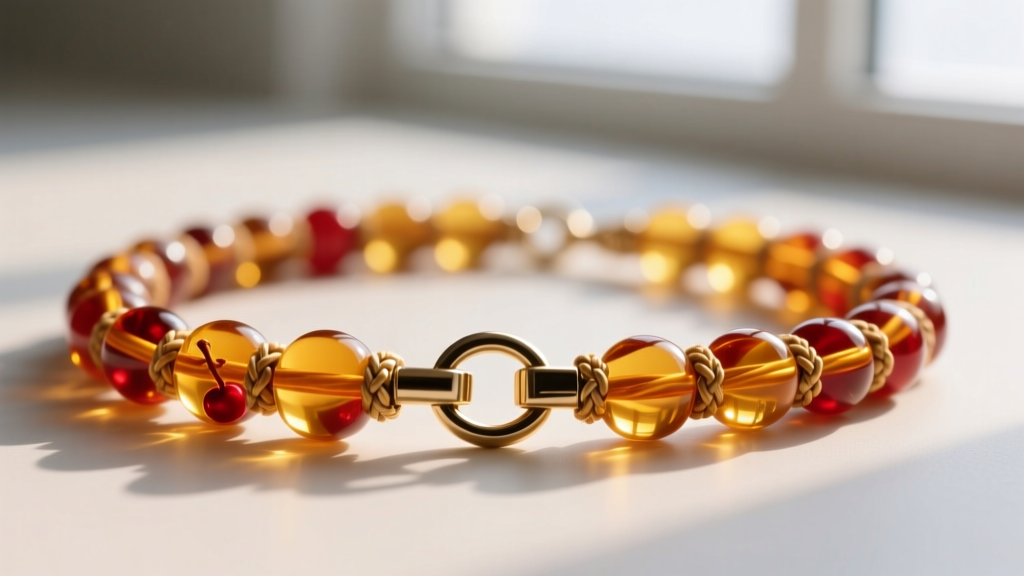
High-quality adult amber necklaces should be constructed using the following specifications:
- Thread Material: Synthetic nylon or high-tensile silk. Cotton degrades rapidly from skin oils and sweat, leading to catastrophic strand failure.
- Micro-Knotting: Every single bead must be flanked by a tight, hand-tied micro-knot. If the thread snaps under tension, this ensures that only one 4mm-6mm bead is released, rather than the entire strand scattering and creating a slipping hazard.
- Breakaway Clasps: Premium wellness necklaces utilize specialized magnetic or tension-screw breakaway clasps calibrated to release at 5 to 7 pounds of lateral pressure. This prevents the nylon cord from acting as a garrote if the necklace becomes snagged on environmental objects.
Care and Maintenance: Preserving the Resin Matrix
Amber is exceptionally soft, rating only 2.0 to 2.5 on the Mohs hardness scale. This means it can be easily scratched by a copper coin, let alone harder gemstones like quartz or diamonds. To preserve the polished surface and the internal terpene matrix of your amber necklace, adhere to these strict maintenance protocols:
- Avoid Chemical Solvents: Never clean amber with ethanol, isopropyl alcohol, ammonia, or commercial jewelry dips. These solvents will strip the natural oxidized patina and cause micro-fracturing on the bead surface.
- Thermal Shock Prevention: Do not wear amber in saunas, hot tubs, or leave it on a car dashboard. Prolonged exposure to temperatures above 60°C (140°F) can cause the internal volatile oils to expand, resulting in irreversible internal "sun spangles" (stress fractures).
- Proper Cleaning: Wipe the beads gently with a microfiber cloth dampened only with lukewarm distilled water. If the beads lose their luster over time, they can be carefully hand-polished using a tiny amount of natural carnauba wax or pure olive oil, buffed immediately with a dry flannel cloth.
By understanding the geochemical reality of succinite, utilizing rigorous identification tests, and respecting the physical limitations of organic resins, you can safely enjoy the unique aesthetic and electrostatic benefits that genuine Baltic amber provides.


