Amber Necklace Teething Safety: A Step-by-Step Parent Guide
Learn how to safely select, size, and use an amber necklace teething accessory. Expert tips on Baltic authenticity, knotting, and FDA guidelines.


The search for natural, drug-free remedies for infant discomfort has made the amber necklace teething trend a staple in modern parenting circles. Proponents argue that Baltic amber contains succinic acid, a natural analgesic that absorbs into the skin to soothe inflamed gums. However, as jewelry experts and child safety advocates, we must bridge the gap between holistic traditions and stringent pediatric safety standards. This comprehensive, step-by-step guide will teach you how to evaluate authenticity, inspect structural integrity, and implement the safest possible usage protocols for amber teething jewelry.
The Medical Consensus: Understanding the Risks
Before purchasing or using any teething jewelry, parents must understand the stance of leading pediatric authorities. The U.S. Food and Drug Administration (FDA) and the American Academy of Pediatrics (AAP) strongly advise against placing any jewelry around an infant's neck. The primary risks are twofold: strangulation if the necklace catches on a crib or playpen, and choking if the clasp fails and beads are ingested.
As a jewelry style and safety guide, our goal is not to dismiss parental choice, but to ensure that if you choose to use an amber necklace teething accessory, you do so with maximum awareness, rigorous quality control, and safer alternative wearing methods (such as the ankle method detailed in Step 4).
Step 1: Verifying Authentic Baltic Amber
The market is flooded with counterfeit teething necklaces made from copal (immature tree resin), dyed plastic, or glass. True Baltic amber is fossilized resin dating back over 40 million years and is the only variety believed to contain meaningful trace amounts of succinic acid. Authentic baby amber necklaces typically retail between $18 and $45. If you find one for $5, it is almost certainly synthetic.
The Saltwater Density Test
According to the Gemological Institute of America (GIA), authentic amber has a specific gravity of 1.05 to 1.09, meaning it will float in heavily saturated saltwater but sink in fresh water.
- The Mix: Dissolve 2 tablespoons of sea salt into 1 cup of warm water.
- The Test: Drop the necklace into the solution. Authentic Baltic amber will float to the surface.
- The Control: Move the necklace to a bowl of plain tap water. It should sink immediately.
Note: Copal will also float in saltwater, so this test must be combined with the UV or scent test to rule out immature resins.
The UV and Scent Tests
Under a UV blacklight, genuine Baltic amber fluoresces a pale green or milky blue, while copal glows a stark, bright white. For the scent test, rub the beads vigorously against a soft cloth until they are warm. Real amber emits a faint, pleasant piney or rosin scent, whereas plastic smells like chemicals and copal smells overly sweet and sticky.
Step 2: Inspecting Construction and Hardware
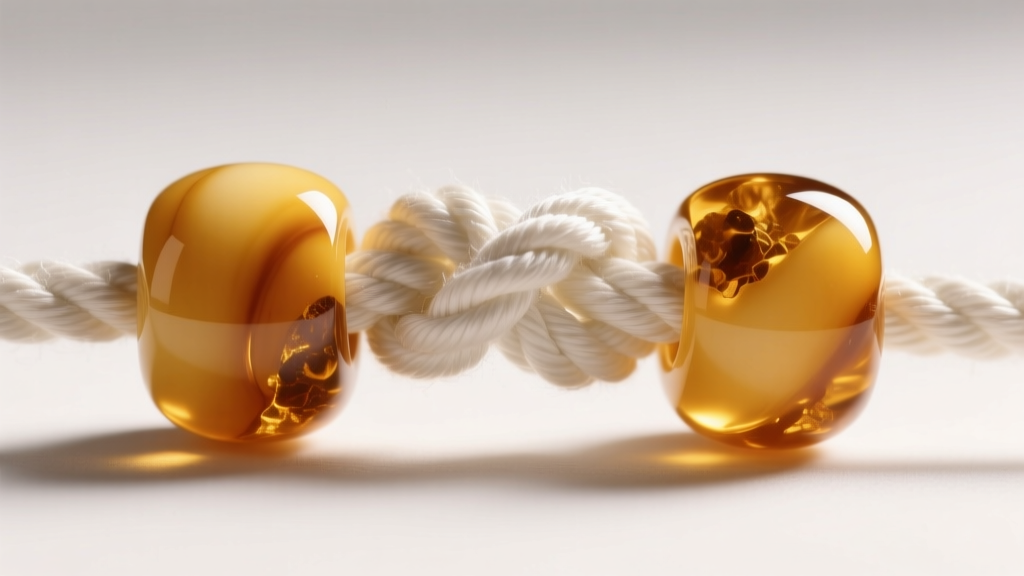
If you are buying an amber necklace teething product, the physical construction is a matter of life and death. Never compromise on the following structural elements:
Individual Knotting
Every single bead must be individually knotted on both sides. This traditional jewelry technique ensures that if the cotton or silk thread snaps under pressure, only one bead is released, drastically reducing the choking hazard. Run your fingers along the strand; you should feel a distinct, tight knot between every bead. If the beads slide freely along the thread, reject the necklace immediately.
Bead Shape: Barrel vs. Round
Opt for barrel-shaped or chip-shaped beads rather than perfectly round ones. Barrel beads sit flatter against the skin, reducing the risk of the necklace catching on clothing or fingers. Furthermore, ensure the beads are highly polished. Raw or unpolished amber can have microscopic sharp edges that may irritate delicate infant skin.
Clasp Mechanics: Screw vs. Breakaway
- Screw Clasps: These feature a threaded barrel that screws together. They are highly secure and will not pop open if tugged, making them the only acceptable clasp type if the necklace is worn on the ankle (where a breakaway clasp could leave the child stepping on loose beads).
- Breakaway (Pop) Clasps: Designed to release when subjected to roughly 5 to 7 pounds of tensile pressure. While safer for neck wear to prevent strangulation, they pose a higher risk of scattering beads if the child plays with the clasp.
Step 3: Exact Sizing Guidelines for Infants and Toddlers
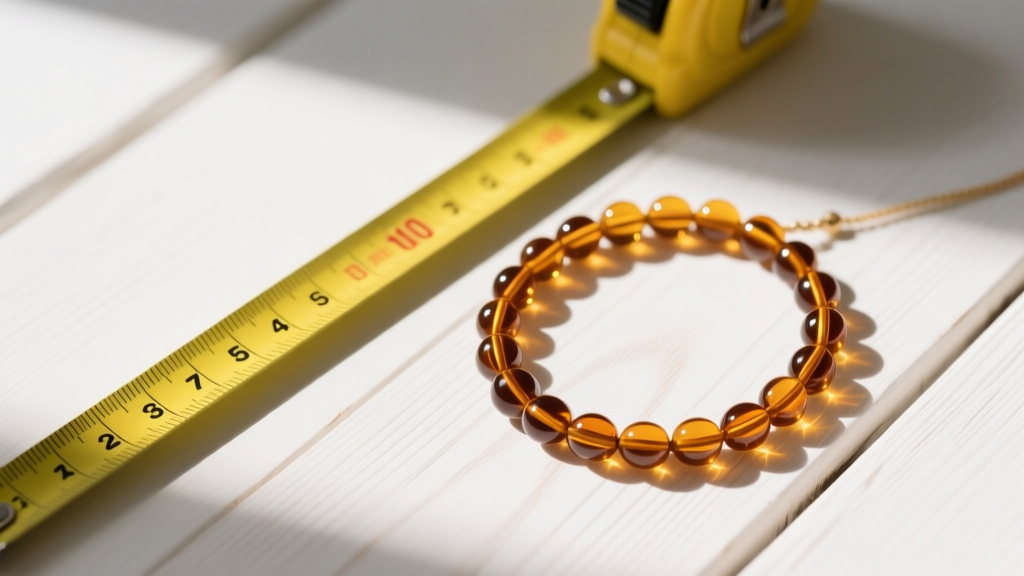
A teething necklace should never hang low. If it hangs below the collarbone, it poses a severe snagging hazard. The necklace should fit snugly enough that the child cannot pull it over their chin or fit more than two adult fingers between the beads and the skin. Use a soft fabric measuring tape to measure the child's neck or ankle before ordering.
| Age Range | Target Neck Length | Target Ankle Length | Recommended Clasp |
|---|---|---|---|
| 0 - 6 Months | 11.5" - 12.0" (29-30 cm) | 13.5" - 14.5" (34-36 cm) | Breakaway (Neck) / Screw (Ankle) |
| 6 - 12 Months | 12.0" - 12.5" (30-32 cm) | 14.5" - 15.5" (36-39 cm) | Breakaway (Neck) / Screw (Ankle) |
| 12 - 24 Months | 12.5" - 13.0" (32-33 cm) | 15.5" - 16.5" (39-42 cm) | Breakaway (Neck) / Screw (Ankle) |
Step 4: Safe Usage Protocols (The Ankle Method)
Given the stringent warnings from the AAP regarding neck wear, many pediatricians and holistic practitioners recommend the ankle method as a harm-reduction strategy. By wrapping the amber necklace securely around the infant's ankle and covering it with a sock or footie pajama, you eliminate the strangulation risk entirely while maintaining skin contact with the succinic acid.
Rules for Safe Wear
- Never During Sleep: Remove the amber necklace entirely during naps and nighttime sleep. Infants roll and shift unpredictably, and any jewelry poses an entanglement risk in the crib.
- Direct Skin Contact: For the succinic acid theory to hold any merit, the amber must touch the skin. Do not wear it over thick clothing.
- Supervision is Mandatory: Teething jewelry should only be worn when the child is actively supervised by an adult. Remove it before placing the child in a car seat, stroller, or playpen where it could snag on hardware.
Step 5: Cleaning and Maintenance
Baltic amber is remarkably soft, ranking only 2 to 2.5 on the Mohs hardness scale. It is easily scratched and degraded by harsh chemicals. To maintain the structural integrity of the thread and the polish of the beads:
- Wipe Down: Clean the necklace weekly with a soft, damp flannel cloth.
- Avoid Soaps: Never use dish soap, baby shampoo, or chemical cleaners, as these can strip the natural oils from the amber and weaken the cotton thread.
- Inspect the Thread: Every month, gently tug on the spaces between the knots. If the thread shows signs of fraying, stretching, or discoloration, retire the necklace immediately. The lifespan of a well-cared-for amber teething necklace is typically 12 to 18 months before the thread requires professional restringing.
Final Thoughts on Holistic Jewelry
Navigating the world of infant care requires balancing natural remedies with uncompromising safety standards. By rigorously testing for Baltic authenticity, demanding individually knotted barrel beads, utilizing proper sizing charts, and opting for the ankle-wear method, parents can mitigate the severe risks associated with teething jewelry. Always prioritize the guidance of your pediatrician, and remember that no piece of jewelry is worth compromising your child's physical safety.


