Authenticating the American Indian Bone Necklace: An Expert Guide
Discover expert techniques for authenticating, preserving, and identifying materials in vintage and antique American Indian bone necklaces.

Introduction to Indigenous Osteological Adornment
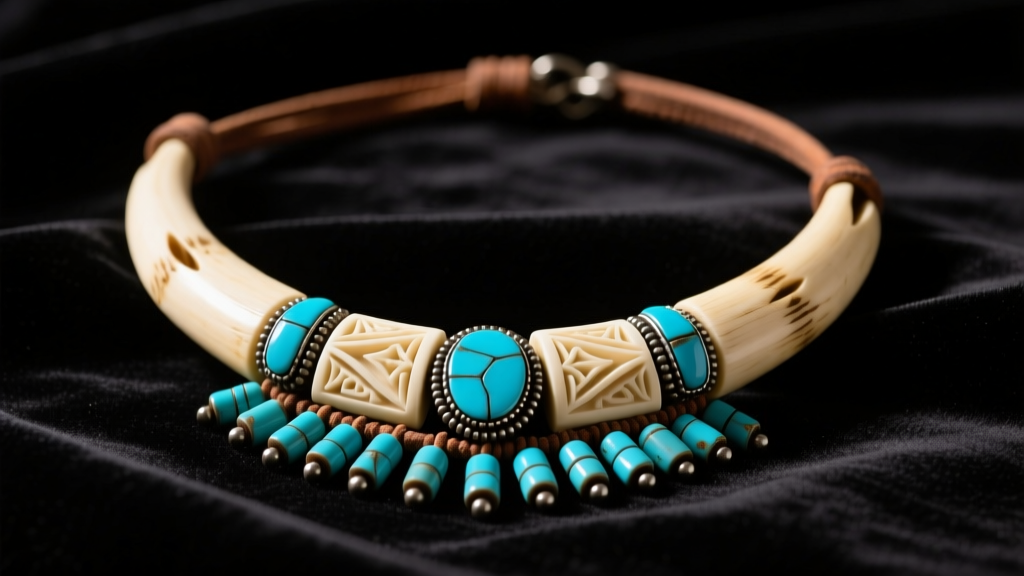
The american indian bone necklace represents a profound intersection of artistry, spirituality, and material science. For collectors, curators, and jewelry historians, evaluating these pieces requires moving beyond superficial aesthetics into the realm of osteological identification, historical tool-mark analysis, and conservation chemistry. Unlike cast metals or faceted gemstones, bone is a hygroscopic, organic composite that records the environmental and cultural history of its wearer. This technical deep dive explores the material composition, historical manufacturing techniques, and authentication protocols necessary to properly evaluate Native American bone jewelry.
Material Science: Bone vs. Antler vs. Shell
A common error among novice collectors is conflating bone, antler, and shell. While all three were utilized in indigenous adornment, their microscopic structures and chemical compositions differ vastly. True bone is a composite matrix of hydroxyapatite (a calcium phosphate mineral) and collagen fibers. Under magnification, mammalian bone reveals Haversian canals—microscopic circular structures that housed blood vessels.
Antler, conversely, is denser and lacks the same prominent Haversian systems, often displaying a more compact, spongy core (cancellous bone) surrounded by a dense outer layer. Historically, the most prized material for early cylindrical beads was not mammalian bone at all, but the central columella of the marine conch shell (Busycon). It wasn't until the late 19th century, driven by the commercial trade of bovine byproducts and the scarcity of coastal shells for inland tribes, that cow bone and horn largely replaced shell in the production of hairpipe beads. Identifying the exact material is the first critical step in dating an american indian bone necklace.
The Evolution of the Hairpipe: Dimensions and Eras
The "hairpipe" is the most iconic cylindrical bead used in Native American breastplates and chokers. Originally crafted from conch shell by European traders and indigenous artisans alike, the transition to bovine bone occurred roughly between 1880 and 1920. The dimensions and taper of these bone tubes provide vital chronological data.
| Era | Primary Material | Average Length | Drill Hole Characteristics |
|---|---|---|---|
| Pre-1850 | Conch Shell (Columella) | 1.5" - 2.5" | Conical, uneven, hand-pumped |
| 1880 - 1920 | Bovine Bone (Commercial) | 2.5" - 4.0" | Slightly tapered, steel-filed ends |
| 1930 - 1970 | Bovine Bone / Horn | 1.5" - 3.0" | Cylindrical, early mechanical drill |
| Post-1980 | Bleached Cow Bone | Variable | Perfectly round, CNC/Dremel routed |
Authentication: Analyzing Tool Marks and Drill Holes
The most definitive method for authenticating a vintage american indian bone necklace is the forensic analysis of its drill holes and carving marks. Pre-contact and early reservation-era beads were drilled using bow drills or pump drills equipped with stone, copper, or early iron bits. This manual process inherently creates a conical entry point. Because the artisan would often drill from both ends of a long hairpipe to meet in the middle, authentic antique pieces frequently exhibit a slight misalignment or "step" where the two holes converge.
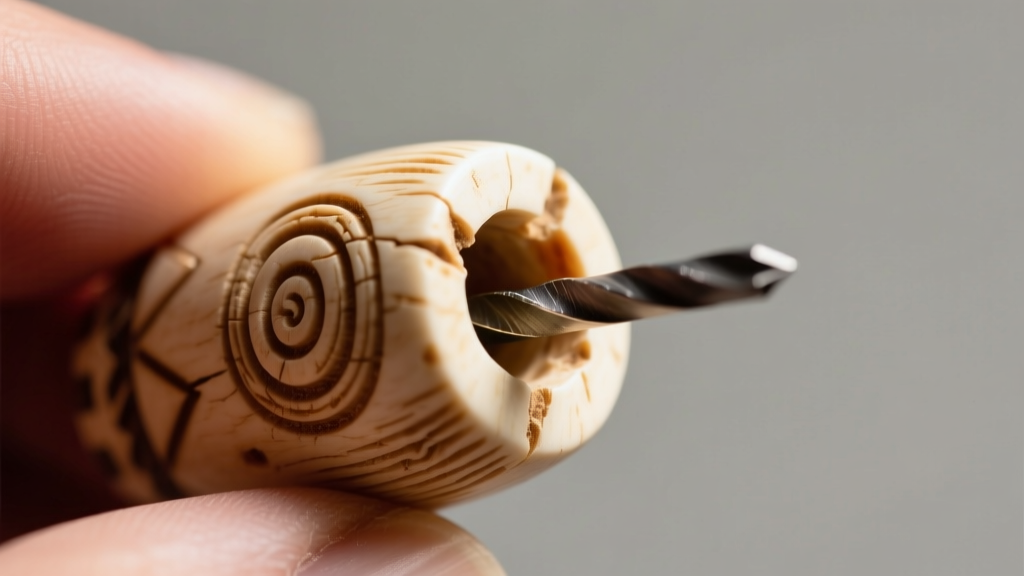
Furthermore, the interior walls of hand-drilled bone exhibit irregular, spiraling striations. In contrast, modern counterfeit or mass-produced tourist-trade necklaces utilize high-speed rotary tools (like Dremels or CNC lathes). These modern tools leave perfectly cylindrical holes with parallel, uniform striations and no conical taper. Examining the bead holes with a 10x to 30x jeweler's loupe is mandatory for serious authentication.
Patina, Sebum, and the Chemistry of Wear
Bone is highly porous. When worn against the skin, it absorbs sebum, sweat, and environmental particulates, developing a rich, amber-toned patina over decades. This oxidation process is difficult to fake. Artificial aging techniques—such as soaking bone in tea, coffee, or potassium permanganate—result in a superficial, muddy discoloration that pools in the tool marks and drill holes but fails to penetrate the dense outer cortex evenly.
An authentic, historically worn bone bead will display micro-cracks (crazing) that have darkened from the inside out due to decades of oil absorption. The ends of the beads, which experience the most friction against adjacent beads and the wearer's skin, will show a distinct, polished wear pattern that contrasts with the matte texture of the unpolished sides.
Preservation Protocols for Hygroscopic Materials
Conserving an antique bone necklace requires strict environmental controls. Because bone contains collagen, it is highly susceptible to fluctuations in relative humidity (RH).
- Humidity Control: Maintain a stable RH between 45% and 55%. Rapid drops in humidity will cause the collagen matrix to shrink, leading to irreversible longitudinal splitting and warping.
- Light Exposure: Limit exposure to ultraviolet (UV) light, which degrades the organic proteins and causes the bone to become chalky and brittle.
- Cleaning: Never use water, solvents, or commercial jewelry dips. Water can cause residual fats within poorly degreased historical bone to swell and rot. Clean only with a soft, dry microfiber cloth or a conservation-grade soft brush.
- Pest Management: Dermestid beetles and clothes moths are attracted to the residual proteins in bone. Store pieces in acid-free tissue paper within sealed, climate-controlled archival boxes.
Legal Frameworks and Ethical Sourcing
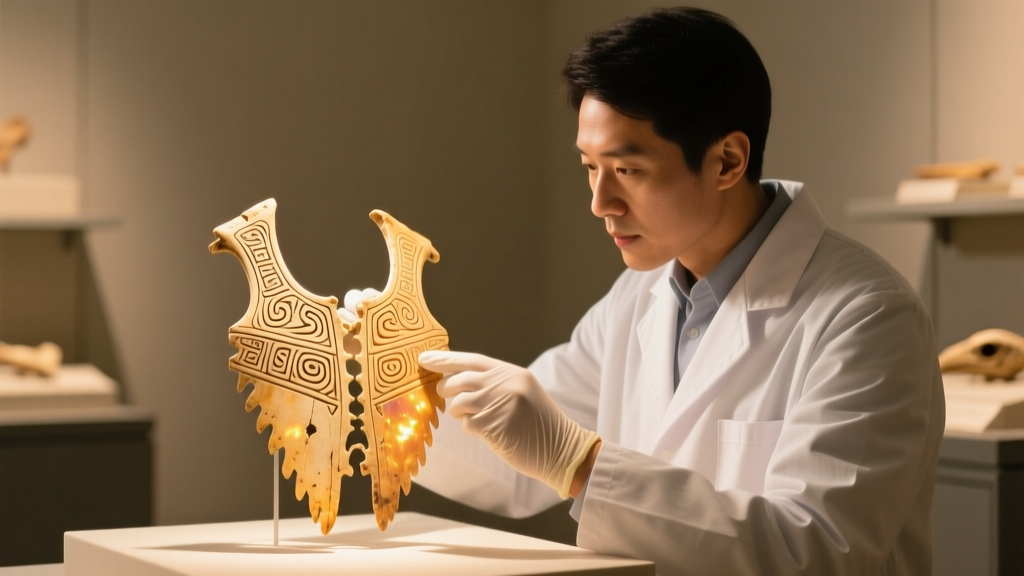
When acquiring Native American jewelry, collectors must navigate complex legal and ethical landscapes. The Indian Arts and Crafts Board (IACB) enforces the Indian Arts and Crafts Act of 1990, which makes it illegal to offer or sell any art or craft product in a manner that falsely suggests it is Indian-produced. When evaluating an american indian bone necklace, provenance is paramount. Documentation linking the piece to a specific tribal artisan or a verified historical trading post not only establishes authenticity but ensures compliance with federal law.
Furthermore, collectors must be acutely aware of the National Museum of the American Indian guidelines and the Native American Graves Protection and Repatriation Act (NAGPRA). Bone artifacts excavated from burial sites or sacred grounds are subject to repatriation claims. Ethical collectors strictly avoid archaeological bone specimens lacking clear, legal provenance, focusing instead on verifiable vintage and contemporary artisan-crafted adornment.
Conclusion: The Responsibility of the Collector
Evaluating an american indian bone necklace is an exercise in historical forensics. By understanding the osteological differences between materials, recognizing the physics of bow-drill technology, and respecting the chemical realities of organic patina, collectors can separate genuine indigenous heritage from mass-produced imitation. True expertise lies not just in acquisition, but in the active, scientifically sound preservation of these profound cultural artifacts for future generations.


