Laughing Buddha Necklace Value Guide: Pricing & Materials
Evaluate your laughing buddha necklace with our expert value guide. Learn to assess jade grades, gold karats, carving quality, and fair market pricing.

Decoding the Laughing Buddha Pendant Market
The Laughing Buddha, known historically as Budai or Hotei, is a ubiquitous symbol of abundance, contentment, and prosperity. In the jewelry market, laughing buddha necklaces range from $15 mass-produced brass trinkets to $50,000 master-carved imperial jadeite heirlooms. For buyers and collectors, navigating this vast pricing spectrum requires a strict analytical framework. Value in this category is not merely about the brand name; it is an intersection of material gemology, lapidary artistry, and structural durability. This guide provides a comprehensive budget and value assessment to help you determine exactly what you are paying for.
Material Valuation: Jade, Gold, and Wood
The base material dictates the baseline floor of your necklace's value. The three most prominent materials used for these pendants are jade, gold, and carved wood, each with its own grading metrics.
Jade: The Ultimate Value Driver
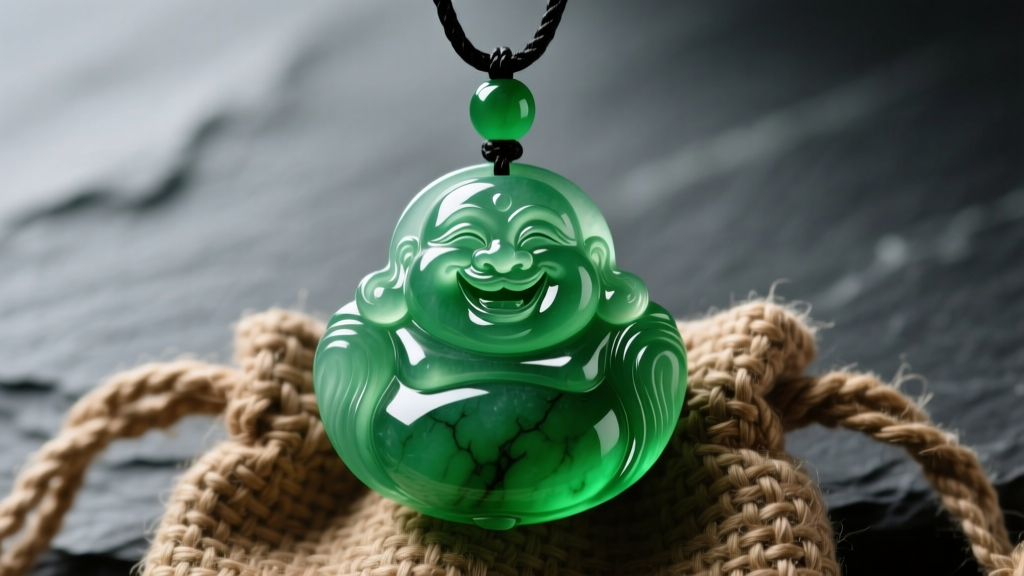
When evaluating a jade laughing buddha, you must first distinguish between nephrite (softer, historically significant in China) and jadeite (harder, more vibrant, highly prized in modern markets). According to the Gemological Institute of America (GIA), jadeite's value is heavily dependent on its treatment status, categorized into three distinct types:
- Type A (Untreated): 100% natural, untreated jadeite. This is the only grade that holds or appreciates in value. A high-quality Type A laughing buddha with good 'water head' (translucency) and vibrant green hues will command premium prices.
- Type B (Bleached and Polymer-Impregnated): Acid-washed to remove impurities and filled with resin. While it may look clean, the structural integrity is compromised, and it holds zero investment value.
- Type C (Dyed): Artificially colored. The dye fades over time, especially when exposed to sunlight and skin oils.
Budget Tip: If a vivid, translucent green jadeite laughing buddha is priced under $200, it is almost certainly Type B or C. Genuine Type A imperial jade of that size and clarity starts in the thousands.
Precious Metals: Gold Karats and Weight
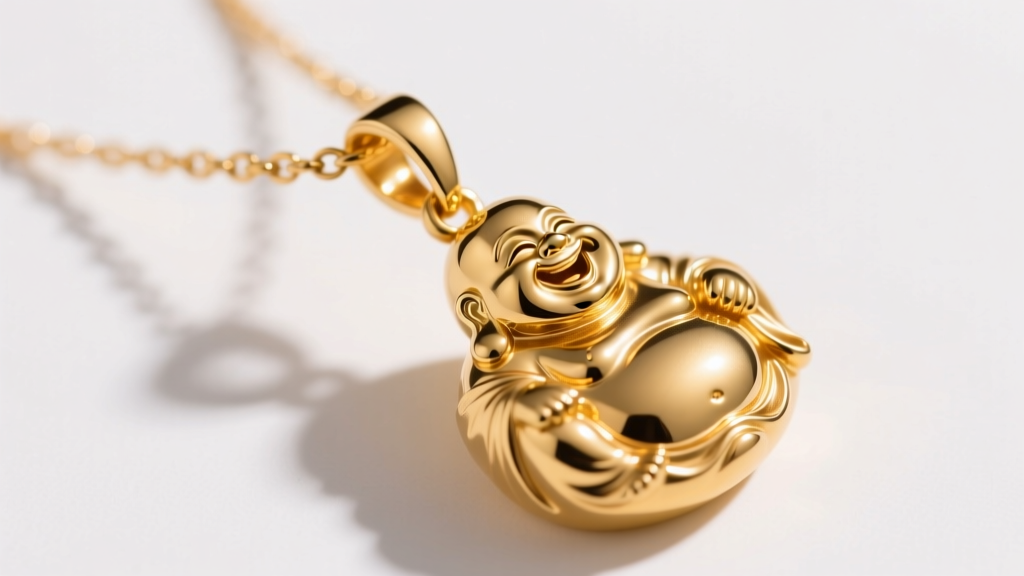
Gold laughing buddha pendants are evaluated by karatage and gram weight. As detailed in GIA's gold overview, 24k gold (99.9% pure) is traditional in Asian markets but is too soft for intricate, high-relief carving. To solve this, manufacturers use '3D hard gold'—an electroforming process that creates hollow, lightweight, yet durable 24k shells. Conversely, 18k (75% gold) and 14k (58.3% gold) allow for solid, detailed castings that withstand daily wear. Always check the gram weight; a solid 18k gold pendant should feel substantial, and its melt value alone provides a baseline for your budget assessment.
Carving Quality & Proportions Framework
Material aside, the artistry of the carving significantly impacts the necklace's aesthetic and monetary value. A master-carved Budai requires specific proportional accuracy that machine-stamped pendants fail to achieve.
The Facial Expression and Symmetry
The hallmark of a high-value carving is the facial expression. The eyes should be deeply crinkled in genuine mirth, not merely painted or lightly etched. The smile must be symmetrical and wide, exposing the teeth or tongue in traditional depictions. Low-value, mass-produced pendants often feature flat, lifeless faces with poorly defined cheekbones.
The Sack and Bead Details
Budai is always depicted carrying a cloth sack (his name literally translates to 'cloth sack') filled with abundance. In premium carvings, the folds of the sack exhibit dynamic, flowing movement, and the beads spilling out are perfectly spherical and individually distinct. In budget-tier pendants, the sack looks like a flat blob, and the beads are merged together due to poor mold quality or rushed hand-carving.
Pricing Tiers & Value Expectations
To help you benchmark your budget, we have categorized the laughing buddha necklace market into three distinct tiers based on current retail and auction data.
| Tier | Price Range | Expected Material | Carving Quality | Best For |
|---|---|---|---|---|
| Entry | $20 - $80 | Nephrite, Type C Jadeite, Brass, Resin | Machine-stamped, flat relief, poor symmetry | Casual daily wear, fast fashion |
| Mid | $150 - $800 | Type A Jadeite (commercial), 14k/18k Gold, Agarwood | Hand-finished, good symmetry, distinct beads | Meaningful gifting, regular wear |
| High | $1,000 - $10,000+ | Fine/Imperial Type A Jadeite, Solid 22k/24k Gold | Master-carved, dynamic proportions, high polish | Investment, heirlooms, collectors |
Chain Pairings, Bails, and Hidden Costs
A common failure point in budget assessment is ignoring the hardware. The bail (the loop connecting the pendant to the chain) and the chain itself can add hidden costs or introduce structural vulnerabilities.
Drilled vs. Glued Bails
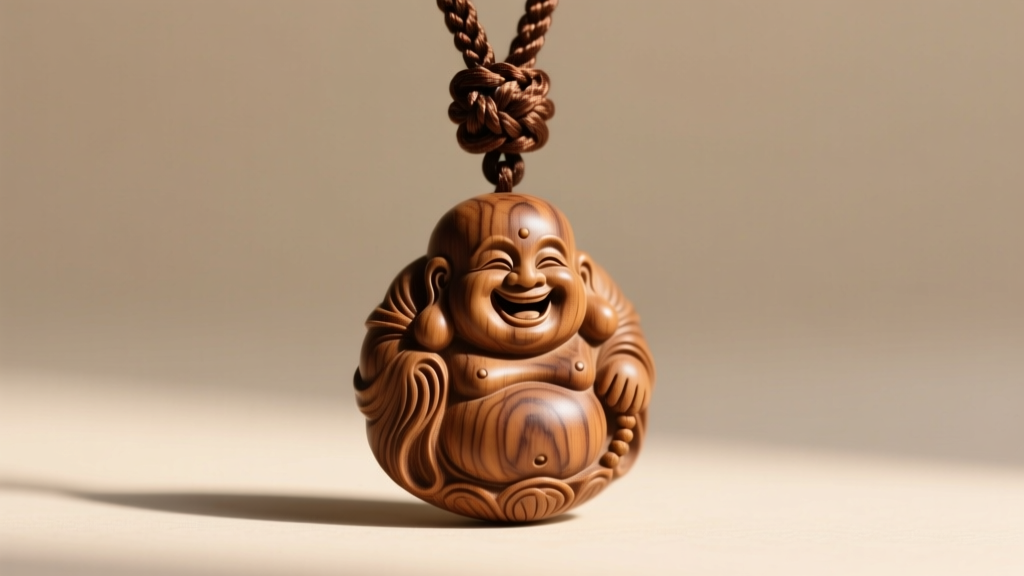
High-value jade and wood pendants feature a physically drilled hole through the top of the carving, allowing a silk cord or precious metal chain to pass directly through. This is the most secure method. Lower-end pendants often use a glued-on metal bail. Over time, exposure to perfumes, sweat, and temperature changes degrades the epoxy, leading to the sudden loss of the pendant. When assessing value, deduct points (and potential re-setting costs) for glued bails on stones priced over $100.
Chain Material Compatibility
Heavy solid gold or thick jadeite pendants require chains with high tensile strength. A delicate 14k cable chain (0.8mm) will snap under the weight of a 20-gram jadeite Budai. For pendants exceeding 15 grams, upgrade to a 2.0mm to 3.0mm rope, wheat, or curb chain. Factor the cost of a sturdy chain ($150-$400 for solid gold) into your total budget assessment, as the pendant's value is compromised if it cannot be worn safely.
Authentication and Avoiding Counterfeits
Protecting your budget means avoiding fakes. If you are purchasing a mid-to-high-tier laughing buddha necklace, demand documentation.
- Jade Certificates: Always request a lab report from a reputable gemological laboratory (such as GIA, NGTC, or Gubelin) confirming 'Type A' or 'Untreated' status.
- UV Fluorescence: Under a 365nm UV flashlight, Type B polymer-filled jade will often exhibit a chalky blue or greenish fluorescence, whereas Type A jade is generally inert.
- Wood Authenticity: Genuine agarwood (oud) and sandalwood pendants should have a subtle, natural scent that intensifies slightly with body heat. If the scent is overwhelmingly sharp or smells like synthetic incense, it is likely a cheap wood soaked in artificial oils.
Expert Insight: Never purchase a high-value laughing buddha necklace based solely on the seller's verbal guarantee. The market is saturated with glass imitations and dyed quartz masquerading as jadeite. A $50 lab certificate is a non-negotiable expense that protects a $5,000 investment.
Ultimately, the value of a laughing buddha necklace lies in the harmony between its material authenticity and the artisan's ability to capture the spirit of Budai. By applying this rigorous assessment framework, you can confidently allocate your budget toward a piece that offers both enduring aesthetic joy and genuine financial worth.


