Amethyst Butterfly Necklace: 2026 Gift Guide & Occasion Matcher
Discover how to select, style, and gift the perfect amethyst butterfly necklace in 2026. Expert tips on stone grades, chain pairings, and occasions.

The Enduring Appeal of the Amethyst Butterfly Motif
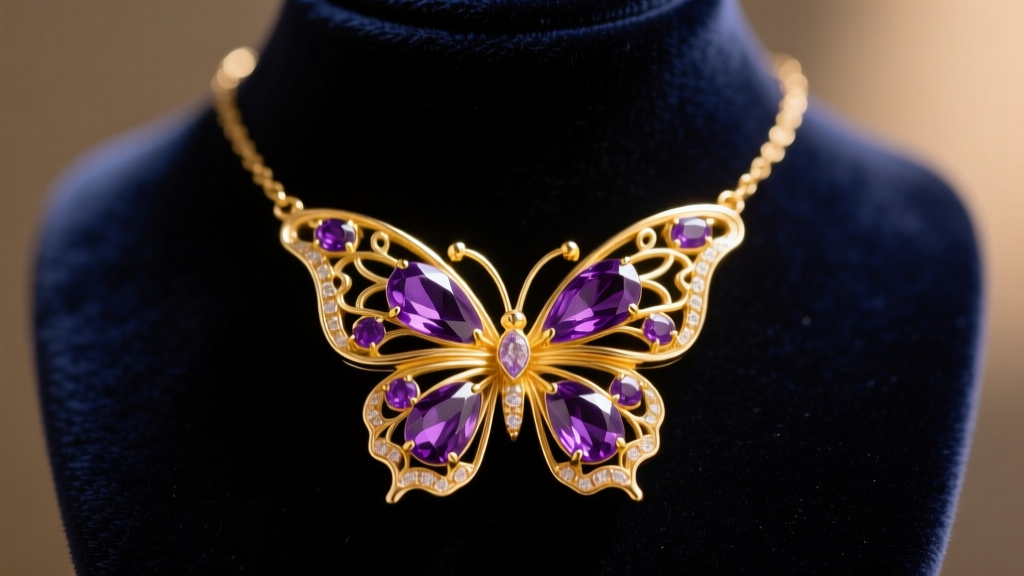
When it comes to meaningful jewelry gifting, few combinations rival the poetic resonance of an amethyst butterfly necklace. The butterfly has been a symbol of metamorphosis, the soul (Psyche in ancient Greek), and rebirth for millennia. Paired with amethyst—a gemstone historically revered for its calming energy, clarity-inducing properties, and regal purple hues—the resulting pendant becomes more than a mere accessory. It is a talisman of transformation and peace.
As we navigate the 2026 jewelry market, consumers and gift-givers are increasingly prioritizing intentionality over sheer carat weight. The amethyst butterfly necklace perfectly bridges the gap between accessible luxury and deep personal symbolism. Whether you are shopping for a February-born loved one, celebrating a major life transition, or marking a milestone anniversary, understanding the gemological and structural nuances of this piece is critical to making a purchase that lasts a lifetime.
Decoding Amethyst Grades: What to Look for When Gifting
Not all amethysts are created equal. As a variety of quartz (Mohs hardness 7), amethyst is durable enough for everyday wear, but its value and visual impact are dictated by color saturation, clarity, and origin. When sourcing an amethyst butterfly pendant, you will typically encounter three main commercial grades. According to the Gemological Institute of America (GIA), the most prized amethyst displays a strong reddish-purple or pure purple hue with no visible color zoning.
Siberian vs. Uruguayan vs. Brazilian Amethyst
The term 'Siberian' in the modern gem trade refers to a specific color grade—deep, velvety purple with secondary flashes of red and blue—rather than strict geographic origin. Uruguayan amethyst is renowned for its deep, rich saturation, while Brazilian stones are often lighter and more abundant, making them ideal for entry-level jewelry.
| Amethyst Grade | Color Profile | Clarity & Cut | Estimated Price Range (1-2ct) |
|---|---|---|---|
| Siberian (Premium) | Deep purple with red/blue flashes | Eye-clean, precision custom faceting | $150 - $400+ |
| Uruguayan (Mid-High) | Rich, dark saturated purple | Eye-clean, standard brilliant or cabochon | $70 - $150 |
| Brazilian (Commercial) | Light to medium lavender/purple | Minor inclusions, commercial machine cut | $15 - $50 |
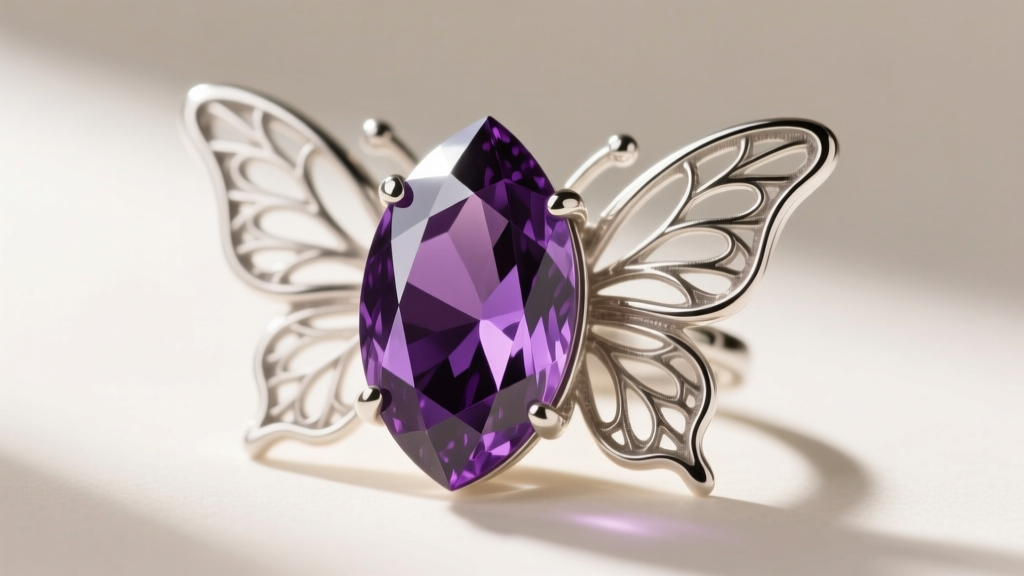
Gifting Tip: If your recipient prefers bold, high-contrast jewelry, seek out a Siberian-grade marquise or pear-cut stone set into the butterfly's wings. For a more subtle, everyday piece, a Brazilian cabochon (smooth, unfaceted dome) offers a soft, romantic glow.
Chain Selection: Matching the Metal and Gauge to the Occasion
The pendant is only half the equation. The chain you select dictates the necklace's durability, drape, and overall aesthetic. For an amethyst butterfly pendant, which typically weighs between 2 and 6 grams, you need a chain that offers structural integrity without overpowering the delicate motif.
- Cable Chain (0.9mm - 1.1mm): The classic choice. Oval links provide a traditional look that allows the amethyst to take center stage. Best for everyday wear and minimalist styling.
- Box Chain (1.0mm - 1.5mm): Composed of square, interlocking links, box chains are incredibly strong and resist kinking. They offer a modern, geometric contrast to the organic curves of the butterfly.
- Rope Chain (1.2mm): Twisted links create a spiral effect that catches the light beautifully. This pairs exceptionally well with yellow or rose gold settings, enhancing the warmth of the metal against the cool purple stone.
Clasp Mechanics Matter
Do not overlook the clasp. For chains under 1.2mm, a standard spring ring clasp is sufficient and lightweight. However, for thicker box or rope chains, insist on a lobster claw clasp. Lobster clasps feature a secure, spring-loaded mechanism that is far less likely to accidentally unhook when catching on clothing or hair.
Occasion Matching: When to Gift an Amethyst Butterfly Pendant
Matching the jewelry to the milestone ensures the gift carries emotional weight. Here is a strategic guide to gifting the amethyst butterfly necklace in 2026:
February Birthdays & 6th/33rd Anniversaries
Amethyst is the official birthstone for February. Gifting a butterfly motif adds a layer of personalization beyond the standard solitaire pendant. Furthermore, amethyst is widely recognized as the modern gemstone for the 6th and 33rd wedding anniversaries. The butterfly symbolizes the evolution and enduring beauty of a long-term partnership.
Graduations & Career Transitions
Because the butterfly represents metamorphosis and emerging into one's true self, this necklace is an exceptional graduation gift. It serves as a wearable reminder of the graduate's transformation from student to professional. Opt for a sleek sterling silver or white gold setting for a contemporary, youthful appeal.
Sympathy, Healing, and New Beginnings
Historically, amethyst was believed to ward off negative energy and promote emotional balance. When a loved one is navigating grief, recovery, or a major life reset (such as retirement or relocation), the amethyst butterfly necklace acts as a comforting, grounding talisman.
Styling and Layering: The 2026 Trend Forecast
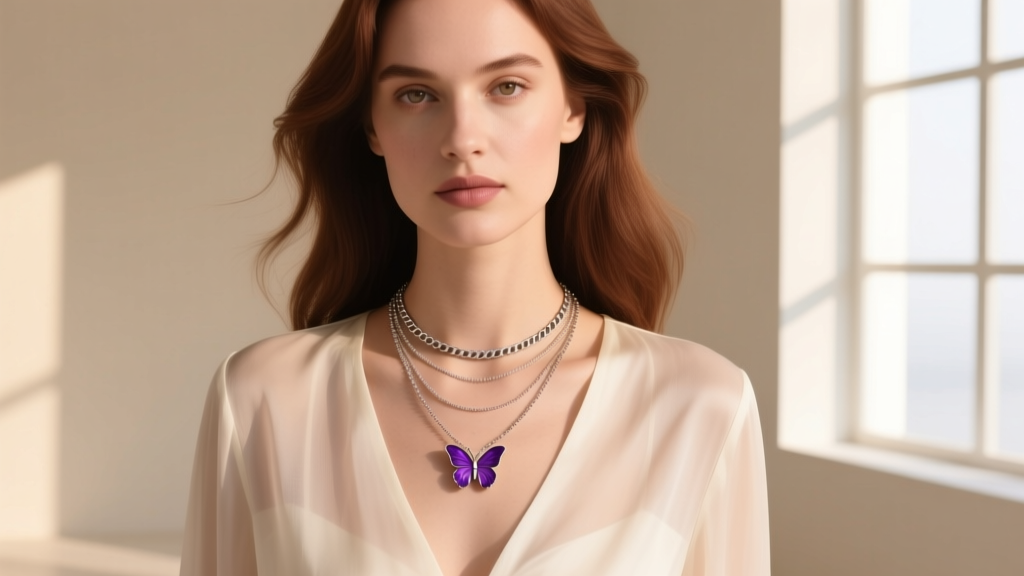
In 2026, the 'curated collarbone' aesthetic continues to dominate neckline styling. The amethyst butterfly necklace is highly versatile and serves as the perfect 'anchor' piece in a layered stack.
The 2026 Layering Formula: Start with a 14-inch minimalist gold choker or snake chain. Add your 16-inch amethyst butterfly pendant as the focal point. Finish with an 18-inch or 20-inch textured chain (like a paperclip or wheat chain) featuring a simple diamond or plain gold disc. This creates depth, prevents tangling, and frames the décolletage beautifully.
When pairing metals, mixed-metal styling remains highly relevant. A two-tone butterfly pendant—featuring rose gold wings and a white gold bezel around the amethyst—allows the wearer to seamlessly mix their existing gold and silver jewelry collections.
Pricing Tiers and Authenticity Checks
Understanding market pricing protects you from overpaying for commercial-grade stones marketed as premium. Here is what you should expect to spend on a high-quality amethyst butterfly necklace:
- Entry-Level ($40 - $120): Sterling silver settings (often rhodium-plated to prevent tarnish) with commercial-grade Brazilian amethyst. Stones may show visible color zoning or windowing (a washed-out center).
- Mid-Tier ($150 - $600): Solid 14k yellow, white, or rose gold settings. Features well-cut Uruguayan or mid-tier Siberian amethysts with rich saturation and excellent clarity. Often includes secure lobster clasps and premium packaging.
- Luxury & Custom ($800 - $2,500+): 18k gold or platinum settings, often accented with diamond pavé on the butterfly's body or antennae. Features top-tier, unheated Siberian amethysts with custom precision cutting to maximize the red/blue flash.
Authenticity Check: Genuine amethyst will feel cool to the touch and will not have perfectly uniform color or perfectly spherical gas bubbles (which indicate dyed glass). Always request a gemstone origin or treatment disclosure from the jeweler.
Care and Maintenance for Longevity
While amethyst ranks at a 7 on the Mohs scale—making it resistant to everyday dust and scratches—it requires specific care to maintain its legendary purple hue. The American Gem Trade Association (AGTA) warns that prolonged exposure to intense heat or direct, harsh sunlight can cause amethyst to fade or, in extreme cases, alter its chemical structure to resemble citrine.
To clean an amethyst butterfly necklace, avoid ultrasonic cleaners if the stone has surface-reaching fractures, and completely avoid steam cleaning due to the risk of thermal shock. Instead, use a bowl of lukewarm water with a drop of mild, phosphate-free dish soap. Gently agitate the water, use a soft-bristled baby toothbrush to clean behind the gemstone setting (where skin oils and lotions accumulate), rinse thoroughly, and pat dry with a lint-free microfiber cloth. Store the necklace in a fabric-lined jewelry box away from direct sunlight to preserve the stone's vibrant saturation for decades to come.


