The Anatomy of a Crystal Rhinestone Necklace: Expert Guide
Discover the technical anatomy of a crystal rhinestone necklace, from refractive indices and foil backing to prong settings and chain metallurgy.

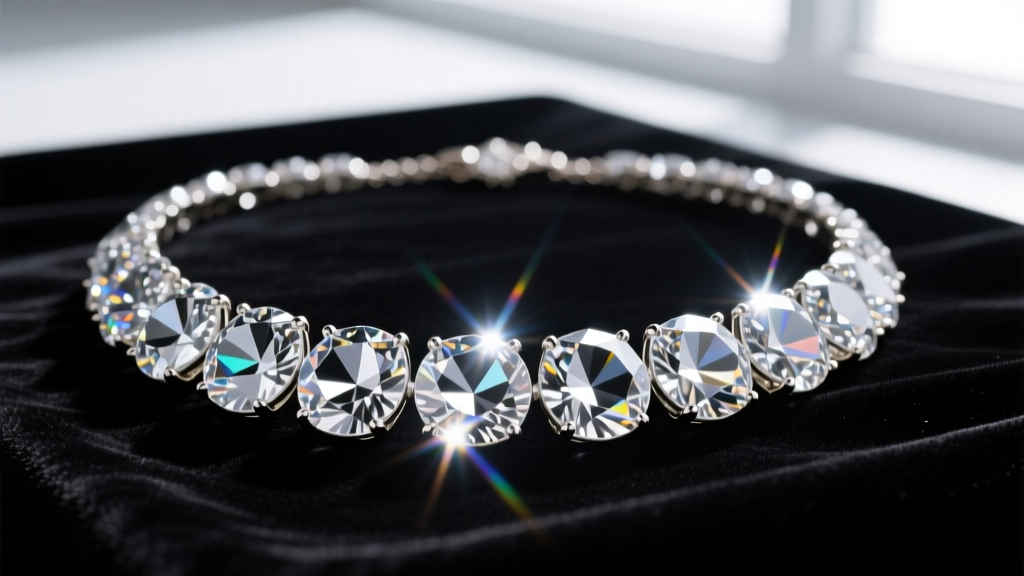
Most consumers view a crystal rhinestone necklace as mere costume jewelry. However, from a gemological and manufacturing perspective, high-end rhinestone pieces are marvels of optical engineering and precision metallurgy. While the term 'rhinestone' originally referred to quartz pebbles gathered from the Rhine River in the 18th century, today it denotes a highly engineered simulated gemstone. In this expert deep dive, we deconstruct the exact anatomy, material grades, and structural integrity of modern crystal rhinestone necklaces.
The Physics of Sparkle: Refractive Index and Cut
The brilliance of any gemstone is dictated by its Refractive Index (RI)—the measure of how much light bends as it enters the material. A natural diamond boasts an RI of 2.42. Historically, manufacturers achieved high brilliance in rhinestones by adding lead oxide (PbO) to glass, creating 'lead crystal' with an RI of up to 1.70. However, due to modern toxicity regulations, the industry has shifted.
Today, premium lead-free crystals utilize a proprietary blend of barium oxide, zinc oxide, and potassium oxide. According to the Gemological Institute of America (GIA), these advanced formulations achieve an RI of approximately 1.65, delivering near-diamond fire without the environmental hazards. The cut is equally critical; precision-machine-cut stones feature 14 to 16 perfectly symmetrical facets, whereas cheap acrylic alternatives are molded, resulting in rounded, light-leaking facet junctions.
The Hidden Engine: Foil Backing and Coatings
Unlike faceted diamonds that rely on total internal reflection, the vast majority of rhinestones in a crystal rhinestone necklace are 'chatons' (pointed-back stones) that require a reflective backing to bounce light back through the crown.
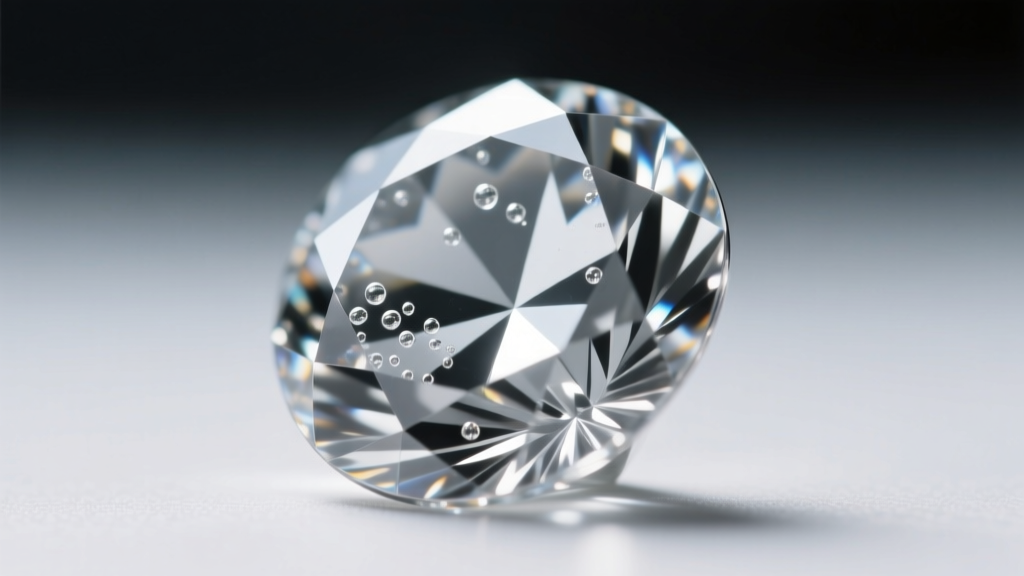
The industry standard is a microscopically thin layer of vaporized silver or aluminum applied to the pavilion. For specialized effects like Aurora Borealis (AB), a vacuum-coated titanium layer is applied to the top facets, creating a dichroic interference effect that splits light into spectral colors. If this foil layer is compromised by moisture or harsh chemicals, the stone will 'black out' or appear cloudy, permanently destroying its optical performance.
Setting Techniques: Prong Cups vs. Adhesive
How the crystal is secured to the necklace chassis dictates its lifespan. There are two primary methods:
- Prong Settings (Chatons): The stone is seated in a stamped brass or silver cup with 4 to 8 prongs. In high-end manufacturing, prongs are hand-burnished over the stone's girdle. In mass-produced pieces, machine-stamping is used, which can lead to micro-fractures in the glass if the pressure calibration is off by even a fraction of a millimeter.
- Glue Settings (Flatbacks): Flat-bottomed stones are adhered directly to a metal mesh or channel. The choice of adhesive is critical. Cyanoacrylate (super glue) is strictly avoided by experts because it cures brittle and emits fumes that permanently cloud the foil backing. Professional jewelers use two-part optically clear epoxies that allow for slight thermal expansion and contraction.
Material Composition and Safety Standards
When sourcing or evaluating a crystal rhinestone necklace, understanding the base material is crucial for both safety and longevity. The Federal Trade Commission (FTC) strictly regulates jewelry labeling and heavy metal content. Below is a technical comparison of the core materials used in the market today.
| Material Grade | Composition | Refractive Index | Durability (Mohs) | Best Use Case |
|---|---|---|---|---|
| Acrylic Resin | Polymer plastic | 1.49 | 2.0 - 2.5 | Fast fashion, lightweight statement pieces |
| Standard Glass | Silica, soda ash | 1.52 | 5.5 | Mid-tier vintage reproduction |
| Lead Crystal | 24%+ PbO, silica | 1.65 - 1.70 | 5.0 | Antique jewelry (pre-1990s) |
| Advanced Lead-Free | Barium/Zinc oxide | 1.65 | 5.5 - 6.0 | Premium modern crystal rhinestone necklaces |
Chain Metallurgy and Clasp Engineering
A heavily beaded crystal rhinestone necklace can easily exceed 80 grams. Suspending this weight requires specific metallurgical choices. Cheap zinc alloy (Zamak) chains will suffer from tensile failure at the jump rings. Expert manufacturers utilize solid brass or 316L surgical stainless steel for the chain links, often plated with rhodium to prevent tarnishing and provide a hard, scratch-resistant surface.
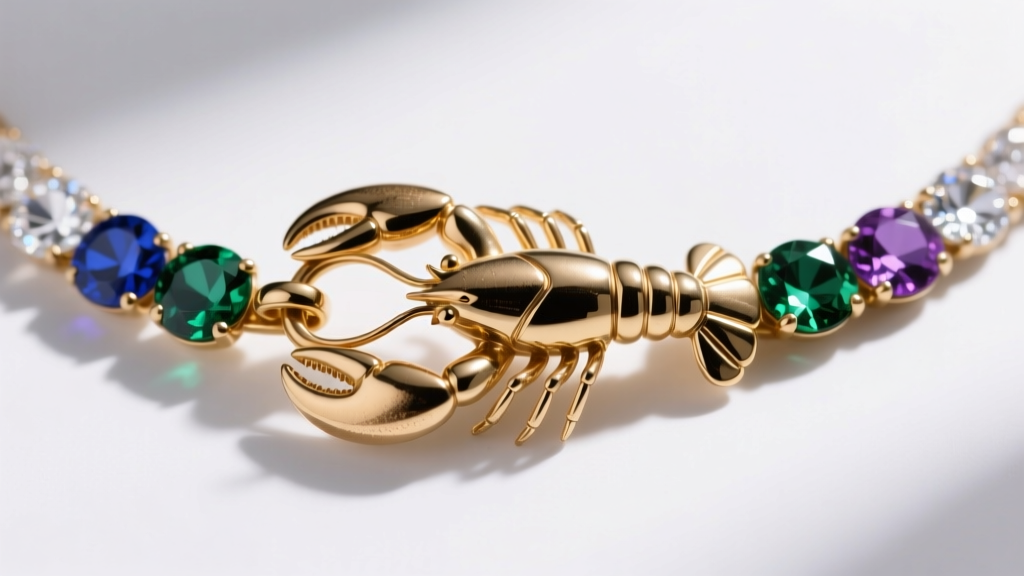
The clasp must also be engineered for the load. A standard 5mm spring-ring clasp is insufficient and poses a high risk of accidental unhooking. A 12mm to 15mm solid brass lobster clasp with a heavy-duty internal steel spring and fully soldered jump rings is the mandatory standard for secure suspension.
Maintenance and Ultrasonic Cleaning Risks
The most common way consumers destroy a high-end crystal rhinestone necklace is through improper cleaning. Ultrasonic cleaners generate high-frequency cavitation bubbles that can easily penetrate microscopic gaps between the prong and the stone. Once inside, the liquid strips the delicate silver foil backing, rendering the stone dull and gray.
Expert Cleaning Protocol: Never submerge a foil-backed rhinestone necklace. Instead, use a soft, lint-free microfiber cloth lightly dampened with a 50/50 mix of distilled water and isopropyl alcohol. Gently wipe the crowns of the stones, avoiding the base settings, and immediately dry with compressed air to prevent moisture from wicking into the prong cups.
By understanding the precise optical physics, material grades, and structural engineering behind these pieces, collectors and stylists can accurately assess the true value and longevity of a crystal rhinestone necklace, separating genuine optical marvels from disposable fast-fashion imitations.