Angel Number Necklaces Buying Guide: What to Look For
Discover what to look for when buying angel number necklaces. Compare metals, engraving techniques, chain gauges, and pricing in our expert guide.

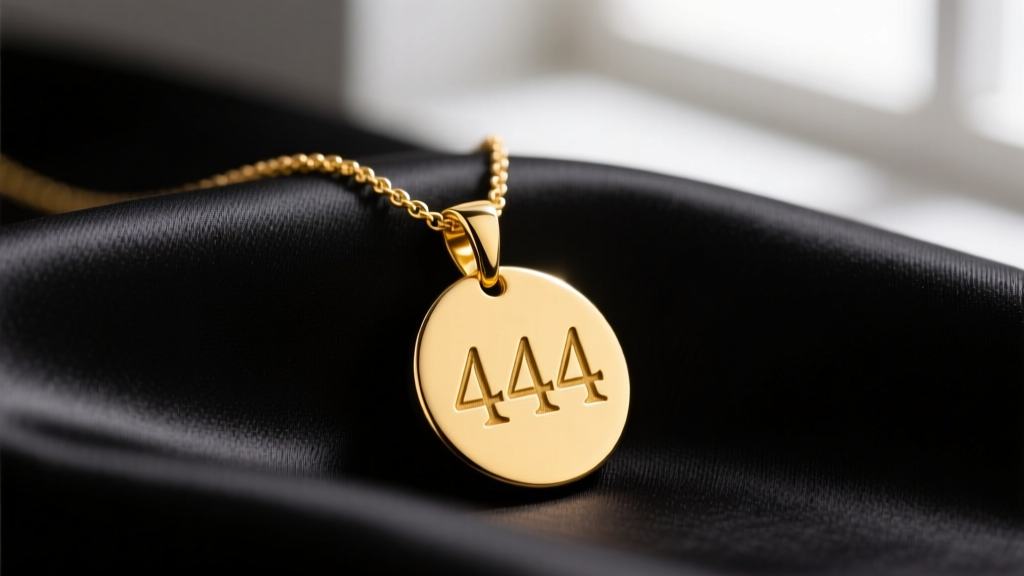
The surge in popularity of intention-setting jewelry has made angel number necklaces a staple in modern collections. Far from being a fleeting trend, these numerical talismans serve as daily reminders of personal milestones, spiritual alignment, and manifestation goals. However, the market is currently flooded with mass-produced, low-quality pieces that tarnish within weeks. As a buyer, distinguishing between a meaningful, heirloom-quality pendant and a cheap novelty item requires a keen eye for metallurgy, craftsmanship, and structural integrity.
This comprehensive buying guide cuts through the marketing fluff. We will examine the exact material grades, engraving techniques, and chain specifications you need to look for when investing in angel number necklaces that will actually stand the test of time.
Decoding the Numbers: Choosing Your Sequence
Before evaluating the physical construction of the jewelry, it is essential to select the sequence that aligns with your personal intentions. In numerology, repeating numbers carry specific vibrational frequencies. Here is a quick reference framework to guide your selection:
- 111: Manifestation, new beginnings, and alignment with the universe.
- 222: Balance, harmony, and trust in the timing of your life.
- 333: Creative expansion and the presence of ascended masters or guides.
- 444: Protection, grounding, and building solid foundations.
- 555: Major life transitions, transformation, and embracing change.
- 777: Spiritual awakening, luck, and divine guidance.
- 888: Financial abundance, infinite loops of prosperity, and karmic rewards.
- 999: Completion of a cycle, closure, and stepping into a new phase.
Material Matters: Metals That Last
The longevity of your necklace depends entirely on its base metal and plating thickness. Many fast-fashion brands use brass bases with flash plating (less than 0.1 microns of gold), which will oxidize and turn your skin green within a month. When shopping for high-quality angel number necklaces, restrict your search to these four tiers:
| Metal Type | Composition & Standards | Durability | Price Range |
|---|---|---|---|
| 925 Sterling Silver | 92.5% pure silver, 7.5% copper. Look for rhodium plating to prevent tarnish. | High (requires occasional polishing) | $40 - $90 |
| Gold Vermeil | Sterling silver base with a minimum of 2.5 microns of 14k or 18k gold. | Medium-High (lasts 1-3 years with daily wear) | $65 - $130 |
| Solid 14k Gold | 58.5% pure gold alloyed with zinc/silver. The industry standard for fine jewelry. | Exceptional (lifetime wear, waterproof) | $180 - $400 |
| Platinum (950) | 95% pure platinum. Hypoallergenic and naturally white. | Unmatched (heirloom grade) | $600+ |
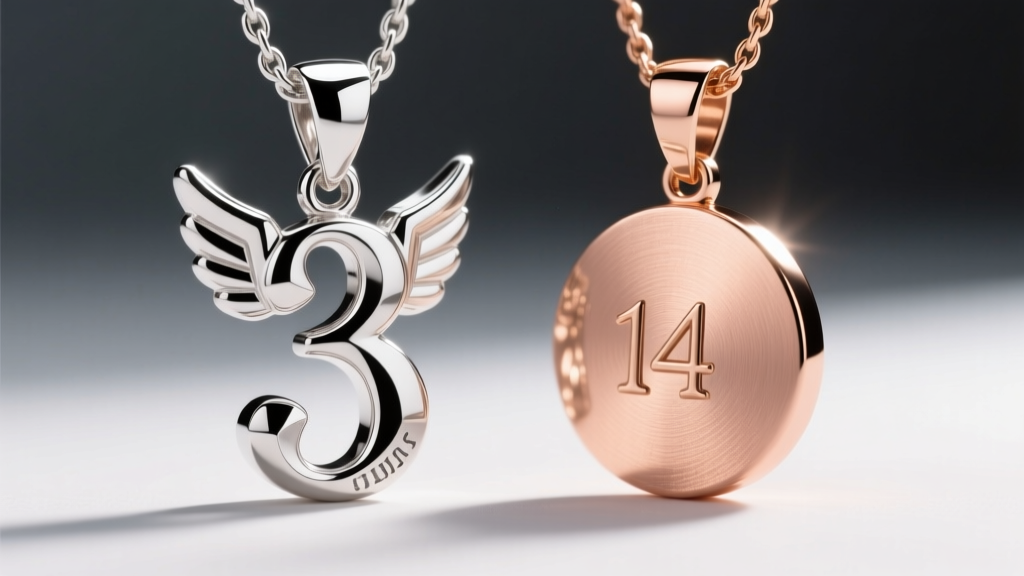
Expert Insight: Always verify vermeil claims. According to the US Federal Trade Commission, jewelry cannot be legally marketed as "vermeil" unless it has a sterling silver base and a gold coating of at least 2.5 microns. If a brand simply says "gold plated over silver," it is likely a fraction of that thickness.
Engraving Techniques: Laser vs. Hand-Stamped
How the numbers are applied to the metal dictates both the aesthetic and the lifespan of the piece. There are two primary methods used in the industry today.
Fiber Laser Engraving
Fiber lasers operate at a 1064 nm wavelength, which allows them to anneal the metal surface. This creates a permanent, high-contrast mark without actually removing material. A quality fiber laser engraving will penetrate up to 0.2mm - 0.5mm deep, meaning it will not polish away over time. This technique is ideal for minimalist bar pendants and precise, modern typography.
Hand Stamping
Hand stamping involves a jeweler striking individual steel stamps with a brass mallet. This results in a rustic, organic look where the depth and alignment of each digit vary slightly. While beautiful, hand stamping work-hardens the metal. If the jeweler strikes too hard on a thin gauge pendant (under 1.0mm), it can cause micro-fractures or warping. Always look for hand-stamped pieces that are at least 1.2mm thick to ensure structural integrity.
Chain Selection: Matching the Pendant Weight
A common failure point in angel number necklaces is the chain snapping under the pendant's weight. The chain gauge (thickness) must be proportionate to the pendant's mass. As noted by jewelry manufacturing experts at JCK Online, matching the tensile strength of the chain to the pendant is critical for daily wear.
- 0.9mm - 1.0mm Cable Chain: Suitable only for ultra-lightweight charms (under 3 grams). Prone to kinking if slept in.
- 1.2mm - 1.5mm Box or Rope Chain: The sweet spot for most angel number pendants (3 to 8 grams). Box chains offer excellent structural rigidity and resist tangling.
- Clasp Hardware: Insist on a solid lobster clasp. Spring ring clasps are notorious for failing, and the tiny internal springs frequently snap when subjected to the daily tension of a pendant.
Pricing Guide: What Should You Actually Pay?
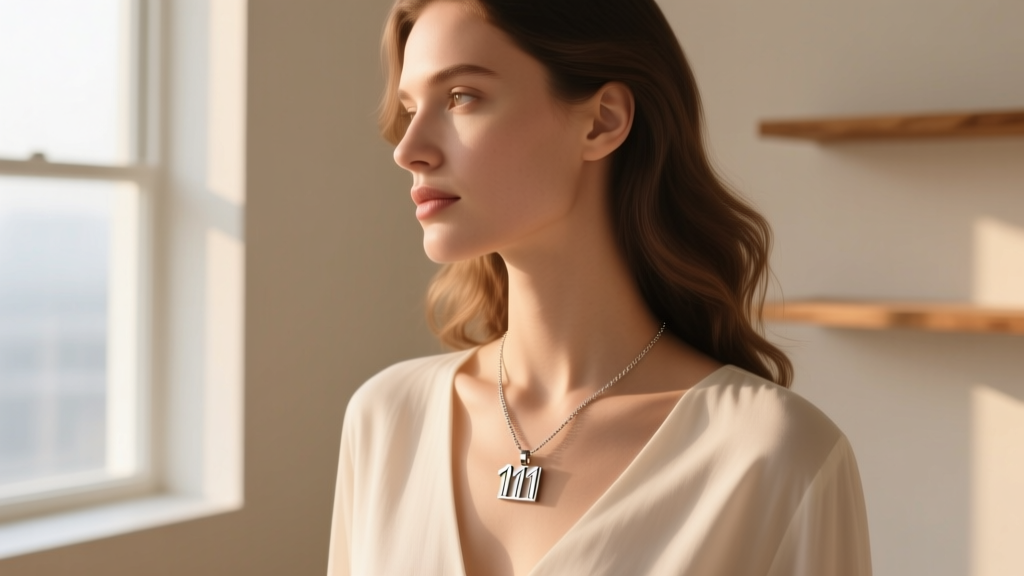
Understanding the fair market value prevents you from overpaying for branded marketing or underpaying for suspiciously cheap alloys. Here is a realistic pricing framework for 2026:
The "Too Good to Be True" Zone (Under $35): Usually brass or copper with flash plating. The engraving is likely shallow CO2 laser work that will fade within six months.
The Artisan Sweet Spot ($80 - $150): Heavy gold vermeil or solid 10k/14k gold from independent jewelers. Expect deep fiber laser engraving, solid lobster clasps, and ethically sourced metals.
The Fine Jewelry Tier ($250 - $500+): Solid 14k or 18k gold, potentially featuring hidden diamond accents (e.g., a 0.05ct diamond dotting the 'i' or integrated into the number sequence), crafted by established fine jewelry houses.
Final Checklist Before You Buy
Before adding an angel number necklace to your cart, run it through this quick quality-assurance checklist:
- Hallmark Verification: Does the product description explicitly state "925", "14k", or "Vermeil (2.5 microns)"?
- Chain Proportion: Is the chain at least 1.2mm thick if the pendant is a solid metal bar?
- Engraving Depth: Does the macro photography show deep, dark contrast in the numbers, indicating fiber laser annealing rather than surface scratching?
- Clasp Quality: Is it equipped with a durable lobster clasp and a sturdy jump ring?
- Return Policy: Does the retailer offer a minimum 30-day return window in case the chain length (e.g., 16" vs 18") does not suit your neckline?
By prioritizing material integrity and precise craftsmanship over fast-fashion trends, your chosen sequence will remain a brilliant, enduring anchor for your personal intentions for decades to come.


