Tracing Necklace Origin: How Geography Dictates Material Properties
Discover how necklace origin impacts material properties. Compare Baltic amber, Burmese jade, and regional gold alloys for informed jewelry buying.

The Geology of Adornment: Why Necklace Origin Matters
When evaluating fine jewelry, most consumers focus on the 4Cs of diamonds or the karat weight of gold. However, the true connoisseur knows that necklace origin—the specific geographical and geological birthplace of a material—dictates its fundamental physical properties, durability, and long-term value. A gemstone or metal is not merely a chemical formula; it is a product of its terroir. The tectonic pressures, trace element presence, and cooling rates unique to a specific region imprint distinct characteristics on the materials we wear around our necks.
Understanding these regional variations is critical for making informed purchasing decisions, especially when comparing seemingly identical materials. In this comprehensive guide, we analyze how geographical origin influences the structural integrity, optical phenomena, and wearability of popular necklace materials.
Amber: Baltic Succinite vs. Dominican Retinite
Amber is fossilized tree resin, but its chemical composition varies wildly depending on its origin. This variance directly impacts how the material behaves when carved into beads or pendants.
Baltic Amber (Succinite)
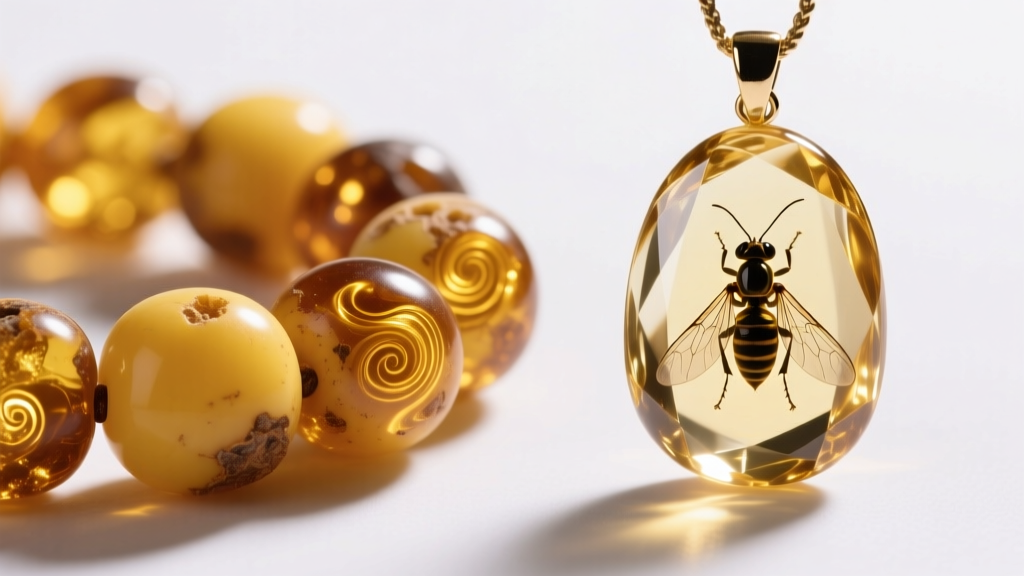
Mined primarily along the shores of the Baltic Sea, this amber contains 3% to 8% succinic acid. This chemical inclusion makes Baltic amber slightly more flexible and less prone to shattering upon impact compared to other varieties. On the Mohs hardness scale, it sits at 2.0 to 2.5. Because it often forms with microscopic bubbles, Baltic amber is naturally cloudy and requires heat treatment (clarification) to achieve high transparency. Its specific gravity ranges from 1.05 to 1.10, allowing it to float in saturated saltwater—a key diagnostic test for authenticity.
Dominican Amber (Retinite)
Originating from the extinct Hymenaea protera tree, Dominican amber lacks succinic acid. It is classified as a retinite. While it shares the same Mohs hardness (2.0-2.5), its lack of succinic acid makes it more brittle, requiring jewelers to use specialized, low-vibration lapidary equipment to prevent micro-fractures during drilling. Dominican amber is prized for its natural transparency and rare blue fluorescence under UV light, a phenomenon caused by specific hydrocarbon inclusions unique to the region's volcanic ash-rich soil.
According to the Gemological Institute of America (GIA), infrared spectroscopy is the definitive method for separating Baltic succinite from Dominican retinite, as their absorption spectra differ fundamentally due to the succinic acid signature.
Jadeite: Burmese Imperial vs. Guatemalan Cosmopolitan
Jadeite is a pyroxene mineral, but its origin determines its translucency, color saturation, and structural density. The market is dominated by two primary sources, each yielding necklaces with distinct wear properties.
Myanmar (Burmese) Jadeite
Burmese jadeite is the global standard for "Imperial" jade. Formed under extreme high-pressure, low-temperature metamorphic conditions, it consists of nearly pure sodium aluminum silicate. This purity results in a tightly interlocking crystalline structure that yields exceptional toughness (surpassing even steel in impact resistance) and high translucency. When purchasing a Burmese jadeite necklace, buyers must verify it is "Type A" (untreated). Type B (acid-bleached and polymer-impregnated) and Type C (dyed) are common, but the polymer degrades over time, causing the necklace to lose its luster and become brittle.
Guatemalan Jadeite
Guatemalan jade often contains higher concentrations of omphacite and chloromelanite. This results in deeper, sometimes darker greens, as well as unique black and silver hues. While it shares the same Mohs hardness (6.5 to 7) and specific gravity (3.30 to 3.38) as Burmese jade, Guatemalan jadeite generally exhibits lower translucency and a more granular texture. It is an excellent choice for heavily carved pendants where structural depth is required, but it rarely achieves the "glassy" luster of top-tier Burmese beads.
Pearls: How Water Origin Shapes Nacre Thickness
The origin of a pearl—specifically the water temperature and the host oyster species—dictates the thickness and optical quality of its nacre. Nacre is composed of microscopic aragonite platelets bound by conchiolin.
| Pearl Origin & Type | Host Oyster | Average Nacre Thickness | Luster Quality | Durability Profile |
|---|---|---|---|---|
| Japanese Akoya | Pinctada fucata martensii | 0.3mm - 0.5mm | Sharp, mirror-like | Prone to peeling if worn daily against acidic skin |
| Australian South Sea | Pinctada maxima (Silver-lipped) | 2.0mm - 4.0mm | Satiny, soft glow | Highly durable, resistant to chipping and peeling |
| Tahitian Black | Pinctada margaritifera | 0.8mm - 2.0mm | Metallic, peacock overtones | Moderate durability, sensitive to harsh cosmetics |
As noted by GIA's pearl research division, the colder waters of Japan cause the Akoya oyster to secrete nacre more slowly, resulting in thinner but highly compacted aragonite layers that produce sharp luster. Conversely, the warm waters of Australia's South Sea promote rapid nacre deposition, yielding thick, durable layers with a softer, satiny luster. When buying a pearl necklace for daily wear, South Sea origins offer vastly superior longevity compared to thin-nacred Akoya strands.
Precious Metals: The Impact of Regional Alloying Standards
Gold is rarely used in its pure 24k form for necklaces due to its extreme malleability. The necklace origin in terms of manufacturing dictates the alloy composition, which fundamentally alters the metal's color, tensile strength, and skin-reactivity.
Italian Goldsmithing (18k Standard)
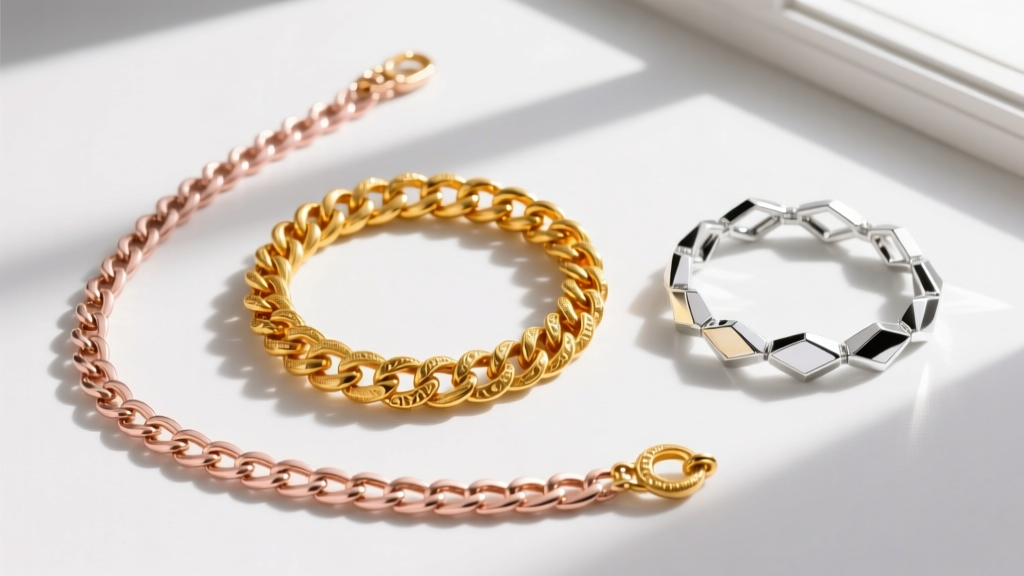
Italian chains, particularly from regions like Vicenza and Arezzo, are predominantly crafted in 18k (75% pure gold). Italian alloying standards prioritize tensile strength and precise color consistency. For rose gold, Italian smiths use a precise copper-to-silver ratio (typically 20% copper, 5% silver) to achieve a pale, elegant blush that resists oxidation. The higher alloy content makes Italian 18k chains highly resistant to stretching, making them ideal for supporting heavy diamond pendants.
Indian Heritage Jewelry (22k Standard)
Traditional Indian necklaces are typically crafted in 22k gold (91.6% pure). The remaining 8.4% is usually a mix of silver and a minimal amount of copper. This specific alloy ratio preserves a deep, rich yellow hue that is culturally significant, but it results in a much softer metal. A 22k Indian gold chain will stretch and deform under heavy pendant loads, requiring periodic re-linking by a master jeweler. It is best suited for lightweight, intricate temple jewelry designs rather than heavy daily-wear pendants.
Verifying Origin: Gemological Frameworks
In an era where synthetic alternatives and geographical misrepresentations are prevalent, relying on visual inspection is insufficient. To truly verify necklace origin, buyers must demand documentation from tier-one gemological laboratories.
- FTIR Spectroscopy: Used to identify the chemical signature of amber and detect polymer treatments in jadeite.
- EDXRF (Energy Dispersive X-Ray Fluorescence): Maps the trace element profile of pearls and colored gemstones, matching them to specific regional mines.
- Isotope Analysis: Increasingly used for precious metals to determine the exact geological epoch and region of the gold's formation.
According to the GIA's comprehensive jadeite guidelines, a certificate of origin is not merely a statement of geography; it is a guarantee of the material's untreated status and structural integrity. Always request a full gemological dossier when investing in high-value, origin-specific necklace materials.
Quick-Reference Guide: Matching Origin to Lifestyle
To synthesize this data into a practical decision framework, match your lifestyle to the material's origin-based properties:
- For Active, Daily Wear: Choose Australian South Sea pearls (thick nacre) or Italian 18k gold chains (high tensile strength).
- For Collector/Investment Pieces: Opt for untreated Burmese Type A jadeite or Dominican amber with rare inclusions.
- For Occasion/Evening Wear: Japanese Akoya pearls (superior mirror luster) and 22k Indian gold (rich, warm color under indoor lighting) are ideal.
By shifting your focus from mere aesthetics to the geological and geographical realities of necklace origin, you transform from a passive consumer into an informed custodian of earth's most remarkable materials.


