How to Clean and Care for Your 3 Nail Cross Necklace
Learn expert techniques to clean, polish, and maintain your 3 nail cross necklace. Discover safe methods for textured metals and heavy chains.


The 3 nail cross necklace is a profound piece of jewelry, blending deep religious symbolism with striking, rugged aesthetics. Whether worn as a testament to faith or as a bold fashion statement, this specific pendant style presents unique maintenance challenges. Unlike smooth, high-polish pendants, the 3 nail cross design frequently features hammered, matte, or intentionally oxidized textures meant to mimic the rustic appearance of forged iron. While visually stunning, these crevices and textured surfaces act as magnets for sebum, environmental sulfur, and microscopic dust. As of 2026, jewelry care has evolved with better micro-fiber technologies and specialized pH-neutral solutions, yet the fundamental metallurgy of these pieces requires a careful, informed approach. In this comprehensive guide, we will explore the exact protocols for cleaning, maintaining, and storing your 3 nail cross necklace to ensure it remains a pristine heirloom for decades.
Understanding the Metallurgy and Intentional Patinas
Before applying any cleaning agent, you must identify the base metal and the surface treatment of your pendant. The vast majority of 3 nail cross necklaces are crafted from 925 sterling silver, 316L surgical stainless steel, or solid brass. However, the secret to the "rustic nail" look lies in the surface treatment. Jewelers often use liver of sulfur (potassium sulfide) to force rapid oxidation on sterling silver, turning the recessed areas black while leaving the raised hammered edges bright. This creates a high-contrast, antique finish. According to The Silver Institute, chemically induced patinas are delicate; aggressive polishing will strip away this intentional darkness, leaving you with a flat, overly shiny pendant that loses its rugged character. If your piece is made of 316L stainless steel, it may feature a PVD (Physical Vapor Deposition) black or rose gold coating, which requires entirely different care to prevent micro-scratches.
The Challenge of Textured and Hammered Finishes
The primary enemy of a textured 3 nail cross pendant is surface area. A hammered finish increases the microscopic surface area of the metal by up to 40% compared to a smooth polish. This means there are significantly more microscopic valleys for dead skin cells, lotion residue, and sulfur-bearing air pollutants to accumulate. When human sebum mixes with sterling silver, it accelerates the formation of silver sulfide (tarnish). Because the 3 nail cross design features deep intersections where the "nails" overlap, standard wiping with a jewelry cloth is entirely ineffective. You must employ a combination of chemical loosening and gentle mechanical agitation to safely lift debris from these overlapping metal joints without damaging the structural integrity of the bail or the chain.
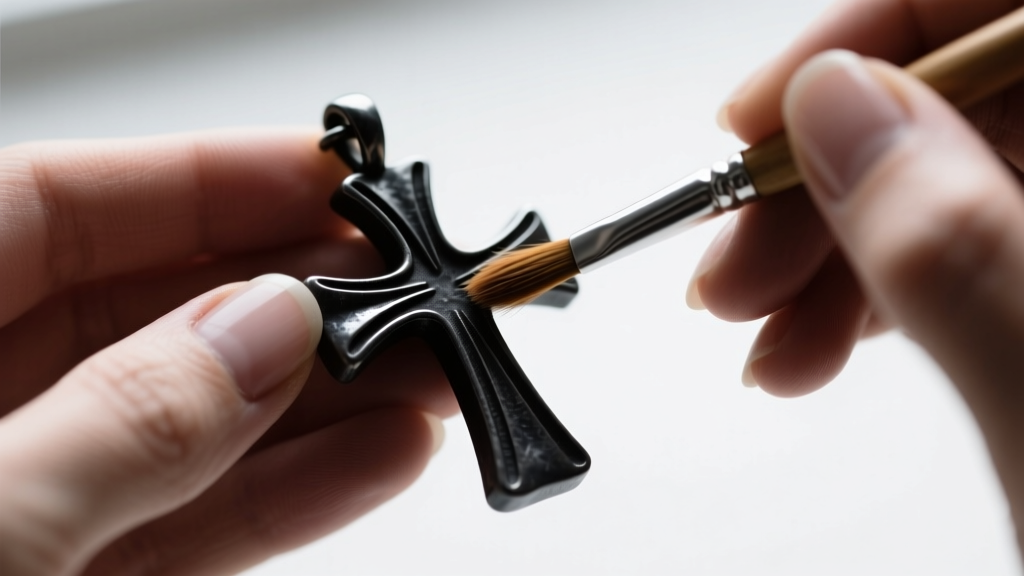
Step-by-Step Cleaning Protocol for 3 Nail Cross Pendants
To properly clean your necklace without stripping intentional oxidation or scratching PVD coatings, follow this exact, jeweler-approved methodology. This process is safe for sterling silver, stainless steel, and brass.
Phase 1: The pH-Neutral Soak
Fill a small glass bowl with lukewarm distilled water. Tap water contains chlorine and trace minerals that can cause spotting or react with brass alloys. Add three drops of a pH-neutral, phosphate-free dish soap (such as original Dawn). Submerge the 3 nail cross pendant and chain entirely. Let it soak for exactly 10 to 15 minutes. This duration is critical; it is long enough to soften hardened sebum and lotion buildup in the crevices, but short enough to prevent any potential water-spotting on high-polish accents. Do not use hot water, as extreme temperature shifts can weaken the solder joints connecting the overlapping nails.
Phase 2: Targeted Mechanical Agitation
Remove the necklace from the soak. Using an extra-soft baby toothbrush (never a standard firm-bristled brush), gently agitate the overlapping intersections of the three nails. Brush in a circular motion, applying zero downward pressure—let the bristles do the work. For the deep, narrow gaps where the nails cross, a wooden dental pick or a soft fiberglass scratch pen can gently dislodge stubborn grime without scratching the metal. If your piece has intentional black oxidation, avoid brushing the recessed areas too vigorously, as you want to preserve the dark contrast.
Phase 3: Rinsing and Micro-Drying
Rinse the necklace thoroughly under a gentle stream of lukewarm distilled water. To dry, do not rub the piece with a cotton towel, as cotton fibers can snag on the hammered textures and leave behind microscopic lint. Instead, use a clean, lint-free microfiber cloth to gently pat the surface. For the deep crevices between the nails, use a can of compressed air (held at least six inches away) to blow out trapped moisture. Leaving water in these joints will lead to accelerated localized tarnishing.
Heavy Pendant Chain Maintenance and Bail Friction
A 3 nail cross pendant is inherently heavy, often weighing between 15 and 35 grams depending on its scale and material. This concentrated weight places immense, continuous stress on the chain, specifically at the bail (the loop connecting the pendant to the chain) and the clasp mechanism. Over time, the constant friction of a heavy silver or steel bail rubbing against the chain links can cause metal fatigue, leading to thinning links and eventual breakage.
Inspect the jump ring holding the pendant every three months. Look for a tiny gap where the ring was soldered or twisted shut; if you see daylight, take it to a jeweler for a laser weld. Furthermore, the spring mechanism inside lobster clasps frequently fails due to dried hand cream and dust jamming the internal coil. Once a month, apply a single, microscopic drop of mineral oil to the clasp hinge using a toothpick. Pump the clasp lever a few times to work the oil in, then wipe away any excess. This simple step, endorsed by master jewelers, extends the life of your clasp mechanism by years. For more on structural jewelry maintenance, refer to the Blue Nile Jewelry Care guidelines.

Destructive Cleaning Methods You Must Avoid
Many well-intentioned owners ruin their 3 nail cross necklaces by applying generic cleaning hacks found online. To protect your investment, strictly avoid the following methods:
- Ultrasonic Cleaners: While great for smooth diamond rings, the high-frequency vibrations of an ultrasonic bath can shake the soldered joints of a multi-piece 3 nail cross pendant loose. It can also strip PVD coatings and fracture oxidized patinas.
- Silver Dip Solutions: These liquid chemical baths (often containing thiourea) instantly remove tarnish but will completely obliterate the intentional black oxidation in the crevices of your cross, leaving it looking flat and artificial.
- Baking Soda and Aluminum Foil: This galvanic reaction is far too aggressive for textured jewelry. It can leave a dull, chalky residue deep within the hammered dimples that is nearly impossible to remove without professional polishing.
- Toothpaste: Toothpaste contains hydrated silica, an abrasive that will leave micro-scratches across any high-polish accents on the nail heads.
Material-Specific Care Matrix
| Material / Finish | Recommended Cleaning Agent | Drying Method | Polishing Cloth Safe? |
|---|---|---|---|
| 925 Silver (Oxidized) | pH-neutral soap + distilled water | Microfiber + compressed air | No (strips patina) |
| 925 Silver (High Polish) | pH-neutral soap + distilled water | Microfiber pat dry | Yes (gentle rubbing) |
| 316L Stainless Steel | Mild dish soap + warm water | Lint-free cotton cloth | Yes |
| Brass (Raw or Lacquered) | Damp microfiber cloth only | Air dry immediately | No (damages lacquer) |
| PVD Coated Metals | Lukewarm water only | Microfiber pat dry | No (causes scratching) |
Long-Term Storage to Prevent Tarnish and Scratches
How you store your 3 nail cross necklace when not wearing it is just as critical as how you clean it. Sterling silver tarnishes when exposed to hydrogen sulfide in the air, a process accelerated by humidity and UV light. Never leave this necklace sitting out on a bathroom counter or dresser. Instead, store it in an airtight, anti-tarnish polyethylene bag. Place a 3M anti-tarnish strip or a small silica gel desiccant packet inside the bag to absorb ambient moisture and neutralize sulfur gases.
Furthermore, because the 3 nail cross design features protruding edges and textured nail heads, it can easily scratch other jewelry if tossed into a communal jewelry box. Always store it isolated. If you must use a jewelry box, ensure the pendant is laid flat in a velvet-lined compartment, and unclasp the chain so it does not tangle around the heavy cross, which can cause kinking in thinner chain styles like cable or box chains.
Expert Jeweler Tip: If your sterling silver 3 nail cross necklace has lost its intentional dark oxidation in the crevices due to over-polishing, you can restore the contrast at home. Purchase a liquid liver of sulfur solution, dilute a single drop in a cup of warm water, and dip the pendant for just 5 to 10 seconds. Rinse immediately, then use a polishing cloth to gently buff only the raised, hammered edges of the nails, leaving the deep intersections dark and rustic.
By understanding the unique material properties and structural demands of your jewelry, you can ensure your 3 nail cross necklace remains a striking, pristine symbol for years to come. Regular, gentle maintenance will always yield better results than aggressive, reactive cleaning.


