Emerald Mens Necklace Trends: 2026 Style & Sourcing Guide
Discover the 2026 emerald mens necklace trend. Explore grading, chain pairings, bezel vs. prong settings, and how to style green gems for modern menswear.

The Shift to Colored Gemstones in Menswear
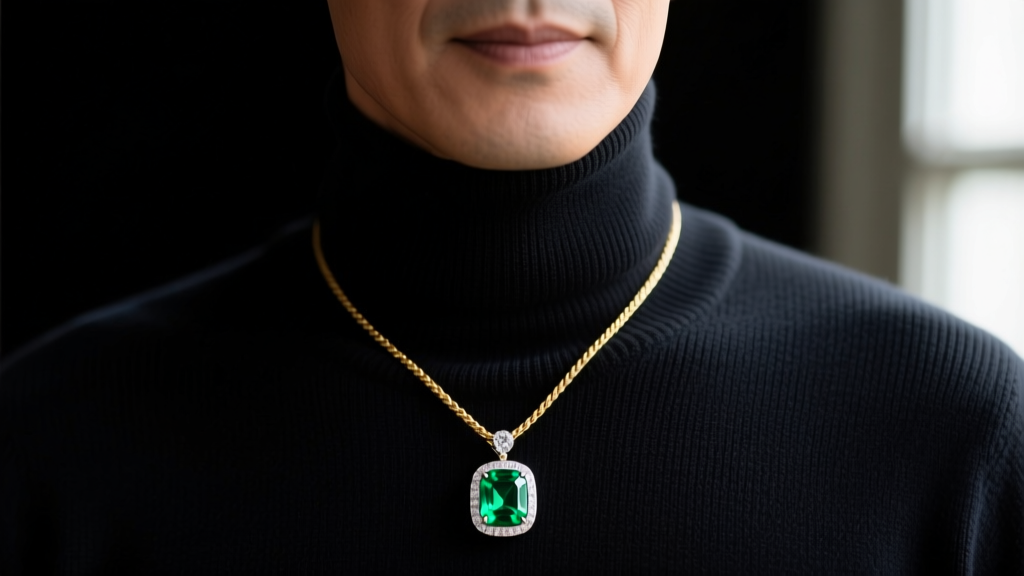
The landscape of men's luxury jewelry has undergone a radical transformation. While the early 2020s were dominated by heavy diamond tennis chains and plain metal links, 2026 marks the definitive rise of the emerald mens necklace as the ultimate sartorial anchor. This shift from monochromatic brilliance to deep, saturated color reflects a broader movement in menswear toward 'curated maximalism'—where a single, high-quality colored gemstone communicates status, taste, and individuality far better than a generic ice chain. Whether worn over a tailored linen shirt in Milan or layered with streetwear in Tokyo, the green beryl variant has become the undisputed king of men's pendants.
Decoding Emerald Quality: What Men Should Look For
Unlike diamonds, where clarity and cut reign supreme, evaluating an emerald requires a completely different framework. According to the Gemological Institute of America (GIA), color is the single most critical value factor for emeralds. However, understanding the nuances of origin, inclusions, and treatments is essential for any serious collector or style-conscious buyer.
Color and Origin
The most prized emeralds exhibit a pure, vibrant green to slightly bluish-green hue with vivid saturation. Colombian emeralds, specifically from the Muzo and Chivor mines, are the gold standard, offering a warm, intense green that seems to glow from within. Zambian emeralds, while often cleaner, tend to lean slightly cooler and bluer. Brazilian stones offer a lighter, more yellowish-green alternative that pairs exceptionally well with rose gold settings.
The 'Jardin' and Clarity
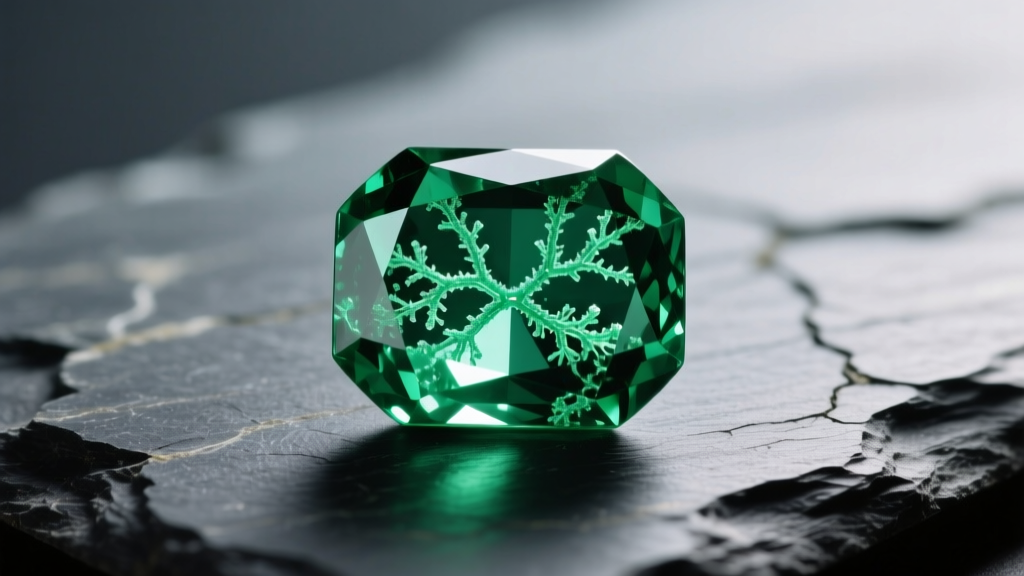
Emeralds are Type III gemstones, meaning they are almost always heavily included. The French call these inclusions jardin (garden). Rather than viewing these internal fractures and mineral deposits as flaws, collectors recognize them as the fingerprint of a natural stone. A completely flawless emerald is either astronomically expensive or entirely synthetic.
Treatment Realities: Oil vs. Resin
Because of their natural surface-reaching fractures, nearly all emeralds are treated to improve clarity. The American Gem Trade Association (AGTA) notes that traditional cedar oil treatment is an accepted, centuries-old practice. However, buyers must be wary of stones treated with modern polymers, epoxies, or resins. While resin-treated stones look pristine and are much cheaper, they degrade over time, turn yellow, and hold virtually no resale value. Always demand a lab report (GIA, SSEF, or Gübelin) confirming 'minor' or 'moderate' oil treatment, avoiding 'polymer' or 'resin' entirely.
Chain Pairings: Matching Metal and Link Style
An emerald pendant is only as good as the chain that holds it. The weight of the stone and the metal setting requires a chain with structural integrity. Hollow chains are a strict faux pas; they will kink, snap, and ruin the aesthetic. Here is a breakdown of the best chain pairings for an emerald mens necklace in 2026.
| Chain Style | Recommended Width | Best Metal | Vibe & Application |
|---|---|---|---|
| Rope Chain | 4mm - 6mm | 18k Yellow Gold | Classic luxury; the twisted links catch light, complementing the emerald's depth. |
| Cuban Link | 8mm - 12mm | 14k/18k Yellow Gold | Streetwear dominance; heavy, flat links provide a bold contrast to the green stone. |
| Box Chain | 2mm - 3.5mm | Platinum / White Gold | Understated elegance; geometric links offer a modern, architectural backdrop. |
| Figaro Chain | 4mm - 5mm | 18k Yellow Gold | Vintage flair; the alternating link pattern adds visual interest without overpowering. |
Prong vs. Bezel: The Durability Debate
Emeralds rank between 7.5 and 8 on the Mohs hardness scale, which sounds durable until you factor in their brittleness. The extensive jardin inclusions create internal fault lines, making emeralds highly susceptible to chipping from sharp impacts—a common hazard in daily menswear.
"For men's jewelry, which inherently takes more physical abuse than women's fine jewelry, a full bezel setting is not just an aesthetic choice; it is a structural necessity to protect the vulnerable corners of an emerald cut or cushion cut stone."
While traditional prong settings allow more light to enter the stone, they leave the corners exposed. In 2026, the trend has heavily favored thick, sculpted gold bezels. A well-crafted bezel not only shields the gemstone but also provides a rugged, masculine frame that integrates seamlessly with signet rings and luxury watch cases.
Styling the Emerald Mens Necklace for 2026
Styling a colored gemstone requires an understanding of color theory, neckline geometry, and fabric weight. The emerald mens necklace is remarkably versatile, provided you adjust the chain length and pendant scale to the occasion.
Streetwear & High-End Casual
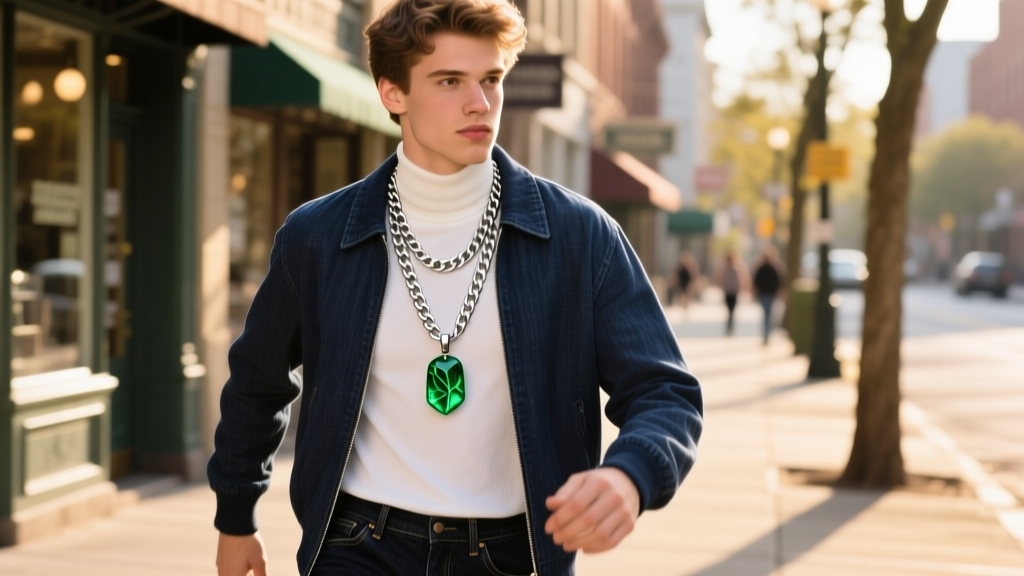
For a modern streetwear aesthetic, layering is key. Pair a 2.5-carat emerald bezel pendant on a 22-inch, 4mm yellow gold rope chain with a thicker, unadorned 10mm silver or white gold Cuban link worn at 20 inches. The contrast between the warm gold/green combo and the cool silver creates a dynamic, curated look. This setup works best over heavyweight cotton t-shirts or unbuttoned flannel overshirts.
Tailoring & Formal Wear
When wearing a suit or a fine-gauge turtleneck, subtlety is paramount. Opt for a smaller, high-clarity emerald (1 to 1.5 carats) set in platinum or white gold on a 20-inch, 2.5mm box chain. The pendant should rest just below the collarbone, peeking out from an unbuttoned dress shirt or sitting flush against a dark merino wool turtleneck. Avoid yellow gold in highly formal corporate settings unless it perfectly matches your watch hardware and cufflinks.
Sourcing and Price Tiers
The market for men's emerald jewelry is stratified by origin, treatment, and craftsmanship. Understanding these tiers prevents overpaying for commercial-grade stones marketed as luxury items.
- Entry-Level ($800 - $2,500): Typically features Zambian or Brazilian emeralds (0.5 to 1.5 carats) with visible inclusions and moderate oiling. Often set in 10k or 14k gold with commercial castings. Great for everyday beater pieces.
- Mid-Tier Collector ($3,000 - $8,000): High-quality Colombian stones (2 to 4 carats) with excellent color saturation and minor cedar oil treatment. Features custom or semi-custom bezel settings in solid 18k gold paired with Italian-made solid links.
- Investment Grade ($15,000 - $50,000+): Rare, untreated or insignificantly oiled Muzo/Chivor emeralds (5+ carats) with exceptional transparency. Paired with bespoke, hand-forged chains and often accented with subtle baguette diamond halos. These pieces come with full SSEF or Gübelin provenance documentation.
Maintenance: Caring for Oiled Emeralds
Because the vast majority of emeralds are oiled, they require specific maintenance. Never clean an emerald mens necklace in an ultrasonic cleaner or use steam; the heat and vibrations will fracture the stone and strip the cedar oil, leaving it cloudy and fractured-looking. Instead, use a soft, lint-free cloth and lukewarm water with a drop of mild, non-detergent soap. Over time, the oil may dry out, causing the stone to look pale or reveal hidden fractures. A professional jeweler can safely 're-oil' the stone, restoring its original luster and depth.


