Whiting & Davis Cameo Necklace: Material & Value Guide
Explore the material composition of a Whiting & Davis cameo necklace. Learn about mesh metals, cameo types, plating, and authentication.

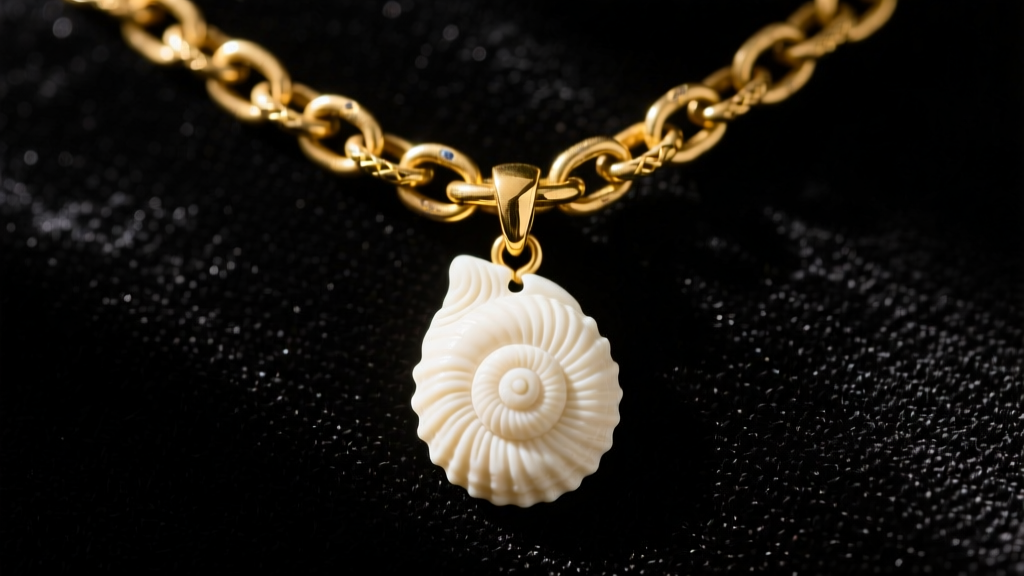
When collectors and vintage jewelry enthusiasts discuss early 20th-century accessories, the Whiting & Davis cameo necklace occupies a fascinating intersection of industrial innovation and classical aesthetics. While the Whiting & Davis company is globally renowned for pioneering machine-made metal mesh handbags starting in 1912, their foray into jewelry—specifically pairing their patented mesh chains with cameo pendants—created a highly collectible category that remains relevant today. However, the market is flooded with misidentified pieces, reproductions, and heavily degraded examples. To accurately assess the value, authenticity, and longevity of a Whiting & Davis cameo necklace, one must look past the design and deeply analyze the material properties of both the mesh chain and the cameo pendant.
The Anatomy of the Mesh Chain: Brass vs. Steel
The foundation of any authentic vintage Whiting & Davis necklace is its mesh chain. Unlike traditional link chains, W&D mesh is constructed from thousands of tiny, interlocking metal rings stamped and woven by specialized machines. The base metal used in these chains dictates the necklace's weight, drape, and susceptibility to corrosion.
Early Era (1910s–1930s): Brass Base
Early Whiting & Davis mesh jewelry predominantly utilized brass as the base metal. Brass (an alloy of copper and zinc) was favored for its malleability, which allowed the machine stamping process to create incredibly fine, fluid links without fracturing. A brass-mesh Whiting & Davis cameo necklace will feel slightly heavier and possess a warmer, softer drape. From a material science perspective, brass is highly resistant to rust but is prone to dezincification and surface oxidation (tarnish) when exposed to the sulfur compounds in human sweat and atmospheric pollutants.
Mid-Century Era (1940s–1950s): Steel Base
During World War II, brass was heavily rationed for munitions, forcing W&D to pivot to carbon steel and stainless steel alloys for their mesh production. Steel mesh is distinctly lighter, stiffer, and highly magnetic. While steel offers superior tensile strength—making the links less prone to stretching under the weight of a heavy cameo pendant—it introduces a critical failure mode: iron oxide corrosion. If the protective outer plating on a steel-mesh necklace is compromised, ambient humidity will trigger rapid, irreversible rusting that weakens the micro-links and eventually causes the chain to snap.
Material Comparison: The Cameo Pendant
The cameo pendant itself is where the greatest variance in material quality and market value occurs. While traditional cameos are hand-carved from hardstone or shell, Whiting & Davis utilized a variety of materials depending on the production era and the target price point. According to the Victoria and Albert Museum's extensive archives on cameo history, the transition from natural materials to synthetic alternatives was a defining shift in 20th-century costume jewelry.
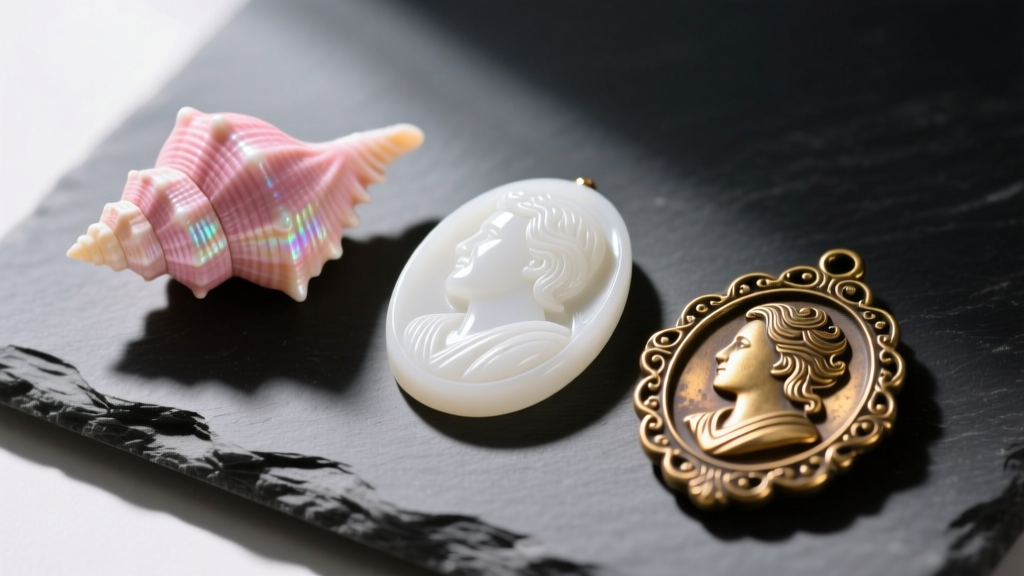
| Cameo Material | Density & Weight | Carving / Mold Depth | UV & Heat Resistance | Current Market Value Range |
|---|---|---|---|---|
| Carved Conch Shell | Medium (2.7 g/cm³) | Deep, sharp undercuts | High (but acid sensitive) | $150 – $350+ |
| Molded Cellulose Acetate / Resin | Low (1.2 g/cm³) | Shallow, rounded edges | Low (yellows and warps) | $45 – $90 |
| Stamped Metal (Pot Metal/Brass) | High (7.5+ g/cm³) | Uniform, shallow relief | High (prone to plating loss) | $60 – $120 |
Shell Cameos: The Premium Standard
The most sought-after Whiting & Davis cameo necklaces feature genuine carved shell, typically from the Queen Conch or the Emperor Helmet shell (Cassis madagascariensis). Shell is composed primarily of calcium carbonate. Under magnification, a genuine shell cameo will reveal microscopic striations and a distinct lack of mold lines. The background is usually a translucent orange or pink, while the carved figure is opaque white. Because calcium carbonate is highly reactive to acids, even the mild lactic acid in human perspiration can etch the surface of a shell cameo over decades of wear, dulling the high-relief details.
Resin and Cellulose Acetate: The Mass-Market Alternative
To meet post-war consumer demand, W&D introduced molded synthetic cameos. These pieces lack the sharp, undercut depth of hand-carved shell. Materially, early cellulose acetate is highly unstable; it off-gasses acetic acid as it degrades, leading to a condition known as 'vinegar syndrome,' which causes the cameo to shrink, warp, and develop a network of fine surface crazing. Later epoxy resins are more stable but are prone to UV degradation, turning a once-bright white into a dingy, irreversible yellow.
Plating Properties and Tarnish Failure Modes
The metal mesh and the bezel holding the cameo were rarely left in their raw base metal state. They were finished via electroplating. Understanding the plating thickness and composition is vital for evaluating a necklace's condition. As detailed by the Antique Jewelry University's guide to metal plating, the longevity of vintage electroplate depends entirely on the micron thickness of the top layer and the presence of a barrier strike layer.

- Gold Wash (Flash Plating): Less than 0.175 microns thick. Found on lower-tier pieces. It wears away rapidly through micro-abrasion against the skin, exposing the brass or steel beneath to galvanic corrosion.
- Heavy Gold Electroplate (HGE): Typically 2.5 microns or thicker. Found on premium W&D pieces. It offers excellent wear resistance but will eventually show 'brass bleed' at the high-friction points of the interlocking mesh links.
- Rhodium Plating: Used to simulate platinum or white gold. Rhodium is a noble metal, meaning it is virtually impervious to oxidation and tarnish. However, if the underlying copper or brass base metal oxidizes, the resulting expansion will cause the brittle rhodium layer to flake and spall off the mesh.
Authentication and Material Testing
Because the Whiting & Davis cameo necklace is a high-value collector's item, authentication requires material testing rather than just visual inspection of the clasp or hangtag.
Expert Insight: Never rely solely on the 'W&D' stamp on the clasp. Clasp components were frequently replaced by jewelers in the 1960s and 70s when the original spring rings failed. The mesh weave pattern and the metallurgical composition of the chain are far more reliable indicators of authenticity.
The Magnet Test
Pass a strong neodymium magnet along the chain. If the mesh is strongly attracted, the base metal is steel, dating the piece likely to the 1940s or later. If there is zero magnetic pull, the base is brass, indicating an earlier production date (or a modern reproduction, which must be cross-referenced with link shape).
The UV Fluorescence Test
Shine a 365nm ultraviolet flashlight on the cameo pendant. Genuine carved shell will appear mostly inert or show a faint, chalky white fluorescence. Conversely, many vintage molded resins and cellulose acetates will fluoresce brightly (often a milky blue or green) due to the optical brighteners and chemical plasticizers used in mid-century manufacturing.
Preservation and Material-Specific Care
Caring for a Whiting & Davis cameo necklace requires a bifurcated approach, as the cleaning agents safe for metal mesh will destroy a shell cameo, and vice versa.
- Never Use Ultrasonic Cleaners: The high-frequency cavitation bubbles generated by ultrasonic cleaners can easily snap the delicate, aged interlocking links of a vintage mesh chain, particularly if the brass has suffered from dezincification.
- Avoid Chemical Dips: Commercial silver and gold dips contain thiourea and strong acids. These will strip the gold electroplate from the mesh and will aggressively etch the calcium carbonate surface of a shell cameo, ruining the carved relief.
- Proper Storage Mechanics: Mesh chains suffer from 'link memory' and kinking. Always store the necklace laid perfectly flat in a low-humidity environment, or hang it from a wide, padded hanger. Never store it coiled in a tight jewelry box, as the steel or brass links will permanently deform and weaken at the bend radius.
- Cameo Hydration: Shell cameos require a minimal amount of ambient humidity to prevent micro-cracking. Storing them in airtight plastic bags with silica gel packets will desiccate the organic matrix of the shell, leading to catastrophic structural failure.
By understanding the precise metallurgical and organic materials that comprise a Whiting & Davis cameo necklace, collectors can make informed purchasing decisions, accurately date their pieces, and implement preservation strategies that ensure these remarkable artifacts of early 20th-century manufacturing survive for generations to come.


