How to Style an Egyptian Kohl Necklace: Step-by-Step Guide
Learn how to style, authenticate, and care for an Egyptian kohl necklace. Our step-by-step guide covers materials, layering, and historical styling.

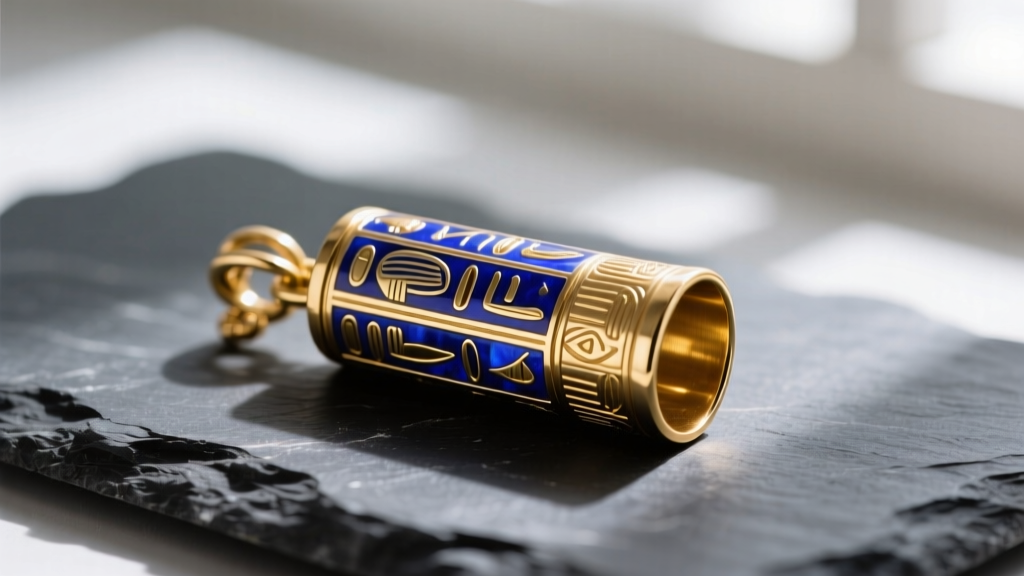
The Historical Allure of the Kohl Tube Pendant
When jewelry enthusiasts and historians discuss ancient Egyptian adornments, the kohl necklace stands out as a masterpiece of functional artistry. Unlike standard gemstone pendants, the kohl tube or kohl pot pendant is a direct homage to the ancient cosmetic vessels used to store galena and malachite powders—the sacred eyeliners worn by pharaohs and nobility to protect against the harsh desert sun and the evil eye. Today, modern revival pieces and authentic antiquities transformed into wearable art offer a striking, vertical silhouette that defies conventional jewelry norms.
Styling a kohl necklace requires an understanding of its unique geometry, historical weight, and the specific material vulnerabilities of the stones typically used in its craftsmanship. This comprehensive, step-by-step guide will walk you through authenticating materials, selecting the proper chain architecture, mastering advanced layering techniques, and preserving these porous historical treasures for daily wear in 2026.
Step 1: Authenticating Materials and Craftsmanship
The first step in curating a high-quality kohl necklace is verifying the materials. Traditional Egyptian revival pendants rely heavily on Lapis Lazuli, Carnelian, Turquoise, and Faience (a glazed non-clay ceramic). Unfortunately, the market is saturated with dyed howlite and synthetic resins masquerading as genuine stones.
According to the Gemological Institute of America (GIA), genuine Lapis Lazuli should exhibit a slightly uneven distribution of color, often with flecks of golden pyrite and white calcite. If the blue is perfectly uniform and lacks these natural inclusions, you are likely looking at dyed jasper or synthetic spinel. Furthermore, the metal casing should be evaluated. For daily wear, insist on 18k Gold Vermeil (a minimum of 2.5 microns of gold over a sterling silver base) rather than standard gold-plated brass, which will oxidize and turn your skin green within months of contact with body oils.
| Material | Mohs Hardness | Average Price Range | Authentication Marker |
|---|---|---|---|
| Genuine Lapis Lazuli | 5.0 - 6.0 | $120 - $350 | Pyrite flecks, uneven dye absorption |
| Carnelian (Agate) | 6.5 - 7.0 | $80 - $200 | Cloudy translucency, banded coloring |
| Egyptian Faience | 4.0 - 5.0 | $150 - $500+ | Glassy glaze, micro-cracking (crazing) |
| Dyed Howlite (Fake) | 3.5 | $15 - $45 | Concentrated dye in surface cracks |
Step 2: Selecting the Optimal Chain Gauge and Length
The defining characteristic of a kohl pendant is its elongated, cylindrical, or slightly tapered tubular shape. Because this geometry is inherently top-heavy and vertical, pairing it with a flimsy chain is a structural mistake. A chain that is too thin will constantly tangle around the elongated bail, while a chain that is too thick will visually overpower the intricate hieroglyphic or geometric engravings on the tube.
The Ideal Chain Specifications
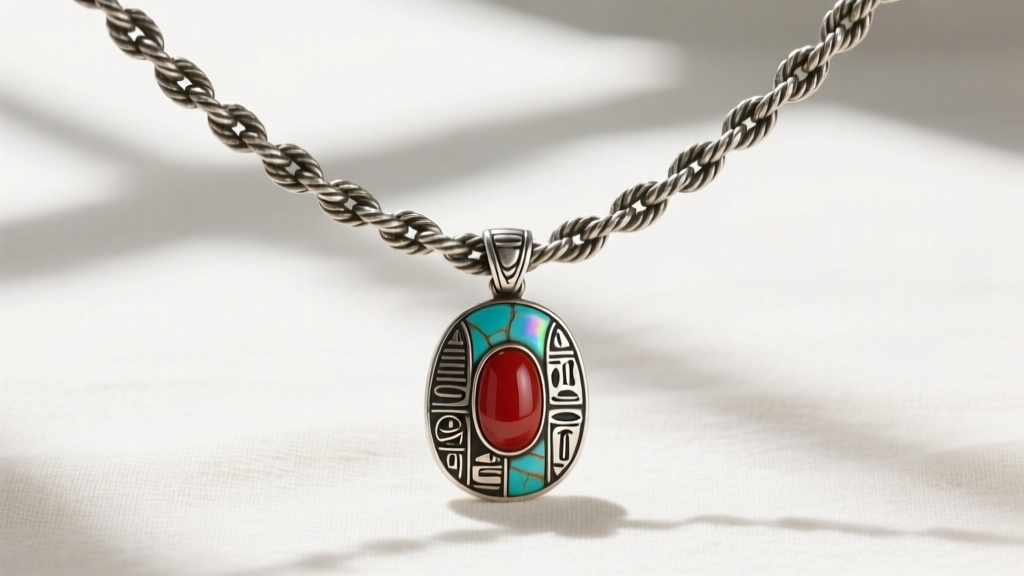
- Chain Type: Opt for a Box Chain or a Rope Chain. These styles offer high tensile strength and resist kinking, which is crucial when supporting a heavy, elongated pendant.
- Gauge Size: A 1.5mm to 2.2mm gauge provides the perfect visual anchor. Anything below 1.2mm risks snapping under the pendulum-like swing of a heavy brass or silver kohl tube.
- Length: An 18-inch to 20-inch drop is optimal. This allows the bottom of the kohl tube to rest precisely on the sternum, mimicking the placement of ancient Egyptian pectoral collars.
Step 3: Mastering the Layering Technique
Layering a kohl necklace requires a strategic approach to geometry. Because the kohl tube is strictly vertical, layering it with other vertical pendants (like dagger or spike motifs) creates visual clutter and physical tangling. Instead, you must employ the principle of geometric contrast.
The Rule of Thirds in Necklace Layering
Build your stack using three distinct lengths and shapes to create a balanced focal point:
- The Anchor (16 inches): Start with a simple, unadorned gold or silver herringbone choker. This provides a horizontal baseline that frames the collarbone.
- The Focal Point (18 inches): This is where your kohl necklace sits. The vertical drop of the tube will intersect beautifully with the horizontal choker.
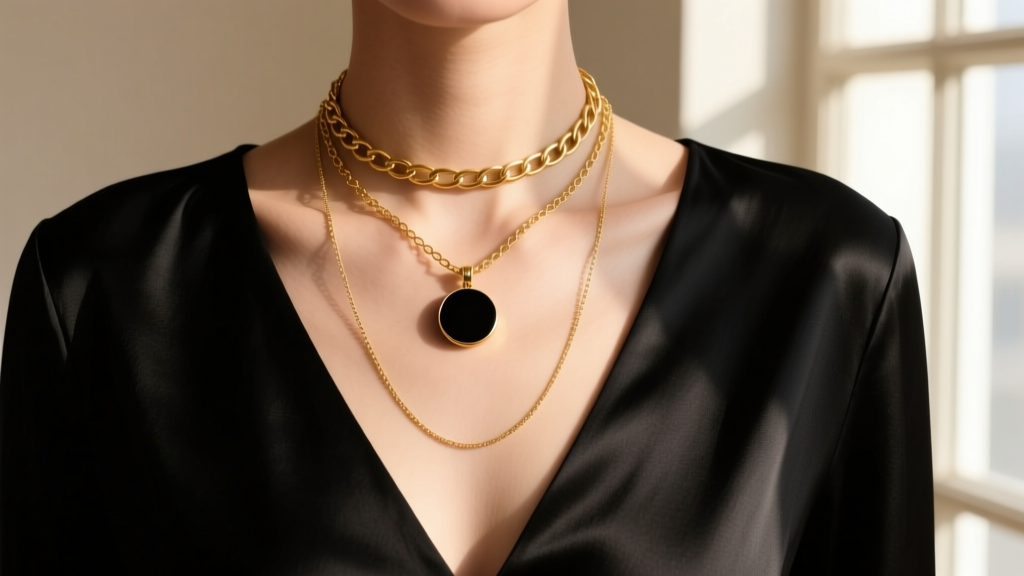
- The Counterweight (22 inches): Finish with a wide, circular pendant—such as a hammered gold disc, a coin replica, or a scarab beetle motif. The circular shape contrasts with the cylindrical kohl tube, preventing the eye from getting trapped in a single vertical line.
Step 4: Mapping Necklines to Occasions
The elongated nature of the kohl pendant makes it a powerful tool for manipulating visual proportions. However, it can easily clash with the wrong garment architecture.
"When wearing tubular amulets, treat the pendant as an extension of the garment's neckline. The goal is to elongate the torso without allowing the jewelry to become lost in fabric folds." — Archival Jewelry Styling Guidelines, Metropolitan Museum of Art Costume Institute
- Deep V-Necks & Wrap Dresses: The ideal pairing. The V-shape of the garment naturally guides the eye down to the vertical kohl tube, creating a seamless, elongating effect perfect for evening wear or professional settings.
- Crew Necks & High Collars: Avoid these. The bottom edge of a kohl tube will constantly snag on the ribbed collar of a sweater or the top button of a blouse, risking damage to the delicate faience or stone inlays.
- Off-the-Shoulder & Boat Necks: A brilliant choice for summer. The horizontal expanse of exposed skin provides a blank canvas that allows the intricate gold vermeil casing and vibrant lapis lazuli to pop without competition.
Step 5: Preservation and Cleaning Protocols
Caring for a kohl necklace is vastly different from maintaining standard diamond or sapphire jewelry. The materials historically used in these pieces are highly porous and chemically sensitive. According to conservation guidelines detailed by the Metropolitan Museum of Art's Heilbrunn Timeline of Art History, ancient cosmetic vessels and their modern replicas require meticulous environmental control.
What to Avoid
Never use ultrasonic cleaners. The high-frequency vibrations will shatter faience glazes and cause micro-fractures in natural lapis lazuli. Furthermore, commercial silver dips contain harsh acids that will strip the oxidized detailing from the hieroglyphic engravings, leaving the piece looking flat and artificially bright.
The Safe Cleaning Method
- Dry Dusting: Use a clean, ultra-soft makeup brush (like a goat-hair powder brush) to gently sweep dust out of the engraved crevices of the metal casing.
- Stone Wiping: Dampen a microfiber cloth with distilled water—never tap water, as the chlorine and fluoride can react with the copper compounds in turquoise and malachite. Gently wipe the stone surface.
- Metal Polishing: Apply a minuscule amount of jeweler's rouge to a dry cotton swab and carefully polish only the raised metal surfaces, avoiding any contact with the porous stones.
- Storage: Store the necklace flat in a climate-controlled environment. Hanging a heavy kohl tube for long periods can stretch the chain and place undue stress on the soldered bail loop.
Final Thoughts on the Kohl Necklace
The kohl necklace is far more than a passing trend; it is a wearable artifact that bridges the gap between ancient cosmetic rituals and modern sartorial expression. By rigorously authenticating your materials, respecting the structural demands of the pendant's geometry, and adhering to strict preservation protocols, you can confidently integrate this striking piece into your daily rotation. Whether you are layering it over a minimalist linen tunic or letting it stand alone against a dark silk blouse, the kohl tube remains a testament to the enduring power of historical jewelry design.


