The Egyptian Gold Necklace: Metallurgy, Motifs & Craft
Explore the technical craft of the Egyptian gold necklace. Learn about karat alloys, historical motifs, casting methods, and authentication.

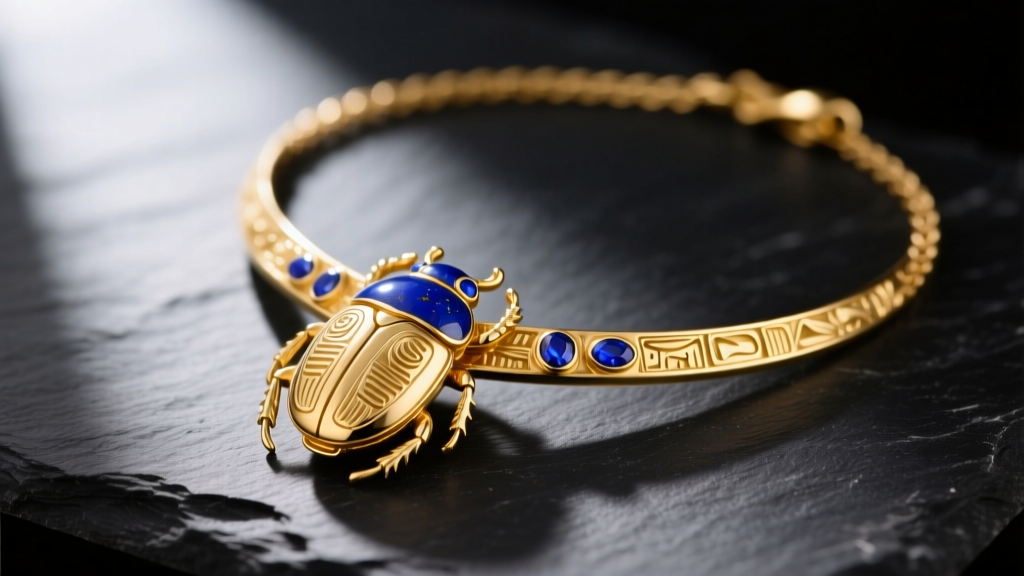
The appeal of an Egyptian gold necklace transcends mere ornamentation; it is a wearable archive of ancient metallurgy, iconography, and engineering. While mass-market costume jewelry floods the internet with hollow, gold-plated replicas, true horological and jewelry collectors seek out pieces that honor the technical precision of ancient Egyptian goldsmiths while utilizing modern material science. This guide bypasses superficial style advice to deliver a deep-dive technical analysis of the alloys, casting methodologies, chain architectures, and authentication frameworks that define high-caliber Egyptian-inspired gold jewelry in 2026.
The Metallurgy of Ancient vs. Modern Egyptian Gold
To understand the structural integrity of an Egyptian gold necklace, one must first examine the alloy composition. Ancient Egyptian goldsmiths primarily worked with native gold, which is often an alloy of gold and silver known as electrum. According to the Metropolitan Museum of Art, electrum was highly prized in the Middle Kingdom for its pale, luminous hue, but its silver content made it harder and more brittle than pure gold.
Modern artisan jewelers crafting authentic Egyptian-style necklaces typically avoid 24-karat (99.9% pure) gold for structural components due to its extreme malleability. On the Vickers hardness scale, 24k gold measures a mere 25 HV, making it highly susceptible to deformation under the weight of heavy pendants. Instead, specialists rely on two primary alloy standards:
- 21-Karat Gold (875): The standard for high-end Middle Eastern and Egyptian domestic markets. Comprising 87.5% gold and 12.5% alloy (typically a 2:1 ratio of copper to silver), 21k gold achieves a Vickers hardness of roughly 80 HV. It retains the deep, saturated yellow-orange hue of ancient artifacts while providing sufficient tensile strength for chain links.
- 18-Karat Gold (750): The international luxury standard. With 25% alloy metals, 18k gold reaches 120-140 HV, allowing for intricate micro-pave settings and high-stress clasp mechanisms without the risk of metal fatigue.
As noted by the Gemological Institute of America (GIA), the specific copper-to-silver ratio in the alloy dictates the final color temperature. A higher copper content yields the rose-gold tint seen in some New Kingdom artifacts, while a balanced copper-silver mix achieves the classic yellow gold associated with Tutankhamun's funerary mask.
Decoding Iconographic Motifs & Casting Techniques
The visual language of an Egyptian gold necklace relies on specific iconography: the Scarab (Kheper) representing rebirth, the Wedjat (Eye of Horus) for protection, and the Tyet (Knot of Isis) for welfare. However, the method by which these motifs are rendered separates master craftsmen from mass-producers.
The Lost-Wax Casting Protocol
High-end Egyptian pendants are produced via lost-wax casting, a method that allows for complex, three-dimensional bas-relief and high-relief textures. The technical workflow involves:
- Wax Modeling: A master model is carved from jeweler's wax or milled via 5-axis CNC machines to achieve perfect symmetry in motifs like the Wedjat eye.
- Spruing and Investment: The wax model is attached to a wax tree via sprues (channels for molten gold) and encased in a phosphate-bonded investment plaster.
- Burnout: The flask is heated to 750°C in a kiln, vaporizing the wax and leaving a precise negative cavity.
- Centrifugal Casting: Molten 18k or 21k gold, heated to approximately 1,000°C, is forced into the cavity. The rapid cooling rate ensures a dense, porosity-free crystalline structure.
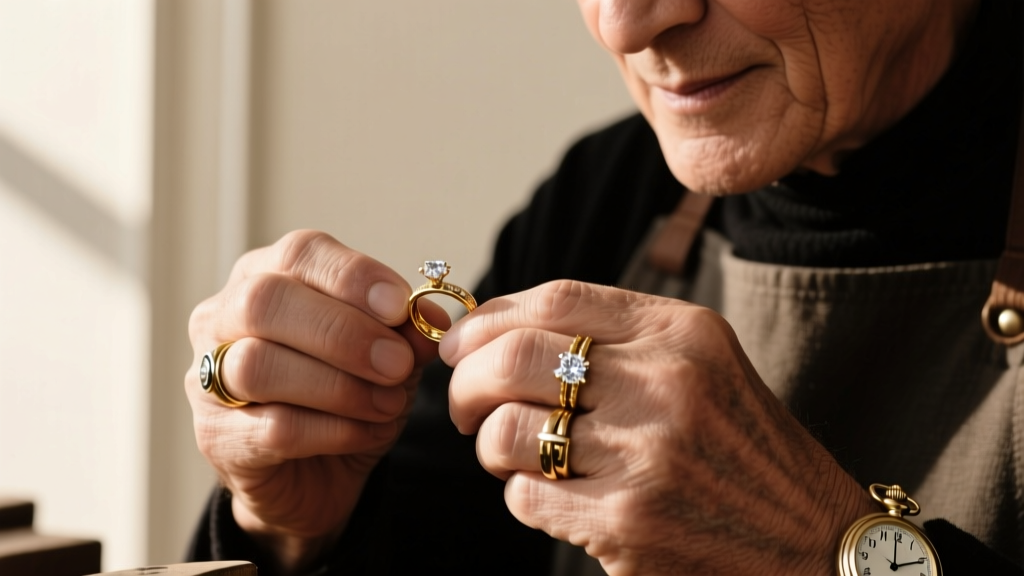
Expert Insight: Beware of 'die-struck' Egyptian pendants. While die-stripping is excellent for high-volume, low-relief coins, it compresses the metal grain structure in a way that flattens the intricate, multi-layered depth required for authentic-looking scarab wings or hieroglyphic cartouches. Always inspect the reverse side of the pendant; a true cast piece will have a slightly organic texture or deliberate hollowing to manage weight, whereas a stamped piece will mirror the front design in negative.
Chain Architecture and Clasp Engineering
The pendant is only half the equation; the chain architecture of an Egyptian gold necklace must support significant mass. Solid cast gold pendants frequently weigh between 15 and 40 grams. A standard 1mm cable chain, which offers a tensile strength of roughly 15-20 lbs, will inevitably suffer from link elongation and eventual failure under this load.
Optimal Chain Weaves
For heavy Egyptian pendants, structural integrity dictates the use of specific weaves:
- Foxtail Chain: Composed of V-shaped links arranged in a continuous, braided pattern. The foxtail weave distributes lateral stress across multiple contact points, making it virtually immune to kinking and highly resistant to snapping under heavy pendant loads.
- Byzantine Chain: A complex 4-in-1 weave that offers immense thickness and a rope-like drape. Its interlocking links provide a tensile strength exceeding 60 lbs, making it the premier choice for pendants over 30 grams.
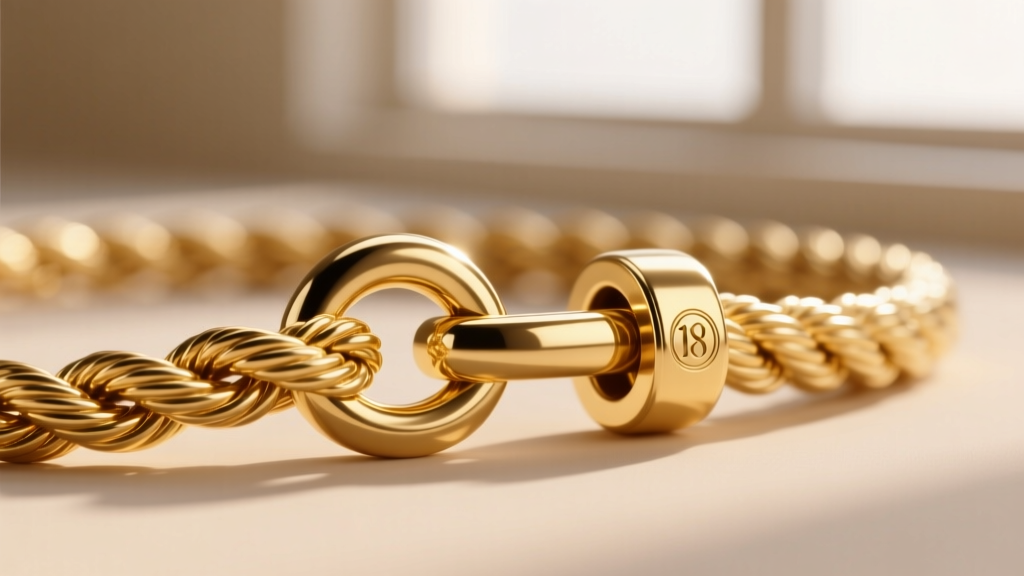
- Rope Chain: While visually appropriate for the twisted collars seen in ancient depictions, standard rope chains are prone to unraveling if a single link fails. If choosing a rope chain, opt for a 'hardened' or diamond-cut variant that has been mechanically compressed to increase link density.
Clasp Mechanisms: Form vs. Function
The clasp is the most frequent point of mechanical failure. Traditional spring-ring clasps are entirely inadequate for heavy Egyptian necklaces. The two acceptable standards are:
- Threaded Barrel Clasp: Offers a seamless, historical aesthetic that blends into the chain. However, it requires precise 0.5mm pitch threading. Cross-threading can strip the internal grooves, rendering the clasp useless.
- Heavy-Duty Lobster Claw: The modern engineering solution. A cast 18k lobster clasp with a stainless steel internal spring provides superior security, though it disrupts the historical illusion of the piece.
Market Tiers and Authentication Framework
Navigating the market for an Egyptian gold necklace requires a strict analytical framework. Pricing is inextricably linked to the daily spot price of gold, as tracked by the World Gold Council, plus the artisan premium. Below is a technical breakdown of market tiers.
| Market Tier | Karat / Purity | Manufacturing Method | Hallmarks & Stamps | Estimated Price Range (USD) |
|---|---|---|---|---|
| Mass Market / Tourist | 14k (585) or Gold-Plated | Die-Struck / Electroformed | Faded '585' or no stamp | $150 - $600 |
| Artisan / Boutique | 18k (750) or 21k (875) | Lost-Wax Cast, Hand-Finished | Maker's Mark, '750', Assay Stamp | $1,200 - $4,500 |
| Archaeological / Antique | Varies (often 22k+) | Historical Repoussé / Granulation | Period-specific assay marks | $10,000 - $100,000+ |
Authentication Protocol: Never rely solely on a visual stamp. High-end counterfeits frequently feature laser-engraved '750' stamps on base metals. Always request X-ray fluorescence (XRF) spectrometry results from the seller, which provides a non-destructive, exact elemental breakdown of the alloy, confirming the precise gold-to-copper-to-silver ratios.
Care and Preservation Protocols
The metallurgical composition of an Egyptian gold necklace dictates its care regimen. Because 18k and 21k gold contain significant copper, these pieces are vulnerable to oxidation when exposed to sulfur compounds in the atmosphere or chlorine in tap water. This manifests as a dull, reddish-brown surface film.
Furthermore, authentic Egyptian designs frequently incorporate inlays of lapis lazuli, turquoise, or carnelian. Never use ultrasonic cleaners or steamers on these pieces. Lapis lazuli is a porous, calcite-based rock (Mohs hardness 5-5.5) that will absorb cleaning chemicals, leading to irreversible discoloration. Turquoise is similarly vulnerable to thermal shock and chemical dehydration.
Proper Cleaning Method: Use a solution of distilled water and a few drops of pH-neutral, phosphate-free dish soap. Agitate gently with a natural-bristle brush (synthetic bristles can induce micro-scratches on high-polish 21k gold). Dry immediately with a microfiber cloth, and store the necklace flat in an anti-tarnish cloth pouch to prevent the chain links from grinding against one another and generating gold dust.


