How to Clean and Care for Your Watch Pendant Necklace
Learn expert care, cleaning, and maintenance tips for your watch pendant necklace. Protect the movement, polish the chain, and preserve your piece.

The Unique Challenge of Watch Pendant Jewelry
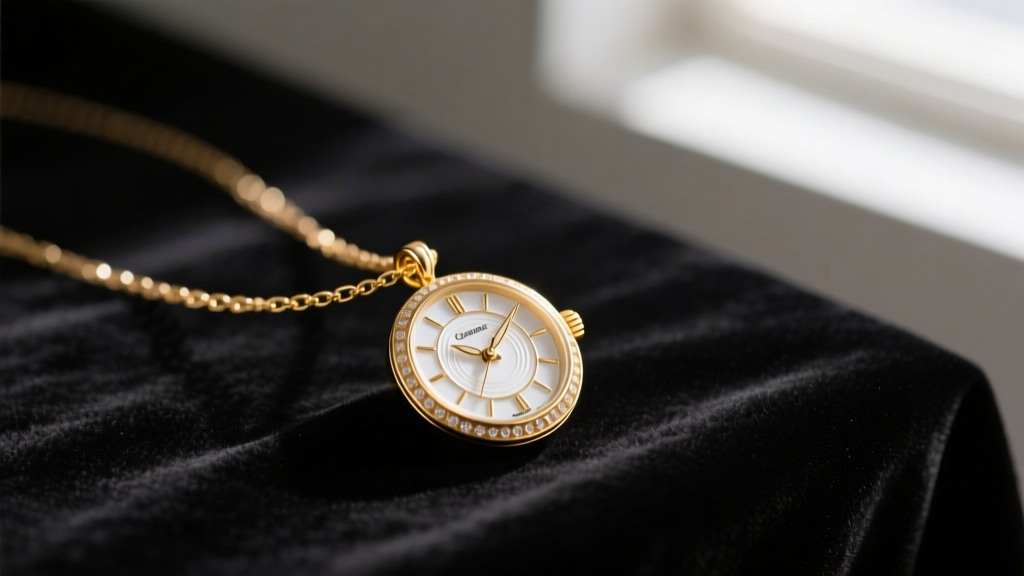
A watch pendant necklace is a remarkable fusion of horology and adornment. Whether you own a vintage mechanical pocket watch converted into a pendant, a modern quartz miniature watch on a rolo chain, or a decorative locket styled like a timepiece, this accessory requires a highly specialized approach to maintenance. Standard jewelry cleaning protocols are not just insufficient for these pieces; they can be actively destructive.
The primary challenge lies in the duality of the object. The chain and outer casing can often withstand traditional jewelry cleaning methods, but the internal movement—comprising microscopic gears, synthetic ruby jewel bearings, and delicate lubricants—is highly vulnerable to moisture, vibrations, and harsh chemicals. According to the Gemological Institute of America (GIA), while precious metals and gemstones require specific pH-balanced care, the introduction of those same cleaning agents into a watch movement will strip essential oils and cause rapid mechanical failure.
In this comprehensive guide, we will break down the exact protocols for cleaning, maintaining, and storing your watch pendant necklace to ensure both its aesthetic brilliance and its horological longevity.
Step-by-Step Cleaning Guide: Chain vs. Casing
The golden rule of cleaning any functional watch pendant necklace is separation. You must never submerge the entire piece in a liquid bath or place it in an ultrasonic cleaner. Ultrasonic waves can shatter the delicate pivots of a mechanical movement and degrade the rubber O-ring gaskets that provide water resistance.
What You Need
- Mild, phosphate-free dish soap (e.g., original Dawn)
- Distilled water (to prevent hard water spots on the crystal)
- A soft-bristled baby toothbrush or specialized jewelry brush
- Lint-free microfiber cloths
- Cotton swabs (Q-tips)
- A wooden toothpick (for crevice cleaning)
The Cleaning Process
1. Detach the Chain: If your pendant features a removable bail or a jump ring connecting it to the chain, carefully detach it. This allows you to clean the chain aggressively without risking the watch casing.
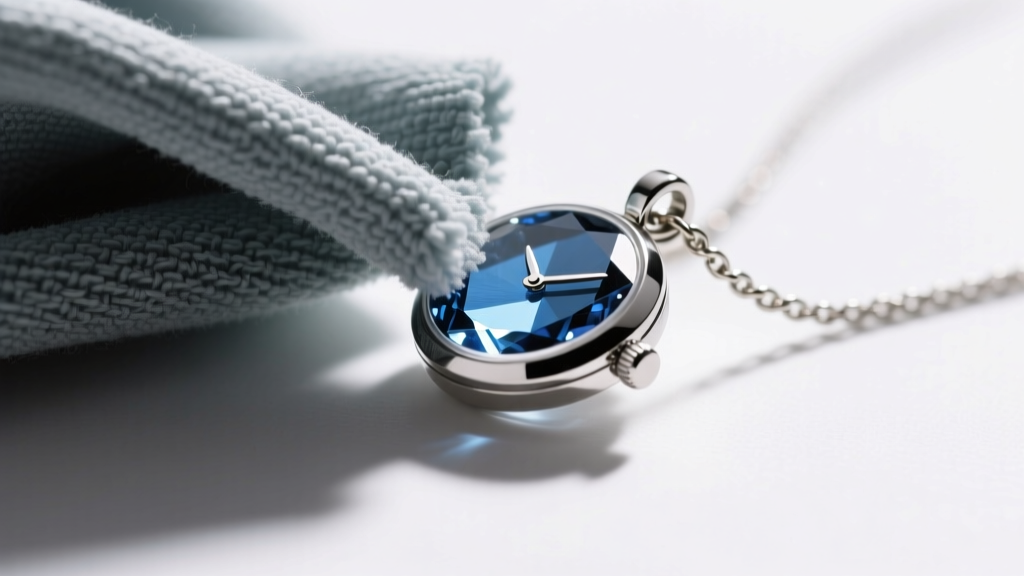
2. Clean the Chain: Mix a few drops of mild dish soap into a bowl of warm distilled water. Submerge the chain for 5 to 10 minutes. Gently agitate it, then use the soft-bristled brush to clean between the links. Rinse thoroughly with distilled water and pat dry with a microfiber cloth. For sterling silver chains prone to oxidation, follow up with a specialized silver polishing cloth.
3. Wipe the Casing: Never submerge the watch pendant. Instead, dampen a corner of your microfiber cloth with distilled water and gently wipe the metal casing. Use a dry cotton swab to carefully clean the crevices around the crown (the winding knob) and the bow (the loop where the chain attaches).
"The most common cause of death for a pendant watch is not a drop or a shock, but the well-intentioned owner who decides to 'give it a good soak' in soapy water. Moisture ingress is the ultimate enemy of horology." — Master Watchmaker Adage
Crucial Maintenance: Protecting the Internal Movement
Understanding the environmental hazards your watch pendant necklace faces is critical. Because pendant watches sit against the chest, they are exposed to body heat, sweat, and the occasional splash. The table below outlines standard water resistance ratings and what they actually mean for your pendant.
| ATM Rating | Real-World Meaning | Pendant Necklace Suitability |
|---|---|---|
| 0 ATM | No water resistance. Dust resistant only. | Strictly decorative. Keep away from all moisture and heavy perspiration. |
| 1-3 ATM | Splash resistant. Can handle light rain. | Standard for most fashion watch pendants. Safe for daily wear, but remove before showering. |
| 5 ATM | Can withstand brief immersion and showering. | Rare in pendant watches. Still avoid hot water, as steam bypasses gaskets. |
| 10+ ATM | Swimming and snorkeling safe. | Almost non-existent in pendant jewelry due to case thickness constraints. |
Furthermore, avoid exposing your pendant to aerosolized chemicals. Hairspray, perfume, and sunscreen can degrade the acrylic or mineral crystal over time and cause the metal plating on the casing to flake or discolor. Always apply cosmetics and fragrances at least 10 minutes before putting on your necklace.
Polishing the Crystal and Metal Finishes
The crystal (the clear cover over the dial) requires specific care based on its material composition. Misidentifying your crystal type and using the wrong polish will result in permanent clouding or scratching.
Identifying and Caring for Your Crystal
- Acrylic (Hesalite/Plastic): Common in vintage and budget-friendly watch pendants. It scratches easily but is also the easiest to polish. Use a specialized compound like Polywatch and a soft cotton cloth, buffing in small circular motions for two minutes to erase light scuffs.
- Mineral Glass: The industry standard for mid-range pendants. It is highly scratch-resistant but cannot be polished if deeply scratched. Clean with a slightly damp microfiber cloth. Never use glass cleaners containing ammonia, as ammonia can seep into the bezel and damage the dial printing.
- Sapphire Crystal: Found on luxury watch pendants. Virtually scratch-proof (ranking 9 on the Mohs scale). Simply wipe with a dry, clean microfiber cloth to remove fingerprints and skin oils.
For the metal casing, use a jeweler's rouge cloth for gold and silver. If your pendant features an oxidized or antiqued finish (common in steampunk or gothic watch pendants), avoid polishing cloths entirely, as they will strip the intentional darkening from the engraved recesses.
Battery, Magnetism, and Movement Maintenance
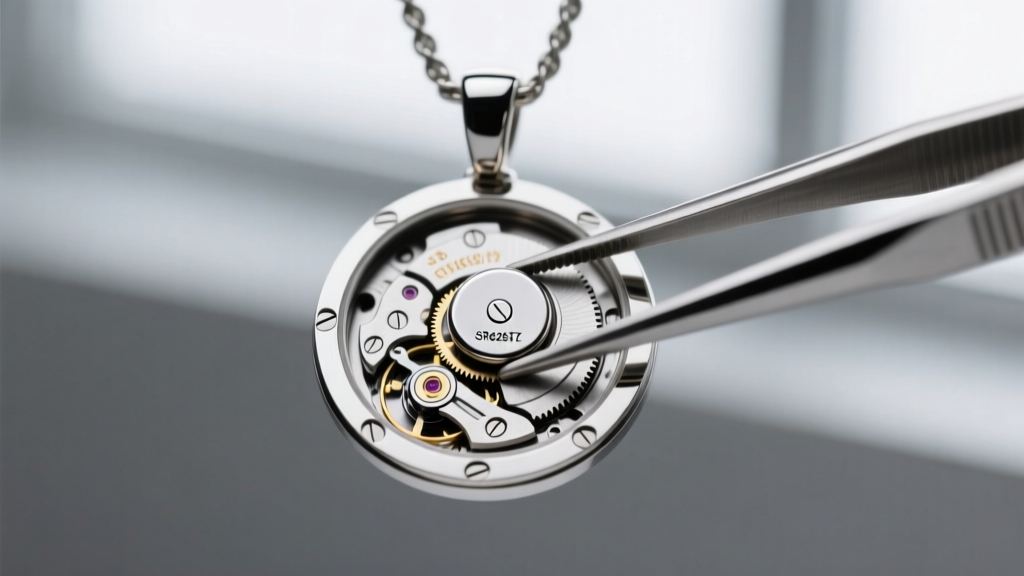
The internal mechanics dictate your long-term maintenance schedule. If your watch pendant necklace is powered by a quartz movement, it relies on a miniature silver oxide battery (typically an SR626SW or 377 cell).
Battery Leakage Prevention: Quartz batteries should be replaced every 2 to 3 years. If a depleted battery is left inside the casing, the internal chemicals can eventually leak, corroding the copper wiring and destroying the circuit board. If you notice the watch has stopped, do not leave it sitting in your jewelry box for years; take it to a jeweler for a battery swap and a simultaneous O-ring gasket check.
The Magnetism Threat: If you own a mechanical (wind-up) watch pendant, you must be vigilant about magnetic fields. Modern environments are saturated with neodymium magnets—found in smartphone cases, tablet covers, and handbag clasps. Exposure to strong magnetic fields can magnetize the Nivarox hairspring inside the movement, causing the watch to run drastically fast or stop entirely. As noted by horological experts at Hodinkee, keeping mechanical timepieces away from magnetic sources is just as important as keeping them dry. If your mechanical pendant begins gaining several minutes a day, it likely requires professional demagnetization, a quick and inexpensive service.
Storage and Structural Integrity Checks
How you store your watch pendant necklace when it is not being worn directly impacts its lifespan.
- Hang or Lay Flat: Do not toss the necklace into a crowded jewelry drawer where the chain can tangle and pull on the watch's bail (the top loop). Repeated stress on the bail can warp the metal and compromise the case seal. Hang it on a padded jewelry stand or lay it flat in a dedicated compartment.
- Check the Jump Rings: Every six months, inspect the small jump ring connecting the chain to the watch pendant. Because the watch is heavier than a standard pendant, this ring undergoes significant friction. If you see any gap in the ring, take it to a jeweler to be soldered shut or replaced with a thicker gauge ring to prevent losing the timepiece.
- Climate Control: Store the piece in a cool, dry environment. Extreme temperature fluctuations can cause the metal casing to expand and contract, potentially breaking the seal on the crystal and allowing dust to enter the dial.
When to Seek Professional Horological Help
While routine exterior cleaning and chain polishing are easily managed at home, certain issues require the intervention of a trained watchmaker. Seek professional help if:
- The crown (winding knob) feels gritty, loose, or fails to click into place.
- You hear a rattling sound inside the casing, indicating a dislodged gear or a broken screw.
- Condensation or fogging appears under the crystal, signaling a breached gasket and immediate moisture ingress.
- The watch requires a complete movement overhaul (recommended every 5-7 years for mechanical pieces to clean and re-oil the moving parts).
By treating your watch pendant necklace not just as a piece of jewelry, but as a precision micro-machine, you ensure that it remains a functional, beautiful heirloom capable of keeping perfect time for generations.


