Fixing Tarnish and Tangles on a Gold Tree of Life Necklace
Learn how to fix tarnish, untangle delicate branches, and repair clasps on your gold tree of life necklace with expert troubleshooting tips.

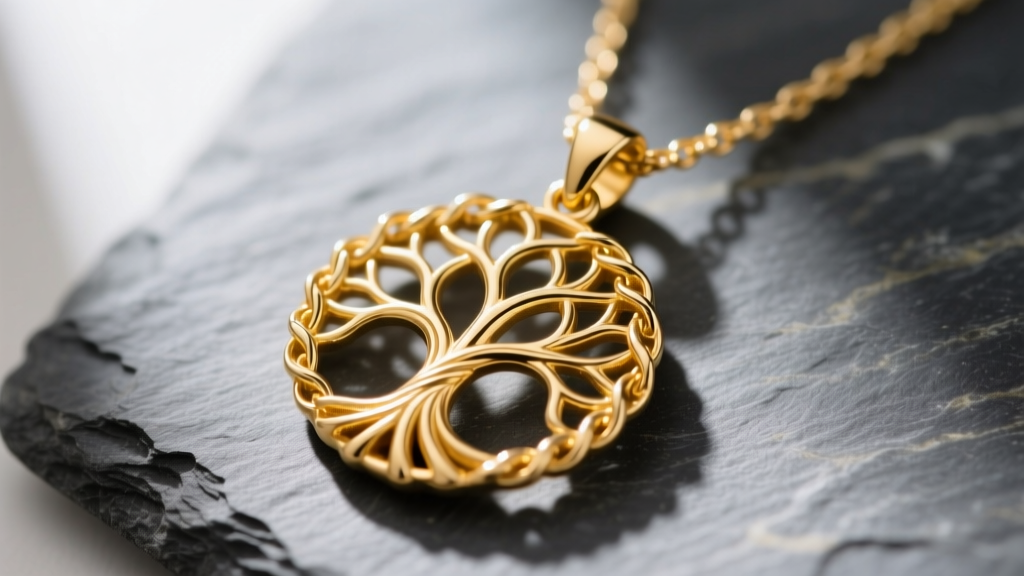
The tree of life is one of the most enduring and beloved motifs in jewelry, symbolizing growth, connection, and strength. However, from a jeweler’s bench perspective, the intricate filigree, negative space cutouts, and delicate branch structures of a gold tree of life necklace make it a unique magnet for mechanical and chemical problems. As of 2026, with gold prices pushing past historical highs, maintaining and repairing your existing solid gold pieces is far more economical and sustainable than replacing them.
Whether your pendant has suffered from severe chain tangling, unexpected tarnish, or a snapped filigree branch, this troubleshooting guide will walk you through the exact metallurgical and mechanical solutions required to restore your necklace to its original glory.
Diagnosing the Gold: Plated, Filled, or Solid?
The most common complaint we see with tree of life pendants is unexpected tarnishing or skin discoloration. Pure 24k gold does not tarnish, but a tree of life pendant is almost never crafted in 24k gold; the metal is simply too soft to hold the microscopic 0.4mm branch details without bending. Therefore, your necklace is likely an alloy, gold-filled, or gold-plated.
Before attempting any chemical cleaning or polishing, you must identify the gold grade. Aggressively polishing a gold-plated piece will strip the microscopic gold layer entirely, exposing the base brass or copper underneath. According to the Federal Trade Commission Jewelry Guides, the terminology around gold plating and vermeil is strictly regulated, but manufacturer stamps can still be misleading.
| Material Grade | Typical Stamp | Tarnish Risk | Repair & Polish Protocol |
|---|---|---|---|
| Solid 14k Gold | 14k, 585 | Low (unless exposed to sulfur/chlorine) | Safe for ultrasonic, steam, and heavy polishing. |
| Solid 18k Gold | 18k, 750 | Very Low | Safe for all cleaning; prone to scratching due to high gold content. |
| Gold Vermeil | 925 (Sterling base) | Moderate (Sterling silver base can oxidize) | Use only a damp microfiber cloth; no abrasive pastes. |
| Gold Plated / PVD | GP, GEP, or unmarked | High (Base metal bleeds through quickly) | Do not polish. Requires professional re-plating when worn. |
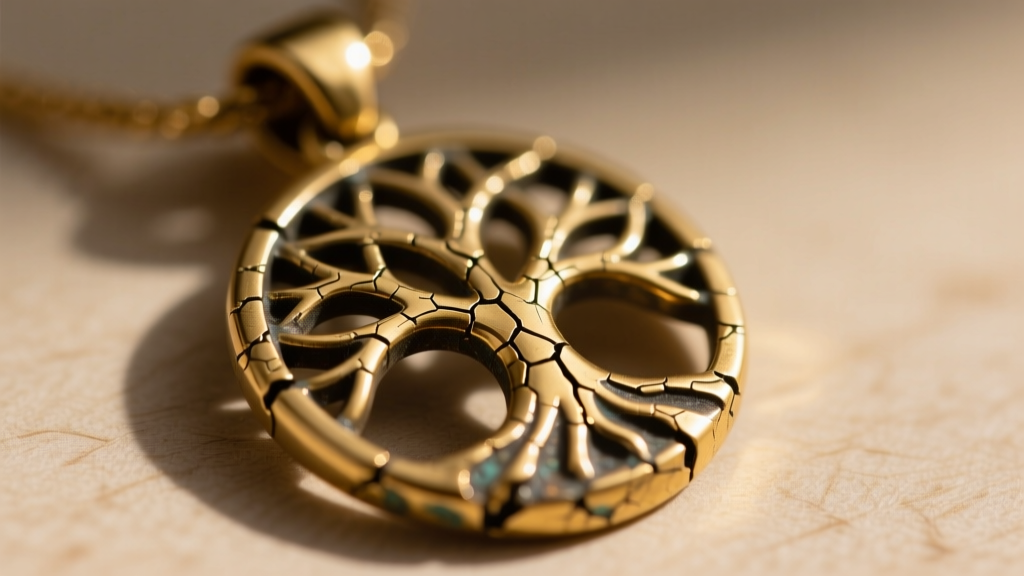
If your 14k or 18k gold tree of life necklace has developed a dark film, it is likely copper or silver oxidation within the alloy reacting to environmental sulfur, lotions, or chlorine. A mild bath in warm water with a few drops of phosphate-free dish soap, followed by a gentle brushing with an extra-soft baby toothbrush, will usually lift this oxidation without damaging the patina of the bark texture.
The Tangle Trap: Why Tree Pendants Knot and How to Free Them
There is a specific mechanical reason why a gold tree of life necklace tangles more frequently than a simple solitaire pendant. The circular, openwork design of the tree creates multiple negative spaces (the gaps between the roots and branches). When you move, the pendant acts as a pendulum. The chain whips around, and the spring-ring or lobster clasp easily threads through one of these gaps. Once the clasp passes through a branch gap and the pendant flips, a complex knot is formed.
The Baby Powder and Needle Method
Never pull the chain tight when trying to untangle the pendant; this will work the knot into a hardened coil that can snap the chain links or bend the gold branches. Instead, lay the necklace flat on a dark, non-slip surface. Apply a generous dusting of baby powder or talcum powder directly onto the knot. The powder acts as a dry lubricant, reducing the friction between the gold links and the pendant bail. Using two fine sewing needles, gently work the center link of the knot outward, allowing the powder to coat the metal as you loosen the tension.
Upgrading the Chain to Prevent Future Knots
If your necklace constantly tangles, the issue is likely your chain profile. Standard cable chains or snake chains are highly flexible and easily slip through the 1.5mm gaps in the tree's filigree. To solve this permanently, swap the chain for a 1.2mm to 1.5mm Box Chain. Box chains have rigid, squared links that do not fold flat against themselves, making it physically impossible for the chain to thread through the small negative spaces of the tree branches. Furthermore, ensure the pendant bail (the loop the chain passes through) is properly sized; if the bail is too wide, the pendant will slide too far down the chain, increasing the pendulum effect.
Structural Failures: Fixing Snapped Branches and Bail Wear
The intricate branches of a tree of life pendant are typically cast with a thickness of just 0.3mm to 0.8mm. This makes them highly susceptible to snapping if the necklace is caught on a sweater or pulled by a child. Additionally, the bail experiences constant friction from the chain, which can eventually wear a groove through the gold, causing the pendant to detach and fall off.
Why Traditional Torch Soldering Fails Here
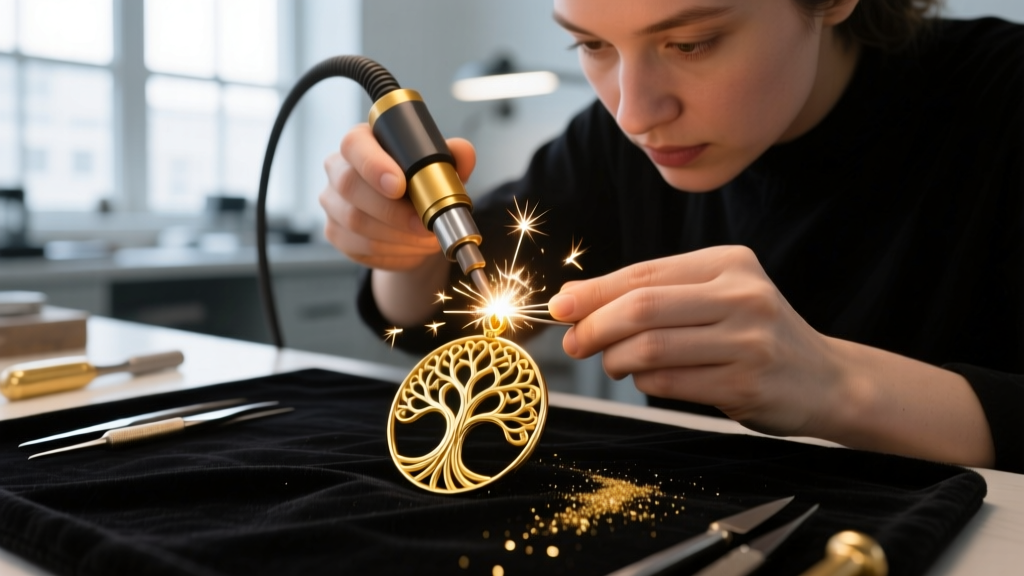
Historically, jewelers used a torch and gold solder to repair broken chains and pendants. However, applying a torch flame to a delicate filigree tree of life pendant is incredibly risky. The heat required to melt the solder (around 1,300°F to 1,400°F) will rapidly conduct through the thin gold branches, potentially warping the entire circular frame or melting adjacent leaves. Furthermore, the flux required for torch soldering can become trapped in the intricate bark textures, leaving a cloudy, unremovable residue.
The Laser Welding Solution
Modern jewelry repair relies on precision laser welding for complex filigree. A laser welder uses highly focused pulses of light energy to melt a microscopic dot of gold exactly where the branch has snapped, without transferring heat to the surrounding metal. This allows the jeweler to rebuild a broken 14k gold branch or reinforce a worn bail using matching gold wire, preserving the structural integrity and the original patina of the tree of life pendant. If your local jeweler does not have an in-house laser welder, seek out a specialized jewelry repair lab that advertises laser services.
Cleaning Without Destroying the Patina or Inset Stones
Many gold tree of life necklaces incorporate gemstones, such as turquoise, lapis lazuli, or mother-of-pearl, set into the roots or the canopy of the tree. This introduces a massive troubleshooting variable: ultrasonic cleaners.
While ultrasonic cleaners are excellent for removing sebum and dirt from bare gold chains, the high-frequency sound waves create microscopic cavitation bubbles that implode with immense force. If your tree of life pendant features porous stones like turquoise (Mohs hardness 5-6) or opal, the ultrasonic vibrations will fracture the stone or cause it to detach from its bezel. According to gemological experts at the Gemological Institute of America (GIA), organic gems and porous cabochons require strictly non-mechanical cleaning.
Safe Cleaning Protocol for Necklaces with Inset Stones:
- Mix a solution of lukewarm water and a few drops of mild, ammonia-free dish soap.
- Submerge only the gold chain, keeping the stone-set pendant above the water line if possible.
- Use a damp, lint-free microfiber cloth to gently wipe the gold branches and the surface of the stones.
- Never use silver dip, bleach, or toothpaste, as these abrasives and chemicals will permanently strip the polish from the gold and dull the surface of cabochon stones.
- Dry immediately with a hair dryer on the 'cool' setting to prevent water spots from forming in the deep crevices of the tree bark.
By understanding the specific mechanical vulnerabilities of the tree of life motif and the metallurgical realities of gold alloys, you can troubleshoot common issues effectively. Whether you are upgrading to an anti-tangle box chain or seeking out a laser welder for a micro-repair, these targeted solutions will ensure your necklace remains a durable, lifelong heirloom.


