Saint Michael Necklace Meaning and Expert Care Guide
Discover the Saint Michael necklace meaning and learn expert care, cleaning, and maintenance tips to preserve your devotional medal's metal and details.

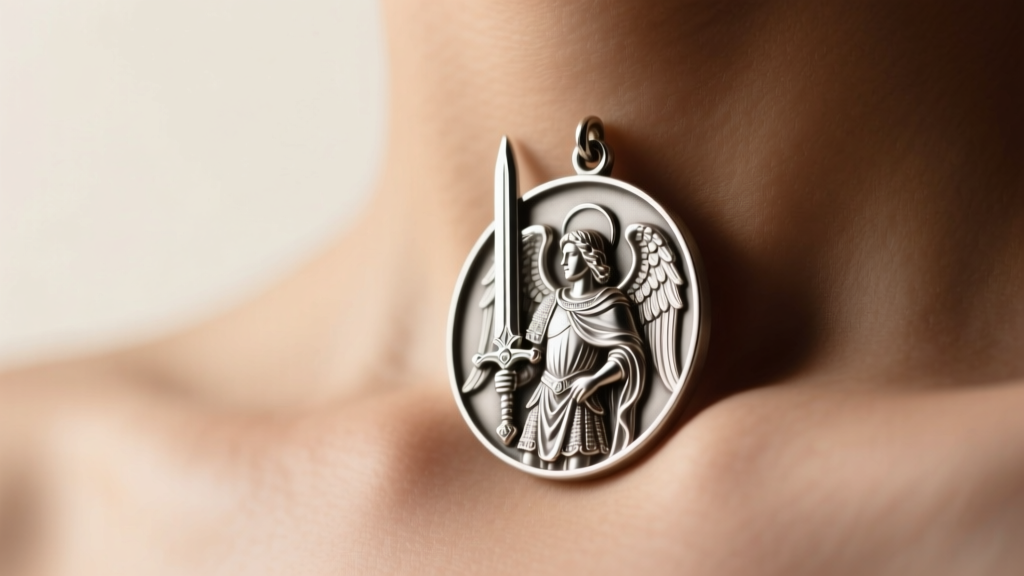
The Spiritual Weight: Understanding the Saint Michael Necklace Meaning
Before diving into the metallurgy and maintenance of devotional jewelry, it is essential to understand the profound Saint Michael necklace meaning that drives its constant wear. Saint Michael the Archangel is revered across multiple faith traditions as the ultimate protector, the leader of the heavenly armies, and the weigher of souls. The Latin phrase often inscribed on these medals, "Quis ut Deus" (Who is like God?), serves as a spiritual battle cry. Because believers view this pendant not merely as an accessory but as an active talisman for spiritual and physical protection, it is rarely removed.
This 24/7 devotional wear creates a unique set of challenges for jewelry conservation. Unlike fashion pieces worn occasionally, a Saint Michael medal is exposed to continuous body oils, sweat, environmental humidity, and friction. According to the Gemological Institute of America (GIA), continuous skin contact accelerates the chemical breakdown of metal alloys, meaning your protective medal requires a highly specific, proactive maintenance routine to preserve both its physical integrity and its intricate iconography.
Material Breakdown: What Is Your Devotional Medal Made Of?
Saint Michael pendants are struck in a variety of metals, each reacting differently to the microclimate against your skin. Identifying your medal's exact material grade is the first step in proper maintenance.
| Material Grade | Common Markings | Tarnish & Corrosion Profile | Primary Maintenance Focus |
|---|---|---|---|
| 925 Sterling Silver | "925", "Sterling" | Highly prone to silver sulfide tarnish (blackening) from sweat and humidity. | Regular polishing, avoiding sulfur-rich environments. |
| Gold Vermeil | "925" (underneath), "Vermeil" | The 2.5μm gold layer can wear away from friction, exposing the silver core. | Gentle washing only; zero abrasive rubbing. |
| 316L Stainless Steel | "316L", "Surgical Steel" | Highly corrosion-resistant, but can pit if exposed to chlorine or salt water. | Rinsing after swimming; mild soap cleaning. |
| Solid 14K/18K Gold | "14K", "18K", "585", "750" | Does not tarnish, but softer alloys (18K) can scratch and accumulate grime. | Deep cleaning to restore brilliance; ultrasonic safe. |
The 24/7 Wear Problem: Sweat, Oils, and Tarnish
Human sweat is mildly acidic, typically ranging from a pH of 4.5 to 7.0, and contains salts, urea, and lactic acid. When a sterling silver Saint Michael necklace is worn constantly, this acidic environment reacts with the copper alloyed in the 925 silver (which makes up 7.5% of the metal). Furthermore, hydrogen sulfide present in the ambient air and in certain foods accelerates the formation of silver sulfide, the blackish film that obscures the archangel's intricate sword and shield motifs.
For gold vermeil pieces, the friction of the medal rubbing against the chest, combined with the chemical breakdown from body oils, can thin the gold plating. Once the gold layer drops below 1.0 micron, the underlying silver is exposed, leading to localized, patchy tarnishing that is difficult to clean without stripping the remaining gold entirely.
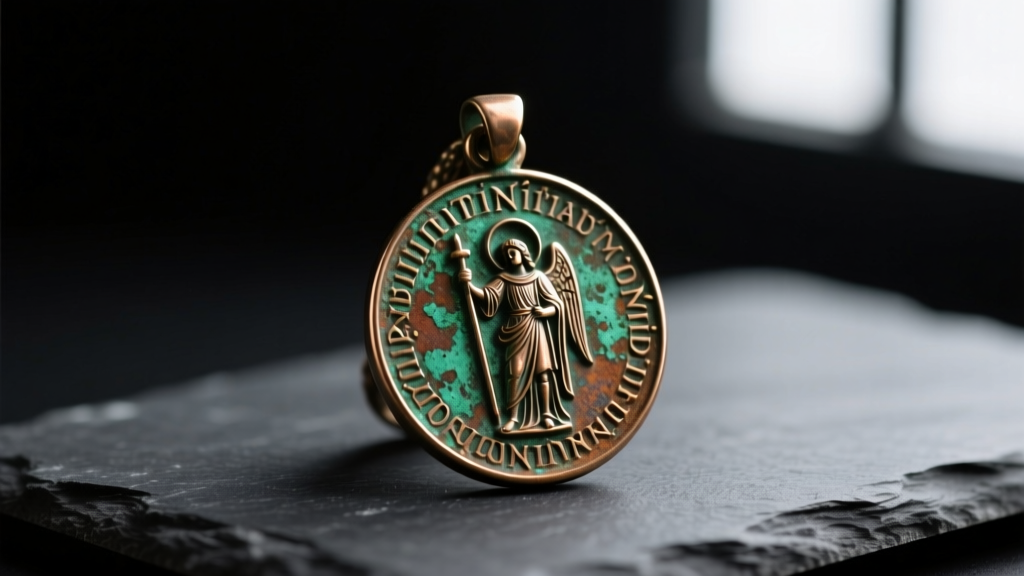
Cleaning Protocols by Material Grade
To maintain the spiritual and aesthetic value of your necklace, follow these material-specific cleaning protocols. The Smithsonian Institution's object care guidelines emphasize using the least aggressive method first to preserve historical and detailed artifacts, a principle that applies perfectly to high-relief devotional medals.
- For 925 Sterling Silver: Avoid liquid chemical dips (like Tarn-X). These strips away the oxidized antiquing deliberately placed in the recesses of the medal to make the "Quis ut Deus" text and St. Michael's wings stand out. Instead, use a treated polishing cloth (such as a Sunshine Cloth) and gently buff only the raised, high-relief areas. For heavy tarnish, use a paste polish like Goddard's Silver Polish applied with a cotton swab, avoiding the deep crevices.
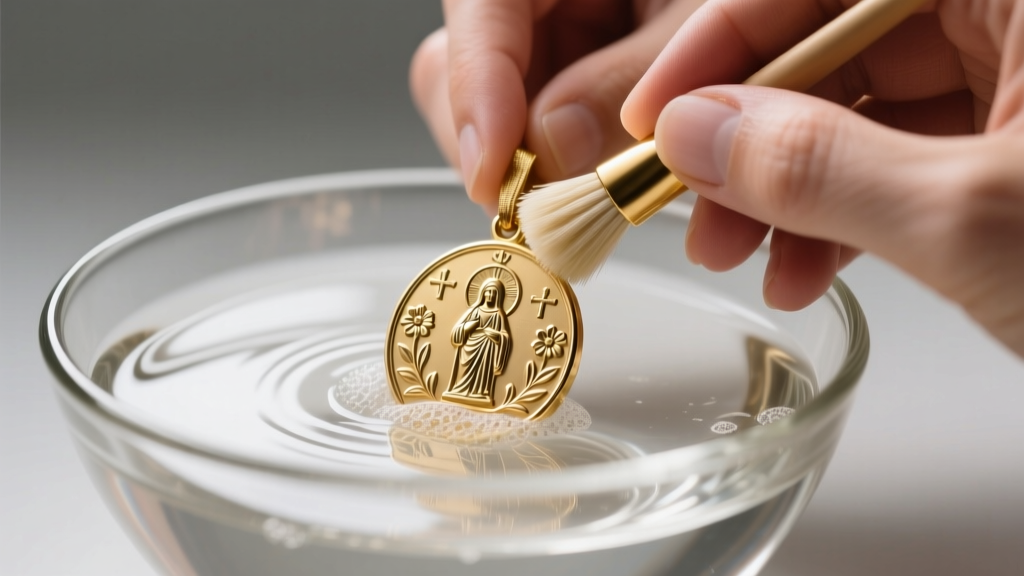
- For Gold Vermeil: Never use polishing cloths or pastes, as they will strip the 2.5-micron gold layer. Mix a few drops of phosphate-free dish soap (like Dawn) in lukewarm water. Soak the medal for exactly 3 minutes, then gently agitate with a soft-bristle baby toothbrush. Rinse with distilled water and pat dry with a microfiber cloth.
- For 316L Stainless Steel: This metal is virtually indestructible in daily wear but can accumulate a cloudy film of dead skin cells and lotion. Clean with a 50/50 mixture of white vinegar and water, scrubbing gently with a nylon brush. Rinse thoroughly to prevent any long-term acidic etching.
Preserving the Engraving and High-Relief Details
The defining characteristic of a premium Saint Michael medal is its bas-relief or high-relief striking. The depth of the engraving gives the piece its three-dimensional beauty, but these microscopic valleys are magnets for sebum, dead skin, and environmental dust. Over time, this compacted grime hardens, creating a dull, grayish film that no amount of surface polishing will remove.
The Wooden Pick Technique: To safely remove compacted debris from the intricate feathers of the archangel's wings or the scales of the dragon beneath his feet, use a wooden toothpick or a bamboo skewer. Wood is softer than all jewelry metals and will not scratch the surface. Gently trace the engraved lines to lift the grime. Follow this by brushing the area with a clean, dry horsehair detailing brush to sweep away the loosened particles.
Warning on Ultrasonic Cleaners: While ultrasonic cleaners are excellent for diamond rings, they are highly dangerous for Saint Michael medals. The high-frequency cavitation bubbles can literally shake the oxidized antiquing right out of the lettering, leaving the medal looking flat, washed out, and uniformly bright. Furthermore, if your medal features any enamel work (such as a blue or red painted shield), the ultrasonic vibrations will shatter the glass enamel.
When to Remove Your Saint Michael Medal
While the Saint Michael necklace meaning encourages continuous wear for spiritual protection, there are specific physical environments where the medal must be removed to prevent catastrophic, irreversible damage to the metal and chain.
- Swimming in Chlorinated Pools: Chlorine is highly reactive. It will permanently pit 316L stainless steel, turn sterling silver a dark, bruised purple, and instantly degrade the solder points connecting your pendant bail to the chain.
- Hot Tubs and Saunas: The combination of extreme heat, sulfur, and chemical treatments will accelerate tarnishing by months in a matter of minutes. Heat also causes the metal to expand, which can loosen any glued-in gemstones if your specific medal features them.
- Applying Sunscreen or Lotions: Chemical sunscreens often contain avobenzone and other active compounds that react with copper alloys, leaving a permanent greenish stain on the metal's surface. Always put your necklace on after your skincare and sunscreen have fully absorbed.
- Sleeping: While many choose to sleep with their devotional jewelry, doing so puts immense lateral stress on the chain's weakest point (usually the clasp or the jump ring). Over months of tossing and turning, the metal fatigues and snaps, risking the loss of the medal entirely.
Expert Insight: If your Saint Michael necklace features a delicate cable chain (typically 0.9mm to 1.2mm thick), inspect the jump ring connecting the pendant to the chain every six months. Use a magnifying loupe to check for a tiny gap where the ring closes. If you see light passing through the seam, take it to a jeweler to have it laser-welded shut before the pendant slips off and is lost.
By understanding the deep Saint Michael necklace meaning and pairing that reverence with rigorous, science-backed jewelry maintenance, you ensure that your protective medal remains a brilliant, legible, and enduring symbol of faith for decades to come.


