Technical Guide to Buying a Mens Gold Belcher Necklace
Explore the technical specs of a mens gold belcher necklace. Learn about link geometry, gold karats, weight tolerances, and clasp durability.

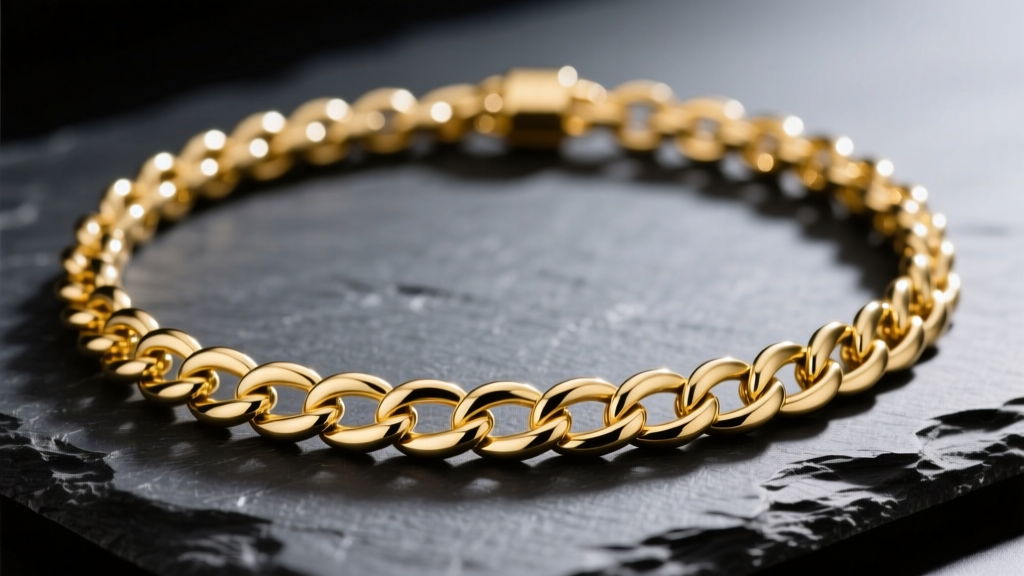
The Anatomy of a Belcher Chain Link
When evaluating a mens gold belcher necklace, understanding the underlying geometry and manufacturing process is critical. The belcher chain, also widely known as a rolo chain, is characterized by its interlocking, uniform links. Unlike curb chains, which are twisted to lie flat, belcher links are typically formed from round or D-shaped wire and alternate at 90-degree angles. This alternating orientation provides exceptional three-dimensional flexibility and prevents the chain from kinking under tension.
From a metallurgical and manufacturing standpoint, high-quality belcher chains are machine-stamped from drawn gold wire, interlocked, and then individually soldered. The soldering process is what separates premium chains from budget alternatives. An unsoldered belcher link will easily pull apart if subjected to the weight of a heavy pendant or accidental snagging. Laser-soldered joints offer the highest precision, ensuring the structural integrity of the link without leaving visible discoloration or weak points.
Aspect Ratio (AR) and Link Geometry
The Aspect Ratio (AR) is the mathematical relationship between the inner diameter of the link and the thickness of the wire used to create it. For a classic belcher chain, the ideal AR sits between 3.5 and 4.0. An AR lower than 3.0 results in stiff, tightly bound links that lack drape and flexibility, while an AR higher than 5.0 creates elongated, weak links prone to deformation. When shopping for a mens gold belcher necklace, visually inspect the links: they should appear perfectly circular or slightly D-shaped, with consistent wire thickness throughout.
Gold Purity vs. Tensile Strength: Karat Breakdown
Gold purity drastically alters the mechanical properties of the chain. Pure 24k gold is far too malleable for structural jewelry; it will stretch and deform under its own weight if formed into delicate links. Therefore, alloying metals like copper, silver, and zinc are introduced to increase the Vickers hardness (HV) and tensile strength. According to the Gemological Institute of America (GIA), the specific alloy mix not only dictates color but also the chain's resistance to work hardening and fatigue.
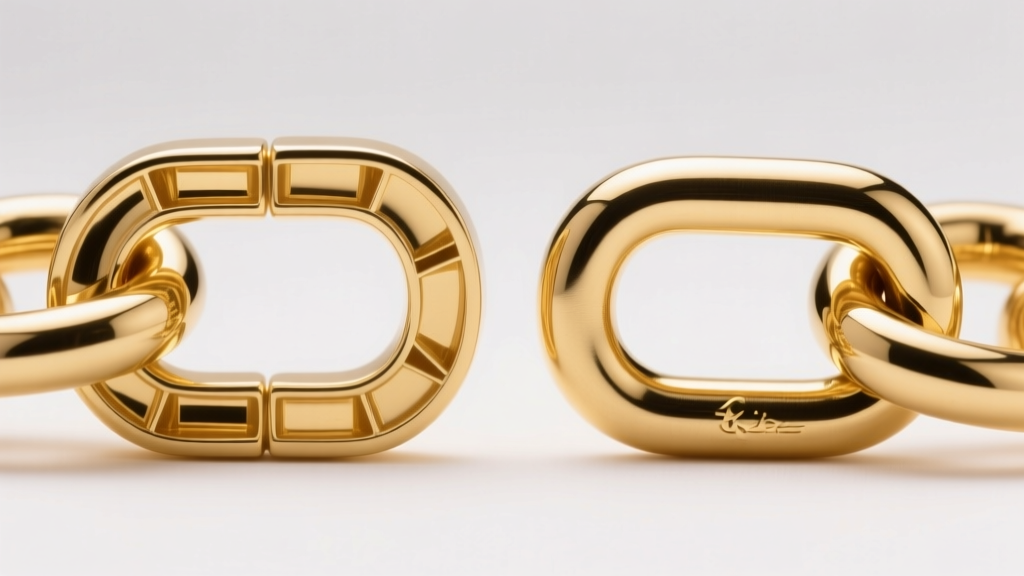
Karat Performance Matrix
| Karat | Gold Content | Approx. Hardness (HV) | Tensile Strength | Best Application |
|---|---|---|---|---|
| 10k | 41.7% | ~135 HV | Very High | Heavy pendants, high-impact daily wear |
| 14k | 58.3% | ~115 HV | High | Standard daily wear, medium pendants |
| 18k | 75.0% | ~85 HV | Medium | Luxury wear, lightweight pendants |
| 22k | 91.6% | ~60 HV | Low | Investment pieces, minimal physical stress |
For a mens gold belcher necklace intended to hold a heavy pendant (e.g., a solid gold cross or signet pendant over 15 grams), 14k or 10k gold is highly recommended. The increased copper and silver content in 14k gold provides the necessary yield strength to prevent the links from slowly stretching into ovals over time. Conversely, an 18k gold belcher chain offers a richer, warmer hue but requires a thicker wire gauge to achieve the same load-bearing capacity as a thinner 14k chain.
Width, Weight, and Gauge: Sizing Metrics
The terminology surrounding chain sizing is often misunderstood. Width (measured in millimeters) is a visual metric, while weight (measured in grams per inch) is a structural metric. A 4mm hollow belcher chain will look identical in width to a 4mm solid belcher chain, but the hollow version will weigh roughly 70% less and possess a fraction of the tensile strength.
"Never judge a chain's durability by its visual width alone. A solid 3mm belcher chain will consistently outlast a hollow 5mm chain under pendant load due to the superior cross-sectional mass of the solid wire."
Solid vs. Hollow Construction
Hollow belcher chains are manufactured by wrapping gold sheet around a base metal core, which is later dissolved in acid, or by using specialized extrusion techniques. While they offer a bold look at a lower price point, they are notoriously difficult to repair. If a hollow link crushes or kinks, it cannot be easily soldered back into shape without collapsing. Solid belcher chains, milled from solid gold wire, are heavier, more expensive, but infinitely more durable and repairable.
- Lightweight (1mm - 2.5mm): Best for layering or wearing solo. Not recommended for pendants over 5 grams.
- Medium Weight (3mm - 5mm): The versatile standard. Can support pendants up to 20 grams if constructed from solid 14k gold.
- Heavyweight (6mm - 10mm+): Statement pieces. Capable of bearing massive pendants, but the weight of the chain itself requires a robust clasp system.
Clasp Engineering: The Weakest Link
The clasp is invariably the most vulnerable mechanical component of any necklace. When investing in a premium mens gold belcher necklace, the clasp must be proportionate to the chain's weight and tensile load. Standard spring-ring clasps are entirely inadequate for chains exceeding 25 grams; their internal springs are weak, and the small jump rings easily pull open.
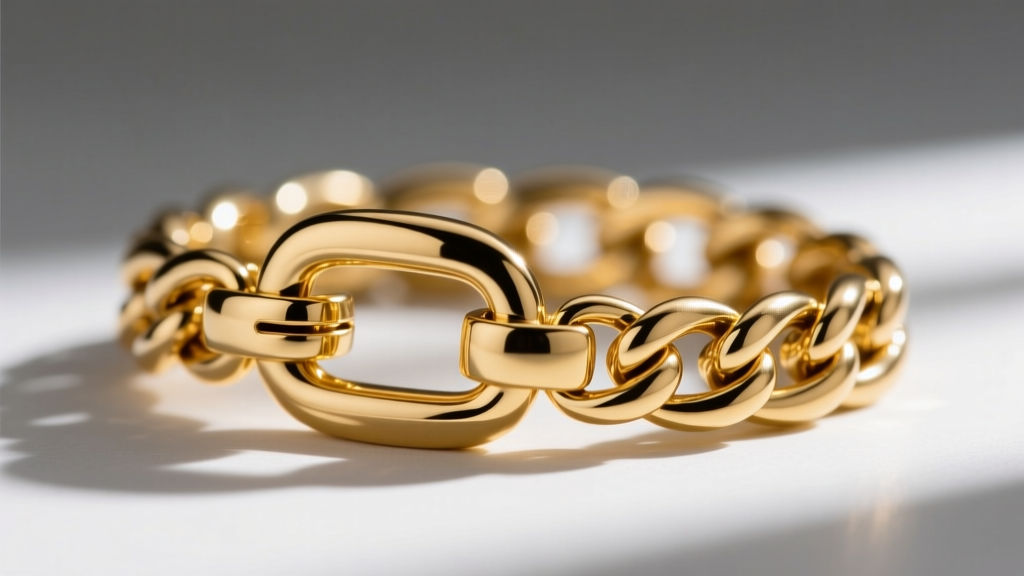
Clasp Types and Failure Points
Lobster Claw Clasps: The industry standard for medium to heavy chains. A high-quality lobster clasp is forged or cast from solid gold and features a robust internal stainless steel or gold-alloy spring. Ensure the jump ring connecting the lobster clasp to the chain is soldered shut. An unsoldered jump ring will spread open under lateral tension, causing the chain to detach.
Box Clasps with Safety Catches: For heavyweight belcher chains (8mm and above), a box clasp provides a secure, flush connection that integrates seamlessly into the chain's geometry. The primary locking mechanism is a spring-loaded lever that clicks into a recessed box. Crucially, premium box clasps include a secondary safety catch—a small figure-eight wire that snaps over a pin on the opposite side of the clasp. This redundancy ensures that if the primary spring fails, the necklace remains secured.
Maintenance, Failure Modes, and Repair Realities
Even the most meticulously crafted mens gold belcher necklace is subject to the laws of physics and material fatigue. Understanding common failure modes allows you to perform preventative maintenance and recognize when professional intervention is required. The Jewelers of America recommends regular professional inspections for any chain bearing significant weight.
Common Failure Modes
- Work Hardening: Gold alloys become harder and more brittle when repeatedly bent or stressed. Over years of wear, the links resting against the clasp experience the most friction and movement, eventually becoming brittle and snapping. Periodic annealing (heating the metal to relieve internal stress) by a professional jeweler can prevent this.
- Clasp Spring Fatigue: The internal spring of a lobster clasp will eventually lose its tension, resulting in a lever that fails to snap shut completely. This is a simple, inexpensive repair, but ignoring it risks losing the entire chain.
- Abrasive Thinning: If worn with a pendant, the bail (the loop holding the pendant) acts as a file against the interior of the belcher links. Over a decade, this friction can wear through a solid 14k link. Using a polished, hardened steel bail or a diamond-cut bail can minimize this abrasive wear.
Soldering and Repair Realities
When a solid belcher link breaks, a jeweler will typically use a laser welder or a micro-torch to re-solder the joint. Laser welding is highly preferred for belcher chains because it localizes the heat, preventing the surrounding links from fusing together or warping. If you own a hollow belcher chain, be aware that many jewelers will refuse to solder it; the intense heat required to melt the solder will often cause the thin gold walls of the hollow link to melt, bubble, or collapse entirely.
Conclusion
Selecting the right mens gold belcher necklace requires looking past the superficial shine and evaluating the structural engineering of the piece. By prioritizing solid wire construction, understanding the tensile limitations of your chosen gold karat, and ensuring the clasp mechanism is rated for the chain's total mass, you secure a piece of jewelry that is not only visually striking but mechanically enduring. Whether worn as a standalone statement or engineered to bear a heavy heirloom pendant, a technically sound belcher chain is a foundational element of a lasting jewelry collection.


