Gemologist Guide to Authenticating a Coral and Turquoise Necklace
Master the gemological details of a coral and turquoise necklace. Learn to identify stabilization treatments, dye tests, and grading standards.

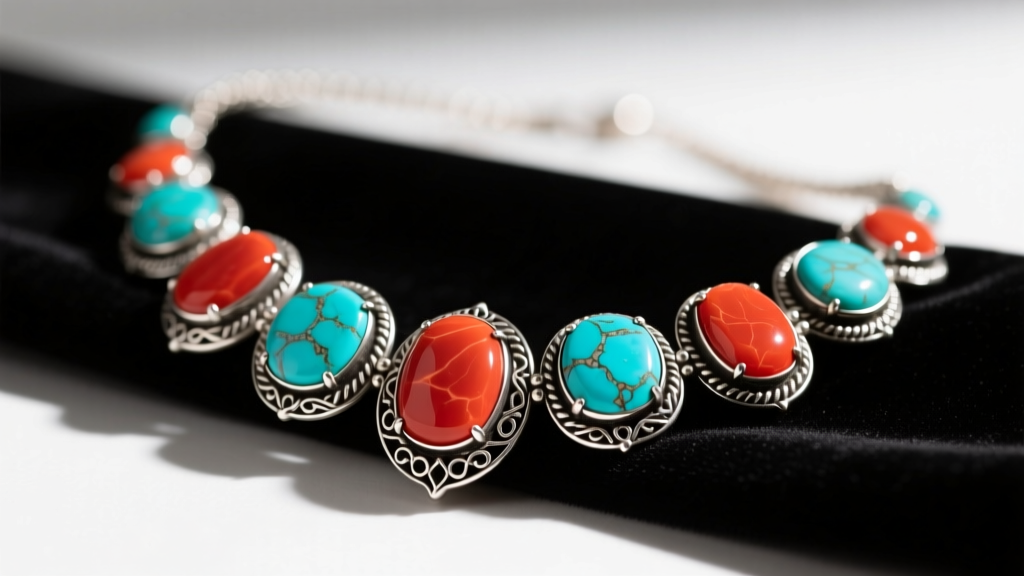
The Gemological Intersection of Organic and Inorganic
The pairing of coral and turquoise represents one of the most historically significant intersections in jewelry design, marrying an organic calcium carbonate gemstone with an inorganic hydrous phosphate of copper and aluminum. For collectors, appraisers, and enthusiasts, evaluating a coral and turquoise necklace requires moving beyond superficial aesthetics. You must understand the mineralogical vulnerabilities, the prevalence of modern enhancement techniques, and the structural engineering required to keep these porous materials intact over decades of wear.
In this expert deep dive, we deconstruct the gemological realities of these two stones, providing actionable frameworks for authentication, treatment identification, and structural assessment.
Decoding Turquoise: Stabilization, Treatments, and Grading
Natural, untreated turquoise of gem quality is exceptionally rare, comprising less than 5% of all mined material. The vast majority of turquoise used in commercial and artisanal jewelry is stabilized to prevent fracturing and color shifting. Understanding these treatments is critical when appraising a coral and turquoise necklace.
The Mohs Scale Reality and Polymer Impregnation
Turquoise sits at 5 to 6 on the Mohs hardness scale, but its porous nature (often exhibiting a specific gravity between 2.60 and 2.90) makes it highly susceptible to absorbing oils, cosmetics, and environmental pollutants. To counteract this, the industry utilizes polymer impregnation. Under a vacuum, epoxy or acrylic resins are forced into the microscopic pores of the stone, hardening it to a durable state without altering its fundamental chemical structure. According to the Gemological Institute of America (GIA), stabilization is an accepted industry practice, provided it is disclosed.
Identifying the Zachery Treatment and Dyed Imitations
More deceptive is the Zachery treatment, a proprietary method that uses a potassium silicate-based solution to reduce porosity and enhance color without introducing polymers. It is notoriously difficult to detect without Energy Dispersive X-Ray Fluorescence (EDXRF) spectrometry, which reveals elevated potassium levels.
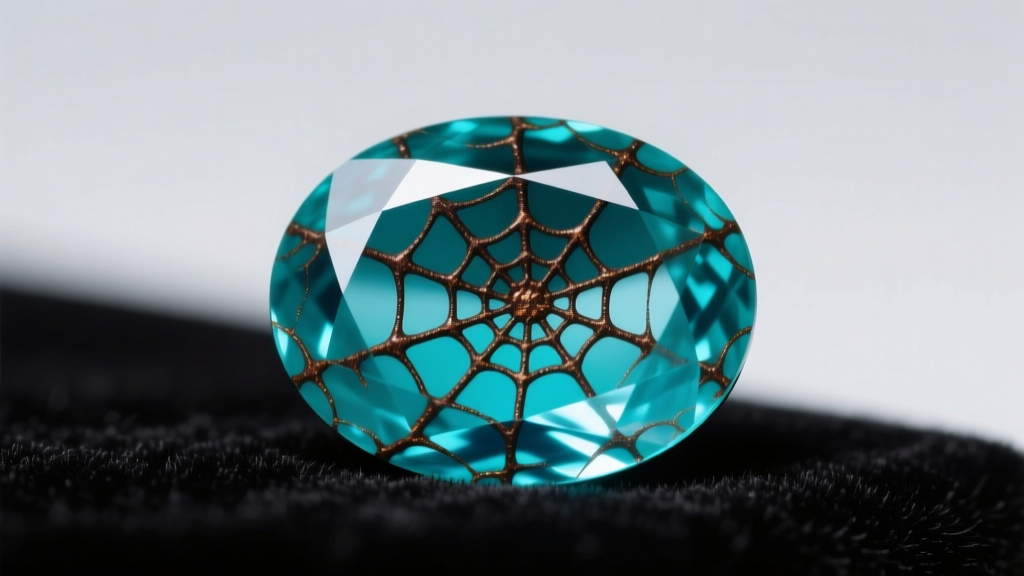
Furthermore, buyers must be vigilant against dyed howlite and magnesite. Under 10x magnification, dyed imitations reveal a distinct concentration of dye within the natural fractures and grain boundaries of the host rock, whereas genuine turquoise exhibits a more uniform color distribution or natural matrix integration.
Coral Authentication: From Bamboo to Precious Red
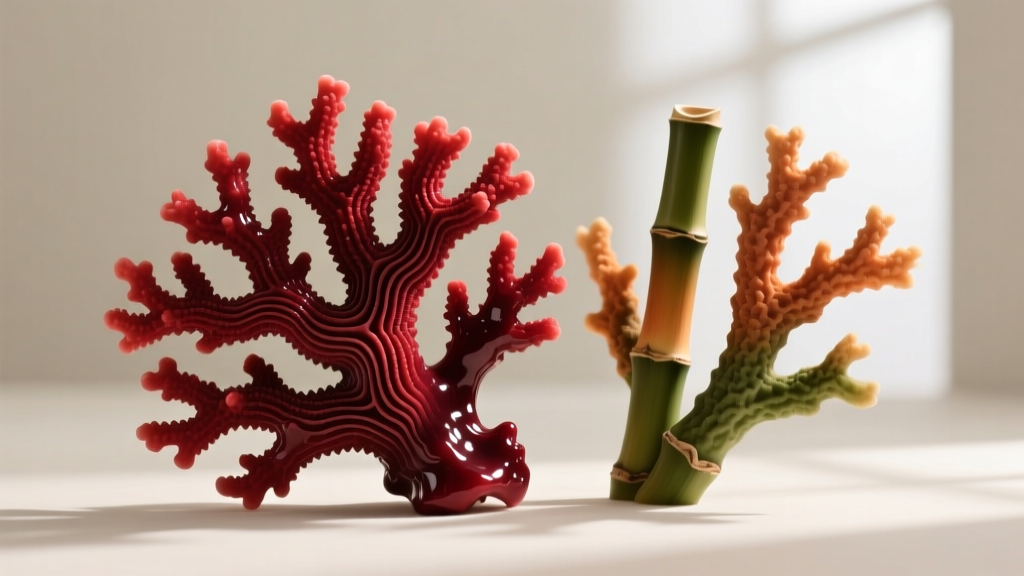
Unlike turquoise, coral is an organic gemstone secreted by marine polyps. The most prized varieties belong to the Corallium genus, specifically Corallium rubrum (Mediterranean red coral) and Corallium japonicum (Blood coral). These possess a rich, intrinsic coloration derived from carotenoid pigments. However, the market is saturated with dyed alternatives.
Species Breakdown and the Acetone Test
Bamboo coral (family Isididae) is naturally white or pale gray and features a segmented, jointed structure. It is routinely dyed red to mimic precious coral and is a frequent culprit in mid-tier coral and turquoise necklaces. To differentiate the two, gemologists employ the acetone test: rubbing a cotton swab soaked in acetone over a suspected bamboo coral bead will often pull the artificial red dye, leaving a stain on the swab. Precious coral's color is intrinsic and will not bleed.
Magnification and Structural Diagnostics
When visual inspection is inconclusive, magnification provides definitive answers. Under a gemological microscope, precious coral exhibits concentric growth rings and a radiating structure, much like the cross-section of a tree trunk. In contrast, bamboo coral displays a distinct wood-grain or fibrous longitudinal pattern. For a comprehensive overview of organic gem identification, refer to the GIA's coral quality and grading guidelines.
Structural Integrity: Stringing, Bezels, and Hardware
The physical construction of a coral and turquoise necklace is just as critical as the gemstones themselves. Both materials are highly sensitive to thermal shock and mechanical stress. The hardware and stringing methods must accommodate their specific gravity and fragility.
Bezel Settings vs. Prongs
Turquoise and coral cabochons must exclusively be set in bezels. Prong settings exert localized, high-pressure points on the girdle of the stone. Given coral's low Mohs hardness (3.5 to 4) and turquoise's tendency to cleave along natural matrix veins, prong pressure will inevitably lead to micro-fractures and eventual chipping. A properly engineered bezel distributes pressure evenly and protects the vulnerable edges of the cabochon.
Stringing Material Matrix
Heavy, multi-strand Native American or artisanal necklaces require specialized stringing materials. Traditional silk degrades rapidly under the weight of stone beads and the friction of irregular drill holes.
| Stringing Material | Tensile Strength | Abrasion Resistance | Best Use Case |
|---|---|---|---|
| Traditional Silk | Low | Poor | Lightweight pearls, small coral rondelles |
| Braided Nylon (e.g., C-Lon) | High | Excellent | Heavy turquoise beads, multi-strand designs |
| Stainless Steel Wire | Very High | Moderate (can saw through soft stone) | Structured collars, rigid necklaces |
Market Valuation, CITES, and Sourcing Ethics
The valuation of a coral and turquoise necklace is heavily influenced by provenance, material origin, and international trade regulations. As of 2026, ethical sourcing and legal compliance are paramount in the gem trade.
Mediterranean and Pacific precious corals are strictly regulated under the Convention on International Trade in Endangered Species (CITES). The CITES species database outlines the stringent permitting required to export and import Corallium species. Necklaces lacking proper documentation from pre-convention eras or verified sustainable harvests face severe import restrictions, which inherently drives up the market value of legally documented vintage pieces.
Conversely, turquoise valuation is anchored by its mine origin. Lander Blue, Bisbee, and Number 8 turquoise command massive premiums due to mine depletion. A necklace featuring verified, high-grade natural Lander Blue turquoise with a tight, black spiderweb matrix can easily exceed $15,000, whereas a similar design utilizing stabilized, dyed howlite and bamboo coral will retail between $150 and $400.
Care Protocols and Common Failure Modes
Maintaining the structural and visual integrity of a coral and turquoise necklace requires strict adherence to specialized care protocols. The most common failure mode in vintage pieces is the degradation of the stringing material, leading to catastrophic bead loss and surface abrasion as the heavy stones grind against one another.
- Never use ultrasonic cleaners: The cavitation bubbles generated by ultrasonic frequencies will fracture stabilized turquoise and strip the polished finish off calcium carbonate coral.
- Avoid chemical exposure: Turquoise is highly reactive to acids and harsh chemicals. Ammonia-based jewelry cleaners will permanently alter the stone's color and degrade the polymer stabilizers.
- Storage isolation: Because coral scratches easily (Mohs 3.5), the necklace must be stored in a soft, acid-free textile pouch, separate from harder gemstones like quartz or diamonds.
By applying these gemological frameworks, collectors and appraisers can accurately authenticate, value, and preserve these iconic pieces of jewelry history.


