Gold Dangle Necklace Mechanics: Gauges, Bails & Purity
Discover the technical specs behind a durable gold dangle necklace. Expert guide on chain gauges, bail mechanics, and 14k vs 18k gold purity.

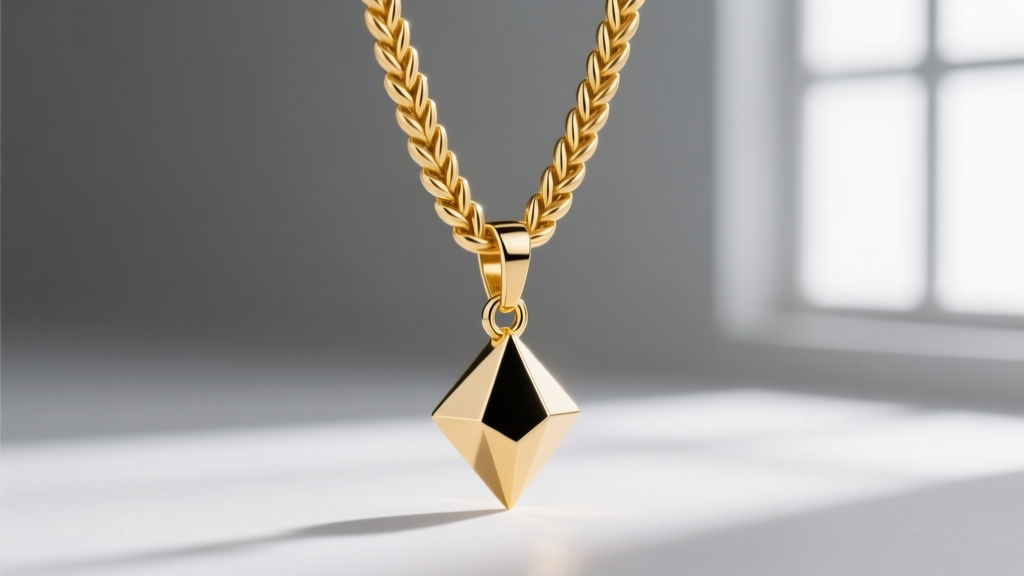
The Physics of the Pendulum: Why Dangles Demand More
A gold dangle necklace is not merely a static piece of adornment; it is a kinetic system. Unlike a flush-fitting pendant or a simple solitaire chain, a dangle necklace operates under the laws of pendulum physics. Every time the wearer moves, turns, or leans forward, the suspended element generates kinetic energy that transfers directly upward through the bail, the jump ring, and into the weakest link of the chain. Over time, this repetitive micro-stress leads to metal fatigue, work hardening, and ultimately, catastrophic structural failure if the initial engineering is inadequate.
As a domain expert evaluating fine jewelry, I frequently see beautiful 18k gold dangle necklaces fail within months because the manufacturer prioritized aesthetic delicacy over tensile strength. Selecting the right gold dangle necklace requires a deep understanding of metallurgy, chain architecture, and mechanical stress points. This guide strips away the marketing fluff and dives directly into the technical specifications required to choose or design a dangle necklace that will endure decades of kinetic wear.
Metallurgical Breakdown: 14K vs. 18K Gold for Kinetic Stress
Pure 24-karat gold is notoriously soft, possessing a Vickers Hardness (HV) of roughly 25, making it entirely unsuitable for the structural demands of a necklace chain or a load-bearing bail. To achieve durability, gold is alloyed with metals like copper, silver, and zinc. According to the Gemological Institute of America (GIA), the specific ratio of these alloys drastically alters the tensile strength and yield point of the final metal.
When choosing a gold dangle necklace, the karat weight dictates the maximum load the chain can safely support without stretching or snapping.
| Gold Purity | Gold Content | Typical Alloy Mix | Vickers Hardness (HV) | Kinetic Suitability |
|---|---|---|---|---|
| 22K Gold | 91.6% | Copper/Silver | ~70 HV | Poor. Too soft for chains; limited to heavy, static cast pendants. |
| 18K Gold | 75.0% | Copper/Silver/Zinc | 120 - 135 HV | Moderate. Requires thicker gauges (1.5mm+) for dangles over 10 grams. |
| 14K Gold | 58.5% | Copper/Silver/Nickel | 140 - 165 HV | Excellent. High tensile strength, ideal for fine, durable dangle chains. |
For a lightweight, delicate gold dangle necklace (under 5 grams), 18K gold is perfectly viable provided the chain gauge is sufficient. However, for heavy statement dangles featuring large gemstones or solid gold geometric drops, 14K gold is the superior engineering choice. Its higher copper and silver content provides the necessary rigidity to resist the stretching forces exerted by a swinging pendant.
Chain Architecture: Selecting the Right Gauge and Weave
The chain is the suspension bridge of your necklace. The two critical metrics here are wire gauge (thickness) and link geometry (weave pattern). A common failure mode in dangle necklaces is the use of a chain that is wide but structurally hollow, or a chain with a geometry prone to kinking under pendulum stress.

Tensile Strength and Articulation by Chain Type
Not all chain weaves handle multidirectional kinetic energy equally. Here is how the most common gold chain types perform when paired with a dangle pendant:
- Wheat (Spiga) Chain: The undisputed champion for dangle necklaces. The woven, braided geometry allows for multidirectional articulation without kinking. A 1.5mm solid wheat chain can comfortably support a 20-gram dangle pendant due to its redundant link structure.
- Box Chain: While visually appealing and highly reflective, box chains are prone to kinking. When a heavy dangle pulls a box chain at an acute angle, the square links can collapse inward. If used, opt for a minimum width of 2.0mm and ensure it is solid, not hollow-cast.
- Rope Chain: Excellent tensile strength, but the twisted links create high surface friction against the bail. This friction can cause accelerated wear on both the chain and the bail loop. Use only with hardened steel or platinum-lined bails.
- Cable Chain: The classic oval link. For dangles, every single link must be soldered shut. An unsoldered cable chain will inevitably pull apart at the clasp or bail connection point under the dynamic load of a swinging pendant.
Gauge Sizing Framework
Use this weight-to-gauge framework to ensure structural integrity:
- Under 5g Dangles: 0.9mm to 1.2mm solid chain width.
- 5g to 15g Dangles: 1.5mm to 2.0mm solid chain width.
- Over 15g Dangles: 2.5mm+ solid chain width, ideally in a wheat or heavy rope weave.
The Bail and Jump Ring: Preventing Catastrophic Failure
The bail is the mechanical interface between the static chain and the kinetic dangle. It is the most frequent point of failure in fine jewelry. A standard cast bail often contains microscopic porosity, creating weak points that snap under sudden tensile loads (such as the necklace catching on a garment).
Expert Insight: Never rely on friction-fit or glued bails for a gold dangle necklace. The pendulum effect generates enough micro-movement to gradually break down adhesive bonds and wear away friction settings. Always insist on a mechanically locked or laser-welded bail.
Furthermore, the jump ring connecting the bail to the chain must be scrutinized. A standard 20-gauge (0.81mm) wire jump ring is insufficient for heavy dangles. The constant swinging causes the jump ring to rub against the chain link, acting like a microscopic saw. Over time, this friction cuts through the gold. For dangles exceeding 10 grams, demand an 18-gauge (1.02mm) or 16-gauge (1.29mm) jump ring, and ensure it is soldered shut. An unsoldered jump ring will eventually twist open under kinetic torque, resulting in the loss of the pendant.
Clasp Engineering: Counterweights and Security
The clasp on a gold dangle necklace serves a dual purpose: security and balance. A heavy dangle pendant will naturally pull the necklace forward, causing the clasp to migrate from the back of the neck to the front collarbone. This is not just an aesthetic annoyance; it places asymmetric stress on the chain.
To counteract this, high-quality dangle necklaces utilize a counterweight system. This involves adding a small, dense gold tag or a secondary mini-dangle to the chain immediately adjacent to the clasp. This counterweight anchors the back of the necklace, keeping the clasp securely at the nape of the neck and ensuring the primary dangle remains centered on the sternum.
Regarding clasp types, avoid spring ring clasps for any dangle over 5 grams. The internal tension spring in a spring ring is prone to fatigue and failure. Instead, specify a forged lobster claw clasp with a reinforced lever. For ultra-heavy statement dangles, a custom box clasp with a dual figure-eight safety catch is the only mechanically sound option, as it distributes the tensile load across a broader surface area rather than a single microscopic pin.
Maintenance Protocol for Gold Dangle Necklaces
Even perfectly engineered jewelry requires targeted maintenance to survive decades of kinetic wear. The Jewelers of America organization recommends specific care routines for pieces subjected to high mechanical stress.
- Bi-Annual Bail Inspection: Every six months, inspect the interior of the bail loop and the corresponding chain link. Look for 'grooving'—a U-shaped wear pattern caused by friction. If the metal has worn down by more than 20% of its original thickness, the bail or link must be replaced before it snaps.
- Ultrasonic Caution: While ultrasonic cleaners are excellent for removing sebum and lotion from gold chains, the high-frequency vibrations can loosen gemstone settings within the dangle pendant itself. Clean the chain ultrasonically, but wipe the dangle element with a soft brush and mild surfactant.
- Storage Mechanics: Never store a gold dangle necklace in a tangled pile. The kinetic weight of the dangle can press into the chain links, causing permanent deformation or kinking, especially in box or omega chains. Always hang dangle necklaces vertically on a padded jewelry valet to allow gravity to naturally align the links and relieve tension.
By prioritizing metallurgical hardness, precise chain gauges, and robust mechanical connections, you elevate a gold dangle necklace from a fragile accessory to a resilient, lifelong asset. Understanding these technical parameters ensures that your jewelry moves beautifully with you, without the constant anxiety of structural failure.


