Angel Skin Coral Bead Necklace: A Gemological & Sourcing Guide
Discover the gemological properties, CITES sourcing rules, and grading metrics for an authentic angel skin coral bead necklace in our expert guide.

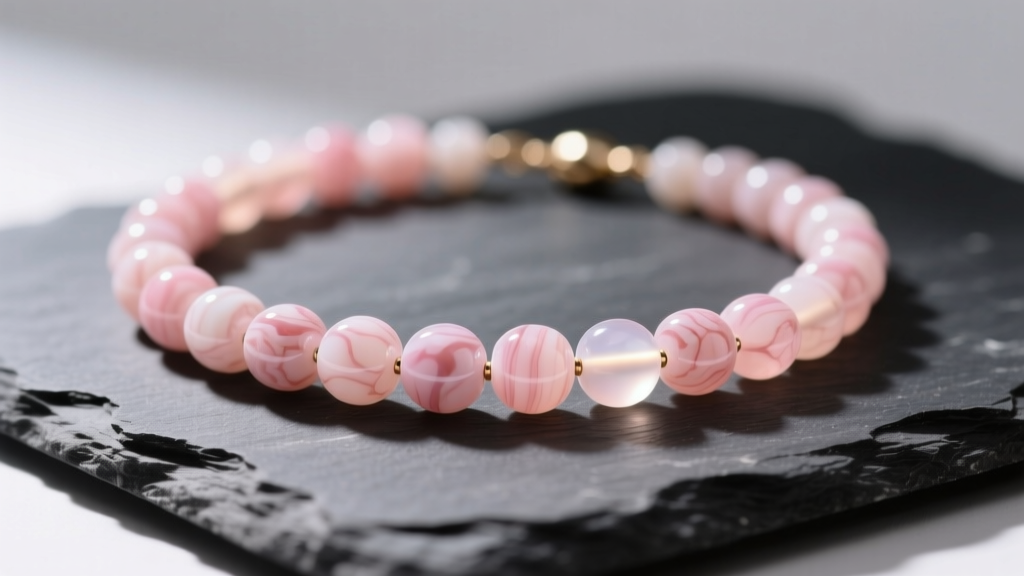
The allure of organic gemstones lies in their biological origins, and few materials capture the ocean's delicate beauty quite like precious coral. Among the various species harvested for fine jewelry, the angel skin coral bead necklace stands as a pinnacle of understated elegance. Characterized by its pale, blush-pink hue and subtle organic mottling, this material requires a highly specialized understanding of gemology, marine conservation laws, and structural jewelry mechanics to properly evaluate and maintain.
As we navigate the 2026 luxury jewelry landscape, the acquisition of precious coral has shifted dramatically. With stringent international regulations and a booming vintage market, buyers and collectors must approach these pieces with a critical, data-driven eye. This expert deep dive explores the exact gemological parameters, grading frameworks, and structural vulnerabilities inherent to angel skin coral.
The Gemological Profile of Angel Skin Coral
Scientifically, the material commonly referred to as 'Angel Skin' in the Japanese and international gem trade typically belongs to the species Pleurocorallium elatius (formerly Corallium elatius), harvested primarily from the deep, cold waters off the coast of Japan. Unlike the deep, saturated reds of Mediterranean Corallium rubrum, Angel Skin coral presents a delicate pinkish-white coloration caused by trace amounts of carotenoid pigments within its organic matrix.
To properly identify and authenticate an angel skin coral bead necklace, gemologists rely on a specific set of physical and optical properties:
- Chemical Composition: Calcium carbonate (CaCO3) in a calcite crystalline structure, bound by an organic protein matrix called conchiolin.
- Specific Gravity (SG): 2.60 to 2.70. This relatively high density means a 10mm bead necklace will feel noticeably heavier than imitation glass or plastic counterparts.
- Refractive Index (RI): 1.48 to 1.66 (spot reading). Due to its opaque to semi-translucent nature, standard refractometer readings are difficult; gemologists typically rely on spot readings or magnification.
- Mohs Hardness: 3.5 to 4.0. This low hardness makes the beads highly susceptible to scratching from everyday dust (which contains quartz at 7.0).
- Luster: Sub-vitreous to waxy when polished, taking on a beautiful, soft glow that synthetics struggle to replicate.
According to the Gemological Institute of America (GIA), the presence of a distinct wood-grain or mottled texture under magnification is a primary diagnostic feature separating natural precious coral from uniform imitations.
Grading Metrics: Evaluating Bead Quality
Not all angel skin coral bead necklaces are created equal. The valuation of these pieces relies on a strict grading framework that assesses color uniformity, surface integrity, and bead symmetry. Because coral grows in irregular, branching structures, cutting perfectly round, blemish-free beads results in massive material waste, driving up the price of high-grade strands exponentially.
Color and Saturation
The most prized Angel Skin beads exhibit a uniform, pale 'blush' pink without stark white patches or dark brown stress fractures. The color should be consistent across the entire 16-inch or 18-inch strand. Beads that display heavy color zoning—where one side of the bead is stark white and the other is deep pink—are considered lower grade and are often relegated to accent stones rather than centerpieces.
Surface Clarity and Pitting
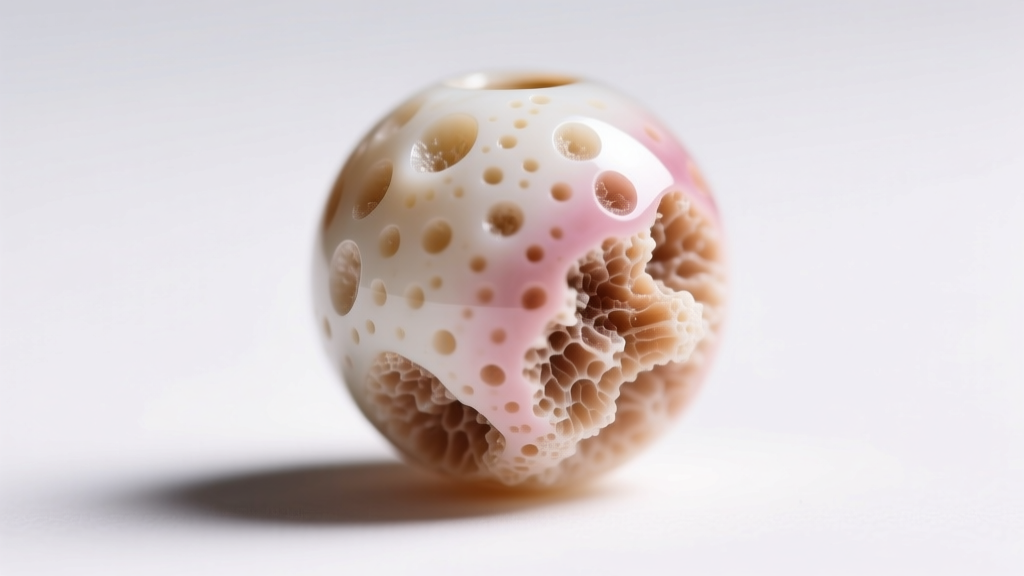
Natural coral is formed in a marine environment and is subject to borers, parasites, and mineral inclusions. Small, natural surface pitting is expected and, to many collectors, serves as a fingerprint of authenticity. However, 'gem-grade' strands will have minimal visible pitting to the naked eye. Beware of beads that appear overly waxy or artificially smooth; some manufacturers fill heavy pitting with calcium carbonate epoxy and re-polish the bead, a treatment that must be disclosed and significantly lowers the value.
CITES, Sourcing, and the Market Reality
You cannot discuss precious coral without addressing the legal and ethical frameworks governing its trade. Due to overharvesting and the slow growth rate of deep-sea coral beds (growing merely a few millimeters per year), many Corallium species have faced severe population declines.
While not all coral species are banned, the international trade of many precious corals is heavily monitored or restricted under the Convention on International Trade in Endangered Species (CITES). Always demand verifiable provenance when purchasing newly harvested coral.
For the modern buyer, the most reliable and ethical route to acquiring a high-quality angel skin coral bead necklace is through the estate and vintage market. Pieces sourced from the mid-20th century, particularly those originating from the renowned workshops of Torre del Greco in Italy or the historic Japanese coral carving centers of Kochi, offer exceptional quality without contributing to modern marine depletion. When purchasing, always consult CITES guidelines or work with a dealer who can provide pre-convention certificates or documented antique provenance.
Verifying Authenticity vs. Dyed Substitutes
The high market value of natural Angel Skin coral has spawned a variety of imitations. The most common substitutes include dyed howlite, dyed magnesite, and coral-powder composites. Here is a practical decision framework for spotting fakes:
- The Magnification Test: Under a 10x loupe, natural coral will show a subtle, organic mottling or grain structure. Dyed howlite will reveal grayish matrix veins that have absorbed dark pink dye, creating an unnatural, spider-web color concentration.
- The Thermal Conductivity Test: Natural coral feels cool to the touch and takes time to warm up against the skin. Plastic imitations will feel immediately warm or room-temperature.
- The Acetone Swab Test (Destructive/Caution): A cotton swab lightly dampened with acetone rubbed on an inconspicuous area (like the bead hole) will pick up pink dye if the stone is artificially colored. Natural coral's color is intrinsic and will not bleed.
Stringing Mechanics and Structural Integrity
A frequent failure mode in vintage and contemporary coral jewelry is strand breakage. Angel skin coral beads have a specific gravity of roughly 2.65, making them relatively heavy. Furthermore, the drill holes in older beads can be rough or sharp-edged, acting like microscopic saws against traditional stringing materials.
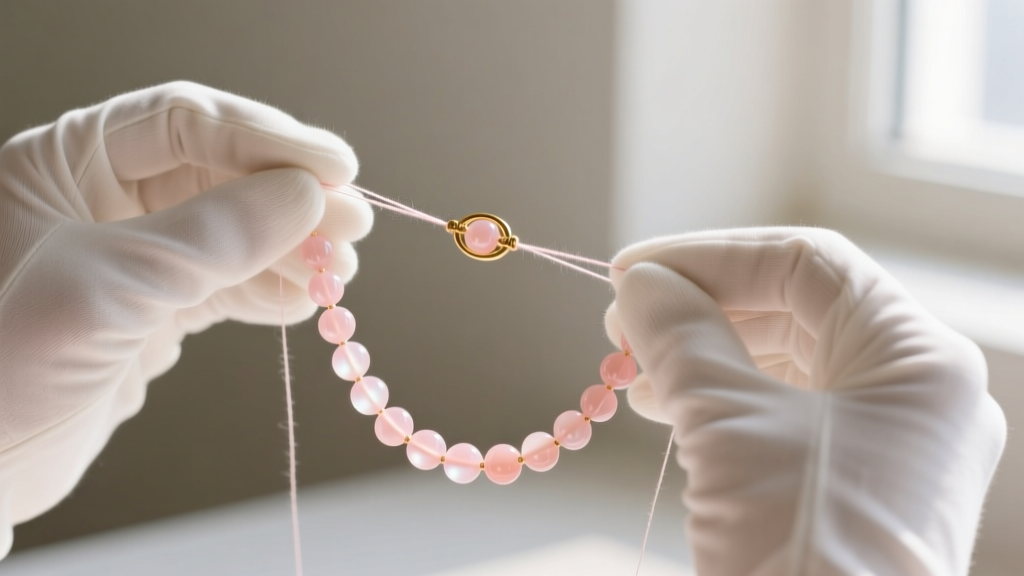
Historically, silk thread was the standard for knotting pearl and coral necklaces. However, silk is highly susceptible to degradation from moisture, sweat, and the slightly acidic environment created by the conchiolin in the coral itself. For modern restringing of an angel skin coral bead necklace, experts strongly recommend using gel-spun polyethylene (e.g., Power Pro) or high-grade synthetic beading wire (e.g., Beadalon 49-strand).
Additionally, knotting between every single bead is non-negotiable. Not only does this prevent the total loss of the strand in the event of a break, but it also prevents the beads from grinding against one another, which would quickly wear away the delicate waxy polish and dull the carotenoid coloration.
Care, Maintenance, and Failure Modes
Coral is primarily calcium carbonate, meaning it is highly reactive to acids. The most common cause of irreversible damage to an angel skin coral bead necklace is exposure to everyday cosmetics and environmental pollutants. Human sweat, which contains lactic and urea-based acids, can slowly etch the surface of the beads, leaving them dull, chalky, and stripped of their natural luster.
| Environmental Factor | Impact on Angel Skin Coral | Preventative Action |
|---|---|---|
| Perfumes & Hairspray | Alcohol and chemicals strip the waxy polish and dry out the conchiolin matrix. | Always apply cosmetics 15 minutes before putting on the necklace. |
| Ultrasonic Cleaners | High-frequency vibrations will shatter the beads along natural micro-fractures. | Never use ultrasonic or steam cleaners. Wipe only with a damp, soft cloth. |
| Chlorine (Pools/Spas) | Chlorine reacts with calcium carbonate, causing severe surface pitting and whitening. | Remove the necklace before any aquatic activities or bathing. |
| Direct Sunlight (Prolonged) | UV exposure can cause the delicate pink carotenoid pigments to fade over decades. | Store in a dark, velvet-lined jewelry box away from direct window light. |
By understanding the intricate gemological properties, adhering to strict ethical sourcing standards, and implementing rigorous care protocols, collectors can ensure their angel skin coral bead necklace remains a pristine, glowing testament to the ocean's rarest organic treasures for generations to come.


