Antica Murrina Necklace: A Technical Glass Anatomy
Explore the technical anatomy of an authentic Antica Murrina necklace, from Murano lampwork glass techniques to metal findings and authentication.

The Legacy of Venetian Lampwork in Modern Jewelry
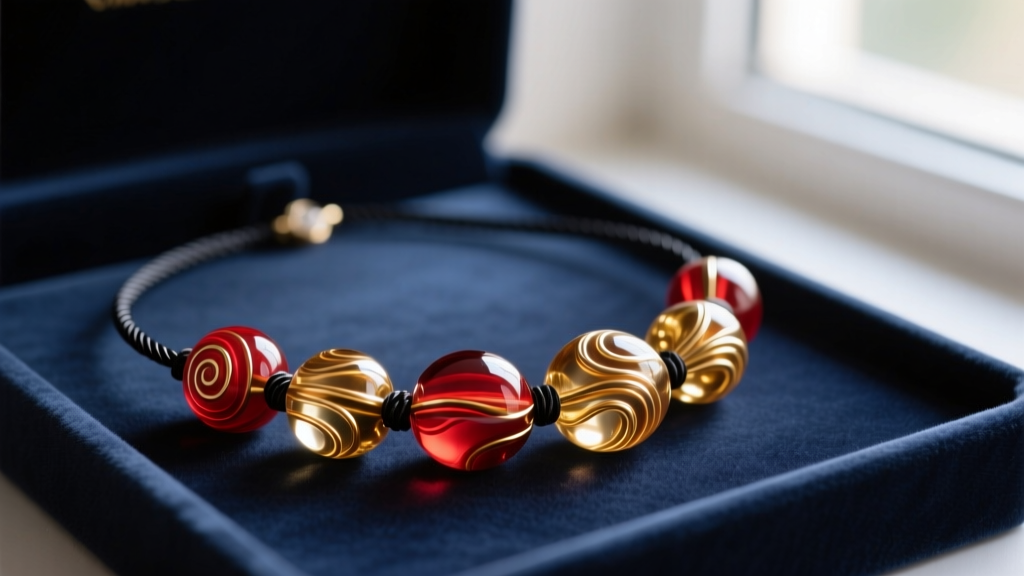
When evaluating high-end artisan jewelry, the Antica Murrina necklace stands as a benchmark for the successful integration of traditional Venetian glassmaking with contemporary structural design. Founded in the 1970s, the brand leverages centuries-old Murano techniques, but it is the underlying technical execution that separates these pieces from mass-produced imitations. Understanding the anatomy of these necklaces requires a deep dive into materials science, thermal dynamics, and jewelry engineering. An authentic Antica Murrina necklace is not merely a decorative item; it is a complex assembly of soda-lime glass, precious metal inclusions, and precision-cast hardware, typically retailing between $150 for simple pendants and exceeding $800 for intricate, multi-strand parure sets.
The Chemical Composition of Murano Soda-Lime Glass
The foundation of any genuine Antica Murrina piece is the glass itself. Unlike the borosilicate glass used in scientific equipment or the lead crystal found in chandeliers, Murano beads are crafted from a specialized soda-lime glass matrix. The base batch consists of silica (SiO2) derived from quartz sand, soda ash (Na2CO3) acting as a flux to lower the melting point, and calcium oxide (CaO) to ensure chemical stability and prevent water solubility.
According to archival data preserved by the Corning Museum of Glass, the precise ratio of these elements dictates the glass's Coefficient of Expansion (COE). Murano lampworkers typically utilize glass with a COE of 104 (often associated with Effetre or Moretti glass lines). This metric is critical: if an artisan fuses glass colors with mismatched COEs during the lampworking process, the differing rates of thermal contraction will introduce severe internal stress, leading to micro-fractures or catastrophic shattering upon cooling. Antica Murrina strictly controls COE matching across its multi-colored bead designs, ensuring structural integrity even in complex, layered patterns.
Thermal Dynamics and the Annealing Lehr
The creation of the glass beads involves melting raw cullet and glass rods over a dual-fuel torch, reaching localized temperatures between 1,400°F and 1,800°F. However, the most critical phase of the manufacturing process occurs after the bead is formed. To prevent the aforementioned thermal shock, the beads must undergo a rigorous annealing process.
The beads are immediately placed into an annealing lehr (a specialized kiln) pre-heated to the glass's strain point, typically around 900°F to 950°F. They are held at this temperature to allow the molecular structure to relax and equalize. The kiln is then programmed to cool at a highly controlled rate of approximately 100°F per hour until it reaches room temperature. This 12-to-24-hour cycle is what gives an Antica Murrina necklace its impact resistance, preventing the delayed cracking that plagues poorly manufactured, un-annealed glass jewelry.
Inclusion Metallurgy: Aventurine and Gold Leaf
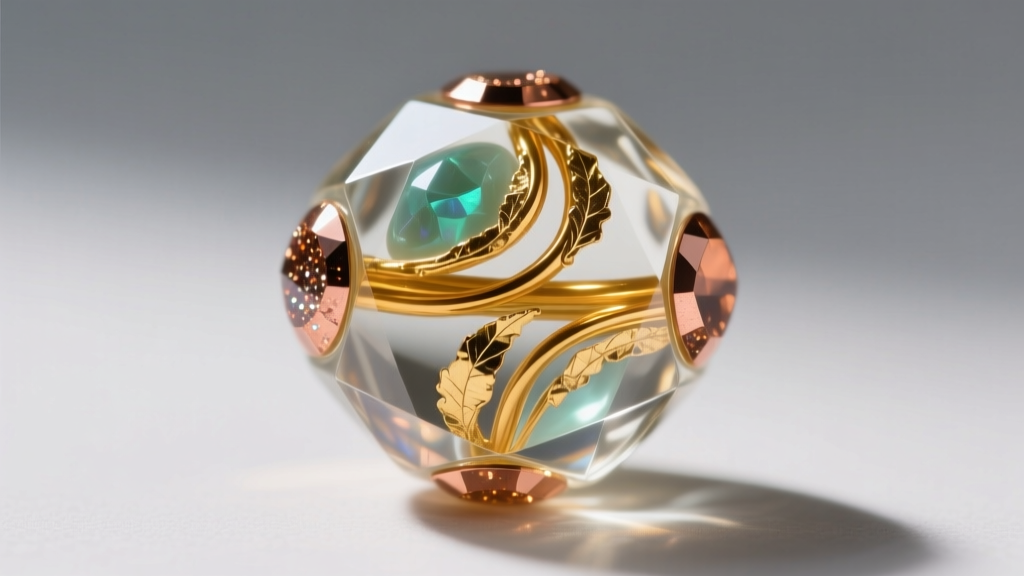
What truly elevates the Antica Murrina necklace is the mastery of internal inclusions. Two techniques dominate their premium collections:
Aventurine (Avventurina) Precipitation
Aventurine glass is characterized by its brilliant, metallic sparkle. This effect is not achieved by simply mixing glitter into molten glass. Instead, it requires a complex reduction-oxidation (redox) reaction. Copper oxide is added to the glass melt in a reducing atmosphere (starving the crucible of oxygen). As the glass slowly cools, the copper ions precipitate out of the solution, forming microscopic, highly reflective hexagonal copper crystals suspended within the silica matrix. The timing of the cooling phase must be exact; cool it too quickly, and the crystals fail to form; cool it too slowly, and the copper oxidizes, turning the glass a muddy green.
24k Gold Leaf Integration
When incorporating genuine 24k gold leaf, the lampworker must apply the ultra-thin metal to the glass core at a precise viscosity window, usually around 1,200°F. If the glass is too hot, the gold will vaporize or burn away; if too cool, the gold will fail to bond, resulting in delamination and flaking over time. The glass is then encased in a transparent outer layer (a technique known as encasing or 'sommerso'), protecting the soft gold from mechanical abrasion.
Hardware, Findings, and Stringing Architecture
A glass bead is only as secure as the hardware that holds it. Antica Murrina utilizes specific metallurgical standards for their findings to withstand the substantial weight of solid glass. Below is a breakdown of the standard hardware specifications utilized in their modern collections.
| Component | Material Grade | Technical Specification |
|---|---|---|
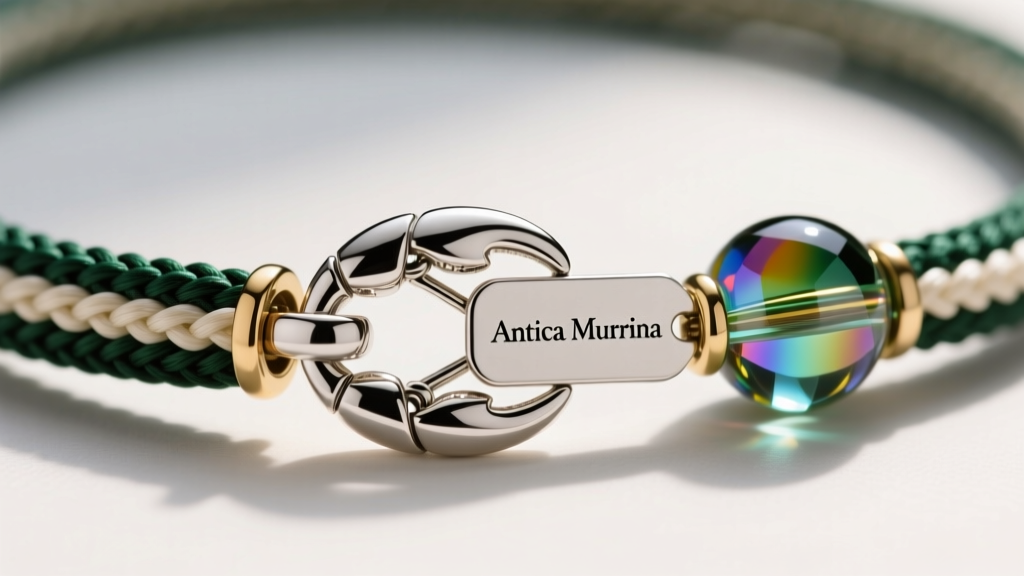
| Lobster Clasp | Rhodium-Plated Brass | 0.75 to 1.0 micron plating thickness, 12mm length |
| Jump Rings | Sterling Silver (925) | Soldered closed, 1.2mm wire gauge to prevent pulling |
| Stringing Core | Nylon-Coated Stainless Steel | 49-strand micro-wire, 20lb minimum tensile strength |
| Signature Tag | Enamel and Brass | Laser-etched branding, epoxy resin coated for waterproofing |
The transition from traditional knotted silk cord to 49-strand nylon-coated stainless steel micro-wire in recent decades has drastically reduced the failure rate of their heavier necklaces. The nylon coating prevents the steel from abrading the interior glass channel of the beads, while the brass findings are plated with a thick layer of rhodium to provide a tarnish-resistant, hypoallergenic barrier that mimics the look of white gold or platinum.
Authentication: Spotting Genuine Antica Murrina Pieces
Because of the brand's prestige, the secondary market is flooded with counterfeits. Authenticating an Antica Murrina necklace requires examining both the glass and the hardware. The Promovetro Consortium, which manages the Murano Glass trademark, provides guidelines that align closely with Antica Murrina's internal quality controls.
- The Pontil Mark: Authentic lampwork beads will have a small, smooth indentation or polished scar where the bead was attached to the steel mandrel. Mass-produced molded glass beads often have a raised seam line running vertically through the bead, which is an immediate indicator of a fake.
- Weight Distribution: Solid soda-lime glass is dense. A genuine multi-bead Antica Murrina necklace will have a substantial, heavy drape. Imitations made from hollow blown glass or acrylic resins will feel unnaturally light and lack the kinetic swing of solid glass.
- Hardware Branding: Examine the signature tag under a 10x jeweler's loupe. Authentic tags feature crisp, laser-etched or deeply stamped typography with clean enamel fills. Counterfeit tags often exhibit shallow stamping, bleeding enamel, or incorrect font weights.
- Internal Bubble Structure: While a few microscopic bubbles are a natural byproduct of lampworking, a high concentration of large, uniform bubbles indicates cheap, machine-molded glass. Antica Murrina beads are highly refined, with inclusions deliberately placed rather than randomly trapped.
Long-Term Maintenance and Mohs Hardness Considerations
Maintaining an Antica Murrina necklace requires an understanding of the material's physical limitations. Soda-lime glass registers between 5.5 and 6.5 on the Mohs hardness scale. While this makes it resistant to scratching from steel (which sits around 4.5 to 5.0), it is highly vulnerable to quartz dust (7.0) and topaz or sapphire abrasion.
Never clean these necklaces using ultrasonic jewelry cleaners. The high-frequency acoustic cavitation can exploit microscopic, invisible surface fissures in the glass, causing the bead to shatter internally. Furthermore, harsh chemical dips used for silver cleaning will strip the rhodium plating from the brass findings and degrade the nylon coating on the stringing wire. The correct maintenance protocol involves wiping the glass with a damp, lint-free microfiber cloth and using a dry, untreated polishing cloth for the metal hardware. Store the necklace flat or draped over a wide radius; hanging heavy glass beads on a narrow hook for extended periods can create localized stress on the stringing wire's crimp beads, eventually leading to metal fatigue and wire failure.
Conclusion
The Antica Murrina necklace represents a triumph of material engineering as much as it does artistic expression. By strictly controlling the chemical composition of their soda-lime glass, executing flawless thermal annealing, and pairing the fragile beads with high-tensile stringing and rhodium-plated hardware, the brand ensures its jewelry survives the rigors of daily wear. For collectors and enthusiasts, understanding these technical nuances transforms the act of purchasing from a simple transaction into an appreciation of centuries-old Venetian science.


