Authenticating Your Antique Freshwater Pearl Necklace
Learn how to authenticate, grade, and care for an antique freshwater pearl necklace with our expert guide on nacre, drill holes, and luster.

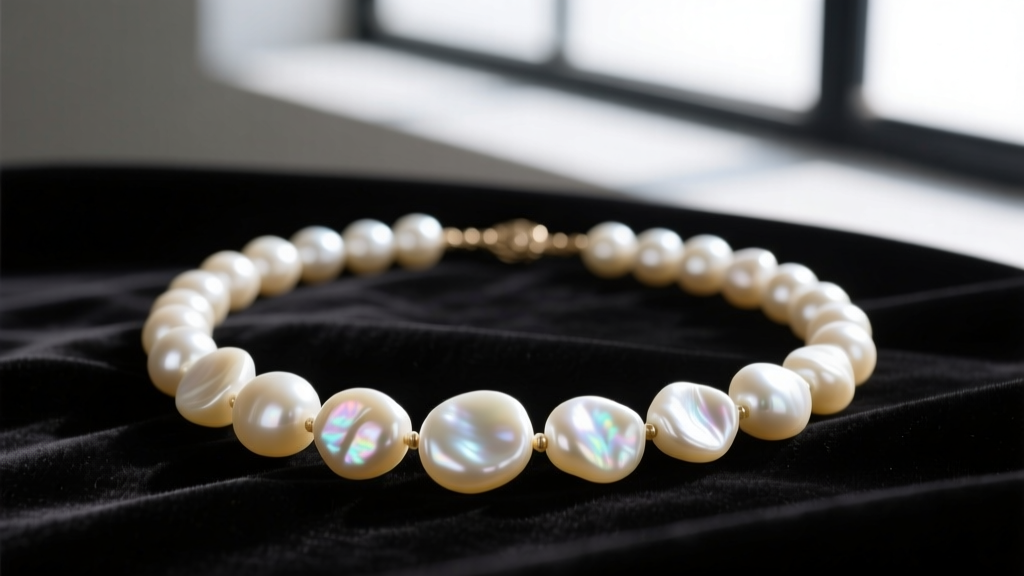
The Gemological Reality of Antique Freshwater Pearls
When evaluating an antique freshwater pearl necklace, collectors and gemologists must first establish a strict chronological baseline. By definition, an antique piece must be at least 100 years old. Therefore, true antique freshwater pearls were harvested prior to 1926, placing them squarely in the era of natural river pearls. Unlike the perfectly spherical cultured Akoya pearls that dominated the mid-20th century, antique freshwater specimens—primarily sourced from the Mississippi River basin in the United States and various river systems across Europe—are celebrated for their organic, asymmetrical baroque shapes, high luster, and complex overtone structures.
The late 19th and early 20th centuries saw the American 'Pearl Rush,' where natural freshwater pearls were harvested from mussels like the Quadrula pustulosa (pimpleback) and Amblema plicata (threeridge). Understanding this historical context is critical for authentication. According to the Gemological Institute of America (GIA), natural freshwater pearls possess a distinct internal structure composed entirely of nacre, lacking the bead nucleus found in saltwater cultured counterparts. This solid nacre composition gives antique freshwater pearls their renowned durability and deep, glowing orient.
Key Gemological Properties
- Refractive Index (RI): 1.53 to 1.68
- Specific Gravity: 2.60 to 2.74
- Mohs Hardness: 2.5 to 4.5
- Luster: High to very high, characterized by a sharp, mirror-like surface reflection combined with deep subsurface iridescence (orient).
Technical Grading: Nacre, Luster, and Surface Topography
Grading an antique freshwater pearl necklace requires abandoning modern commercial grading scales (like A-AAA) and adopting a gemological approach focused on preservation and natural characteristics. Because these pearls are 100% nacre, nacre thickness is not a variable as it is in cultured pearls; instead, we evaluate nacre quality and crystal alignment.
Luster is the primary driver of value. In antique specimens, look for a 'silky' or 'satiny' luster rather than the glassy, mirror-like finish of modern bead-nucleated pearls. The aragonite platelets in natural river pearls often align in slightly irregular patterns, creating a soft, glowing light return. Surface topography will almost always include blemishes—tiny pits, ridges, or 'growth rings.' A completely flawless natural freshwater pearl from the 1800s is a museum-grade anomaly and should immediately trigger requests for advanced X-radiography to prove its natural origin.
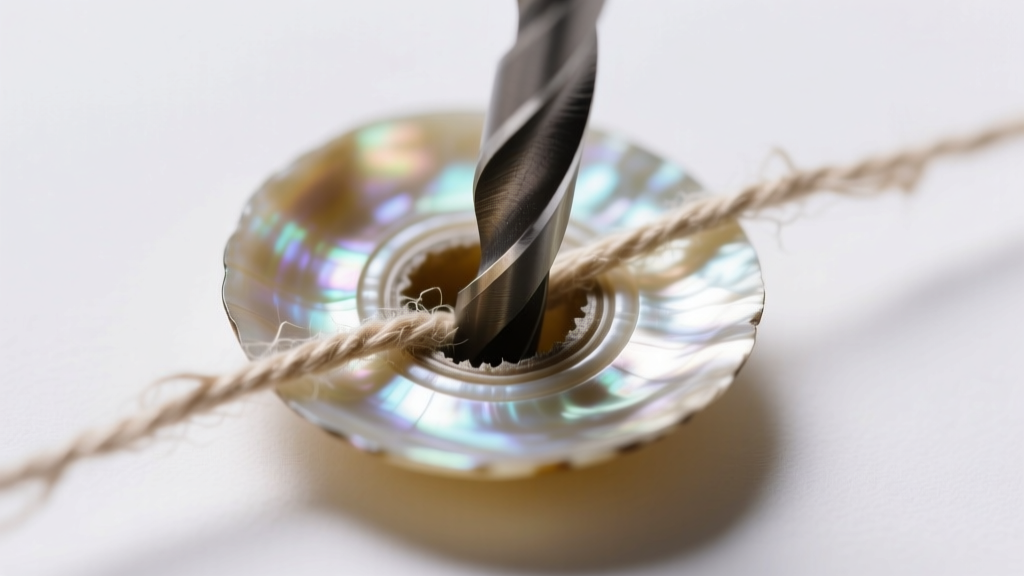
Drill Hole Analysis: The Ultimate Authentication Test
The most definitive way to authenticate and date an antique freshwater pearl necklace without destructive testing is through microscopic examination of the drill holes. Early 20th-century lapidary equipment was rudimentary compared to modern ultrasonic drilling. Analyzing the borehole provides immense data regarding the necklace's provenance and age.
| Era | Drilling Technique | Hole Diameter | Internal Features |
|---|---|---|---|
| Pre-1900 (Victorian) | Hand-pumped bow drill, double-drilled | 0.4mm - 0.7mm | Conical taper, meeting point offset, high chatter marks |
| 1900 - 1920 (Edwardian) | Early mechanical rotary, double-drilled | 0.6mm - 0.9mm | Slight taper, smoother walls, occasional nacre blowout at exit |
| 1920 - 1940 (Art Deco) | Motorized single/double drill | 0.8mm - 1.2mm | Cylindrical, uniform striations, sharp entry/exit edges |
Under 10x to 30x magnification, an authentic antique freshwater pearl will exhibit 'chatter marks'—concentric, uneven rings inside the drill hole caused by the manual pressure and vibration of early drill bits. Furthermore, to prevent the delicate nacre from chipping (blowout) when the drill bit exited the pearl, early jewelers almost exclusively 'double-drilled' the pearls. This means they drilled halfway through from one side, flipped the pearl, and drilled from the opposite side. If the two holes do not meet perfectly in the center, creating a slight internal 'step' or offset, it is a strong indicator of antique hand-drilling.
Stringing Materials and Historical Knotting Techniques
The textile components of an antique freshwater pearl necklace are just as important as the gems themselves. Original stringing materials rarely survive a century without degradation, so finding a piece on its original thread is exceptionally rare and highly prized by archival collectors.
Silk Thread and French Wire
Historically, pearls were strung on twisted, pure silk thread. The thickness of the silk was matched precisely to the drill hole diameter to minimize friction and prevent the pearls from sliding. For antique pieces with 0.6mm drill holes, jewelers used ultra-fine silk (equivalent to modern Size 00 or Size 0). To protect the silk from fraying against the metal clasp, a hollow, coiled metal wire known as 'French wire' or 'gimp' was threaded over the silk at the terminal ends. In authentic antique necklaces, this gimp was typically made of fine silver or gold-filled wire, showing natural oxidation and patina consistent with the age of the clasp.
Clasp Hallmarks and Metallurgy
As noted by antique jewelry historians at Lang Antiques University, the clasp is the primary dating mechanism for pearl necklaces. An authentic antique piece will rarely feature a modern lobster claw or spring-ring clasp. Instead, look for:
- Box Clasps with Figure-8 Safeties: Prevalent in the 1910s and 1920s, featuring a hinged wire safety catch that snaps over the clasp tongue.
- Barrel Clasps: Common in the late 1800s and early 1900s, often featuring screw threads that require precise alignment.
- Metallurgy: 14k gold (often with a lower copper content yielding a paler yellow than modern alloys), 18k gold, or heavily tarnished sterling silver featuring Art Nouveau or Art Deco filigree motifs.
Advanced Non-Destructive Testing (NDT)
When visual and microscopic inspections are inconclusive, modern gemological laboratories employ advanced NDT protocols to verify the natural origin of antique freshwater pearls.
X-Radiography and Endoscopy
X-radiography is the gold standard for separating natural river pearls from early bead-nucleated freshwater imitations. A natural pearl will reveal a series of concentric, overlapping nacreous layers radiating from a central, often microscopic, organic nucleus (a tiny sand grain or parasite). There will be no dark, dense bead in the center. Conversely, if an X-ray reveals a sharp, high-density boundary between a solid core and a thin outer layer of nacre, the pearl is cultured, immediately disqualifying it from being a true 19th-century antique.
Endoscopy involves inserting a microscopic fiber-optic probe into the drill hole to visually inspect the internal structure. This allows the gemologist to confirm the absence of a bead nucleus and observe the natural, swirling grain patterns of solid nacre that are characteristic of wild freshwater mussels.
Market Valuation and Pricing Tiers
The valuation of an antique freshwater pearl necklace is highly nuanced, driven by provenance, condition, and the aesthetic appeal of the baroque shapes. Unlike modern cultured pearls, which are priced on perfect symmetry, antique naturals are valued on their unique 'character' and historical significance.
- Collector Grade ($5,000 - $25,000+): Necklaces featuring exceptionally high luster, rare pastel overtones (like natural pinks or peaches from specific river basins), original period clasps with hallmarks, and documented provenance.
- Wearable Antique Grade ($1,500 - $4,500): Beautiful, lustrous baroque or button-shaped pearls with minor surface blemishes, likely restrung on modern silk but retaining an antique or vintage clasp.
- Project Grade ($300 - $800): Pearls with chalky luster, severe surface degradation (crazing), or mismatched drill holes requiring complete restoration and restringing.
Conservation and Restringing Protocols
If you acquire an antique freshwater pearl necklace, conservation should be your immediate priority. Never attempt to clean these pearls with ultrasonic cleaners, steamers, or commercial jewelry dips. The organic conchiolin within the nacre is highly sensitive to heat, acids, and harsh chemicals. Clean them only with a soft, damp microfiber cloth.
Restringing must be done by a master pearl knotter who understands historical techniques. The pearls should be individually knotted using high-grade, unbleached silk thread. The knots should be pulled tight against the pearl to prevent gaps, but not so tight that they restrict the natural drape of the necklace. If the original clasp is damaged, it should be repaired by a bench jeweler specializing in antique metallurgy, rather than replaced, to preserve the necklace's historical integrity and market value.


