Cross Necklace Name Guide: Budget and Value Assessment
Discover the true value behind every cross necklace name style. Compare materials, pricing frameworks, and budget tips for Latin, Celtic, and custom crosses.

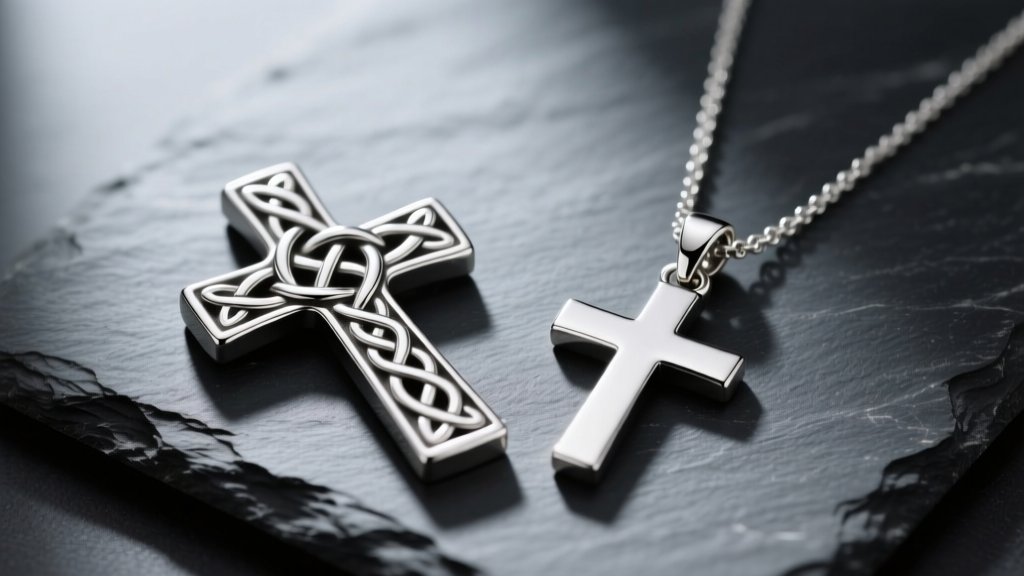
When navigating the jewelry market, the search for a specific cross necklace name often leads to a confusing landscape of pricing. Whether you are searching for a historical cross necklace name like the Maltese, Celtic, or Ankh, or looking to commission a personalized custom name cross pendant, understanding the underlying value is critical. With gold spot prices and precious metal premiums fluctuating near historic highs in 2026, buyers must look beyond the brand name and assess the intrinsic metallurgical and craftsmanship value of their pieces. This guide breaks down the true cost drivers behind popular cross styles, providing a concrete framework to assess budget and value.
The Anatomy of Cross Necklace Pricing
The price of any cross pendant is dictated by three primary variables: material grade, manufacturing method, and design complexity. A common mistake buyers make is assuming that a heavier cross is inherently more valuable. However, a hollow-backed, die-struck 14k gold Latin cross may contain less actual gold than a solid, cast 10k gold Celtic cross. To accurately assess value, you must first understand how the piece was manufactured.
- Die-Striking: Uses high pressure to stamp thin sheets of metal. This creates lightweight, often hollow-backed pendants. It is highly cost-effective but lacks depth and intricate detailing. Expected markup is high relative to the low metal weight.
- Lost-Wax Casting: The standard for solid, detailed pieces like Celtic or Orthodox crosses. A wax model is 3D printed or carved, encased in investment, and burned out, leaving a mold for molten metal. This yields a solid, durable piece with a higher intrinsic metal value.
- CAD/CAM Laser Cutting: Used primarily for custom name cross pendants. A vector file is sent to a laser cutter that slices the design from a flat sheet of sterling silver or gold. The value here lies in the custom programming and edge-finishing labor rather than complex 3D geometry.
Decoding the Cross Necklace Name: Style vs. Cost
Different historical and stylistic cross names carry distinct labor premiums. Here is how specific styles impact your budget.
1. The Latin and Greek Crosses (The Baseline)
The standard Latin cross (with a longer descending arm) and Greek cross (equal arms) are the most common. Because their geometry is simple, they are frequently die-struck or stamped from sheet metal. A 925 sterling silver Latin cross should cost between $25 and $50. If a retailer charges over $100 for a simple, lightweight stamped Latin cross without gemstone accents, you are paying a massive brand markup rather than true material value.
2. The Celtic and Maltese Crosses (The Labor Premium)
The Celtic cross, characterized by its intersecting ring and intricate knotwork, requires advanced lost-wax casting and extensive hand-polishing to remove oxidation from the crevices. Similarly, the Maltese cross features eight distinct points and deep V-cut grooves. Because these designs cannot be easily die-struck, they require more labor and result in a heavier, solid cast piece. Expect to pay a 40% to 60% labor premium over a standard Latin cross of the same metal weight. A solid 14k gold Celtic cross weighing 4 grams should realistically cost between $450 and $600, factoring in the 2026 gold spot price and casting fees.
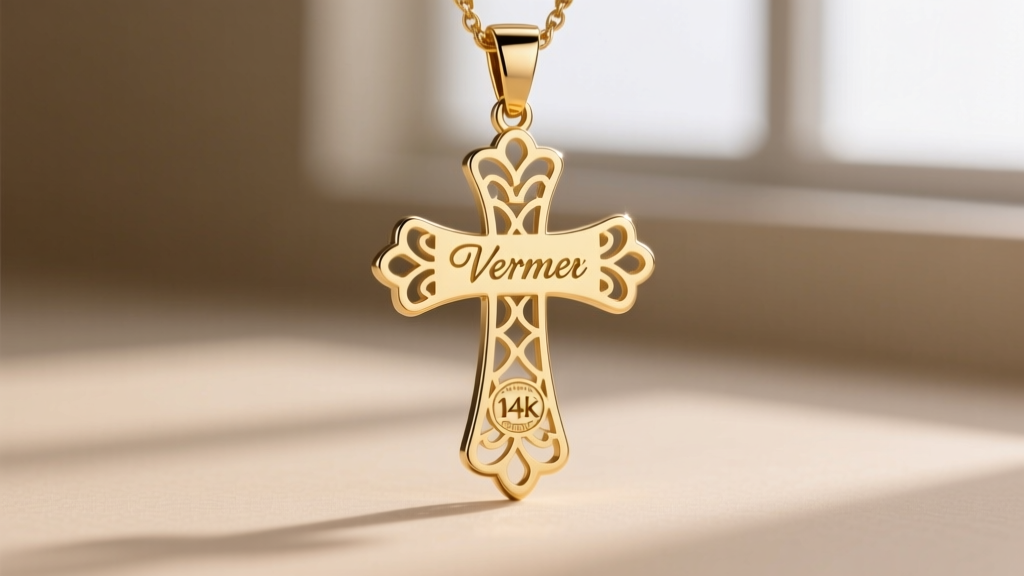
3. Custom Name Cross Pendants (The Personalization Tax)
When the "cross necklace name" you are searching for is actually a personalized name integrated into the cross silhouette, you enter the realm of custom jewelry. The base price for a custom laser-cut name cross in sterling silver typically starts at $120. This covers the CAD design time, laser machine calibration, and the meticulous hand-filing required to smooth the sharp edges left by the laser. Each additional letter or complex flourish (like a heart replacing the cross intersection) adds $10 to $25 to the base price. Beware of retailers charging under $60 for "custom" name crosses; these are almost always cheap brass alloys plated with a microscopic flash of silver that will tarnish and turn the skin green within weeks.
Material Grades and True Market Value
To accurately assess your budget, you must understand the legal and metallurgical definitions of the metals used. According to the Federal Trade Commission (FTC) Jewelry Guides, specific terms like "vermeil" have strict legal definitions that protect consumers from deceptive marketing.
| Material Grade | Specification & Thickness | Expected Price Range (Standard 1-inch Cross) | Value Verdict & Longevity |
|---|---|---|---|
| Brass with Flash Plating | Base brass, <0.1 microns gold/silver | $15 - $35 | Poor Value. Tarnishes quickly, causes skin irritation. 1-2 year lifespan. |
| 925 Sterling Silver | 92.5% pure silver, 7.5% copper alloy | $40 - $90 | Excellent Value. Solid metal, can be polished indefinitely. Lifetime durability. |
| Gold Vermeil | Sterling silver base, minimum 2.5 microns 14k/18k gold | $75 - $150 | Good Value. Thick gold layer over solid silver. 5-10 years of daily wear. |
| Solid 10k / 14k Gold | 41.7% (10k) or 58.5% (14k) pure gold alloy | $250 - $800+ | Premium Value. Generational heirloom piece. Intrinsic melt value retained. |
As noted by the Gemological Institute of America (GIA), the alloy metals mixed with pure gold (such as copper, zinc, and silver) dictate not only the color but the durability of the piece. For a daily-wear cross pendant, 14k gold offers the optimal balance of rich color and scratch resistance, whereas 18k gold, while more valuable, is softer and more prone to bending on thin bail loops.
The "Price-Per-Gram" Value Framework
Professional jewelers and estate liquidators do not look at the retail tag; they look at the gram weight. To determine if a solid gold cross necklace is fairly priced, use the Price-Per-Gram framework.
Expert Formula: (Current Gold Spot Price per Gram × Purity Factor) + 25% Making Charge = Fair Wholesale Value. Retailers typically multiply this wholesale value by 2.0 to 2.5 to cover overhead. If the multiplier exceeds 4.0, you are overpaying for the brand name.
For example, if 14k gold scrap is trading at $50 per gram, a 3-gram solid 14k gold Latin cross has an intrinsic metal value of $150. Adding a standard 30% making charge for casting and polishing brings the wholesale cost to $195. A fair retail price would be between $390 and $487. If a mall jeweler attempts to sell this exact 3-gram cross for $950, the value proposition is fundamentally flawed.
Red Flags: When a Cross Necklace is Overpriced
Protect your budget by watching out for these common industry pricing traps:
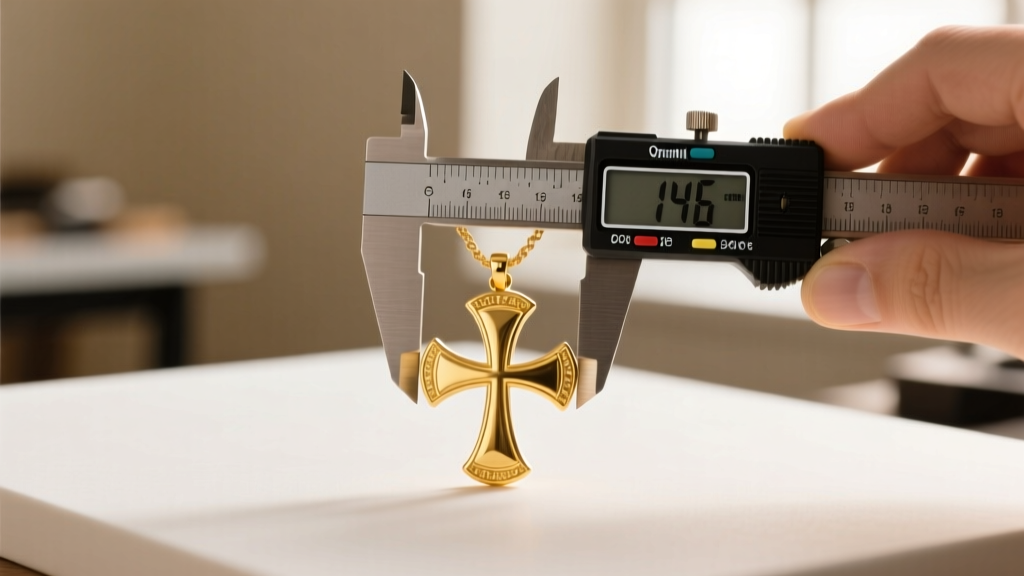
- The "Hollow-Back" Deception: Many large, impressive-looking 14k gold crosses are electroformed or soldered with a hollow back. They look massive but weigh less than 2 grams. Always ask for the exact gram weight before purchasing.
- Vague Plating Terminology: If a product description says "gold plated" but fails to specify the base metal or the micron thickness, assume it is brass with a microscopic flash coating. True value requires a stated base (like sterling silver) and a thickness (like 2.5 microns for vermeil).
- Inflated MSRP Discounts: A cross pendant listed with an "MSRP" of $1,200 but perpetually on sale for $299 is a classic psychological pricing trick. The piece was never worth $1,200; its true market value is likely closer to $150.
- Unverified Gemstone Accents: Crosses featuring "diamond accents" often use single-cut, I3-clarity diamonds (often called 'promotional grade') that are heavily included and lack brilliance. A cross with high-quality melee diamonds will explicitly state the carat weight and clarity grade.
Final Verdict: Maximizing Your Budget
Finding the right cross necklace name style on a budget requires shifting your focus from brand prestige to metallurgical reality. For buyers on a strict budget under $100, a solid 925 sterling silver die-struck Latin or Greek cross offers the best longevity, completely avoiding the inevitable tarnish and skin irritation of plated brass. For those willing to invest between $300 and $600, a solid 14k gold cast Celtic or Maltese cross provides exceptional intrinsic value, retaining its melt value while offering a durable, generational heirloom. By applying the price-per-gram framework and demanding transparency in metal weight and plating thickness, you can confidently navigate the market and secure a piece that honors both your faith and your financial boundaries.


