The Antique Garnet Bead Necklace: 2026 Styling & Trend Guide
Discover how to style, authenticate, and care for an antique garnet bead necklace in 2026. Expert insights on varieties, stringing, and market value.

The 2026 Resurgence: Curated Heritage Over Quiet Luxury
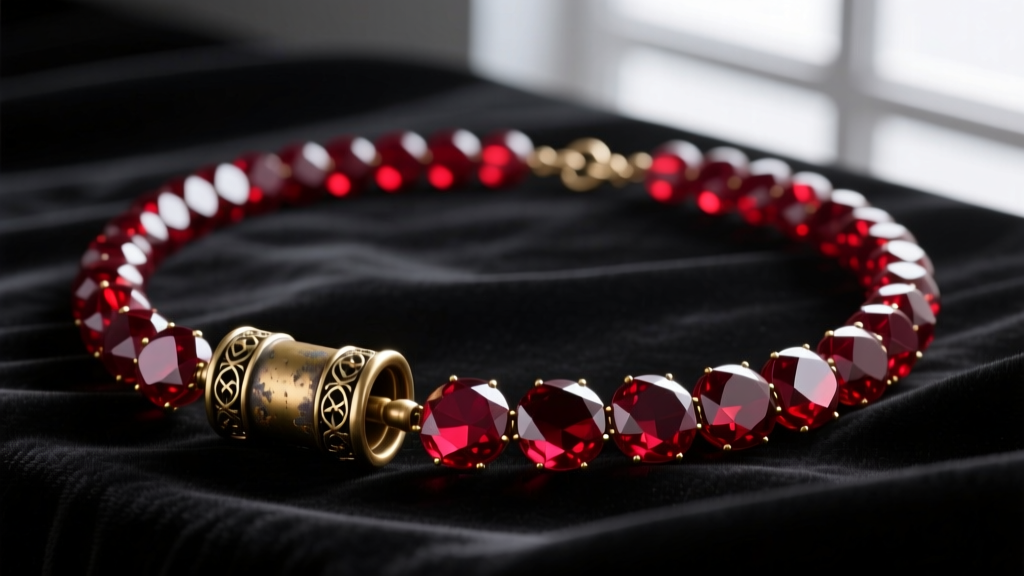
As we navigate the jewelry trends of 2026, the industry is witnessing a definitive pivot from the minimalist "quiet luxury" of previous years toward "curated heritage." Collectors and style enthusiasts are increasingly gravitating toward pieces with historical weight, tangible craftsmanship, and rich color palettes. At the forefront of this movement is the antique garnet bead necklace. Unlike modern, mass-produced gemstone strands, antique garnet necklaces—primarily dating from the Victorian (1837-1901) and Art Deco (1920-1935) eras—offer a masterclass in lapidary history. According to market analyses by Forbes, vintage colored gemstone jewelry has seen a 22% year-over-year increase in auction demand, driven by a desire for sustainable, one-of-a-kind adornments that carry a verifiable provenance.
Gemological Breakdown: Almandine vs. Pyrope Beads
To truly appreciate an antique garnet bead necklace, one must understand the specific mineralogy of the stones used. The term "garnet" refers to a group of silicate minerals, but antique bead strands almost exclusively feature two varieties: Almandine and Pyrope.
Almandine (Fe3Al2(SiO4)3)
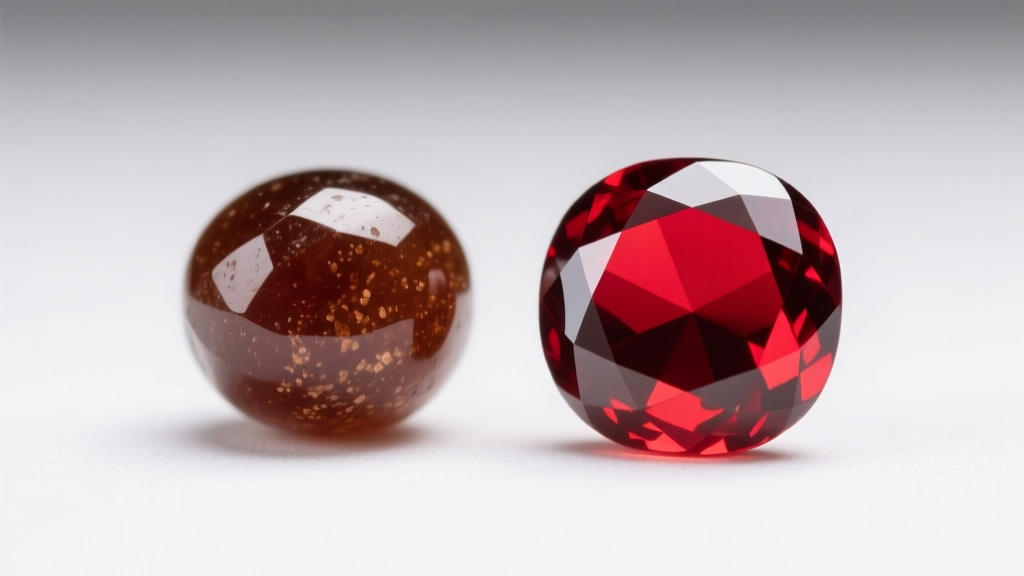
Almandine is the most common garnet found in Victorian-era bead necklaces. It is characterized by a deep, velvety red hue that often carries subtle brownish or purplish undertones. With a refractive index (RI) of approximately 1.76 and a high specific gravity (3.8 to 4.3), Almandine beads feel remarkably heavy in the hand. This density gives antique strands a distinct, liquid-like drape that lighter materials simply cannot replicate. The beads were typically cut into faceted rondelles or rose-cut spheres to maximize candlelight reflection in the 19th century.
Pyrope (Mg3Al2(SiO4)3)
Pyrope garnets, often sourced from historical Bohemian mines, are rarer in large bead strands but highly prized for their pure, blood-red color devoid of brown modifiers. Pyrope has a slightly lower specific gravity (3.5 to 3.8) and an RI of roughly 1.73. According to the Gemological Institute of America (GIA), distinguishing between Almandine and Pyrope in antique beads without advanced spectroscopy can be challenging, but the color saturation under incandescent versus daylight conditions is a reliable visual indicator. Pyrope tends to remain vibrantly red in all lighting, while Almandine can appear nearly black in low light.
Anatomy of an Antique Strand: Clasps, Knotting, and Drill Holes
Authenticating an antique garnet bead necklace requires looking beyond the stones to the structural components. The findings and drill techniques are critical indicators of age and origin.
- Drill Hole Sizes: Antique lapidaries used hand-cranked or early mechanical drills, resulting in smaller, sometimes slightly conical drill holes. Expect hole diameters between 0.6mm and 0.9mm. If a strand features perfectly uniform 1.5mm laser-drilled holes, it is likely a modern reproduction or has been heavily reworked.
- The Gimp (French Wire): Authentic Edwardian and Victorian strands utilize "gimp"—a tightly coiled, microscopic metal wire (usually gold-filled or silver)—placed over the silk thread where it enters the metal clasp. This prevents the metal edge from slicing the silk over decades of wear.
- Clasp Typology: Victorian strands typically feature simple brass or low-karat gold barrel clasps with push-in friction fittings. By the Art Deco era, these evolved into intricate filigree push-pull clasps, often stamped with maker's marks or metal purity hallmarks (e.g., "9CT" or "585").
Structural Failure Modes and Modern Restoration
The most common point of failure for any antique bead necklace is the stringing material. Historically, these necklaces were strung on organic silk thread. While silk provides an unparalleled, supple drape, it is highly susceptible to degradation from acidic skin oils (pH 4.0-6.0), UV exposure, and humidity.
The Great Debate: Silk vs. Micro-Wire
When restoring an antique garnet bead necklace, owners face a critical decision regarding restringing materials. Below is a technical comparison of the two primary options:
| Material | Specifications | Pros | Cons & Failure Modes |
|---|---|---|---|
| Griffin Silk Cord | Size #2 (0.45mm) or #3 (0.50mm); knotted between beads. | Historically accurate; supreme drape; prevents total loss if the strand breaks. | Stretches over time; rots from perspiration; requires restringing every 3-5 years. |
| Beadalon 49-Strand | 0.015" (0.38mm) stainless steel micro-wire; crimped. | Extreme tensile strength; waterproof; immune to body oils and stretching. | Stiffer drape; can kink permanently if bent sharply; lacks historical authenticity. |
Expert Recommendation: For museum-quality preservation or high-value Art Deco pieces, stick to hand-knotted silk using French wire at the terminals. For everyday-wear Victorian strands with smaller (4mm) beads, a 49-strand micro-wire with a protective nylon coating offers the best balance of safety and flexibility.
Market Valuation: What You Should Pay in 2026
Pricing for an antique garnet bead necklace is heavily dictated by the era, bead graduation, clasp material, and overall condition (specifically, the presence of chipped drill holes or "flea bites" on the facet junctions). Based on current 2026 vintage jewelry market data, here is a baseline valuation framework:
| Era & Style | Bead Size & Cut | Clasp Type | Estimated Price Range (USD) |
|---|---|---|---|
| Victorian (c. 1880) | 4mm - 6mm Graduated Rondelle | Base Metal Barrel Clasp | $250 - $550 |
| Edwardian (c. 1910) | 5mm Uniform Rose-Cut | 9k Gold Push-Pull | $600 - $950 |
| Art Deco (c. 1925) | 6mm - 8mm Faceted Spheres | 14k Gold Filigree Box Clasp | $1,200 - $2,500+ |
Always request a blacklight (UV) examination before purchasing. While garnet itself is inert under UV light, the presence of modern synthetic adhesives in the drill holes or on the clasp fittings will fluoresce brightly, indicating recent, potentially unprofessional repairs.
Styling Frameworks: Necklines and Layering Techniques
The deep crimson tones of an antique garnet bead necklace make it a versatile anchor for both vintage-inspired and contemporary wardrobes. However, styling requires an understanding of contrast and proportion.
The Layering Matrix
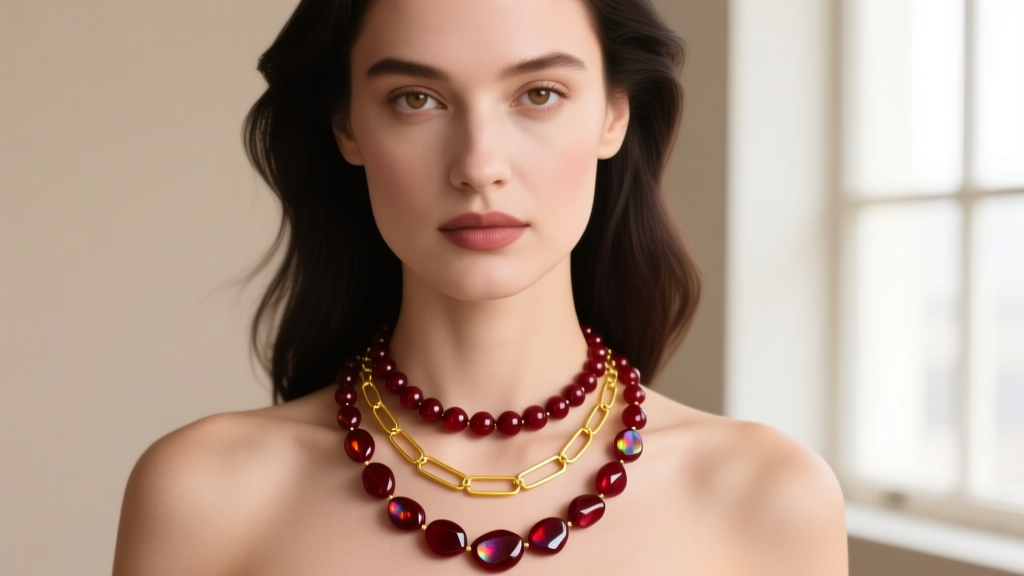
Garnet beads absorb light, meaning they can look heavy or dark if worn alone against dark fabrics. To modernize the antique strand for 2026, employ the "Metallic Interruption" technique:
- The Base Layer: Wear the 16-inch antique garnet choker directly against the skin.
- The Bridge: Add an 18-inch 14k or 18k yellow gold paperclip or cable chain. The high-polish gold reflects light upward, illuminating the garnet's internal fire.
- The Anchor: Finish with a 22-inch matte gold or oxidized silver pendant necklace featuring a complementary stone, such as a moonstone or pearl, to draw the eye vertically.
Neckline Pairings
"The key to styling heavy, historical bead strands is allowing them to dictate the geometry of the neckline. Never force an antique rondelle necklace into a space it wasn't designed to fill."
- Deep V-Necks & Wrap Dresses: Ideal for 18-inch princess-length graduated strands. The V-shape mirrors the natural parabolic drape of the heavy Almandine beads, framing the collarbone without overwhelming the torso.
- Crew Necks & Turtlenecks: Reserve these for shorter, 15-inch choker lengths featuring smaller (4mm) uniform Pyrope beads. Ensure the garment is a contrasting light neutral—such as cream, camel, or soft grey—to prevent the dark red beads from visually disappearing into the fabric.
Conclusion
Owning an antique garnet bead necklace is an exercise in historical stewardship. By understanding the gemological nuances of Almandine and Pyrope, respecting the structural limitations of antique drill holes, and applying modern styling frameworks, you can seamlessly integrate these 19th-century masterpieces into a contemporary 2026 wardrobe. Treat them with care, and they will outlast the fleeting trends of the modern jewelry cycle.


