How to Buy an Authentic Vintage Star of David Necklace
Discover how to authenticate, date, and value a vintage Star of David necklace. Expert tips on hallmarks, Bezalel silver, and 2026 market pricing.


The Enduring Appeal of the Magen David
When searching for a vintage Star of David necklace, buyers are looking for more than just a beautiful piece of jewelry; they are seeking a tangible connection to history, faith, and heritage. The Magen David (Shield of David) became a universal symbol of Jewish identity in the late 19th and early 20th centuries, meaning true antique examples require careful authentication. Unlike modern CAD/CAM cast pendants, vintage pieces feature superior hand-engraving, repoussé metalwork, and a distinct patina that cannot be replicated in a factory. In 2026, with gold prices reaching historic highs and the market for vintage Judaica surging, knowing how to evaluate craftsmanship, hallmarks, and historical eras is critical to avoiding overpriced reproductions.
Decoding the Eras: From Victorian to Mid-Century
The design, metal purity, and construction of a Star of David pendant can accurately date the piece. Understanding these distinct eras is the first step in building a high-quality collection.
Victorian and Edwardian (1880s–1910s)
Because the Star of David was not universally adopted as a primary jewelry motif until the rise of the Zionist movement, true Victorian examples are rare. Pieces from this era originating in the UK often feature 15k gold (stamped 625) or 9k gold, adorned with seed pearls, turquoise cabochons, or intricate repoussé floral borders. Eastern European examples from the same period are typically crafted in low-karat gold (8k or 9k) or silver, featuring heavier, more geometric die-stamped designs.
Art Deco (1920s–1930s)
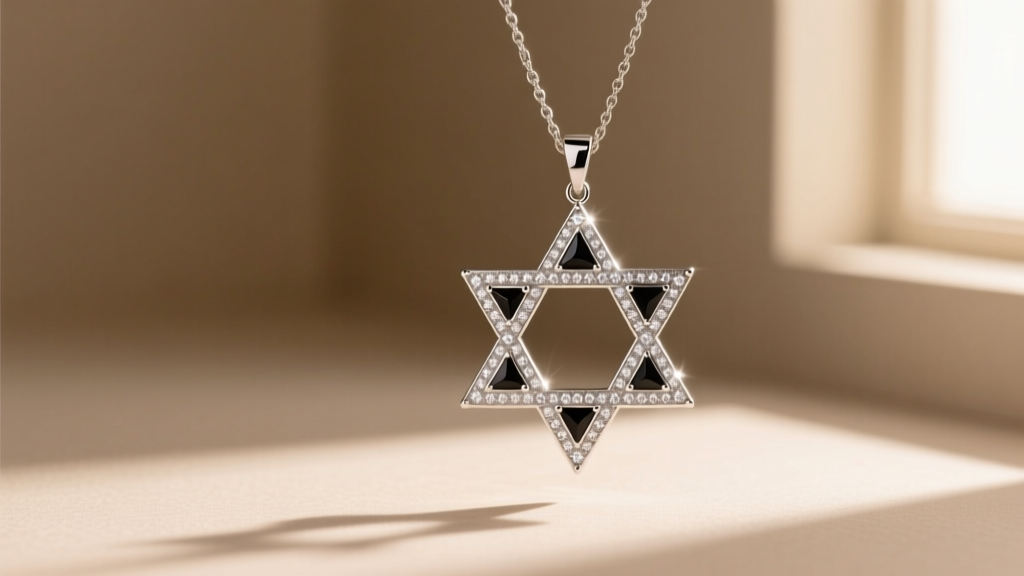
Art Deco Judaica is highly prized for its architectural geometry. A vintage Star of David necklace from this era will likely be crafted in platinum or 18k white gold, featuring calibré-cut onyx, coral, or marcasite inlays. The interlocking triangles of the star naturally lent themselves to the sharp, symmetrical aesthetics of the Deco movement.
The Bezalel School (1906–1929)
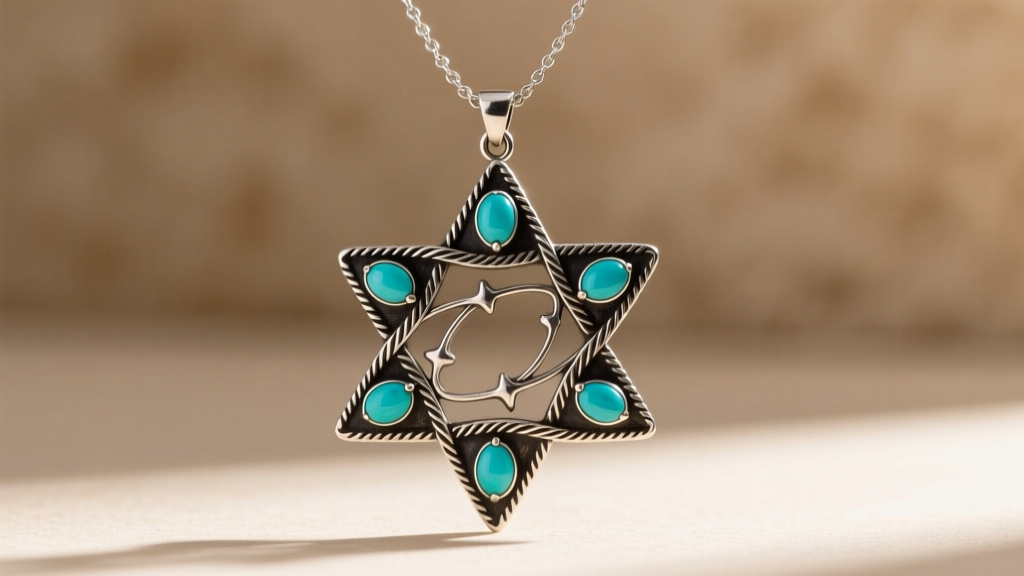
For serious collectors, the "holy grail" of vintage Jewish jewelry is a piece from the Bezalel School of Arts and Crafts in Jerusalem. Founded by Boris Schatz, the school blended Art Nouveau aesthetics with traditional Yemenite silversmithing techniques. Authentic Bezalel Star of David pendants are crafted in silver or copper, featuring microscopic filigree wirework, enamel accents, and bezel-set turquoise or malachite. These pieces are exceptionally rare and command significant premiums at auction.
Mid-Century Israeli (1950s–1970s)
Following the establishment of the State of Israel, jewelry design shifted toward bold, textured 14k yellow gold. Mid-century vintage Star of David necklaces often feature a "bark" or "florentine" finish, heavy rope borders, and integrated motifs like the Chai (life) or Hamsa. These pieces are highly durable and represent excellent intrinsic value due to their heavy gold weight.
Authentication: Hallmarks, Bails, and Blacklights
Authenticating a vintage Star of David necklace requires a multi-sensory approach. Do not rely solely on the visual design, as modern reproduction molds are frequently cast from antique originals.
- Hallmark Hunting: Use a 10x jeweler's loupe to inspect the bail (the loop the chain passes through) and the back plate. Look for European purity marks like 585 (14k), 750 (18k), or the British lion passant for sterling silver. For post-1948 Israeli silver, look for the tiny Israeli lyre or camel assay marks. The Lang Antiques Hallmark Guide is an indispensable resource for decoding these microscopic stamps.
- Bail Wear (Keyholing):strong> A genuine vintage pendant will show significant friction wear inside the bail. Over decades, the chain acts like a saw, carving a distinct "keyhole" groove into the gold or silver. A perfectly round, unworn bail on a supposedly 100-year-old pendant is a massive red flag indicating a modern reproduction or a replaced bail.
- The Smell and Sound Test: Rub the pendant vigorously between your fingers. If it emits a metallic, "penny-like" odor, the core is likely brass or copper with a thin gold wash. Vintage solid gold or silver is odorless. Furthermore, drop the piece lightly on a glass surface; high-karat gold produces a dull, heavy thud, whereas base metals produce a high-pitched ping.
- Enamel and Repair Checks: If the piece features enamel (common in Art Deco and Bezalel pieces), inspect it under a UV blacklight. Modern epoxy repairs will fluoresce brightly, while original glass enamel will remain dark.
Evaluating the Chain and Clasp
A common mistake buyers make is assuming the chain is as old as the pendant. In the vintage market, pendants and chains are frequently married together decades after their initial creation. However, the clasp can help you date the chain itself:
| Clasp Type | Era of Invention/Popularity | Authentication Notes |
|---|---|---|
| C-Clasp | Pre-1900 | Simple hook; no moving parts. Common on early Victorian brooches, rarely on necklaces. |
| Trombone Clasp | 1890s–1940s | Push-pull tube mechanism. Highly indicative of early 20th-century European chains. |
| Spring Ring | Post-1914 | If a "Victorian" necklace has a spring ring, the chain is a later addition or the piece is a fake. |
| Push-in Box Clasp | 1940s–1970s | Standard for mid-century gold chains; features a safety latch or figure-8 wire guard. |
| Lobster Claw | 1980s–Present | Rarely found on authentic vintage chains unless the original clasp was repaired. |
For a deeper understanding of metal testing and clasp evolution, the GIA Hallmark Resources provide excellent baseline data for precious metal verification.
2026 Market Value and Pricing Guide
The market for vintage Judaica has matured significantly. While intrinsic gold value provides a high price floor in 2026, the collectible premium for specific historical eras remains the primary driver of value.
| Era / Style | Primary Material | Distinguishing Feature | Estimated 2026 Market Value |
|---|---|---|---|
| Victorian (UK/Europe) | 15k or 9k Gold | Seed pearls, repoussé borders | $800 – $2,500 |
| Art Deco | Platinum / White Gold | Onyx, marcasite, milgrain edges | $2,500 – $6,000+ |
| Bezalel School | Silver / Copper | Yemenite filigree, enamel | $4,000 – $15,000+ |
| Mid-Century Israeli | 14k Yellow Gold | Heavy bark finish, 15g+ weight | $1,200 – $3,500 (Scrap + Premium) |
Where to Buy and Red Flags to Avoid
Sourcing an authentic vintage Star of David necklace requires navigating specialized marketplaces. Mainstream vintage sites like Etsy can yield excellent finds, but they are flooded with modern "antique-style" castings. When browsing online, always filter for sellers who specialize in estate Judaica and demand high-resolution macro photos of the bail and hallmarks.
For guaranteed authenticity, look to specialized auction houses like Kestenbaum & Company, or vetted dealer platforms like 1stDibs, where sellers are required to provide accurate dating and material guarantees. Avoid any listing that uses vague terms like "vintage-style," "antique-finish," or "old-stock" without providing a definitive decade of origin or a clear hallmark analysis. If the seller cannot identify the specific assay mark or the era of the clasp, walk away. True vintage pieces carry the physical scars of their history—embrace the wear, verify the metal, and invest in the craftsmanship of the past.


