2026 Trend Analysis: The Colorful Gemstone Necklace
Discover 2026 trends for the colorful gemstone necklace. Explore styling frameworks, metal pairings, and investment insights for polychromatic jewelry.

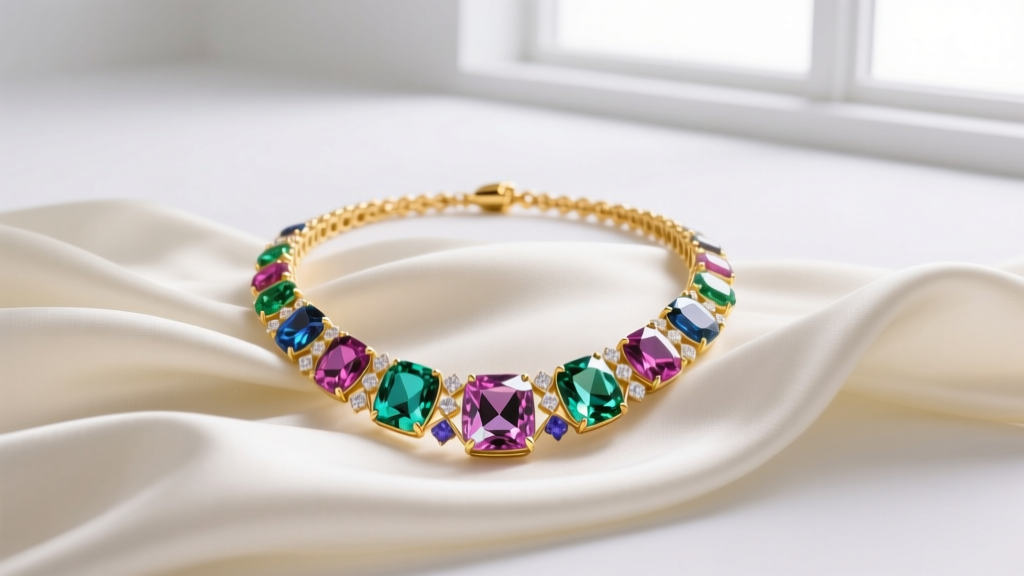
The jewelry landscape of 2026 has decisively pivoted. After several years dominated by the understated aesthetics of "quiet luxury" and monochrome metallic stacking, the pendulum has swung toward unapologetic self-expression. At the forefront of this cultural and stylistic shift is the colorful gemstone necklace. No longer relegated to seasonal summer collections or bohemian niches, polychromatic jewelry has become a cornerstone of contemporary fine jewelry wardrobes. This comprehensive trend analysis explores the material innovations, styling frameworks, and market dynamics defining the colorful gemstone necklace in 2026.
The 2026 Shift: From Monochrome to Polychromatic Masterpieces
The transition toward vibrant, multi-stone jewelry is deeply rooted in a broader consumer desire for individuality and emotional resonance. According to JCK Industry Market Reports, colored gemstone imports for fine jewelry settings have seen a 22% year-over-year increase, driven largely by millennial and Gen Z buyers seeking pieces that reflect personal narratives rather than traditional status symbols.
Designers are responding by moving away from uniform, single-stone pendants. Instead, the modern colorful gemstone necklace features asymmetric clustering, gradient color transitions, and unexpected mineral pairings. We are seeing high-end houses combine precious stones like unheated Burmese rubies with semi-precious but visually striking minerals like Paraíba tourmaline and tsavorite garnet. This democratization of color breaks down archaic hierarchies in gemology, prioritizing visual harmony and optical brilliance over mere carat weight.
Gemstone Cut & Setting Trends Defining 2026
The way a gemstone is cut and set drastically alters its visual impact and structural integrity. In 2026, the emphasis is on maximizing internal light play while ensuring everyday wearability for softer stones.
The Cabochon and Rose-Cut Revival
While brilliant-cut faceting remains standard for diamonds, the colorful gemstone necklace trend heavily favors rose-cuts and cabochons. Rose-cut stones, with their flat bases and domed, triangular facets, offer a softer, more diffused light return that enhances the natural saturation of stones like moonstone, opal, and aquamarine. Cabochons, polished but unfaceted, are the undisputed choice for phenomena stones that exhibit asterism (star sapphires) or chatoyancy (chrysoberyl cat's eye), allowing the optical effects to take center stage without the distraction of facet lines.
Bezel vs. Prong: The Durability Factor
As consumers demand versatile pieces that transition from boardroom to evening wear, setting engineering has evolved. The Gemological Institute of America (GIA) emphasizes the importance of matching setting styles to a stone's Mohs hardness. For a colorful gemstone necklace featuring stones on the lower end of the scale—such as opal (5.5-6.5) or tanzanite (6.5-7)—flush and bezel settings are now mandatory in high-end manufacturing. These settings wrap the metal entirely around the girdle of the stone, protecting vulnerable edges from chipping. Prong settings are increasingly reserved exclusively for corundum (sapphires/rubies) and spinel, where a Mohs rating of 8 or higher can withstand the exposure.
Material Matrix: Pairing Metals with Vibrant Stones
The choice of metal alloy is no longer just a backdrop; it is an active participant in the color theory of the necklace. In 2026, jewelers are utilizing specific metal hues to either amplify or temper the saturation of the gemstones. Below is a strategic matrix for designers and collectors navigating these pairings.
| Metal Alloy | Ideal Gemstone Pairings | Mohs Hardness Match | Avg. Price Range (2026) | Maintenance Level |
|---|---|---|---|---|
| 18k Yellow Gold | Tsavorite, Citrine, Fire Opal | 7.0 - 8.5 | $1,200 - $4,500 | Low (Polishing only) |
| Platinum (950) | Paraíba Tourmaline, Unheated Ruby | 7.5 - 9.0 | $8,000 - $25,000+ | Medium (Develops patina) |
| 14k Rose Gold | Morganite, Kunzite, Pink Spinel | 7.5 - 8.0 | $800 - $3,200 | Low (Copper alloy hides wear) |
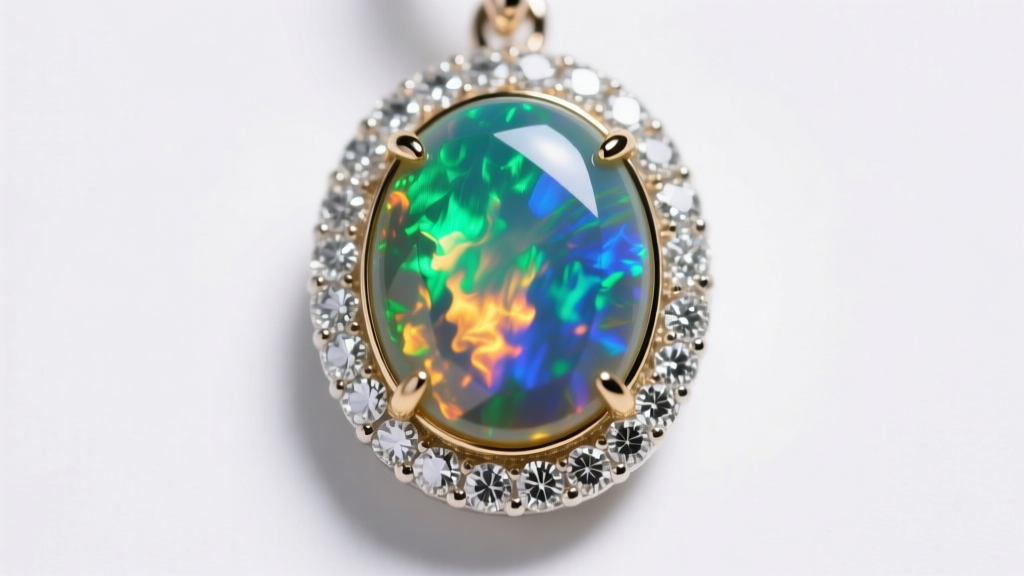
| Black Rhodium-Plated White Gold | Lightning Ridge Black Opal, Onyx | 5.5 - 7.0 | $2,500 - $7,000 | High (Requires re-plating) |
Notice the strategic use of black rhodium over white gold. This 2026 trend creates a moody, high-contrast backdrop that makes the spectral flashes of black opal appear almost three-dimensional, a technique heavily favored by avant-garde designers like Silvia Furmanovich.
Styling Framework: Necklines and Color Theory
Wearing a colorful gemstone necklace requires a deliberate approach to styling. The days of haphazardly throwing on a multi-stone piece with a busy pattern are over. The 2026 styling framework relies on strict color theory and architectural neckline matching.
The Analogous Layering Technique
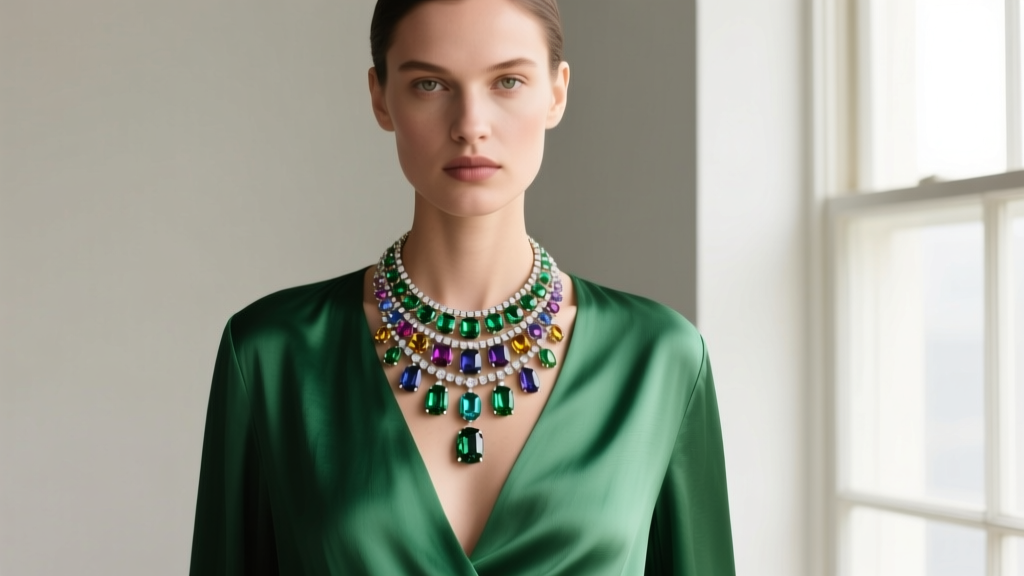
For a sophisticated, cohesive look, stylists recommend analogous layering—pairing a colorful gemstone necklace with garments or outerwear that sit adjacent to the stones on the color wheel. For example, a necklace featuring gradient blue-to-green apatite and chrysoprase should be worn over deep teal or forest green silk. The chain gauge also matters here; a 1.5mm to 2.0mm rope chain provides enough visual weight to anchor the piece against heavy silk or fine-gauge cashmere without getting lost in the fabric's drape.
Contrast Pairing for High Impact
When the goal is to make the jewelry the undeniable focal point, complementary contrast is key. A vibrant, warm-toned necklace featuring Mandarin garnets and yellow sapphires achieves maximum visual velocity when paired with a stark, cool-toned background, such as a structured cobalt blue blazer or a crisp, optic-white poplin shirt. The high contrast forces the eye directly to the décolletage, turning the necklace into a wearable art piece rather than a mere accessory.
Investment vs. Fast Fashion: Navigating the Market
The surge in demand for the colorful gemstone necklace has bifurcated the market. On one end, fast-fashion and accessible luxury brands are utilizing lab-created stones and glass composites to mimic high-end polychromatic trends, with price points hovering between $50 and $250. While these offer trend accessibility, they lack long-term value retention and often suffer from poor alloy integrity, leading to chain snapping and prong failure within months.
On the investment end, the market for natural, untreated colored gemstones is experiencing a renaissance. According to GIA's Tourmaline Market Analysis, the scarcity of high-clarity, naturally saturated Paraíba tourmalines and neon-green tsavorites has pushed their per-carat value to rival that of mid-tier diamonds. Collectors in 2026 are prioritizing provenance and treatment disclosure. A colorful gemstone necklace featuring unheated, origin-certified stones (e.g., Mozambican rubies or Nigerian tourmalines) set in recycled 18k gold is not just a fashion statement; it is a tangible, wearable asset class that historically outpaces inflation.
Conclusion: Building a Future-Proof Polychromatic Wardrobe
The 2026 colorful gemstone necklace is a triumph of modern gemology and expressive design. By understanding the interplay between stone hardness and setting architecture, mastering the nuances of metal-to-gem color theory, and recognizing the investment potential of untreated minerals, collectors can build a jewelry wardrobe that is both visually arresting and structurally enduring. As the industry continues to embrace the full spectrum of the earth's mineral wealth, the polychromatic necklace stands as a testament to the joy, complexity, and enduring allure of colored gemstones.


