Effigy Necklace Avowed: Troubleshooting & Care Guide (2026)
Troubleshoot common issues with your effigy necklace Avowed replica. Learn how to upgrade chains, prevent skin reactions, and maintain fantasy jewelry.

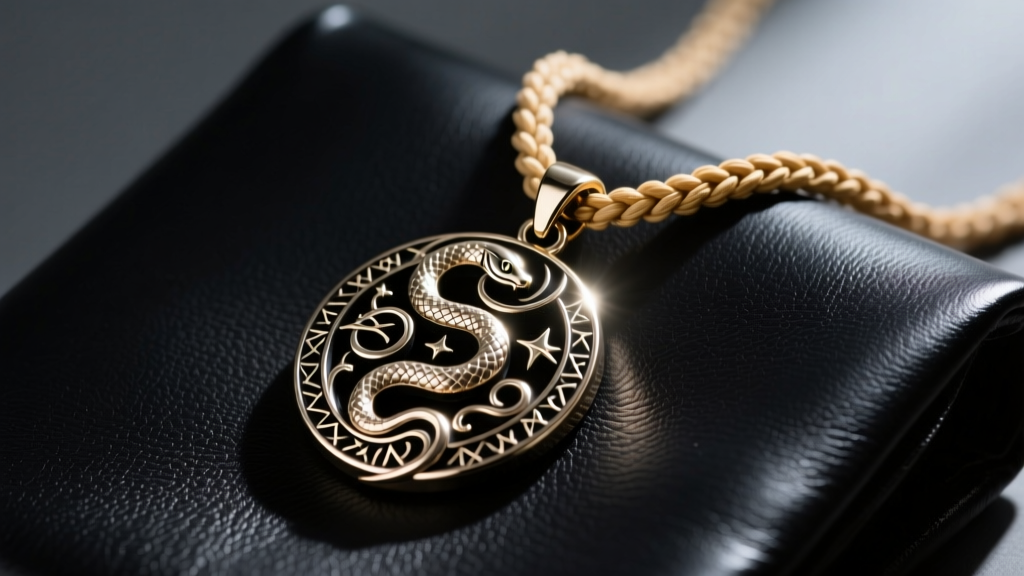
The Reality of Fantasy Replica Jewelry in 2026
Since the highly anticipated release of Obsidian Entertainment’s Avowed, the demand for immersive, lore-accurate cosplay and fan merchandise has skyrocketed. Among the most sought-after pieces is the effigy necklace Avowed fans recognize from the game's intricate talisman system. However, as we move through 2026, a common trend has emerged in the fantasy jewelry community: replica pieces are failing under the stress of daily wear. Whether you commissioned a custom metalsmith, purchased a limited-run merch drop, or picked up a mass-produced alloy version from an online marketplace, replica fantasy jewelry presents unique structural and dermatological challenges.
This comprehensive troubleshooting guide addresses the most frequent failure modes of the Avowed effigy necklace replica—from snapping chains and failing clasps to severe skin reactions caused by base metals. By applying professional jewelry repair techniques, you can transform a fragile cosplay prop into a durable, everyday statement piece.
Problem 1: The Weight-to-Chain Ratio Failure
The most frequent complaint regarding heavy fantasy pendants is chain breakage. An authentic-feeling effigy pendant cast in solid pewter or bronze typically weighs between 35 and 55 grams. Unfortunately, most replica necklaces are shipped with standard 1.2mm or 1.5mm cable chains designed for lightweight charms, not 50-gram talismans.
The Physics of Pendant Stress
When a heavy pendant rests on a thin chain, the gravitational pull creates immense shear stress on the individual jump rings and the clasp mechanism. Over time, the friction wears down the soft metal of the chain links, leading to sudden snapping.
- The Fix: Discard the stock chain. Upgrade to a 2.5mm to 3.0mm wheat chain or rope chain. These weaves distribute weight laterally across multiple interlocking links, increasing the tensile strength by over 300%.
- Material Recommendation: Opt for solid 925 sterling silver or gold-filled (14/20) chains. Avoid silver-plated brass, as the plating will quickly rub off against the heavy pendant bail.
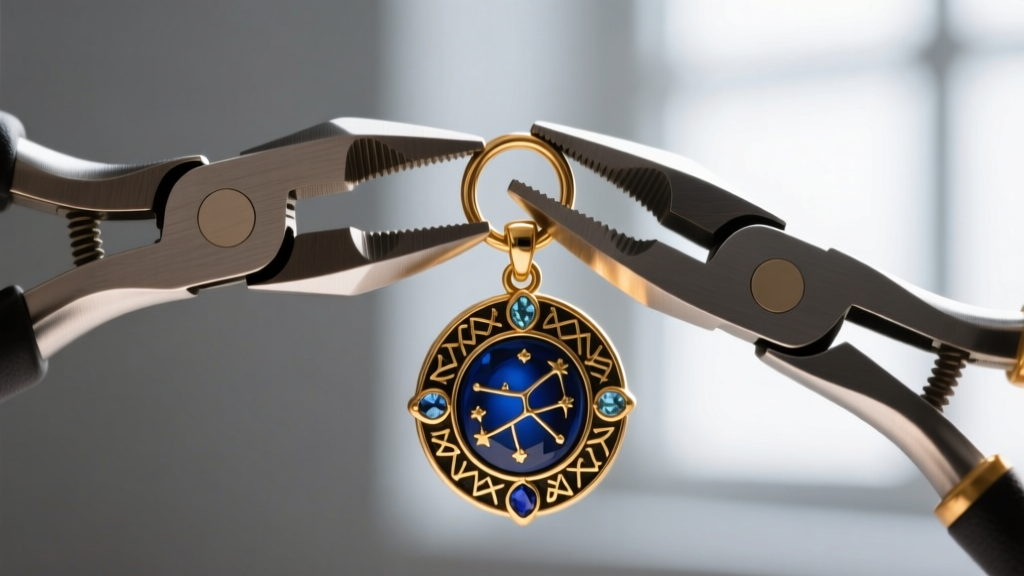
Upgrading the Jump Rings
The jump ring connecting the pendant to the chain is the single biggest point of failure. Standard replicas use 20-gauge (0.8mm) open jump rings that easily pull apart under the weight of an effigy. You must upgrade to a 16-gauge (1.3mm) or 14-gauge (1.6mm) jump ring. For maximum security, use a soldered jump ring or a heavy-duty locking jump ring (such as those made by Eurotool) to ensure the pendant never slips off.
Problem 2: Base Metal Skin Reactions and Tarnish
Mass-produced replicas are frequently cast from Zamak (a zinc alloy) or low-grade pewter. While these materials capture the intricate, weathered details of the Avowed effigy design beautifully, they are notorious for causing contact dermatitis and leaving green or black stains on the chest.
Understanding the Allergic Response
According to the American Academy of Dermatology, nickel and cobalt allergies are among the most common causes of contact dermatitis. Many cheap casting alloys contain trace amounts of nickel to improve flow during the casting process. When your body heat and sweat interact with the alloy, it creates a metallic salt that stains the skin and triggers an itchy, red rash.
Troubleshooting and Sealing the Metal
If your effigy necklace is causing skin irritation, you do not need to stop wearing it. Instead, create a physical barrier between the metal and your skin:
- Renaissance Wax: Originally developed for the British Museum, this micro-crystalline wax polish seals the metal, prevents tarnishing, and provides a temporary barrier against skin oils. Reapply every 4-6 weeks.
- Electrophoretic Clear Coating: For a permanent solution, use a jewelry-specific clear coat like Precious Metal Guard or a two-part epoxy resin designed for metals. This seals the alloy completely.
- The Nail Polish Myth: Avoid using clear nail polish. It yellows over time, chips unevenly, and contains solvents that can degrade painted details on the effigy.
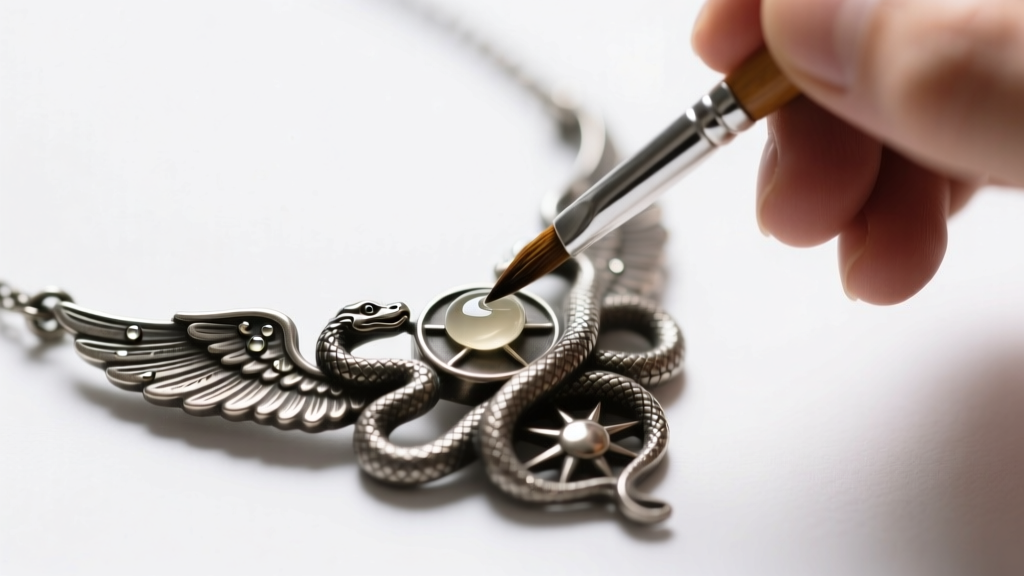
Material Breakdown: What is Your Effigy Actually Made Of?
To properly troubleshoot your necklace, you must identify its core material. Here is a diagnostic table to help you determine the composition of your replica and its specific maintenance needs.
| Material | Weight / Feel | Common Failure Modes | Maintenance Protocol |
|---|---|---|---|
| Zamak (Zinc Alloy) | Heavy, slightly brittle, cold to touch | Snapping at the bail, skin discoloration, pitting | Seal with clear coat; avoid water exposure entirely |
| Lead-Free Pewter | Medium-heavy, soft, bends easily | Bending out of shape, dull gray tarnish | Polish with a soft cloth; store with anti-tarnish strips |
| 3D Printed Resin | Very light, hollow sound when tapped | Chipped paint, cracking at the drill hole | Reinforce bail hole with a metal eyelet pin |
| Bronze / Brass | Heavy, very durable, warm undertones | Verdigris (green oxidation), metallic smell | Clean with lemon juice and salt; seal with wax |
Problem 3: Clasp Slippage and Bail Friction
A heavy effigy pendant will constantly slide down the chain, pulling the clasp from the back of your neck to the front. Furthermore, the friction of a rough-cast bail (the loop the chain passes through) will act like a file, slowly sawing through your chain links.
Solving the Sliding Clasp Issue
To keep the clasp at the nape of your neck, you need to introduce a physical stopper or change the clasp type.
- Use a Parrot Clasp: Also known as a hook clasp, this heavy-duty mechanism is bulkier and acts as a natural counterweight to the pendant.
- Add Silicone Stoppers: Thread small, clear silicone jewelry stoppers onto the chain a few inches away from the clasp to prevent it from sliding forward.
Smoothing a Rough Bail
If you notice your chain fraying or looking dull where it meets the pendant, inspect the inside of the bail. Replicas often have sharp casting seams inside the loop. Take a piece of 600-grit sandpaper, roll it into a tight tube, and gently sand the inside of the bail until it is completely smooth. Finish by rubbing a tiny amount of jeweler's rouge or beeswax inside the bail to reduce friction. The Gemological Institute of America (GIA) emphasizes that regular inspection of findings and bails is critical to preventing the catastrophic loss of heavy pendants.
Restoring Painted and Weathered Details
Many Avowed effigy necklaces feature hand-painted weathering, acrylic washes, or enamel fills to highlight the carved runes and facial features of the talisman. Daily wear, body oils, and friction from clothing will strip these finishes within months.
The Matte Sealant Technique
To restore and protect the painted recesses of your effigy:
- Clean the pendant gently with a damp microfiber cloth and mild dish soap. Let it dry completely for 24 hours.
- Using a fine detail brush, apply a thin layer of matte acrylic varnish (such as Vallejo or Testors) exclusively to the recessed, painted areas.
- Avoid gloss sealants, as they will make the piece look like cheap plastic rather than aged metal or bone.
Proper Storage for Fantasy Talismans
Tossing your effigy necklace into a jewelry box with other pieces is a recipe for disaster. The sharp edges of the effigy will scratch softer metals, and the chain will inevitably tangle around the pendant's protrusions.
Expert Storage Tip: Always store heavy fantasy pendants flat in a lined leather roll or a dedicated silicone jewelry pouch. Include a 3M anti-tarnish strip in the pouch to absorb ambient sulfur and moisture, which are the primary catalysts for oxidation in silver and copper-based alloys.
Final Thoughts on Replica Maintenance
Your effigy necklace Avowed replica is more than just a piece of merchandise; it is a wearable piece of art that connects you to the rich lore of the Living Lands. By taking the time to upgrade the chain gauge, seal the base metals, and smooth out rough castings, you ensure that your talisman remains a durable, comfortable, and striking accessory for years to come. Treat your fantasy jewelry with the same respect you would give to fine jewelry, and it will serve you well on all your real-world adventures.


