The Beginner's Guide to Choosing a Triangle Gold Necklace
Discover how to choose, style, and care for a triangle gold necklace. Learn about karats, chain pairings, and symbolism in our guide.

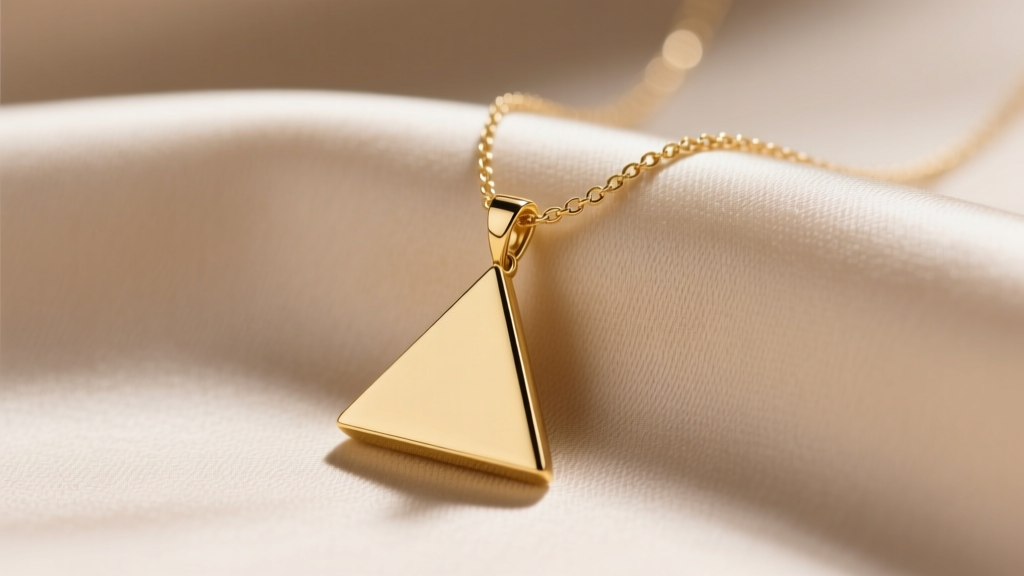
The triangle is one of the most enduring and structurally significant shapes in human history. When translated into fine jewelry, a triangle gold necklace offers a perfect blend of geometric minimalism and profound symbolism. Whether you are drawn to the sharp, modern lines of an equilateral pendant or the subtle elegance of an inverted trinity knot, navigating the world of gold purity, chain weights, and pendant construction can be overwhelming for a first-time buyer.
In this comprehensive beginner's guide, we will break down everything you need to know before purchasing a triangle gold necklace in 2026. From deciphering karat markings to selecting the right chain gauge, these actionable insights will ensure your investment is both beautiful and built to last.
The Symbolism and Geometry of the Triangle
Before diving into metallurgy, it is worth understanding why the triangle remains a staple in jewelry design. In structural engineering, the triangle is the strongest shape because its angles cannot be distorted without changing the length of its sides. This inherent stability translates symbolically into strength, resilience, and balance.
Culturally, the triangle often represents the 'rule of three.' This could signify the past, present, and future; the mind, body, and spirit; or creation, preservation, and destruction. An upward-pointing triangle is traditionally associated with masculine energy, aspiration, and fire, while a downward-pointing (inverted) triangle is linked to feminine energy, water, and intuition. Choosing the orientation of your triangle gold necklace allows you to subtly align your jewelry with your personal philosophy.
Decoding Gold Karats: Purity vs. Durability
One of the most common mistakes beginners make is assuming that a higher gold karat automatically means a 'better' piece of jewelry. In reality, pure gold (24K) is far too soft for everyday pendants and chains. It will scratch, bend, and lose its shape rapidly. Therefore, gold is alloyed with metals like copper, silver, and zinc to increase its tensile strength.
| Gold Karat | Purity Percentage | Durability & Wear | 2026 Avg. Price Range |
|---|---|---|---|
| 10K Gold | 41.7% | Highly durable, resistant to scratching. Slightly paler yellow hue. | $120 - $250 |
| 14K Gold | 58.3% | Industry standard. Excellent balance of rich color and everyday durability. | $250 - $500 |
| 18K Gold | 75.0% | Deep, luxurious yellow tone. Softer and more prone to surface scratches. | $450 - $900+ |
For a triangle pendant that you plan to wear daily, 14K gold is the optimal choice. It provides the structural integrity needed to maintain the sharp, precise angles of a geometric design without dulling over time. According to the Gemological Institute of America (GIA), 14K and 18K remain the global benchmarks for fine jewelry, offering the best compromise between aesthetic warmth and physical resilience.
Solid vs. Hollow Construction: A Critical Distinction
When shopping for geometric pendants, the manufacturing method drastically affects longevity. Many mass-market jewelers sell 'hollow' gold pendants. These are created using a process called electroforming, which deposits a microscopic layer of gold over a wax or resin core that is later melted or dissolved away.
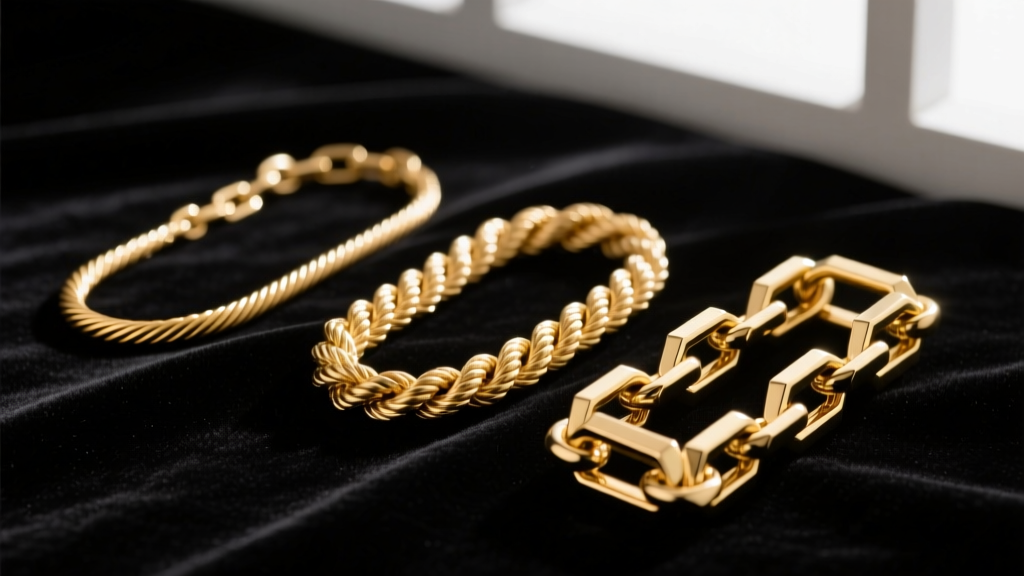
While hollow triangle gold necklaces are significantly cheaper and lighter, they are notoriously fragile. If a hollow pendant is dropped on a hardwood floor or accidentally crushed, it will dent irreparably. Because triangles rely on crisp, sharp corners for their visual impact, a dented corner ruins the design.
Always look for 'solid cast' or 'die-struck' pendants. A solid 14K gold triangle pendant will have a noticeable, satisfying weight to it. Die-struck pendants, which are stamped from solid sheets of gold under immense pressure, are particularly excellent for geometric shapes because the high-pressure stamping compresses the metal's grain structure, making the sharp edges incredibly resistant to wear.
Matching the Perfect Chain to Your Pendant
The pendant is only half the equation; the chain dictates how the triangle sits on your chest and how it handles daily friction. The connection point between the chain and the pendant is called the bail. You must match the chain's width to the bail's inner diameter.
Recommended Chain Styles for Geometric Pendants
- Cable Chain (1.0mm - 1.5mm): The most classic choice. A thin, round cable chain allows a minimalist triangle pendant to float effortlessly on the collarbone. It is lightweight but can kink if slept in.
- Box Chain (1.2mm - 2.0mm): Composed of square links, the box chain mirrors the geometric theme of the triangle pendant. It is highly durable, resists kinking, and lays flat against the skin.
- Rope Chain (1.5mm - 2.5mm): Offers a vintage, textured look that catches the light beautifully. Best paired with slightly larger, heavier solid gold triangles.
Pro Tip: If your triangle pendant has a hidden bail (a loop soldered directly to the back), ensure you buy a chain with a lobster clasp that is small enough to thread through the bail. A standard 12mm lobster clasp will not fit through a delicate 4mm hidden bail.
Sizing and Proportions: Finding the Right Drop
The visual impact of a triangle gold necklace changes dramatically based on the chain length and the pendant's physical dimensions. Here is a practical framework for sizing:
Pendant Dimensions
For a subtle, everyday piece, look for a triangle with a base width of 8mm to 12mm. This size is large enough to be recognized as a deliberate geometric shape but small enough to layer with other necklaces. For a bold, standalone statement piece, opt for a base width of 15mm to 25mm.
Chain Lengths
- 16 Inches (Choker): Sits tightly at the base of the neck. Best for very small, delicate triangles (under 10mm).
- 18 Inches (Princess): The industry standard. Rests perfectly on the collarbone, allowing the triangle to act as a focal point without getting lost in clothing.
- 20 to 22 Inches (Matinee): Drops below the collarbone, resting on the upper chest. Ideal for larger, heavier triangles or for wearing over turtlenecks and crew-neck sweaters in the autumn and winter.
Styling and Layering Techniques
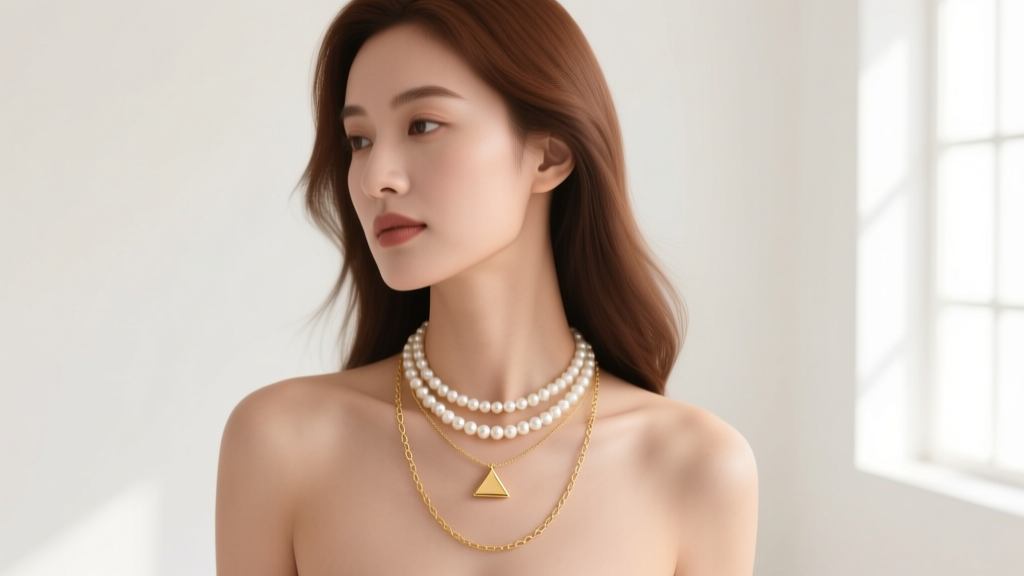
Because of its clean lines, a triangle gold necklace is an exceptional anchor piece for layering. When building a necklace stack, the triangle serves as the 'focal pendant.' To achieve a balanced, professional look in 2026, follow the 'Rule of Ascending Weights':
- Layer 1 (14-16 inches): A simple, unadorned gold chain or a delicate pearl strand.
- Layer 2 (18 inches): Your solid gold triangle pendant.
- Layer 3 (20-22 inches): A longer, heavier chain, such as a gold lariat or a chain featuring a solitary, larger gemstone drop.
This staggered approach prevents the chains from tangling—a common frustration with geometric pendants that have sharp edges capable of catching on adjacent links.
Care and Maintenance for Sharp Edges
Gold is a relatively non-reactive metal, but the alloys mixed into 14K and 18K gold (like copper and silver) can oxidize when exposed to environmental pollutants, lotions, and sweat. Furthermore, the sharp corners of a triangle pendant are prone to accumulating microscopic debris.
According to Jewelers of America, the safest way to clean geometric gold jewelry at home is by using a few drops of mild, phosphate-free dish soap in warm water, gently agitating the piece with a baby-soft toothbrush to dislodge dirt from the sharp corners and the bail.
Crucial Warning: Never use ultrasonic cleaners on hollow gold jewelry, as the high-frequency vibrations can cause the thin metal walls to fracture. Additionally, avoid wearing your triangle necklace in chlorinated pools; chlorine can permanently weaken the alloyed metals in your gold, leading to microscopic cracking, especially at the solder points where the bail meets the pendant.
By understanding the nuances of karat purity, demanding solid construction, and properly pairing your chain, your triangle gold necklace will remain a sharp, meaningful, and timeless fixture in your jewelry collection for decades to come.


