Emerald Necklace Boston Map: 2026 Material & Sourcing Guide
Explore our 2026 emerald necklace Boston map to find top jewelers. Compare Colombian vs. Zambian emerald materials, treatments, and pricing for your pendant.

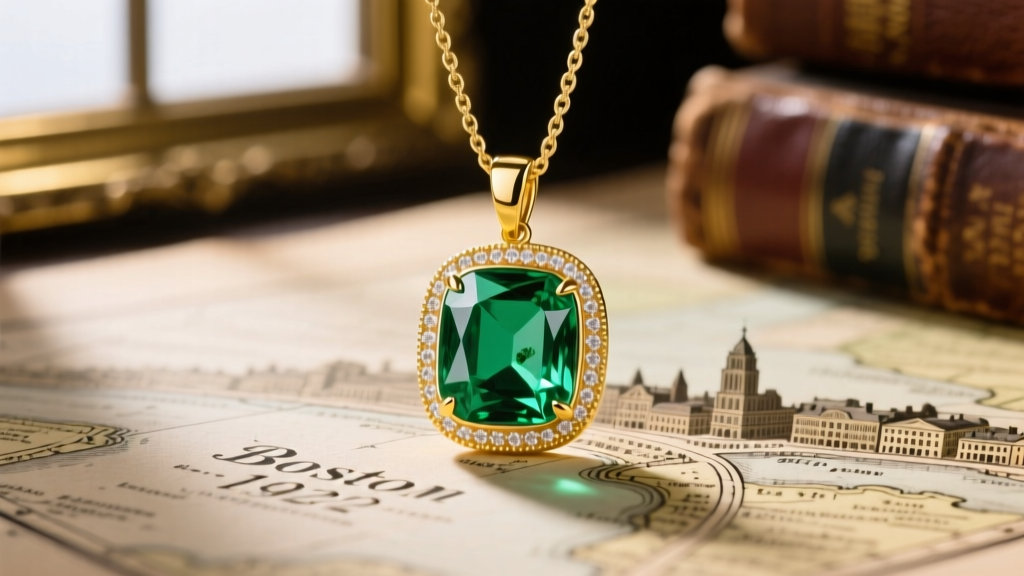
When consulting an emerald necklace Boston map to locate reputable gemologists and estate dealers, the sheer volume of options in the city's historic Jewelers' Building and along Newbury Street can be overwhelming. However, finding a trusted vendor is only half the battle. The true mark of an informed buyer in 2026 is understanding the complex material science, chemical treatments, and structural vulnerabilities of emeralds (beryl variety) before making a high-ticket purchase. This guide bridges the gap between local Boston sourcing and advanced gemological material comparison.
Navigating the Boston Jewelry District for Emeralds
Boston's jewelry hub is heavily concentrated around Downtown Crossing, specifically the Jewelers' Building at 333 Washington Street, and the luxury boutiques of Newbury Street. When mapping out your appointments, prioritize vendors who provide independent laboratory reports rather than in-house appraisals. For emeralds, the gold standards are the GIA (Gemological Institute of America) and AGL (American Gemological Laboratories). AGL is particularly revered in the Boston high-end market for its proprietary origin and enhancement grading, which is critical for determining the long-term stability and true market value of the stone.
Material Origins: Colombian vs. Zambian vs. Brazilian
Emeralds are a variety of the mineral beryl (Be3Al2(SiO3)6). Their green coloration is not inherent to beryl but is caused by trace elemental impurities. Understanding these chemical drivers is essential when comparing stones at a Boston jeweler.
Chemical Color Drivers and Refractive Properties
- Colombian (Muzo, Chivor, Coscuez): Colored primarily by chromium. This results in a pure, intensely saturated green with high fluorescence under UV light, giving the stone a legendary 'glow'. They typically exhibit a refractive index (RI) of 1.577–1.583.
- Zambian (Kagem Mine): Colored by a combination of vanadium, iron, and chromium. The iron content suppresses UV fluorescence but adds a highly desirable, cool bluish-green secondary hue. Zambian material is generally less included and structurally denser than Colombian material.
- Brazilian (Santa Terezinha, Itabira): Often colored by vanadium rather than chromium. These stones tend to be lighter in tone, sometimes exhibiting a slight yellowish-green cast, and are frequently heavily included, requiring significant clarity enhancement.
The Science of Clarity Enhancements: Oils vs. Resins
Unlike diamonds or sapphires, emeralds almost universally possess surface-reaching fissures, known in the trade as jardin (garden). Because of this, clarity enhancement is an accepted industry practice, but the material used dictates the necklace's longevity and value.
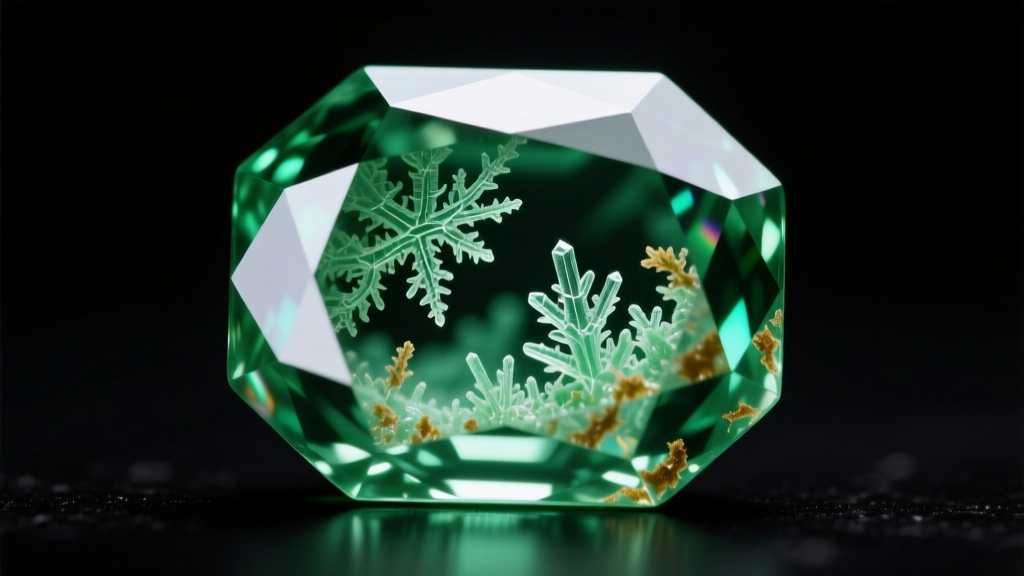
When evaluating an emerald pendant in Boston, you must ask the jeweler to identify the enhancement material. The failure modes of these materials vary drastically:
- Cedar Oil (Traditional): A natural oil with a refractive index (1.51) close to that of emerald, making fissures nearly invisible. Failure Mode: It is highly volatile. Over 3 to 5 years, cedar oil dries out, leaks, or is removed by mild heat and ultrasonic cleaners, causing the inclusions to turn white and opaque. Requires periodic re-oiling by a professional.
- Opticon / Synthetic Resins (Modern Standard): A two-part epoxy-like resin that hardens inside the fissures. Failure Mode: While more stable than oil, cheaper resins can yellow over time when exposed to UV light or degrade when exposed to harsh chemicals (like chlorine in swimming pools).
- Polymer Epoxies (Permanent/Controversial): Used heavily in lower-tier commercial jewelry. These are virtually permanent but are heavily penalized by AGL and GIA in their enhancement grading. An emerald with 'Significant' polymer enhancement is worth a fraction of an oiled equivalent.
Expert Tip: Never wear an enhanced emerald necklace in a Boston sauna, steam room, or while using harsh household cleaners. Thermal expansion and chemical solvents will force the enhancement material out of the surface-reaching fissures, instantly clouding the stone.
Structural Engineering: Setting Brittle Beryls
Emeralds register a 7.5 to 8 on the Mohs scale of hardness, which suggests good scratch resistance. However, their toughness (resistance to breaking and chipping) is notoriously poor due to the internal stress caused by their heavy inclusions. When selecting a setting for your pendant, the metal and prong geometry are critical.
- Prong Settings: Avoid standard four-prong settings with flat or pointed tips. Insist on V-prongs at the corners to protect the vulnerable culet and crown edges from impact. A heavy gallery rail (the metal band connecting the prongs just below the girdle) is mandatory to prevent the stone from popping out if the prongs snag on clothing.
- Bezel Settings: The safest option for an active lifestyle. A full platinum or 18k gold bezel completely encases the girdle, eliminating the risk of edge chipping. However, a bezel reduces the light return by approximately 15% compared to an open-prong setting.
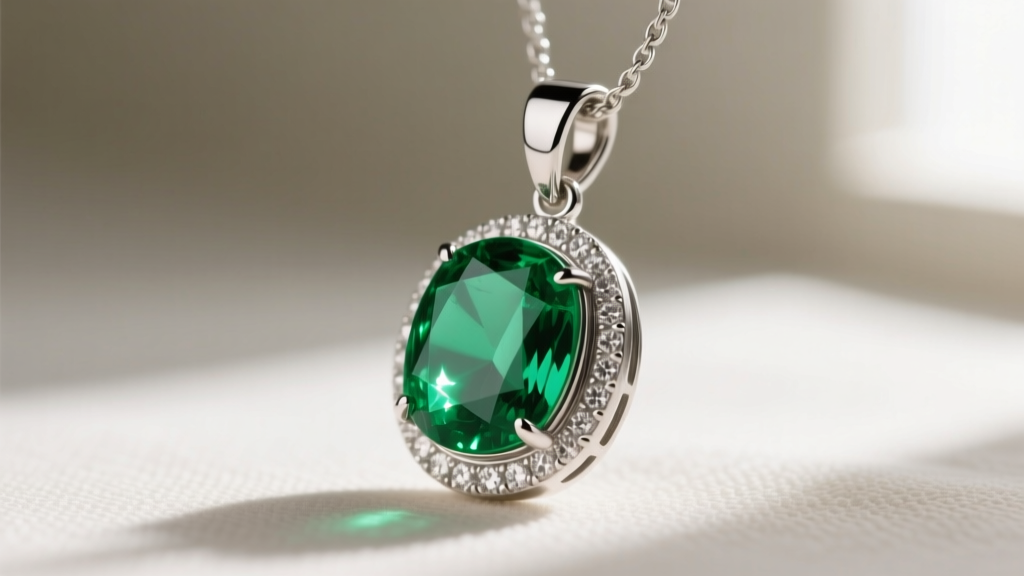
- 18k vs. Platinum: Platinum's high tensile strength makes it superior for securing heavy emerald pendants. 18k yellow gold is traditionally preferred for its warm contrast against the cool green of the stone, but it is softer and requires annual prong-checking by a Boston bench jeweler.
2026 Boston Market Pricing & Verification Matrix
Pricing for emeralds is highly non-linear and depends heavily on the intersection of origin, treatment, and carat weight. Below is a comparative matrix reflecting the 2026 wholesale-to-retail pricing trends observed in the Greater Boston luxury market for a 1.50 to 2.00-carat center stone.
| Origin | AGL Enhancement Grade | Color Profile | Est. Boston Retail Price/ct | Long-Term Stability Risk |
|---|---|---|---|---|
| Colombian (Muzo) | None / Faint Oil | Vivid, Warm Green | $18,000 - $35,000+ | Low (if unheated/unoiled) |
| Colombian (Chivor) | Moderate Oil | Bright, Slightly Bluish | $6,000 - $12,000 | Medium (Requires re-oiling) |
| Zambian | Moderate / Prominent Resin | Deep, Cool Bluish-Green | $3,500 - $8,500 | Low-Medium (Resin stable) |
| Brazilian | Significant Polymer | Light, Yellowish-Green | $800 - $2,500 | High (Permanent alteration) |
Final Sourcing Advice for Boston Buyers
When executing your emerald necklace Boston map strategy, always view the stones under multiple light sources. Boston's notorious overcast winter days provide excellent, diffused natural light that reveals the true depth of an emerald's color and the visibility of its jardin, whereas harsh boutique halogens can artificially enhance saturation. Always demand an AGL report for any stone priced over $5,000, and ensure your jeweler offers a complimentary annual maintenance plan that includes gentle, non-ultrasonic cleaning and prong-tightening to protect your investment for decades to come.


