Beginner Guide: Buying an Antique Pearl and Diamond Necklace
Learn how to authenticate, evaluate, and buy an antique pearl and diamond necklace. Discover era-specific hallmarks, diamond cuts, and pearl types.

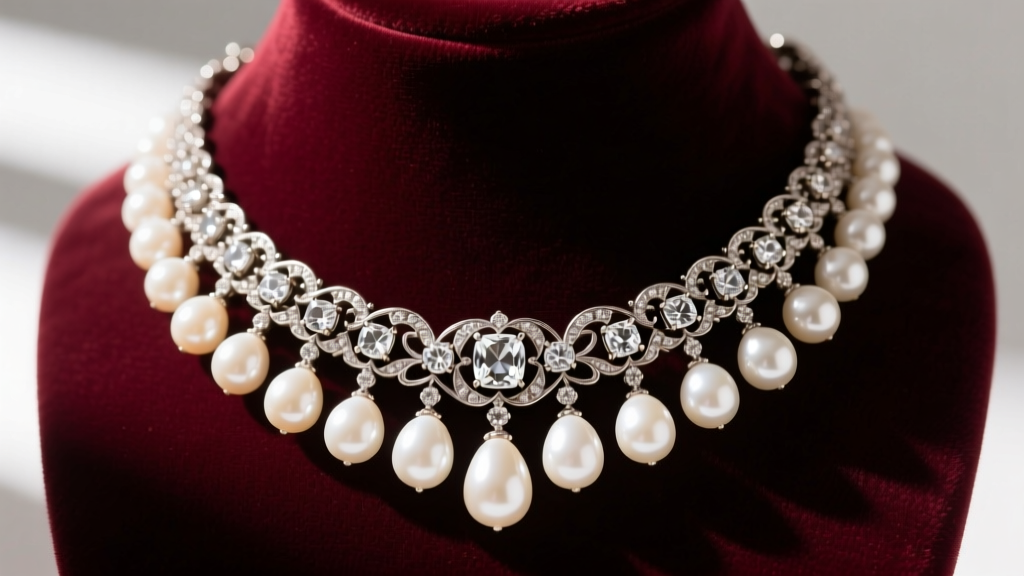
Entering the world of estate jewelry can feel like learning a new language. When you begin searching for an antique pearl and diamond necklace, you are not just buying a piece of jewelry; you are acquiring a wearable artifact. By definition, "antique" refers to pieces crafted 100 or more years ago, placing the cutoff in the early 1920s. This means true antiques predate the mass commercialization of cultured pearls and modern brilliant-cut diamonds.
As of 2026, the market for authenticated antique necklaces has surged, driven by collectors seeking sustainable luxury and unparalleled craftsmanship. However, this demand has also led to an influx of clever reproductions. This beginner-friendly explainer will equip you with the gemological frameworks, historical context, and authentication checkpoints needed to buy with absolute confidence.
Decoding the Eras: Victorian, Edwardian, and Art Deco
To evaluate an antique pearl and diamond necklace, you must first identify its era. The design motifs, metal choices, and diamond cuts shifted dramatically between the mid-19th and early 20th centuries.
| Era | Primary Metals | Diamond Cuts | Pearl Styles |
|---|---|---|---|
| Victorian (1837-1901) | 15k & 18k Yellow Gold, Silver-topped Gold | Rose Cut, Early Old Mine Cut | Seed pearls, half-pearls, natural saltwater drops |
| Edwardian (1901-1915) | Platinum, Platinum over Gold | Old European Cut, Old Mine Cut | Natural Basra pearls, graduated natural strands |
| Early Art Deco (1920-1925) | Platinum, White Gold | Old European, Transitional Cut | Early Japanese cultured pearls, carved gemstone accents |
The Edwardian era is widely considered the golden age for the antique pearl and diamond necklace. The invention of the oxy-acetylene torch allowed jewelers to melt and manipulate platinum, resulting in incredibly delicate, lace-like "millegrain" settings that perfectly complemented the soft luster of natural pearls.
The Million-Dollar Distinction: Natural vs. Cultured Pearls
The most critical valuation factor in any antique pearl necklace is the origin of the pearls. Before Kokichi Mikimoto successfully commercialized the spherical cultured pearl in the late 1910s and 1920s, every pearl on the market was a natural pearl, formed entirely by chance when an irritant entered an oyster in the wild.
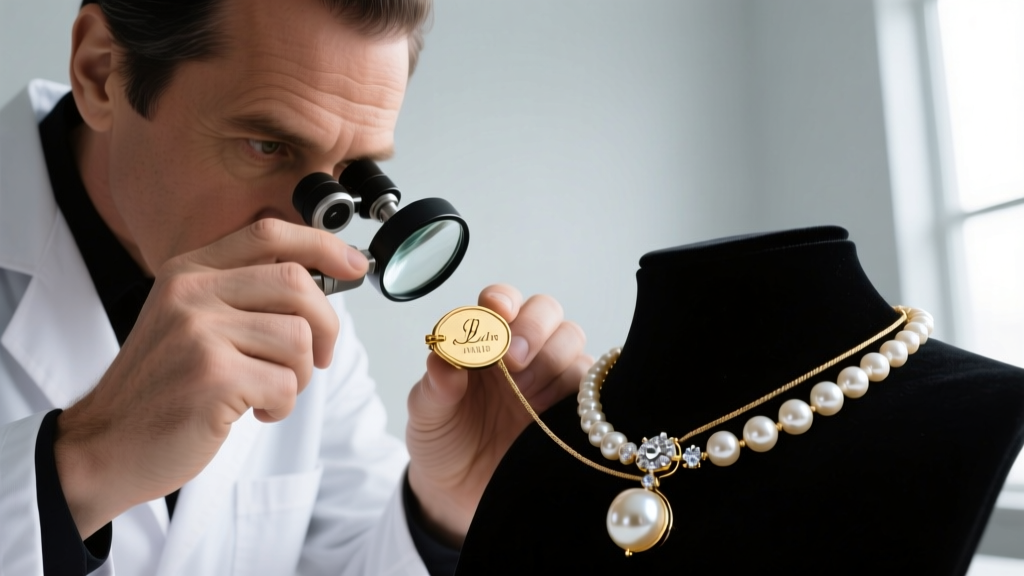
Natural saltwater pearls, particularly those from the Persian Gulf (historically known as Basra pearls), possess a deep, complex luster and orient that modern bead-nucleated cultured pearls struggle to replicate. Because natural pearls are essentially solid nacre, they are also more durable over centuries of wear.
How to Authenticate Pearl Origins
You cannot reliably distinguish between a high-quality early cultured pearl and a natural pearl with the naked eye. According to the Gemological Institute of America (GIA), definitive identification requires X-radiography. An X-ray reveals the internal structure: natural pearls show concentric rings of nacre all the way to the center, while cultured pearls reveal a solid mother-of-pearl bead nucleus surrounded by a relatively thin layer of nacre.
Never purchase a high-value graduated natural pearl necklace without a recent, verifiable pearl identification report from a top-tier laboratory like GIA, SSEF, or Gübelin.
Evaluating the Diamonds: Old Mine vs. Old European Cuts
An authentic antique pearl and diamond necklace will never feature modern Round Brilliant cut diamonds. Modern cuts are engineered for maximum scintillation under bright, artificial lighting. Antique diamonds were cut by hand to maximize fire under candlelight and gas lamps.
- Old Mine Cut (OMC): Prevalent in Victorian and early Edwardian pieces. These feature a cushion-like square shape with rounded corners, a very high crown, a small table, and an "open culet" (a flat facet at the bottom that looks like a tiny dark circle in the center of the stone).
- Old European Cut (OEC): The standard for Edwardian and Art Deco necklaces. These are round but share the high crown, small table, and open culet of the OMC. They exhibit a "chunky," romantic light return that pairs beautifully with the soft glow of antique pearls.
When inspecting the diamonds, look for slight asymmetry. Hand-cut antique diamonds will have varying facet sizes and less-than-perfect symmetry, which is a hallmark of their authenticity and charm.
Metal Hallmarks and Authenticity Checks
Because platinum was not widely used in jewelry until the Edwardian era, a necklace featuring platinum settings is likely post-1900. However, early platinum was often backed with 18k yellow gold because platinum was difficult to cast in intricate shapes. As experts at Lang Antique & Estate Jewelry note, understanding regional hallmarks is vital for dating a piece.
Key Hallmarks to Look For:
- British 15k Gold: Stamped "15" or "15k". This alloy was standard in the UK until 1932, making it a strong indicator of late Victorian or Edwardian origins.
- French Eagle Head: The French guarantee stamp for 18k gold, used since 1838.
- French Dog Head: The official French hallmark for platinum (minimum 950 purity), introduced in the early 20th century.
- Maker's Marks: Look for tiny stamped initials or symbols on the clasp or the small ring connecting the clasp to the chain. Renowned houses like Cartier, Boucheron, or Tiffany & Co. will have distinct, registered maker's marks.
Pricing Framework for Beginners
Pricing an antique pearl and diamond necklace depends heavily on the era, the origin of the pearls, and the carat weight of the diamonds. Here is a general market framework for 2026:
- Victorian Seed Pearl & Rose Cut Diamond Festoons ($1,500 - $5,000): Delicate, lace-like gold necklaces featuring tiny seed pearls (under 3mm) and flat rose-cut diamonds. Highly wearable but fragile.
- Edwardian Platinum, Natural Pearl & OEC Diamond Pendants ($8,000 - $25,000): Single natural pearl drops surrounded by old European cut diamond halos, suspended on fine platinum chains.
- Graduated Natural Pearl & Diamond Clasps ($30,000 - $150,000+): Multi-strand or single-strand necklaces of large, natural saltwater pearls featuring a highly intricate, diamond-encrusted platinum clasp. The clasp alone can sometimes be worth as much as the pearls.
Maintenance: Silk, Knotting, and Storage
Owning an antique necklace requires specialized care. The materials used a century ago react poorly to modern cleaning methods.
The Golden Rules of Antique Pearl Care
- Never Use Ultrasonic Cleaners: Ultrasonic waves can shatter old mine cut diamonds that have internal feathers or fractures. Furthermore, the harsh chemicals used in jewelry cleaning solutions will strip the delicate nacre and orient right off an antique pearl.
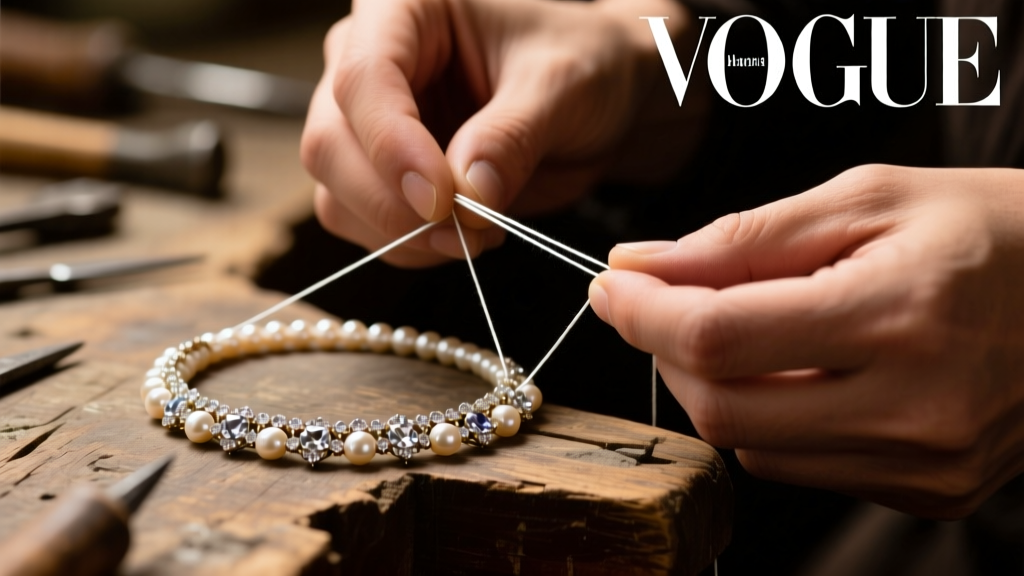
- Check the Silk and French Wire: Antique pearls should always be strung on 100% silk thread with individual knots between each pearl to prevent them from rubbing against one another. At the clasp, the silk must be protected by "French wire" (also known as gimp)—a tiny, coiled metal spring that prevents the metal clasp from sawing through the silk thread over time.
- Restringing is Mandatory: If you acquire an antique pearl and diamond necklace, assume the silk is degraded. Take it to a master stringer who specializes in estate jewelry. They will use traditional French knotting techniques to preserve the historical integrity of the piece.
- Proper Storage: Pearls need moisture. Storing an antique pearl necklace in a plastic bag or a safety deposit box for years will cause the nacre to dry out, crack, and peel. Wear them often, as the natural oils from your skin help maintain their luster, and store them flat in a soft, breathable cloth pouch.
For more detailed maintenance protocols, reference the Sotheby's Pearl Care Guide, which emphasizes the importance of keeping antique pearls away from perfumes, hairsprays, and acidic environments.
Final Thoughts for the Aspiring Collector
Purchasing an antique pearl and diamond necklace is an exercise in patience and education. Do not rush into a buy without verifying the diamond cuts, examining the hallmarks under a jeweler's loupe, and demanding proper gemological documentation for the pearls. When you finally find that perfect Edwardian festoon or Victorian seed pearl collar, you will be wearing a piece of history that has survived wars, shifting fashions, and the passage of time—a true testament to the enduring power of exceptional craftsmanship.


