Material Properties of Antique Pearl Necklace Clasps Explained
Explore the metallurgy, material properties, and failure modes of antique pearl necklace clasps to ensure safe restoration and wear.

The Hidden Metallurgy of Vintage Strands
When collectors and jewelers evaluate vintage pearl jewelry, the focus is overwhelmingly on the nacre quality, luster, and surface cleanliness of the pearls themselves. However, the structural integrity of the entire piece relies entirely on a component that rarely receives the attention it deserves: the clasp. Understanding the material properties of antique pearl necklace clasps is not merely an exercise in historical trivia; it is a critical requirement for safe wear, accurate valuation, and proper restoration. A clasp must endure continuous tensile stress, friction, and environmental exposure, often for over a century. In this comprehensive material guide, we dissect the specific alloys, mechanical failure modes, and restoration realities associated with vintage clasps, drawing on historical jewelry manufacturing techniques and modern metallurgical science.
Common Metals Used in Antique Pearl Necklace Clasps
The evolution of clasp manufacturing is deeply intertwined with the history of precious metal alloying. Each era favored specific materials, which now present unique challenges for modern jewelers attempting to repair or restore these antique mechanisms.
14K and 18K Yellow Gold: The Victorian & Edwardian Standard
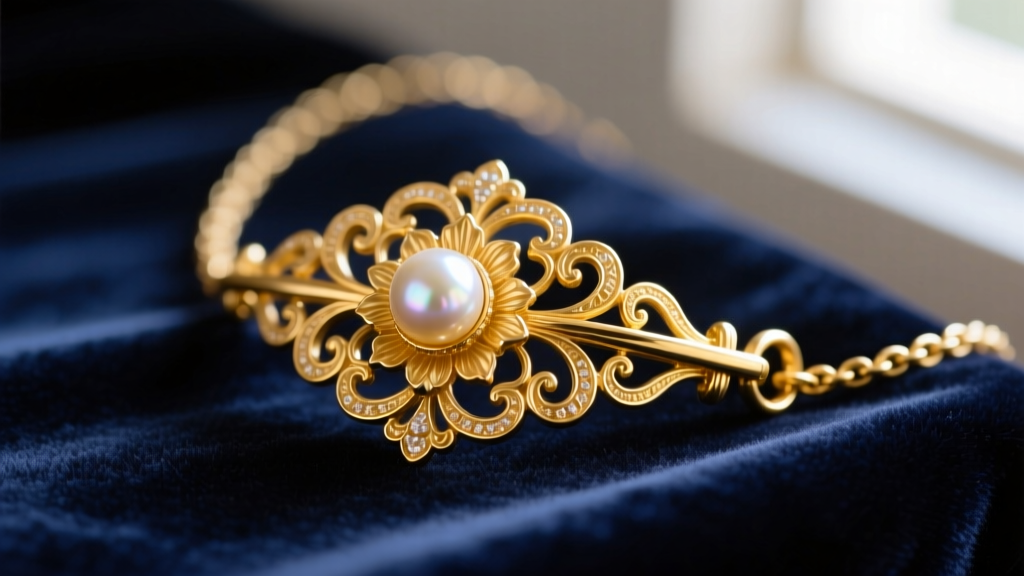
During the late 19th and early 20th centuries, yellow gold was the undisputed standard for fine pearl necklace clasps. However, the metallurgical composition of antique gold differs significantly from modern alloys. Antique 18K gold (75% pure gold) was frequently alloyed with higher proportions of copper and silver to achieve specific warm hues, resulting in a metal that is relatively soft and prone to work hardening. According to historical manufacturing records documented by Lang Antiques University, the internal 'tongue' or spring mechanism of an Edwardian 18K gold box clasp was often forged by hand. Over decades of repeated compression and release, the copper-rich alloy undergoes metal fatigue. The Vickers hardness of the spring increases while its ductility plummets, eventually causing the tongue to snap cleanly under tension. Furthermore, antique 14K gold barrel clasps often suffer from external wear; the soft gold slowly degrades at the friction points where the clasp meets the jump ring, leading to dangerous thinning that can result in catastrophic strand failure.
Sterling Silver: The Tarnish and Galling Dilemma
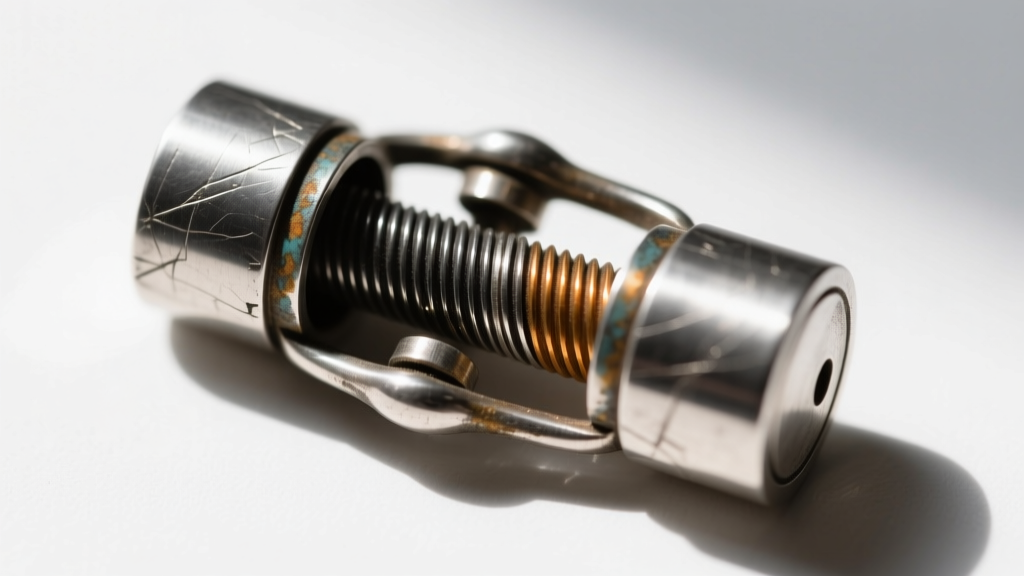
Sterling silver (92.5% silver, 7.5% copper) was frequently utilized for mid-tier pearl strands and seed pearl necklaces. While silver offers a beautiful, cool-toned aesthetic that complements the overtone of certain saltwater pearls, it is mechanically inferior to gold for moving clasp parts. The primary failure mode in antique sterling silver barrel clasps is 'galling'—a form of wear caused by adhesion between sliding surfaces. Because silver is inherently soft and lacks natural lubricity, the male and female screw threads of a barrel clasp can micro-weld together when subjected to friction and oxidization. When a wearer forces a seized silver barrel clasp open, the internal threads strip entirely, rendering the clasp useless. Additionally, the copper content in sterling silver makes it highly susceptible to sulfur-induced tarnishing, which accelerates this galling process if the necklace is stored improperly.
Platinum and White Gold: The Art Deco Shift
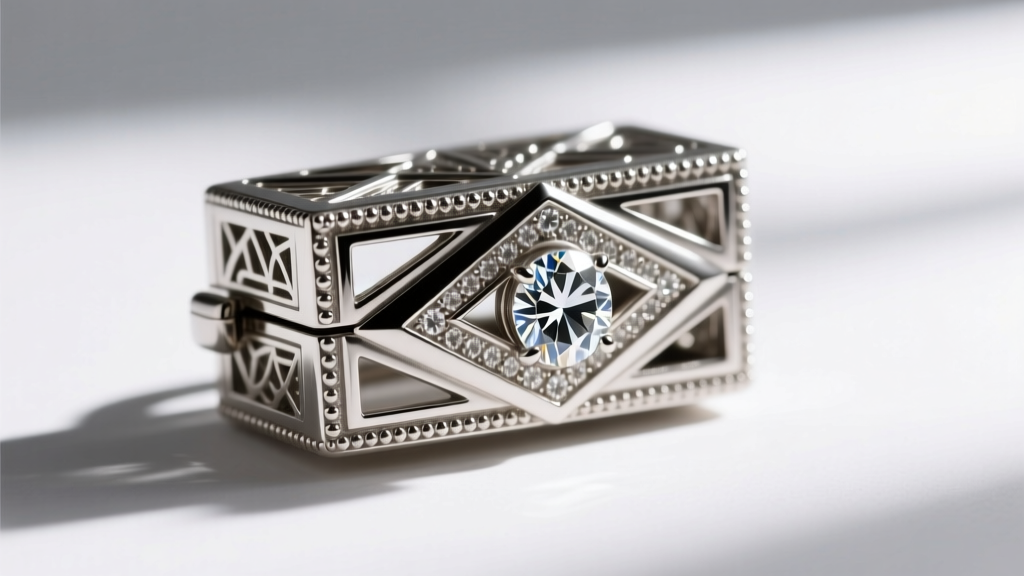
The 1920s and 1930s introduced a radical shift in jewelry metallurgy. The Art Deco era demanded crisp, geometric lines and diamond-set clasps, necessitating stronger, whiter metals. Platinum became the premier choice for high-end antique pearl necklace clasps. Early Art Deco platinum was typically an alloy of 90% platinum and 10% iridium or ruthenium. This specific composition boasts incredible tensile strength and resistance to metal fatigue, meaning the internal springs of antique platinum box clasps rarely snap. However, platinum is not without its vulnerabilities. While the metal itself does not wear away easily, it is prone to 'patination' and surface scratching. More critically, many Art Deco clasps were constructed using a platinum top plate soldered over a lower-karat white gold or silver base to reduce costs and weight. Over time, the galvanic corrosion between these dissimilar metals, combined with the acidic pH of human sweat, can cause the base metal to deteriorate, leaving the delicate platinum filigree unsupported and prone to crushing.
Mechanical Designs and Material Stress Points
The physical shape of the clasp dictates how the material properties are tested. Different mechanical designs place unique stress vectors on the precious metals, leading to predictable failure patterns. Below is a comparative analysis of the three most common antique clasp designs and their associated material vulnerabilities.
| Clasp Type | Primary Era | Common Material | Primary Failure Mode | Stress Vector |
|---|---|---|---|---|
| Barrel (Screw) | Victorian / Edwardian | 14K Gold, Sterling Silver | Thread stripping, cross-threading | Torsional shear |
| Box (Tongue & Groove) | Art Deco / Retro | 18K Gold, Platinum | Spring fatigue, tongue snapping | Compressive bending |
| Fishhook (Safety) | Mid-Century | 14K White Gold | Hook deformation, latch failure | Lateral tensile pull |
As noted in the table, the box clasp is the most mechanically complex. The safety figure-eight wire often found on the side of antique box clasps was typically made from a lower-karat gold wire to increase stiffness. If this safety wire is repaired with high-heat torch soldering, the localized annealing process will soften the wire, defeating its purpose as a secondary fail-safe.
Enamel, Guilloché, and Seed Pearl Accents
Many premium antique pearl necklace clasps, particularly those originating from French and Austrian workshops in the early 1900s, feature intricate surface decorations. Guilloché enamel—a technique where vitreous enamel is fused over a mechanically engine-turned geometric pattern—is a hallmark of high-end Edwardian clasps. From a material science perspective, vitreous enamel is essentially glass. It has high compressive strength but virtually zero tensile strength or flexibility. When the gold substrate of the clasp is subjected to the squeezing force required to open a box mechanism, the metal flexes microscopically. Because the enamel cannot flex, it develops microscopic crazing, which eventually leads to chipping or flaking. Restoring damaged guilloché enamel on an antique clasp requires a master enamelist who understands the specific thermal expansion coefficients of the original antique glass flux, as modern enamels will often crack upon cooling when applied to older gold alloys.
Sourcing, Pricing, and Restoration Realities
When an antique pearl necklace clasp fails, the decision to repair or replace is heavily influenced by material constraints and historical preservation ethics. According to conservation guidelines outlined by the V&A Museum Jewelry Care department, preserving original historical components is paramount whenever structurally viable. However, repairing antique clasps requires specialized techniques.
- Laser Welding vs. Torch Soldering: Traditional torch soldering requires flux and high heat, which can easily travel down the metal and scorch the adjacent silk thread, or worse, cause thermal shock to the nearest pearl, resulting in irreversible nacre cracking. Modern laser welding allows jewelers to fuse broken gold tongues or platinum springs with pinpoint accuracy, introducing heat only to a fraction of a millimeter, leaving the silk and pearls completely unharmed.
- Pricing Benchmarks: A standard laser repair on a 14K gold box clasp tongue typically ranges from $120 to $180. Conversely, rebuilding the internal mechanics of a diamond-set Art Deco platinum box clasp, including retipping worn milgrain edges and securing loose mine-cut diamonds, can easily exceed $650 to $1,200 depending on the complexity of the filigree.
- Replacement Sourcing: Finding a period-correct replacement clasp is notoriously difficult. Jewelers often scour estate inventories for 'parts' necklaces. If a replacement must be cast, it should be done using a continuous casting process that mimics the density of antique die-stamped or hand-forged components, avoiding the porosity common in modern 3D-printed wax castings.
Conclusion: Preserving the Integrity of the Strand
The clasp is the unsung hero of any pearl necklace, bearing the mechanical burden of the strand's weight and the wearer's movements. By understanding the specific material properties of antique pearl necklace clasps—from the work-hardening tendencies of Edwardian gold to the galling vulnerabilities of sterling silver threads—collectors and jewelers can make informed decisions regarding maintenance and restoration. For further reading on the gemological and historical identification of vintage jewelry components, the GIA Gems & Gemology archives offer extensive peer-reviewed research on historical manufacturing techniques. Ultimately, respecting the original metallurgy and utilizing modern, low-heat repair technologies ensures that these mechanical masterpieces continue to secure precious pearls for generations to come.


