Troubleshooting a Slipping Necklace Pin: Expert Fixes
Learn how to troubleshoot a slipping necklace pin, fix bent pin stems, and secure locking clasps with expert jewelry repair techniques and material guides.

The Critical Role of the Necklace Pin Mechanism
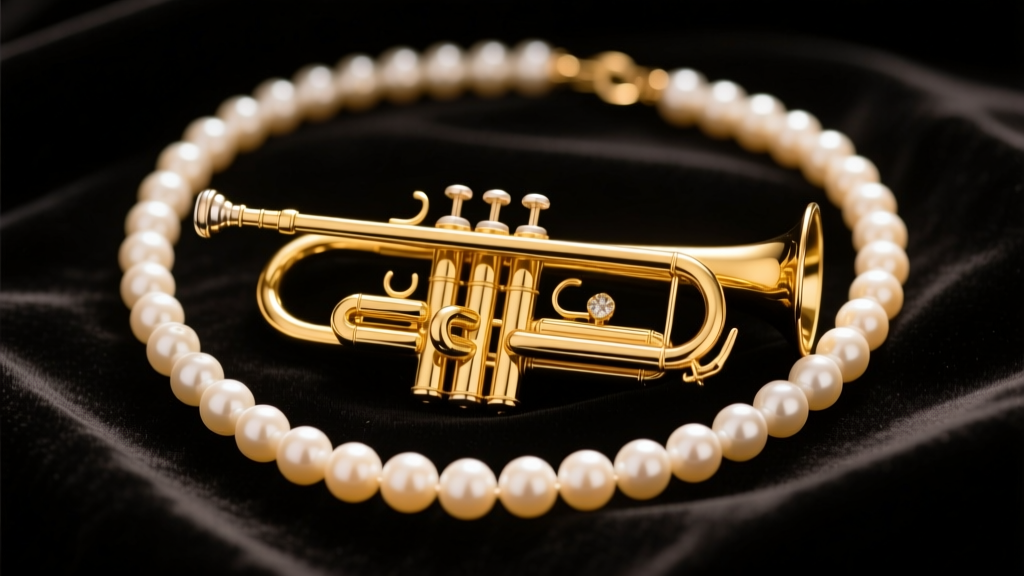
A necklace pin—whether functioning as a stick pin pendant, a brooch-to-necklace converter, or a heavy-duty safety pin clasp on a multi-strand pearl choker—is a vital structural component. When this mechanism fails, you risk losing valuable gemstones or causing severe damage to delicate textiles. As of 2026, while magnetic and smart-clasp technologies are gaining traction in the mass market, traditional mechanical pin stems remain the absolute standard for high-end, vintage, and bespoke jewelry. Troubleshooting a slipping, bent, or failing necklace pin requires a deep understanding of metallurgy, gauge thickness, and clasp tension dynamics.
Unlike standard lobster or spring-ring clasps, a necklace pin relies on the structural integrity of a single metal beam (the pin stem) engaging with a friction or mechanical catch. When problems arise, they almost always stem from three areas: metal fatigue, improper alloy hardness, or gauge-to-weight mismatches. Below, we break down the exact failure modes and provide bench-level repair protocols.
Anatomy of a Failing Pin Clasp
Before attempting any repairs, you must identify the specific type of pin mechanism you are dealing with. The standard assembly consists of three parts:
- The Hinge: A riveted joint allowing the pin stem to pivot. Lateral play here causes misalignment.
- The Pin Stem: The elongated beam that pierces the fabric or secures the pendant. Its hardness dictates its lifespan.
- The Catch: Usually a C-clasp, a trombone (push-pull) clasp, or a modern locking safety catch.
According to the Gemological Institute of America (GIA), the interaction between the pin stem alloy and the catch alloy is a primary source of wear. If the pin stem is harder than the catch, it will slowly file away the interior of the C-clasp, leading to a slipping necklace pin that refuses to stay closed.
Common Necklace Pin Failures and How to Fix Them
1. The Bent Pin Stem (Metallurgy & Straightening)
The most frequent issue is a bent pin stem. This is almost always a metallurgy problem. Many vintage European pieces feature 18k gold pin stems. Because 18k gold has a Vickers Hardness (HV) of roughly 125, it is far too soft to withstand the lateral torque applied when pinning a heavy pendant to a thick knit or silk scarf.
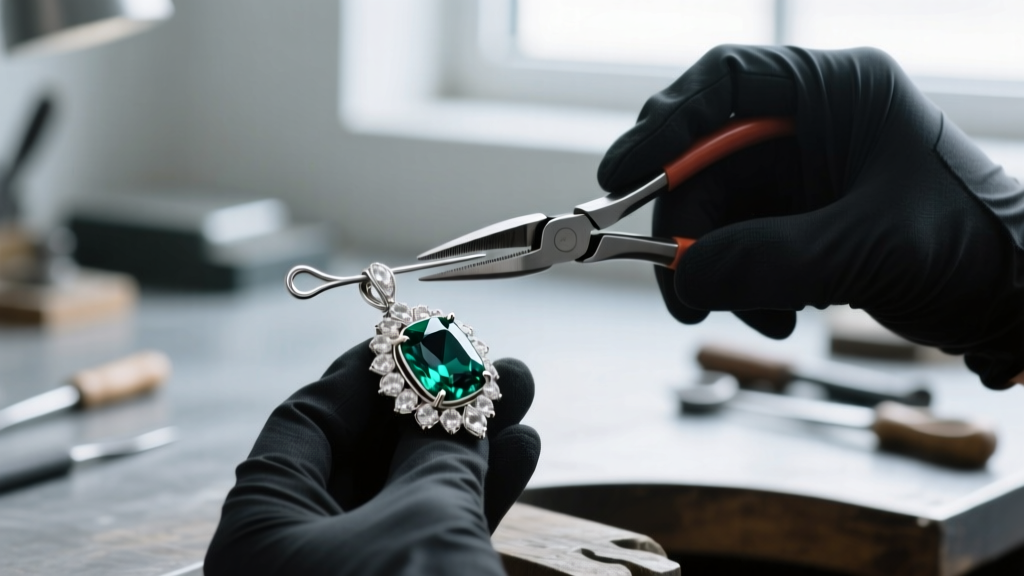
The Fix: Never use standard steel pliers to straighten a precious metal pin, as the serrated teeth will gouge the gold, creating stress risers that lead to snapping. Instead, use nylon jaw pliers. Clamp the bent section and apply gentle, rolling pressure. If the pin is severely work-hardened and brittle, you must anneal it with a micro-torch until it reaches a dull red heat, quench it in water (for sterling or gold), and then straighten it. For long-term durability, consider replacing the 18k stem with a 14k gold or 316L stainless steel stem, which offers an HV of 160 to 200+.
2. The Slipping Locking Catch (Tension & Wear)
If your necklace pin slides out of the catch with minimal resistance, the catch has suffered metal fatigue. In a standard C-clasp, the two prongs must exert inward pressure against the pin stem. Over years of use, these prongs spread apart.
The Fix: Do not use flat-nose pliers to squeeze the prongs together; this will flatten the rounded interior and create sharp edges that catch on fabrics. Instead, use an agate burnisher. Place the burnisher on the outside of the prong and gently roll it inward, compressing the metal molecules and restoring the original curved tension without marring the surface finish. If the interior of the catch is deeply grooved from years of friction, use a 0.5mm round burr to gently ream and smooth the interior channel before re-tensioning.
3. Fabric Tearing and Pendant Sagging (Gauge Mismatches)
A necklace pin that constantly sags or tears the neckline of your garment is suffering from a gauge-to-weight mismatch. Jewelry suppliers like Rio Grande categorize pin stems by gauge, and selecting the wrong thickness is a common design flaw in heavy statement pendants.
Pin Stem Gauge and Material Hardness Chart
| Gauge (mm) | Material | Hardness (HV) | Max Pendant Weight | Common Failure Mode |
|---|---|---|---|---|
| 22g (0.64mm) | Sterling Silver | ~110 HV | Under 5g | Bends under minimal lateral torque |
| 20g (0.81mm) | 14k Yellow Gold | ~140 HV | 5g - 12g | Gradual warping over time |
| 18g (1.02mm) | 316L Stainless | ~210 HV | 12g - 25g | Tears delicate silk fabrics |
| 16g (1.29mm) | Titanium (Grade 5) | ~340 HV | 25g+ | Requires heavy-duty reinforced hinge |
Expert Rule of Thumb: For any gemstone pendant or brooch-to-necklace converter exceeding 15 grams, you must upgrade to an 18-gauge or 16-gauge pin stem and reinforce the hinge rivet to prevent the pin from tearing through the solder joint.
Upgrading to Modern Locking Mechanisms
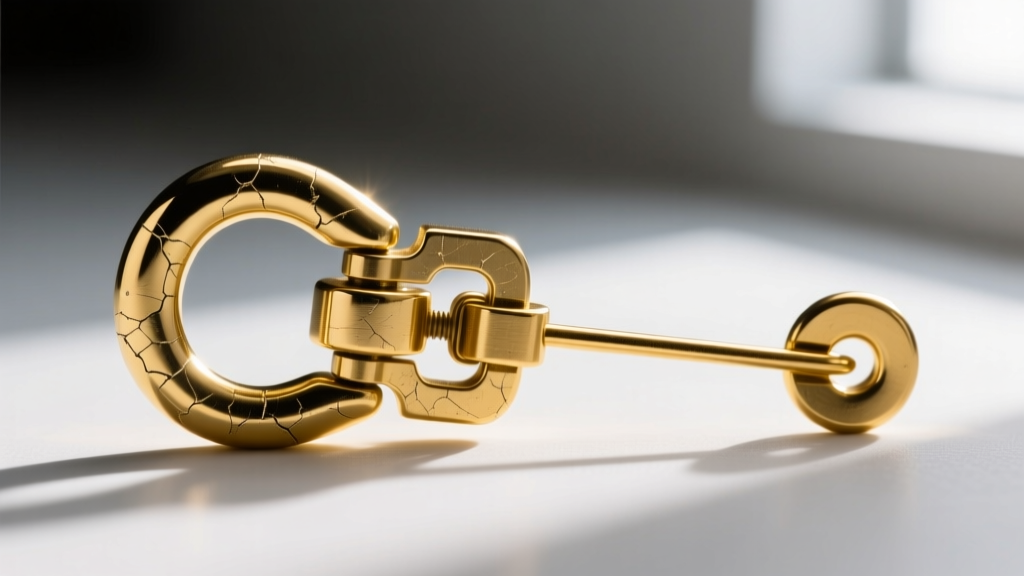
If you are continually troubleshooting a slipping necklace pin on a valuable piece, it is time to retire the antique C-clasp. Upgrading to a trombone clasp or a locking safety catch is a standard bench repair that dramatically increases security.
The Trombone Clasp Upgrade
The trombone clasp features a hollow tube that slides over the pin stem and locks into place via a spring-loaded internal pin. To retrofit this onto a vintage stick pin or pendant:
- Saw off the existing C-clasp using a 4/0 jeweler's saw blade.
- File the solder joint flat and polish the area to 1200 grit.
- Solder the new trombone catch using hard or medium solder, ensuring the tube is perfectly aligned with the pin hinge. Even a 1-degree misalignment will cause the pin stem to bind inside the tube.
- Pickle, neutralize, and polish the assembly.
Adding a Pin Guard (Safety Chain)
For high-value diamond or pearl necklace pins, a mechanical catch is not enough. You must install a pin guard. This is a micro-chain (typically 1.2mm rolo chain) soldered to the body of the pendant, ending in a tiny loop that slides over the tip of the pin stem before it enters the catch. If the catch fails or the hinge rivet shears, the pin guard catches the stem, preventing the piece from falling to the floor.
Preventative Maintenance for Pin Clasps
To extend the life of your necklace pin hardware and avoid emergency repairs, implement the following maintenance schedule:
- Ultrasonic Caution: Never put a piece with a tension-based C-clasp or a spring-loaded trombone clasp in an ultrasonic cleaner. The high-frequency vibrations can fatigue the microscopic rivets in the hinge and weaken the spring tension.
- Lubrication: Apply a microscopic drop of synthetic watch oil (like Moebius 9010) to the hinge rivet annually. This prevents galvanic corrosion between dissimilar metals (e.g., a steel rivet inside a gold hinge tube).
- Silicone Stopper Hack: For stick pin pendants that lack a locking catch, slide a small silicone earring back or a specialized rubber pin stopper onto the tip of the pin after it passes through the fabric. This provides a secondary physical barrier against slipping.
Bench Tip: When testing a newly repaired necklace pin, do not just test it in the air. Pin it to a scrap piece of heavy denim or wool and hang the specified maximum weight from the pendant bail. Observe the pin stem for micro-flexing. If the metal bows more than 2mm under load, the gauge is insufficient, and the stem must be replaced before returning the piece to the client.
Final Thoughts on Pin Security
Troubleshooting a necklace pin is an exercise in applied physics and metallurgy. By respecting the Vickers hardness of your alloys, matching the gauge to the pendant's mass, and maintaining the internal tension of your catches, you can ensure that your stick pins, converters, and safety clasps remain secure. Whether you are preserving an Edwardian diamond stick pin or engineering a modern modular pendant, the integrity of the pin stem is the single most critical factor in the longevity of the wear.


