Moon and Star Necklace Silver: Expert Alloy & Craft Guide
Discover the metallurgy, chain gauges, and casting techniques behind the perfect moon and star necklace silver pendant in our expert guide.

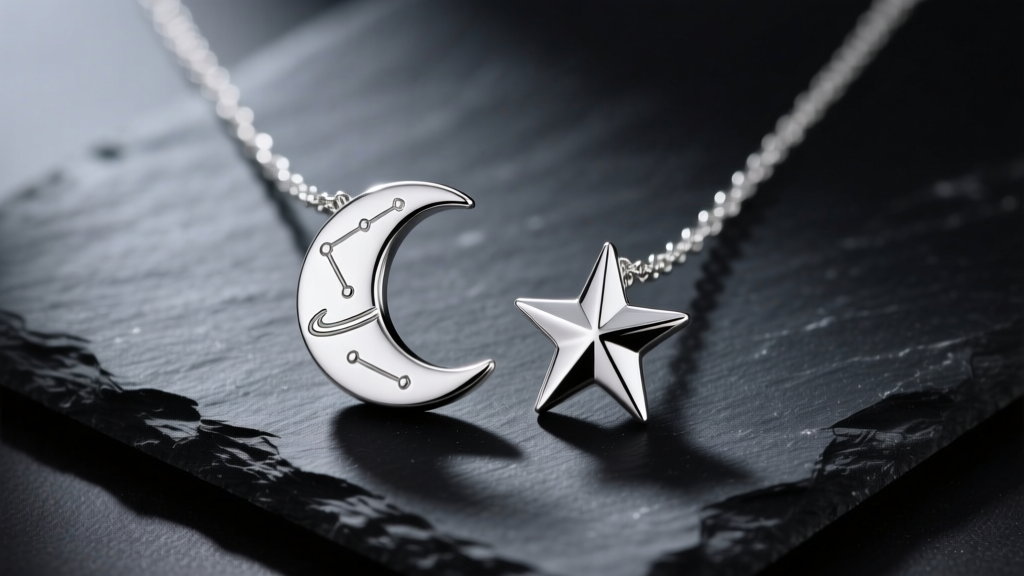
When evaluating a moon and star necklace silver piece, most consumers focus solely on the aesthetic appeal of the celestial motifs. However, as jewelry metallurgists and appraisers know, the structural integrity, alloy composition, and casting techniques dictate whether a pendant will become a lifelong heirloom or snap at the first sign of tension. Celestial designs—characterized by tapering crescent tips and sharp, protruding star points—present unique engineering challenges in silversmithing. This expert deep dive explores the technical specifications, failure modes, and material science behind high-quality silver celestial jewelry in 2026.
The Metallurgy of Celestial Silver: Sterling vs. Fine vs. Argentium
Not all silver is created equal, and the specific alloy used dramatically impacts the durability of intricate motifs. According to the Gemological Institute of America (GIA), pure silver is too malleable for daily wear jewelry, necessitating the addition of alloying metals to increase tensile strength.
999 Fine Silver
Fine silver boasts a Vickers Hardness (HV) of roughly 25. While it offers the highest luster and absolute tarnish resistance, it is catastrophically unsuited for star points or thin crescent moons. A fine silver star point will bend or snap under minimal lateral pressure. Fine silver should only be used for bezel settings or thick, solid domes, never for high-relief celestial extremities.
925 Sterling Silver
The industry standard, comprising 92.5% silver and 7.5% copper, yields an HV of approximately 65 to 70. The copper provides the necessary rigidity to hold sharp star points and crisp moon crater engravings. However, the copper content makes sterling silver highly susceptible to oxidation and sulfide tarnishing, requiring regular maintenance, especially in the deep recesses of a moon motif.
935 Argentium Silver
For the modern buyer seeking a low-maintenance moon and star necklace silver pendant, Argentium is the superior technical choice. By replacing a portion of the copper with germanium, Argentium forms a transparent germanium dioxide layer on the surface that severely retards tarnish. Furthermore, when heat-treated, Argentium can reach an HV of up to 130, making it nearly twice as hard as standard sterling. As detailed in Rio Grande's metallurgical guides, this extreme hardness ensures that delicate star points resist bending and abrasion over decades of wear.
Structural Engineering: Preventing Motif Failure
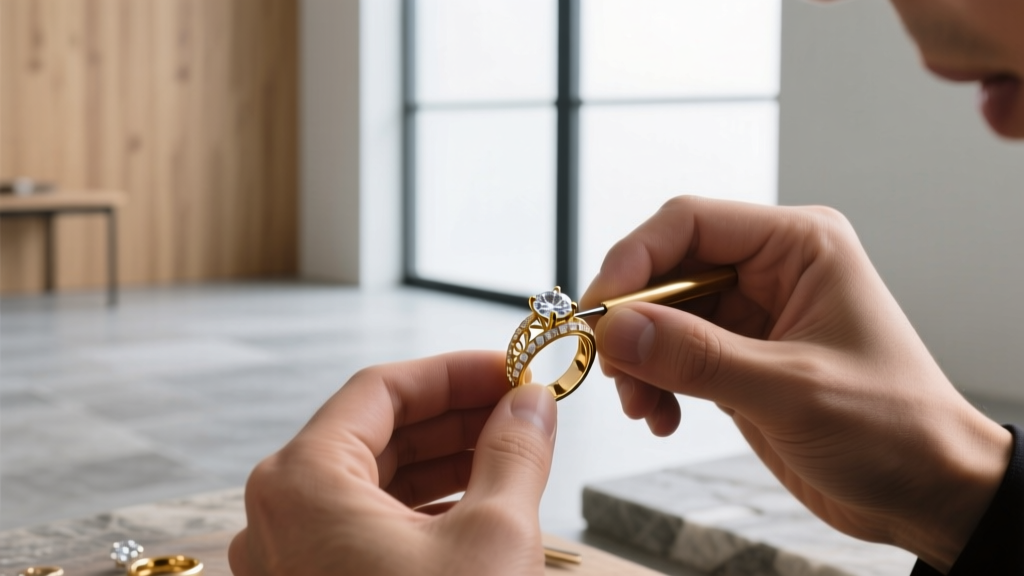
Celestial pendants are notorious for specific structural failure modes, primarily due to the geometry of the designs. Understanding how these pieces are manufactured reveals why some pendants survive generations while others break within months.
The Taper Snap Phenomenon
The most common failure point on a crescent moon pendant is the tapering tip. In lost-wax casting, molten silver is forced into a ceramic investment mold. If the wax original was carved too thin at the crescent's tip (under 1.0mm), the molten metal cools and solidifies before completely filling the cavity, resulting in microscopic porosity. This porosity acts as a stress concentrator. When the necklace is pulled or snagged, the tip snaps cleanly at the porous fault line. Expert silversmiths mandate a minimum base thickness of 1.5mm for crescent tips and a 1.2mm minimum for the base of 5-point stars to prevent the 'taper snap'.
Die-Striking vs. Lost-Wax Casting
While most artisan moon and star pendants are cast, high-volume commercial pieces are often die-struck. Die-striking compresses the silver molecules under immense hydraulic pressure, aligning the grain structure and eliminating the porosity inherent in casting. A die-struck silver star pendant will exhibit vastly superior tensile strength compared to a cast equivalent of the exact same dimensions, though it lacks the deep, three-dimensional crater detailing that casting allows.
Chain Gauge and Bail Compatibility Matrix
A heavy, solid silver celestial pendant requires a chain with adequate tensile strength and a bail with sufficient clearance. Pairing a 15-gram solid silver moon pendant with a delicate 0.8mm chain is a recipe for catastrophic chain failure. Below is the technical compatibility matrix for pairing chains with medium-to-heavy celestial pendants.
| Chain Style | Recommended Gauge | Bail Clearance Req. | Tensile Rating | Best For |
|---|---|---|---|---|
| Box Chain | 1.2mm - 1.5mm | 3.0mm | High | Medium-weight cast pendants |
| Cable Chain | 1.0mm - 1.2mm | 2.5mm | Medium | Lightweight, flat-profile stars |
| Rope Chain | 1.5mm - 2.0mm | 4.0mm | Very High | Heavy, high-relief moon lockets |
| Wheat Chain | 1.2mm - 1.8mm | 3.5mm | High | Intricate, multi-layered celestial pieces |
Expert Note: Always inspect the solder ring on the pendant's bail. A poorly soldered jump ring will pull apart under the dynamic load of a swinging pendant long before the chain itself breaks. Look for a flush, seamless solder joint or a laser-welded closed loop.
Managing Oxidation and Crater Patinas
The visual depth of a moon and star necklace silver design relies heavily on contrast. Silversmiths use liver of sulfur (potassium polysulfide) to intentionally oxidize the recessed areas—such as moon craters and the valleys between star points—creating a dark, matte background that makes the polished high-relief areas pop. This technique, known as patination, requires specific maintenance protocols.

Cleaning Protocols for Patinated Silver
Never use ultrasonic cleaners or chemical silver dip baths on a patinated celestial pendant. The high-frequency cavitation of an ultrasonic cleaner, combined with harsh chemical solvents, will strip the intentional oxidation from the moon craters, leaving the piece looking flat, gray, and lifeless. Furthermore, chemical dips often leave microscopic residues in the porous surface of the silver, accelerating future tarnishing.
The Correct Method: Use a soft-bristled toothbrush with a mild, phosphate-free dish soap and lukewarm water to gently dislodge sebum and environmental dust from the craters. To polish the raised star points and the convex curve of the moon, use a treated jeweler's polishing cloth (impregnated with micro-abrasives), carefully avoiding the darkened recesses. This preserves the three-dimensional optical illusion created by the artisan.
Pricing Tiers and Authenticity Verification
When shopping for a silver celestial necklace in 2026, understanding the pricing tiers helps you identify true value versus inflated mass-market pricing.
- Tier 1: Mass-Cast Commercial ($30 - $70) - Typically produced overseas using 925 sterling silver. Often feature hollowed-out backs to save on metal weight. Star points may be slightly rounded due to mold wear. Hallmarks are usually laser-etched or stamped on a flat soldered tag.
- Tier 2: Artisan Cast & Hand-Finished ($120 - $250) - Solid, heavy pieces cast in small batches. Craters are deeply carved, and star points are filed by hand to razor-sharp precision. Often feature mixed-metal accents (e.g., 14k gold stars set into a silver moon). Hallmarked with both the metal purity (925) and the maker's registered stamp.
- Tier 3: Master Fabricated & Argentium ($300 - $600+) - Hand-sawn, soldered, and textured without the use of casting. The grain structure is continuous, offering maximum durability. Often utilize Argentium silver and feature complex mechanical elements, such as spinning stars or hidden gemstone compartments.
Authentication Tip: A legitimate silver hallmark should be crisp and deeply struck. If the '925' stamp looks blurry, shallow, or is merely etched onto the surface, it may be a silver-plated base metal. Always use a neodymium magnet to test the piece; silver is paramagnetic (non-magnetic). If the pendant exhibits a strong magnetic pull, the core is likely brass or steel, regardless of the stamp.
By prioritizing alloy hardness, structural geometry, and proper chain integration, you can select a moon and star necklace silver piece that is not only astronomically beautiful but engineered to withstand the rigors of daily wear for a lifetime.


