Self Defense Hidden Knife Necklace: 2026 Value & Budget Guide
Assessing the true value of a self defense hidden knife necklace in 2026. We break down steel grades, chain strength, pricing, and legal risks.

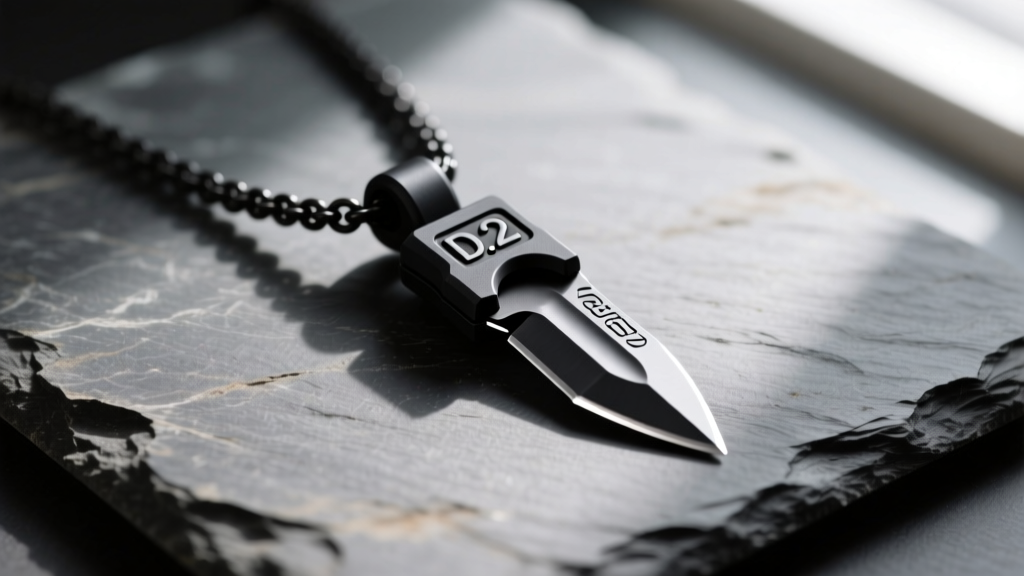
The Tactical Jewelry Market: Gimmick or Genuine Value?
The intersection of everyday carry (EDC) and personal adornment has given rise to a highly polarizing niche: tactical jewelry. Among these, the self defense hidden knife necklace remains one of the most debated accessories in the preparedness community. Marketed as a discreet last-resort tool, these pendants conceal a fixed or folding blade within a wearable housing. But as we navigate the 2026 tactical market, buyers are increasingly asking whether these pieces offer genuine lifesaving value or if they are merely expensive novelties.
To assess the true budget and value proposition of a self defense hidden knife necklace, we must strip away the marketing hype. A proper evaluation requires a deep dive into metallurgical realities, deployment biomechanics, chain tensile strength, and the complex legal landscape surrounding concealed edged weapons. This guide provides a no-nonsense breakdown of where your money is best spent—and where you are likely being overcharged for subpar materials.
Deployment Biomechanics: The Reality of the Draw
Before evaluating price, we must address the functional reality of neck knives. In a high-stress encounter, fine motor skills deteriorate rapidly. Drawing a hidden knife pendant requires a two-handed motion: one hand must stabilize the sheath against the chest to prevent it from swinging, while the other grips the handle and pulls. If an attacker has closed the distance and initiated a grapple, reaching the center of your own chest is biomechanically restricted. Therefore, the value of a self defense hidden knife necklace is not in its primary offensive capability, but in its utility as a retention tool or a surprise escape mechanism. Any budget assessment must weigh the cost against this specific, limited use case.
Material Breakdown: Blade Steel vs. Price Point
The most significant cost driver in tactical pendants is the blade material. Budget manufacturers often cut corners here, using soft stainless steels that fail under lateral stress. Premium brands invest in high-carbon powders or advanced ceramics. Below is a comparative analysis of the materials you will encounter in the 2026 market.
| Steel / Material | HRC Hardness | Edge Retention | Corrosion Resistance | Avg. Price Range |
|---|---|---|---|---|
| 3Cr13 (Budget) | 52-54 | Poor | Moderate | $15 - $25 |
| D2 Tool Steel | 58-60 | Excellent | Low (Needs Coating) | $35 - $60 |
| CPM-S30V | 58-61 | Superior | High | $85 - $140 |
| Zirconia Ceramic | N/A (9 Mohs) | Exceptional | Immune | $50 - $90 |
Budget options utilizing 3Cr13 steel are essentially letter openers. They will roll or chip if used to pry or cut abrasive materials. D2 tool steel represents the sweet spot for value; it holds an edge incredibly well but requires a titanium nitride (TiN) or DLC (Diamond-Like Carbon) coating to prevent rust from ambient sweat. For those prioritizing edge geometry and toughness, CPM-S30V is the gold standard, justifying its premium price tag. Conversely, Zirconium Dioxide (ZrO2) ceramics offer a non-metallic alternative that bypasses metal detectors, though they are highly brittle and prone to snapping under lateral torque.
Chain and Lanyard Dynamics: The Weakest Link
A common and dangerous oversight in budget tactical jewelry is the suspension system. The chain holding your pendant is a critical failure point that can turn your self defense tool into a liability.
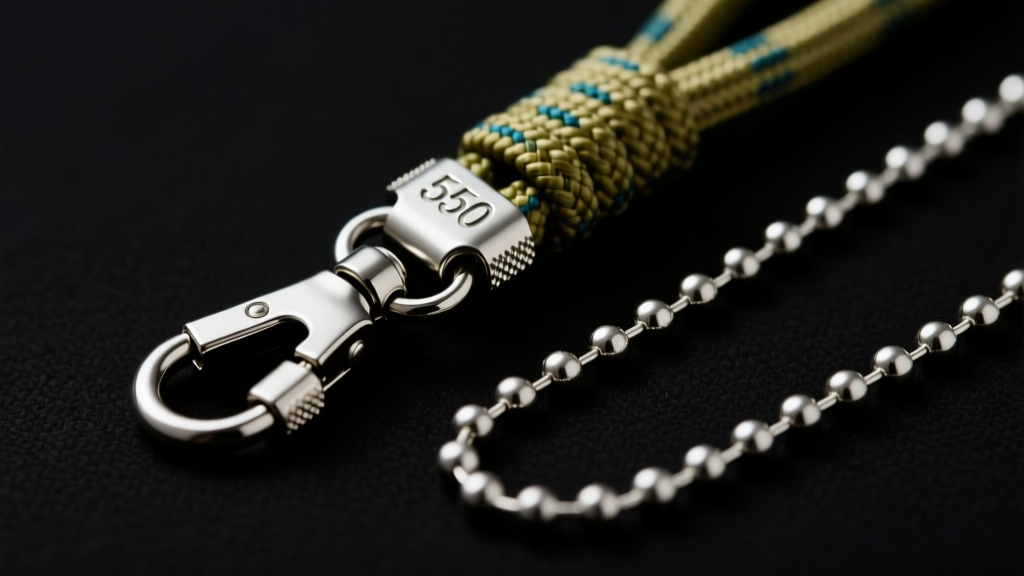
The Garrote Risk of Standard Ball Chains
Most cheap hidden knife necklaces ship with standard 2.4mm 304 stainless steel ball chains. These chains have a tensile breaking strength of roughly 80 to 100 pounds. In a physical altercation, if an opponent grabs the chain, it will not break easily enough to prevent choking, effectively turning your necklace into a garrote. Furthermore, if the chain snaps under extreme dynamic load, the metal whip can cause severe lacerations to the face or eyes.
The Value of Breakaway Systems
When assessing value, prioritize necklaces equipped with 550 Mil-Spec paracord or specialized polymer breakaway clasps. A high-quality breakaway clasp is designed to separate when subjected to 15-20 pounds of lateral pull, ensuring the necklace detaches safely if grabbed. If you prefer the aesthetic of a metal chain, you must upgrade to a titanium wire rope or a chain integrated with a magnetic safety release. Paying an extra $15 to $20 for a proper suspension system is non-negotiable for safe daily carry.
The Legal Reality Check (Crucial for 2026 Buyers)
The legal status of a self defense hidden knife necklace is incredibly murky and varies drastically by jurisdiction. Because these items are designed to be concealed, they frequently run afoul of local 'dirk or dagger' statutes, which often prohibit the concealed carry of any fixed-blade knife, regardless of length. In many states, a blade as short as 1.5 inches, if hidden beneath a shirt, constitutes an illegal concealed weapon.
Warning: According to global knife legislation overviews, intent and concealment are primary factors in weapon classification. A pendant marketed as 'tactical' or 'self defense' can be used by prosecutors to prove malicious intent if deployed in an altercation.
Furthermore, travelers must be acutely aware of federal transit regulations. While some buyers purchase ceramic blades believing they are 'TSA-friendly,' this is a dangerous myth. The TSA prohibited items guidelines explicitly ban all knives, metallic or non-metallic, in carry-on luggage. If a ceramic pendant is discovered during a pat-down or advanced imaging scan, it will be confiscated, and you may face severe civil penalties or missed flights.
Budget Tiers: What to Expect at Every Price Point
To help you allocate your EDC budget effectively, here is a realistic breakdown of what the current market offers across three primary pricing tiers.
- The Novelty Tier ($15 - $30): Expect stamped 3Cr13 or 420J2 steel, injection-molded plastic sheaths with poor retention, and dangerous stainless steel ball chains without safety breaks. These are essentially cosplay props and hold zero defensive value. Avoid these entirely.
- The Mid-Tier EDC ($40 - $75): This is where genuine value begins. You will find D2 or 8Cr13MoV steels with DLC coatings, Kydex or glass-filled nylon sheaths with adjustable friction retention, and 550 paracord lanyards. Brands in this tier focus on functional ergonomics rather than aggressive, skull-adorned aesthetics.
- The Premium Tier ($85 - $150+): Reserved for serious practitioners. These pieces feature CPM-S30V or MagnaCut steels, custom-molded holsters, titanium hardware, and discrete, jewelry-like aesthetics that do not scream 'weapon.' The finish quality prevents skin irritation, and the deployment mechanics are rigorously tested.
Final Verdict: Where Should You Invest Your Money?
Is a self defense hidden knife necklace worth the investment? If you are buying it as a primary self defense weapon, the answer is no. A folding knife in the pocket or a dedicated fixed blade on the belt offers vastly superior biomechanical access and cutting power. However, if you view it as a deep-concealment backup tool, a package cutter, or a psychological deterrent, it holds distinct utility.
For the best budget-to-value ratio in 2026, target the $45 to $65 range. Insist on D2 tool steel with a rust-resistant coating, a molded Kydex sheath that allows for one-handed drawing when pinned against the chest, and a paracord lanyard with a verified breakaway clasp. By prioritizing metallurgical integrity and safety features over aggressive tactical styling, you ensure that your jewelry remains a reliable asset rather than a costly, dangerous liability.


