Squash Blossom Necklace Troubleshooting & Repair Guide
Expert troubleshooting guide for squash blossom necklace repair. Fix loose bezels, restring heavy silver beads, and restore natural turquoise safely.


Diagnosing Common Squash Blossom Necklace Failures
The traditional Navajo squash blossom necklace is a masterpiece of indigenous silversmithing, but its very anatomy makes it prone to specific structural failures. Originally inspired by Spanish-Mexican pomegranate motifs and adapted into the iconic crescent naja pendant, these pieces are notoriously heavy. A full-size, vintage sterling silver squash blossom necklace can easily weigh between 150 and 300 grams. This immense weight, combined with the porosity of natural turquoise and the friction of silver-on-silver bead movement, creates a unique set of maintenance challenges.
If you own or collect Native American jewelry, you will eventually encounter issues ranging from stretched stringing materials to chalking turquoise and loose bezel settings. This comprehensive troubleshooting guide provides actionable, metallurgical, and gemological solutions to restore your squash blossom necklace to wearable condition without compromising its historical integrity or market value.
Turquoise Troubleshooting: Chalking, Cracking, and Color Loss
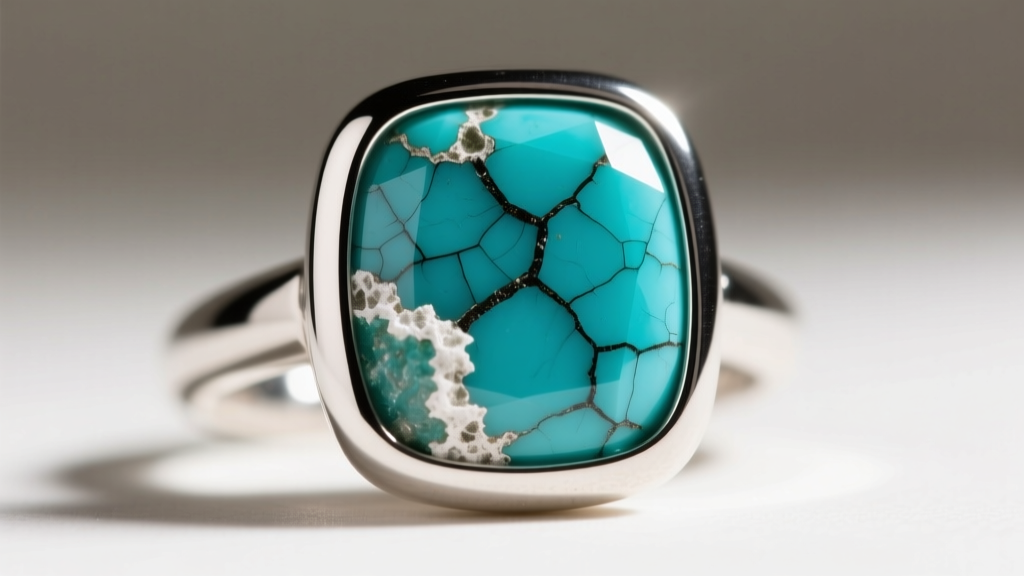
The most frequent complaint among collectors is the discoloration of turquoise cabochons. Natural turquoise is a porous hydrous phosphate of copper and aluminum, ranking between 5 and 6 on the Mohs hardness scale. When exposed to skin oils, cosmetics, or harsh environmental dryness, the stone can undergo drastic visual changes.
Identifying the Root Cause of Discoloration
- Chalking (White Haze): Often caused by extreme dehydration or exposure to harsh chemical cleaners. The stone loses its structural moisture, leaving a brittle, white, chalky surface.
- Greening (Color Shift): Natural blue turquoise contains copper, while green turquoise contains iron or zinc. However, when a blue stone turns green over time, it is usually due to the absorption of acidic skin oils and lotions penetrating the porous matrix, altering the stone's light refraction.
- Matrix Cracking: Spiderweb matrix (the host rock, often sandstone or pyrite) expands and contracts at different rates than the turquoise itself. Sudden temperature changes or ultrasonic cleaner vibrations will shatter the stone along these matrix lines.
Safe Restoration and Prevention
Never submerge a squash blossom necklace in water or use ultrasonic cleaners. The Gemological Institute of America (GIA) explicitly warns against ultrasonic and steam cleaning for any porous gemstone. If your turquoise is natural and untreated, the damage from oil absorption is largely permanent, though gently wiping the stone with a microfiber cloth after every wear prevents further saturation. If the stone is stabilized (treated with epoxy or the Zachery process, as noted by the Indian Arts and Crafts Association), it will be less porous but can still suffer from surface scratching. To restore luster to a dulled, stabilized cabochon, a jeweler can carefully lap and repolish the surface using cerium oxide on a soft felt wheel, provided the stone is temporarily removed from the silver bezel to avoid heat transfer.
Restringing Heavy Silver: Wire Gauge and Tension Solutions
The most catastrophic failure mode for a squash blossom necklace is a snapped stringing material, sending dozens of heavy sandcast or thick-gauge stamped silver beads scattering. Historically, these necklaces were strung on silk or cotton thread. Under the 200+ gram weight of a modern or vintage piece, natural fibers stretch, rot from perspiration, and eventually snap.
Stringing Material Comparison
| Material | Tensile Strength | Stretch Factor | Best Use Case |
|---|---|---|---|
| Silk Thread (Size F) | Low (approx. 12 lbs) | High (10-15%) | Museum conservation, lightweight vintage pieces, authentic historical replication. |
| Nylon (C-Lon / Super-Lon) | Medium (approx. 25 lbs) | Low (2-4%) | Medium-weight beads, requires knotting between beads to prevent silver-on-silver abrasion. |
| 49-Strand Wire (0.024") | High (40+ lbs) | None | Heavy sandcast silver, large naja pendants, daily-wear modern squash blossoms. |
The Professional Restringing Protocol
For a heavy, wearable squash blossom necklace, upgrade to a 49-strand, 0.024-inch stainless steel beading wire (such as those supplied by Rio Grande). The 49-strand construction provides the drape of silk with the tensile strength of steel. Because the naja and blossom motifs have large, sometimes rough-hewn drill holes, the steel wire resists fraying where silver edges might act like a saw blade.
Critical Crimping Technique: Do not simply crush the crimp bead flat with chain-nose pliers. A flattened crimp bead creates sharp, knife-like edges on the inside that will eventually shear the beading wire. Instead, use 2x2mm sterling silver crimp tubes and a micro-crimping tool to fold the tube into a secure, rounded 'C' shape that encapsulates the wire without biting into it. Always use a sterling silver French wire (gimp) or a wire protector at the clasp loop to prevent the heavy necklace from sawing through the wire at the point of highest friction.
Tarnish Removal Without Damaging the Naja or Blossoms
Navajo silverwork is renowned for its deep stamping, repoussé, and applied wirework. These intricate crevices naturally accumulate heavy silver sulfide tarnish (oxidation). While many collectors appreciate the antique patina that highlights the stamped designs, excessive tarnish can make the piece look neglected and can transfer black residue onto clothing.
The Electrochemical Bath (Use with Extreme Caution)
The popular DIY method of lining a bowl with aluminum foil, adding hot water and baking soda, creates an electrochemical reaction that converts silver sulfide back into pure silver. Warning: You must never submerge the naja or the squash blossom beads if they contain turquoise, coral, or lapis lazuli. The hot, alkaline solution will permanently strip the polish from stabilized stones and can fracture natural stones. Furthermore, this method strips all oxidation, including the intentional dark patina in the stamped grooves, leaving the piece looking flat and unnaturally white.
Targeted Polishing for Stamped Silver
The safest and most professional approach is targeted mechanical polishing. Use a high-quality treated polishing cloth (like a Sunshine cloth) to gently buff the raised, high-polish areas of the silver beads and the naja. To clean the deep, oxidized crevices without removing the intentional patina, use a soft horsehair detailing brush or a wooden toothpick to gently dislodge trapped dirt and skin cells. This preserves the depth and contrast of the Navajo stampwork while ensuring the silver is safe against the skin.
Loose Stones and Bezel Pushing Techniques
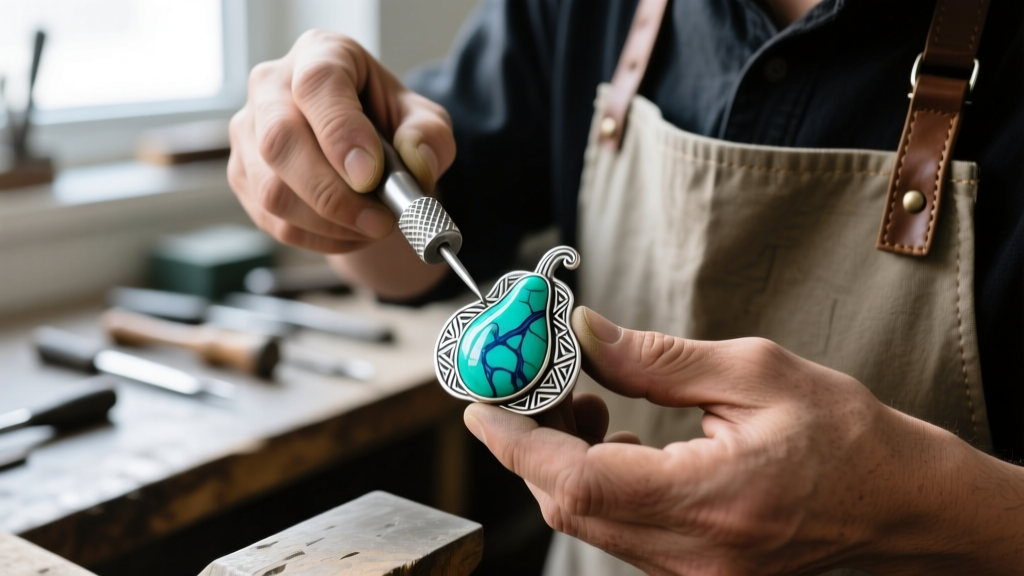
If you hear a faint rattling sound when you move the necklace, or if you can see light passing under the edge of a turquoise cabochon in one of the blossom motifs, the bezel setting has failed. Over time, the dead-soft sterling silver bezel wire can catch on clothing and pull away from the stone.
Choosing the Right Bezel Tools
Turquoise is relatively soft and easily marred. Never use a standard steel bezel pusher or burnisher directly against the stone. Steel is significantly harder than turquoise and will leave permanent metallic smears or deep scratches on the cabochon's polish. Instead, professional jewelers use a nylon-jawed bezel pusher or a Delrin plastic punch. These materials are hard enough to push the dead-soft .925 sterling silver bezel wall over the curve of the stone, but soft enough that they will glide harmlessly over the turquoise if they slip.
The Pushing Process
Work in a star pattern—push the bezel at the 12 o'clock position, then 6 o'clock, then 3 and 9. This ensures the silver is distributed evenly and prevents the stone from popping out of the opposite side. If the bezel wire has become work-hardened and brittle from years of wear, attempting to push it will cause it to crack. In this case, a jeweler must carefully use a micro-torch to anneal (soften) the specific bezel wire without heating the turquoise, which could cause the stone to explode from trapped moisture.
Clasp and Finding Upgrades
Traditional squash blossom necklaces often feature a simple hook-and-eye clasp or a silver concha clasp. While historically accurate, these clasps are notoriously insecure for heavy pieces; a slight tug can cause the hook to slip out of the eye, dropping the necklace. If you plan to wear a heavy vintage piece regularly, upgrading the clasp is a necessary troubleshooting step.
Replace the hook-and-eye with a heavy-duty, solid-cast sterling silver toggle clasp or a large lobster clasp. Ensure that the jump rings connecting the clasp to the beading wire or French wire are soldered closed. An unsoldered jump ring will eventually pull open under the 200-gram pendulum effect of the naja swinging during movement. By soldering the jump rings and utilizing a secure locking clasp, you eliminate the single highest risk of catastrophic loss for your squash blossom necklace.


