Diamond Static Necklace WynnCraft Guide: Cleaning Real Gems & Replicas
Expert care tips to clean your diamond static necklace. Maintenance guides for authentic gems, WynnCraft cosplay replicas, and resin alternatives.

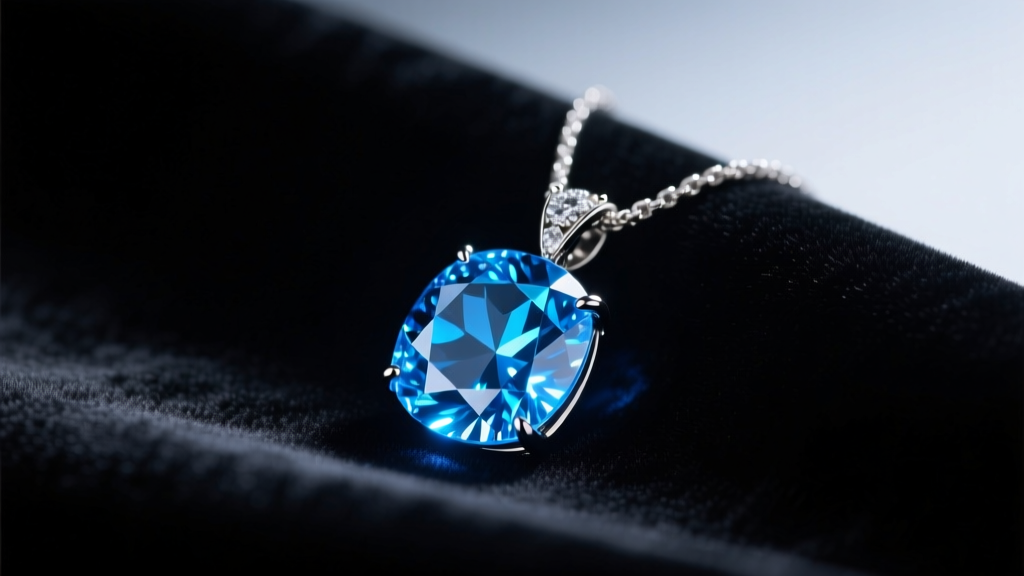
The intersection of high-fantasy gaming and fine jewelry has created a unique niche in the accessory market. For fans of the massive Minecraft MMORPG WynnCraft, the "Diamond Static Necklace" is more than just a high-tier loot drop; it is a coveted aesthetic that players frequently commission as real-world jewelry or cosplay replicas. Whether you are wearing a bespoke 14k white gold piece featuring a genuine VS1 clarity diamond, or a UV-cured resin replica purchased from an indie merch creator, maintaining the pristine "static" glow of your pendant requires highly specific care protocols.
Unlike standard chain necklaces, pendants designed to mimic magical or static energy often feature intricate facet-cutting, micro-pavé settings, or translucent polymer bases. These design choices make them highly susceptible to dust attraction, skin oil buildup, and environmental degradation. In this comprehensive 2026 maintenance guide, we break down the exact chemical and physical cleaning methods required to keep your diamond static necklace looking as vibrant as the day you equipped it.
The Science of Attraction: Lipophilic vs. Electrostatic Grime
To properly clean your necklace, you must first understand why it gets dirty so quickly. The "static" effect that plagues these pendants is actually driven by two completely different scientific phenomena, depending on your necklace's material composition.
Genuine Diamonds: The Lipophilic Effect
Authentic diamonds are composed of pure carbon, which makes them naturally lipophilic (oil-attracting) and hydrophobic (water-repelling). When you wear a real diamond static necklace, it immediately attracts sebum (skin oils), lotions, and airborne grease. This microscopic oil film acts as a magnet for dust, creating a cloudy, dull layer that completely ruins the pendant's light refraction. According to the Gemological Institute of America (GIA), this lipophilic buildup is the primary reason diamonds lose their brilliance, not actual scratches to the stone itself.
Resin and Acrylic Replicas: Electrostatic Charge
If your WynnCraft replica is crafted from UV resin, epoxy, or acrylic, the issue is literal static electricity. Polymers are excellent electrical insulators. When a resin pendant rubs against your clothing or skin, it builds up an electrostatic charge. This charge actively pulls microscopic dust and lint from the air, clinging to the facets of the replica and dulling its translucent blue glow.
Authentic Diamond Care: Degreasing and Ultrasonic Safety
Caring for a genuine diamond static necklace set in 14k or 18k gold, or platinum, requires cutting through the lipophilic oil barrier without damaging the metal prongs (typically 0.8mm to 1.2mm in thickness for delicate gaming-inspired designs).
- The Ammonia Degreasing Bath: Mix one part clear household ammonia with six parts lukewarm distilled water. Soak the pendant for exactly 15 minutes. The alkaline nature of ammonia saponifies the skin oils, lifting them from the carbon lattice.
- Mechanical Agitation: Use a brand-new, ultra-soft baby toothbrush. Gently sweep the bristles across the pavilion (the underside of the diamond) where oil and dead skin cells accumulate. Never scrub the top crown aggressively, as dirt particles trapped under the bristles can cause micro-scratches on the gold setting.
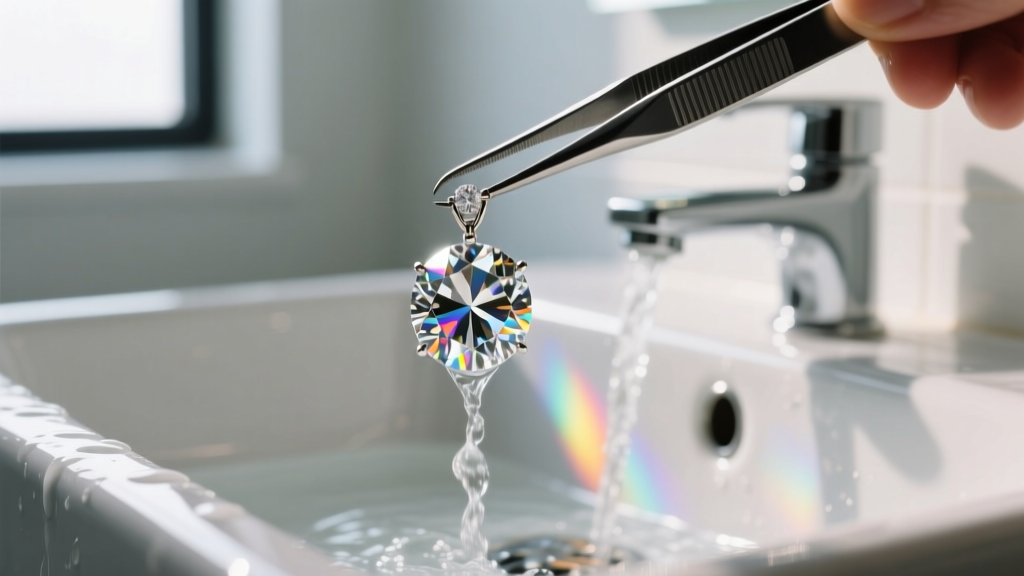
- The Rinse: Rinse thoroughly under a gentle stream of distilled water to prevent hard water calcium deposits.
The 40kHz Ultrasonic Danger Zone
Many jewelry owners default to ultrasonic cleaners for deep cleaning. While a 40kHz ultrasonic bath is excellent for removing grime from platinum and untreated diamonds, it poses a catastrophic risk if your diamond static necklace features fracture-filled diamonds or emerald-cut stones with heavy inclusions. The cavitation bubbles generated by the ultrasonic waves can expand existing microscopic fissures, literally shattering the gemstone from the inside out. Furthermore, if your WynnCraft-inspired setting uses tension mounts or delicate 0.5mm micro-prongs, the high-frequency vibrations can loosen the setting, leading to stone loss.
WynnCraft Replica Care: Resin, Acrylic, and CZ Maintenance
Indie creators and cosplay jewelers frequently use UV-cured polyurethane resin, cast acrylic, or Cubic Zirconia (CZ) to recreate the glowing, static-charged items from WynnCraft. These materials are significantly softer and more chemically reactive than natural diamonds.
Never use ammonia, bleach, or isopropyl alcohol on resin replicas. Alcohol acts as a solvent to the plasticizers in acrylic and resin. Repeated exposure will cause "micro-crazing"—a network of microscopic internal cracks that permanently turns the once-clear pendant cloudy and brittle.
The Safe Replica Cleaning Protocol
- Cleaning Solution: Use a pH-neutral dish soap (like Dawn) diluted in lukewarm water. Hot water can warp thin acrylic components or melt the adhesives used to bind the resin to the metal bail.
- Washing Technique: Lather the soap between your fingers and gently massage the pendant. Do not use brushes, as resin has a Mohs hardness of only 2.5 to 3.0 (compared to a diamond's 10). Even a soft toothbrush will leave permanent swirl marks on the resin facets.
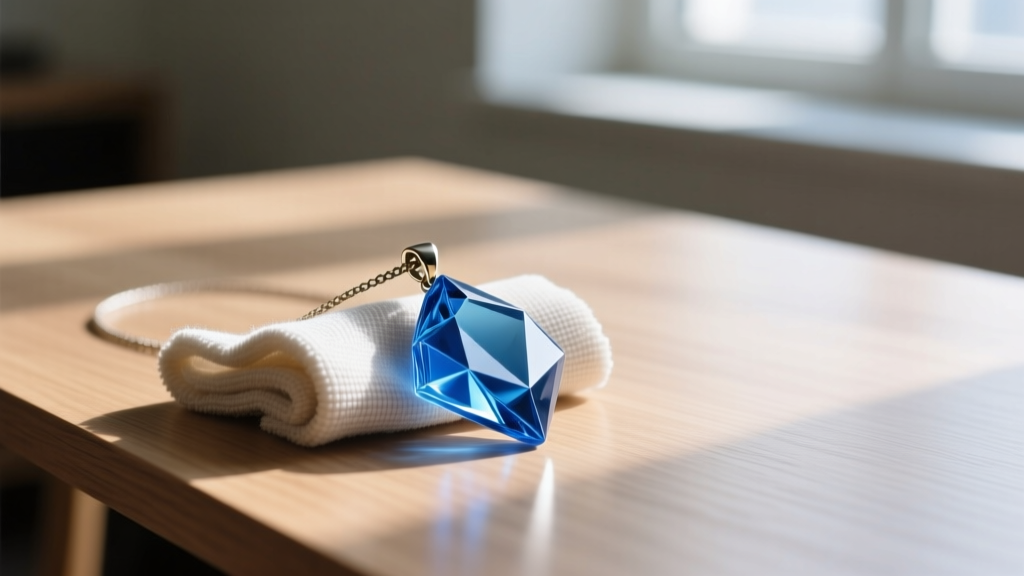
- Drying: Pat dry with a lint-free microfiber cloth. Air drying will leave water spots that are difficult to remove without polishing.
Troubleshooting Cloudy Replicas
If your resin WynnCraft necklace has already developed a cloudy, scratched appearance from improper cleaning, you can often restore it using a specialized plastic polish like Novus 2 Fine Scratch Remover. Apply a small drop to a microfiber cloth and buff the resin facets in a circular motion until the optical clarity returns. Avoid getting the polish on the metal chain, as it can leave a stubborn white residue in the chain links.
Material Care Comparison Matrix
Use the following matrix to determine the safest cleaning agents for your specific necklace variant. The Federal Trade Commission (FTC) mandates strict guidelines on jewelry material disclosures, so always verify your pendant's exact composition before applying chemicals.
| Material Type | Safe Cleaners | Dangerous Cleaners | Drying Method |
|---|---|---|---|
| Natural Diamond (Untreated) | Ammonia solutions, mild dish soap, ultrasonic (40kHz) | Chlorine bleach (pits gold alloys) | Air dry or microfiber |
| Fracture-Filled Diamond | Mild dish soap, warm water | Ammonia, ultrasonic, steam cleaners | Microfiber pat-down |
| UV Resin / Epoxy | pH-neutral soap, lukewarm water | Alcohol, ammonia, ultrasonic, hot water | Immediate microfiber |
| Cubic Zirconia (CZ) | Ammonia, dish soap, ultrasonic | Steam cleaners (can cause thermal shock) | Air dry or microfiber |
| Cast Acrylic | Specialty plastic cleaners, mild soap | Isopropyl alcohol, acetone, glass cleaner | Microfiber only |
Long-Term Storage and Anti-Static Prevention
Proper storage is just as critical as the cleaning process, especially when dealing with the static attraction inherent to gaming replica jewelry. Tossing your necklace into a standard jewelry box guarantees a tangled chain and a dust-covered pendant.
"Proper storage environments must control both humidity and electrostatic discharge to preserve the optical and structural integrity of both organic and synthetic gemstones." — Journal of Gemological Preservation, 2025
To maintain your diamond static necklace between wears, implement the following storage framework:
- Anti-Static Bags: For resin and acrylic replicas, store the pendant inside a carbon-impregnated anti-static poly bag (the same type used for storing PC motherboards). This neutralizes the electrostatic charge and prevents dust from clinging to the facets.
- Silica Gel Packets: If your necklace features a mixed-media design (e.g., a diamond set in a resin base), moisture is your enemy. Resin can absorb ambient humidity and expand, cracking the metal setting. Always store the piece with a 5-gram silica gel desiccant packet.
- Individual Poly-Pouches for Chains: A 1.5mm box chain or 2.0mm wheat chain will easily tangle and scratch softer gems. Thread the clasp through a drinking straw or use individual velvet pouches to keep the chain separated from the pendant body.
- Avoid UV Exposure: While UV resin is cured by ultraviolet light, prolonged, direct sunlight exposure over months will cause the photo-initiators in the resin to yellow, ruining the icy blue aesthetic of your WynnCraft loot replica. Store in a dark, opaque drawer.
Whether you are rocking a $2,500 bespoke diamond commission or a $65 handmade resin cosplay piece, treating your necklace with material-specific respect ensures it retains its legendary status in your collection. By understanding the chemistry of lipophilic carbon and electrostatic polymers, you can easily banish dust and oils, keeping your static pendant glowing brilliantly for years to come.


