Antique Peridot Necklace Trends 2026: Styling & Value Guide
Discover 2026 trends for the antique peridot necklace. Learn to identify Edwardian and Art Deco eras, evaluate pricing, and style these vintage green gems.

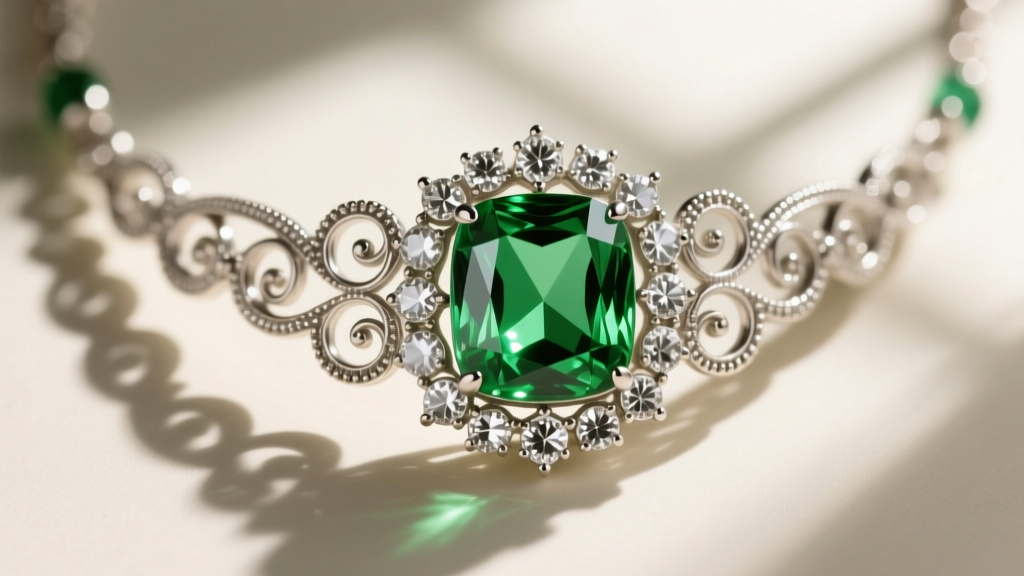
The 2026 Resurgence: Why Collectors are Choosing Peridot
As we navigate the jewelry landscape of 2026, a distinct shift is occurring in the secondary market for colored gemstones. With the skyrocketing prices and scarcity of high-clarity Colombian emeralds, discerning collectors and vintage enthusiasts are turning their attention to a historically significant, yet frequently undervalued alternative: the antique peridot necklace. Peridot, the gem-quality variety of the mineral olivine, offers a vibrant, slightly yellowish-green hue that is entirely unique in the gemological world. Unlike emeralds, which are often heavily included and routinely treated with oils, natural peridot is typically eye-clean and rarely subjected to artificial enhancements. This inherent purity, combined with the masterful craftsmanship of early 20th-century lapidaries, makes antique peridot jewelry a cornerstone of modern vintage styling.
However, acquiring an authentic antique peridot necklace requires more than just an appreciation for its lime-green brilliance. It demands a rigorous understanding of historical design eras, specific lapidary cuts, and the structural integrity of century-old settings. In this comprehensive guide, we will dissect the nuances of Edwardian and Art Deco peridot necklaces, provide a concrete valuation matrix for the current market, and offer expert frameworks for styling these heirloom pieces in a contemporary wardrobe.
Decoding the Eras: Edwardian vs. Art Deco Antiques
The term "antique" strictly applies to jewelry crafted 100 years or more ago. For peridot necklaces, this places the most desirable pieces squarely in the late Edwardian and early Art Deco periods. Each era utilized peridot in vastly different ways, reflecting the sociocultural shifts of the time.
Edwardian Elegance (1901–1915)
The Edwardian era was defined by lightness, lace-like intricacy, and the widespread adoption of platinum in jewelry making. An authentic Edwardian antique peridot necklace will almost always feature a platinum setting, often backed by 15k or 18k yellow gold for structural warmth. Jewelers of this period favored the cushion-cut or oval-cut peridot, surrounding the central stone with intricate millegrain detailing and old-mine cut diamonds. The millegrain technique—creating tiny beads of metal along the edges of the setting—was a hallmark of Edwardian craftsmanship, designed to catch the light and soften the starkness of the platinum. When evaluating these pieces, look for the soft, romantic symmetry and the slightly domed culet of the accompanying old-mine diamonds.
Art Deco Geometry (1920–1935)
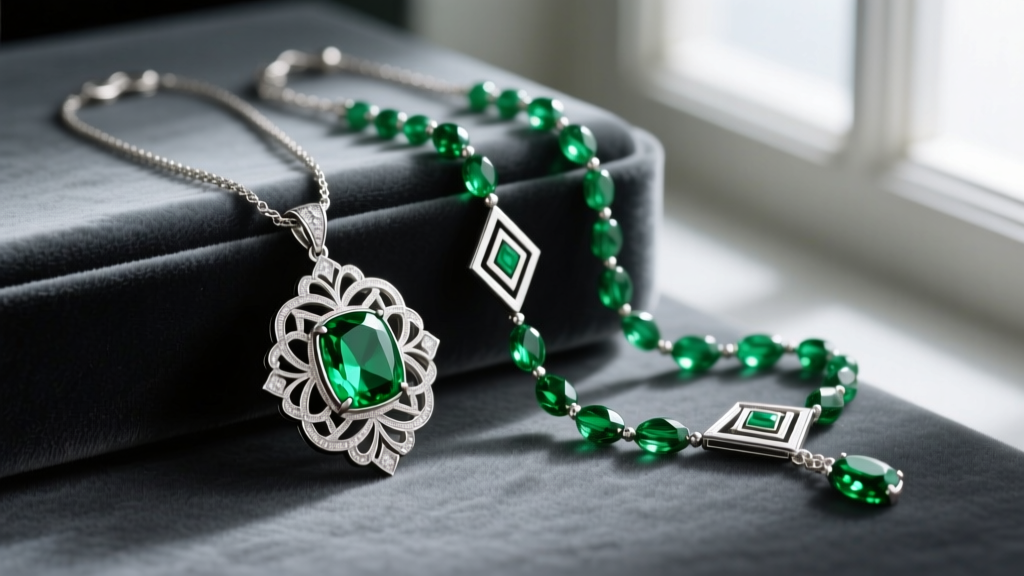
Following the fluidity of the Edwardian era, the Art Deco movement introduced sharp geometry, bold contrasts, and architectural precision. An Art Deco antique peridot necklace frequently utilizes 14k or 18k white gold, a more affordable alternative to platinum that became highly popular in the 1920s. Lapidaries began cutting peridots into step-cuts, baguettes, and trapezoids to emphasize the stone's exceptional clarity and glassy luster. A defining feature of high-end Art Deco peridot necklaces is the use of calibré-cut accent stones—often synthetic sapphires, rubies, or onyx—custom-cut to fit seamlessly into geometric channels around the peridot. Sautoir-style long chains, ending in dramatic peridot tassels or geometric pendants, are the most iconic silhouettes of this era.
Valuation Matrix: What to Pay in 2026
Pricing an antique peridot necklace is a complex exercise that relies heavily on the era, the metal purity, the quality of the accompanying diamonds, and the provenance of the piece. While peridot itself is not a precious gemstone in the traditional sense, the antique craftsmanship and historical value command a significant premium. Below is a generalized valuation matrix based on current 2026 auction data and reputable antique dealer listings.
| Era | Typical Metal | Dominant Peridot Cut | Average Center Carat | 2026 Price Range (USD) |
|---|---|---|---|---|
| Late Victorian (1880-1900) | 15k Yellow Gold / Silver | Rose Cut / Cabochon | 2.0 - 4.0 ct | $800 - $2,200 |
| Edwardian (1901-1915) | Platinum / 15k Gold | Cushion / Old Mine | 3.5 - 8.0 ct | $2,500 - $8,500 |
| Art Deco (1920-1935) | 14k / 18k White Gold | Step Cut / Emerald Cut | 4.0 - 10.0 ct | $1,800 - $6,000 |
| Retro (1935-1950) | 14k Rose / Yellow Gold | Fancy / Mixed Brilliant | 5.0 - 15.0 ct | $1,200 - $4,500 |
Note: Pieces bearing verified maker's marks from prestigious houses like Cartier, Boucheron, or Tiffany & Co. will command a multiplier of 3x to 5x the baseline ranges listed above.
Authentication: Spotting Naturals vs. Simulants
The secondary market is unfortunately saturated with modern synthetics, glass simulants, and synthetic spinel passed off as antique peridot. To authenticate an antique peridot necklace, you must look beyond the color and examine the stone's optical and internal characteristics. According to the Gemological Institute of America (GIA), natural peridot possesses a refractive index of 1.65 to 1.69 and exhibits strong double refraction (birefringence).
- The Loupe Test: Using a 10x jeweler's loupe, look through the table (top facet) of the stone down to the pavilion facets. Natural peridot will show a distinct "doubling" of the back facet lines. Glass and synthetic spinel are singly refractive and will not show this effect.
- Lily Pad Inclusions: Natural peridot frequently contains unique internal fractures that resemble lily pads, often centered around a tiny biotite crystal. These are a dead giveaway of natural, earth-mined olivine.
- Color Zoning: Unlike tourmaline or synthetic stones that may show harsh color banding, natural peridot typically displays an even, slightly sleepy distribution of its yellowish-green body color.
Furthermore, examine the metal hallmarks. French Edwardian pieces will often feature the "dog head" mark for platinum, while an "eagle's head" indicates 18k gold. The Victoria and Albert Museum's jewelry archives provide excellent visual references for these historical hallmarks, which are crucial for verifying the age of the mounting.
Curatorial Care: Preserving Antique Settings
Antique peridot necklaces require specialized care. Peridot ranks at 6.5 to 7 on the Mohs hardness scale, making it softer than diamonds and sapphires, and highly susceptible to scratching and thermal shock. Never place an antique peridot necklace in an ultrasonic cleaner; the high-frequency vibrations can easily shatter the stone if it contains internal tension fractures, and the heat can loosen the delicate century-old shellac or pitch used in some older settings.
Instead, clean the piece using a soft, natural-bristle brush, lukewarm water, and a drop of mild, non-detergent soap. Dry it gently with a microfiber cloth. Because antique prongs—especially the delicate millegrain bezels of the Edwardian era—wear down over decades of use, it is imperative to have a master jeweler inspect the prong tension annually. Request that they use a laser welder for any retipping, as traditional soldering torches can cause fatal thermal shock to the peridot.
Styling Frameworks: Necklines and Layering
Integrating an antique peridot necklace into a 2026 wardrobe requires an understanding of color theory and proportional balance. The yellowish-green undertone of peridot is exceptionally flattering against warm skin tones and creates a striking visual contrast when paired with specific fabrics and necklines.
The V-Neck and Sweetheart Protocol
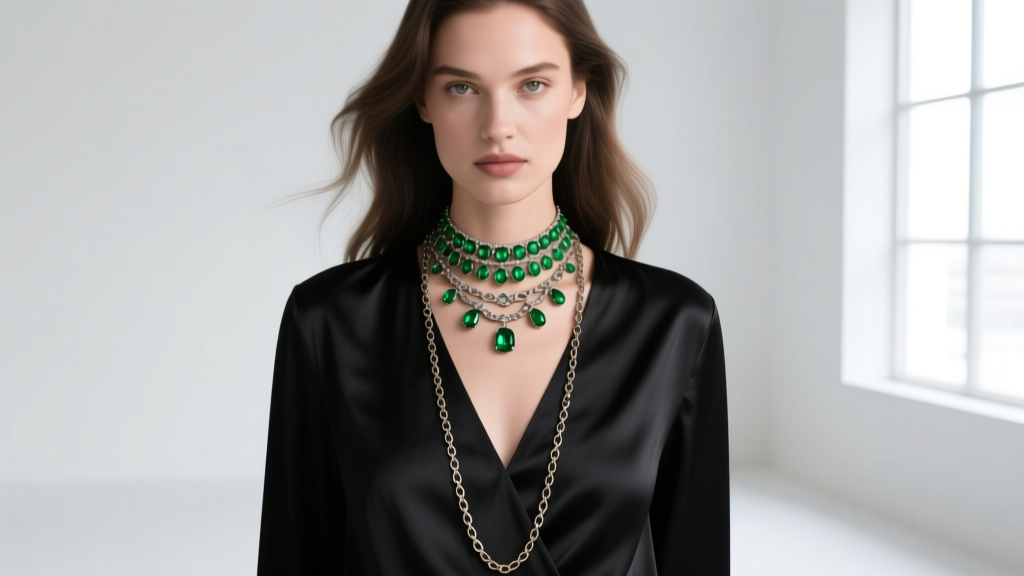
For Edwardian pendants that feature a central drop or a delicate garland motif, a deep V-neck or sweetheart neckline is non-negotiable. These necklines mimic the geometric plunge of the pendant, drawing the eye directly to the peridot. Avoid high crew necks, which will cause the antique bail to catch on the fabric and obscure the lower diamond accents.
Mixed-Metal Layering
A major trend in 2026 is the deliberate mixing of historical metal tones. If you own an Art Deco peridot sautoir crafted in 14k white gold, do not feel compelled to restrict your layering to white metals. Anchor the antique piece with a modern, substantial 18k yellow gold cable chain. The warmth of the yellow gold will pull out the subtle golden undertones in the peridot, while the white gold pendant provides a crisp, vintage focal point. Keep the modern chains minimalist to ensure the intricate calibré-cut details of the antique pendant remain the undisputed star of the ensemble.
Occasion and Lighting
Peridot is uniquely responsive to artificial lighting. While it looks bright and grassy in natural daylight, under the warm incandescent or amber lighting of evening events, the stone takes on a richer, almost neon-olive glow. This makes the antique peridot necklace an exceptional choice for evening galas, theater outings, and dimly lit dinners, where it will outshine darker green gemstones like tourmaline that tend to black out in low light.
Final Thoughts
The antique peridot necklace represents a rare intersection of accessibility, historical artistry, and vibrant aesthetic appeal. By understanding the distinct architectural differences between Edwardian filigree and Art Deco geometry, utilizing proper gemological authentication techniques, and adhering to strict curatorial care standards, collectors can secure heirloom pieces that will only appreciate in both value and beauty. As the 2026 market continues to elevate colored gemstones, the timeless allure of the antique peridot remains a brilliant, verdant investment.


